Tag: author

  • A message from Tomos Roberts, Author of “The Horse Lord” and “Rose’s Story”

    A message from Tomos Roberts, Author of “The Horse Lord” and “Rose’s Story”

    I was diagnosed with dyslexia at age 7. It was my mother who noticed it to start off with, as I had been able to get past my lack of reading by memorizing books from people reading them to me. The big issue at this time was reading, which I found incredibly hard, and that meant my writing was reams behind my classmates.

    This all came to a head with my mum sending me to go and see a specialist teacher on the weekends, who helped me start to untangle the strange symbols into letters, and then into words, but by this time, I was far behind my friends in my writing. The good news was that as soon as I understood the letters I could read the words, in some fashion, and from there I started to fully grasp the English language and catapulted forwards with my reading, going from the worst in my class to one of the best readers – all in the space of a year or two and kindling a new found love of books that remains to this day. Sad to say, though, I wasn’t out of the woods; in fact, this is where the real issue with my dyslexia started.

    Now I could read, articulate myself as well as the best of them, and had no real downside to my reading, so no obvious outward expression of my dyslexia until I started to write, and it was there I really showed how severe I had it. The fact was that most teachers, classmates, and the like couldn’t understand anything I wrote, so I stopped writing and did the bare minimum of notes in class, which was fine due to my ability to memorize things fairly well. I could still cope in class, but writing each year became more and more of an issue as the assessments got longer and longer, and my ability to string a coherent sentence together got weaker and weaker, resulting in the need for a scribe for my GCSE and A-levels. An issue that was slightly embarrassing at the time. But because I was good verbally and my recall was fine, I was able to sit for my exams, which I passed, and then I went to university. During my exam years I had stopped having specialist support lessons and help from teachers to try and improve my writing because of the severity of my writing meant that I had reached a point where the staff of the school I was at, as well as the staff at my university, didn’t know what to do me, being in the top 1% of dyslexic in the world. But although my writing structure could not improve, having a scribe in the exams allowed me to speak the answers, and as I could read and memorize things, this was fine. However, my lack of writing made it harder to really relate to people work-wise, as people couldn’t understand my emails, and most people find my text messages difficult to decipher!!

    My biggest issue at university, which was almost a forewarning for my later life, was that the majority of people don’t understand dyslexia and definitely don’t understand that it comes at different levels. My dissertation brought down my overall final grade at university because my dissertation tutor had no idea how bad I was and assumed I was like the majority of dyslexics he had seen with a “mild case,” as he put it, but saying that I finished uni, got my degree in History, and set off to join the army. A job I had been working towards for five years, mainly because I had realized at 14, during my first job, that the inability to write coherent sentences without someone checking them puts a big black mark against getting a lot of jobs. So I got myself fit and had always been good at sports, and assumed my life would center on practical things outdoors – a career without writing. An idea I assume a lot of dyslexics have – to get me as far away from writing as possible. Anyway, as fate would have it, it was because of my dyslexia that the army failed me during my officer assessment. I actually have a letter from them acknowledging that my dyslexia is the problem, and as they don’t have to comply with discrimination laws, that was the end of the road for me.

    A sting that took a long time to get over – I found it hard to accept that something I was born with would stop me from doing a career that I thought I was meant to do.

    From this point on though, a very strange thing happened, I started writing, creative writing, maybe to help better myself or to prove to myself that I could, I don’t know but I started writing reams and reams of stuff and then landed on my series, Riders of the North, and I wrote all three books back to back; the two short stories and the main full novel story. It was at this time that some of my family and friends heard about what I was doing and wanted to read them, to which I hesitantly obliged. Strangely enough, they seemed to like them with comments like “that’s good,” “very visual,” “great battle scenes, very bloody” started coming back to me, followed by “You should try to get that published.”

    Which leads me to here, probably the most severely dyslexic person you will meet who is an author with two books and a very small but still respectable audience, now trying to hit the big time and show the world that even if you are born with something that stops you from doing something, you still can. I shouldn’t be a writer. It’s crazy, if we bumped into each other in the street and you asked me to write down something for you, I probably couldn’t – or if I did, you wouldn’t understand it, but here I am with two books because of hard work and a good team around me. And it’s put me almost into a position that I believe I was born to occupy; writing my stories is something I really enjoy doing. It takes a lot of editing to get it to publication, but I want to show that with perseverance, it can be done. I have no contacts to make my route easy, no parent in publishing, no rich family to underwrite me, just a computer and a ton of hard work sprinkled with a bit of luck, and a heap load of dyslexia, which has made me so creative, something I now realize, and a good editor. So if you are dyslexic or know how hard dyslexia is to deal with, then please help me get my books out there to an even wider audience, and share them with your friends. If I can do it, anyone can, and I hope sharing my story will inspire others.

    Kindle USA: https://www.amazon.com/s?k=tomos+roberts
    Kindle UK: https://www.amazon.co.uk/s?k=tomos+roberts

    Tomos Roberts
    Tomos Roberts

    Tomos Roberts’ Website: https://ridersofthenorth.wordpress.com/

  • How to Inspire Students to Write
By Linda Davis-Kyle

    How to Inspire Students to Write By Linda Davis-Kyle

    HOW TO INSPIRE STUDENTS TO WRITE
    By Linda Davis-Kyle

    As a youth, Lisa Shontea Nichols (b.d. May 18, 1966) endured from her speech teacher the words, “Miss Nichols, you should never speak in public,” and from her composition teacher, “Miss Nichols, you’re the weakest writer I ever met in my entire life.” 1

    Rising above Denigrating Criticism

    Yet, about three decades later, Lisa is a world-renowned transformational speaker who addresses audiences of 10,000 plus, and she is a bestselling author of six books with a seventh—Abundance Now: Amplify Your Life & Achieve Prosperity Today—ready for release at the time of this writing. As Lisa puts it, she “writes bestsellers, not books.” She is a co-author of Living Proof: Celebrating the Gifts That Came Wrapped in Sandpaper and the author of No Matter What! 9 Steps to Living the Life You Love and Unbreakable Spirit: Rise Above the Impossible. Not only is she a world-renowned speaker and bestselling author, but Lisa is also the founder and CEO of the multi-million dollar company Motivating the Masses, Inc.

    Hearing Discouraging Comments May Be Quite Common

    While aspiring writers can find a multitude of teachers and established writers making discouraging comments about and to youthful writers, I, as a contrarian on the matter, feel that it is important to encourage young learners to write as soon as they show any interest in writing. Some parents may see their very young children—who have enjoyed hearing stories read to them—sit with a notepad and draw wavy lines before the youngsters can read for themselves or even know the alphabet. When asked, “What are you doing?” they very well may say proudly, “I’m writing a story.” When such an action happens, parents I have known capitalize on that moment and encourage those efforts.

    Appreciating Astute Parents, Grandparents, and Teachers

    From the tiny bit I know from Richard Bandler, the great and wonderful co-creator of Neuro-Linguistic Programming, I suspect he would praise the parent or teacher who fosters the growth of thought in youngsters and their keen desire to put pencil to paper to write. Bandler likely would say that the words spoken are of supreme importance to young and mature alike who are inspired to write. To make it clear, neither Bandler nor I are talking about false praise. I’m referring to looking for and finding something good in the young writers’ compositions, theme papers, articles, stories, poems, songs, and books. Some careless comments can, in a sense, “hypnotize” and devalue the efforts of youthful writers.

    Acknowledging the Impact of Positive Effort and Encouragement

    Some who seem to tell youngsters they are not experienced enough to write, they have not seen enough of the world to write, they have no voice or style to write, may be wholly and completely correct in their assumption. I believe, though, that offering constructive criticism with thoughtful suggestions is totally welcome. Young writers learn to write by writing and being nurtured in their efforts. Giving harsh criticism can crush the spirit of some young writers. It is akin to pulling on a sprouting plant, uprooting it, and killing it before it has a chance to develop strong roots and flourish. Thoughtful communication and correction are to the students as water and sunlight are to the emerging sprouts. Why destroy enthusiasm in any eager writers—young or mature—who choose to share their talent with the world? Why try to stymy the love of a budding talent that needs only attention, direction, and their own devotion to their worthy goal?

    Encouraging and Fostering the Love of Writing

    One learns by taking lessons, by observing others doing their chosen activity, and by diving into the activity with passion. I prefer to encourage young writers. I say to young and mature writers alike that “no matter what anyone says to try to dissuade you or what anyone does to put obstacles in your path, keep studying and reading and working to improve your craft.” 

    Motivating with Encouraging Words from the Heart

    Not all teachers are like Lisa’s. Encouragement can come from the hearts of caring teachers, parents, grandparents, and mentors. Reading and writing daily can keep would-be writers energized. Practicing step by step can help eager writers-in-the-making conquer obstacles that arise not only in writing but also in life. Adults who choose to be their mentors can guide and support teens to improve their writing through serious application of some fun ways of looking at writing. If your teens choose to continue to use some of the modest approaches to writing, such as warm-ups (which seasoned writers may or may not use) while exploring and learning more complicated techniques to polish their talents, all the while, who knows where their writing will lead them as they go forth into the world?

    Looking Inside the Writing World of Some Teens

    Had Jake Marcionette’s mother not encouraged Jake, he would not be a triumphant author with his published books, such as Just Jake #1 and Just Jake: Dog Eat Dog #2.
    His mother “encouraged” him. Actually, he explains that she “forced” him to write an hour and a half each day. As a successfully published author, though, force is no longer part of the equation. Marcionette says he “loves writing” now. 
    Rachel Parent’s family encouraged Rachel with her passion to help bring the important anti-GMO message to her peers, her country, and the world. Had her parents not supported her efforts, Rachel would not have had the opportunity to meet with Canada’s Health Minister Rona Ambrose to speak her mind.

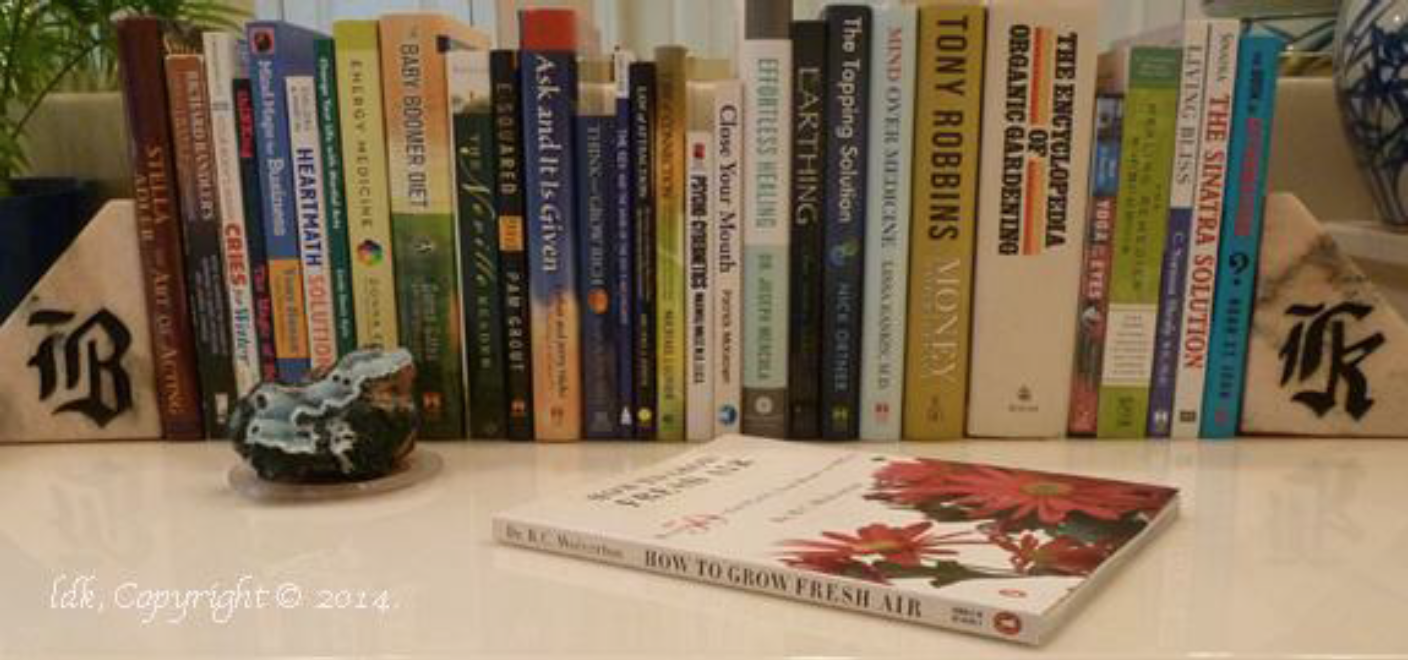
    Books are one of our greatest treasures. Photo by Linda Davis-Kyle, Copyright © 2014.
    Books are one of our greatest treasures. Photo by Linda Davis-Kyle, Copyright © 2014.

    Putting Writing Rules to Good Use

    Sure. It’s good to have a handle on grammar and the parts of speech before one dives right in to write. The late Gary Provost says, “…you cannot write well without [the rules of grammar].” 
    And, as I say in The Busy English Teacher… “recognizing parts of speech and how writers put the words to work can contribute to great fun and relevant learning for eager scholars. An abundance of practice researching, reading, and noting spelling awaits them around every corner. When given a little nudge in the right direction to motivate them, teens may be amazed at their own power. Young learners can experience the joy of learning. They can stretch their thinking when given fun challenges and exciting opportunities to explore. They can accept challenges they have not even thought of accepting before if presented in a non-threatening and fun way.” by

    Writing Even before Becoming Supersaturated in Rules

    Making a bold effort to keep the joy of writing alive, some educators do not intrude on the creative process for quite some time. Montessori schools, with which I am familiar, maintain an initial hands-off policy and just let budding writers write. After the young learners are comfortable with their masterpieces, their teachers, known as guides, gently introduce patterns and rules of spelling and grammar while still managing not to stifle the creativity of the young writers. Some students may excel in spite of harsh criticism, or even because of it, as Lisa has. Nevertheless, some teachers may choose to nurture rather than negate the writing of young students to help them achieve their dreams. If they wish, teachers can leave a legacy of kindness. Their kindness can live to connect with the hearts of their students to help sustain their inner power long after the teachers have gone.

    Sources

    1 Nichols, Lisa. “Questions That Will Stir Your Soul,” YouTube ~ https://www.youtube.com/watch?v=JuKCwS8wmls 24:32.
    2 ldk, The Writer’s Friend, p. 14.
    3 Marcionette, Jake. http://www.cbsnews.com/news/thirteen-year-old-author-writes-own-success-story/
    4 Provost, Gary. 100 Ways to Improve Your Writing. New York: Mentor, 1985, p. 107.
    5 ldk, The Busy English Teacher’s Fun Activities & Exercises for Pre-Teens: Grammar Mind Maps, Fitness Games & More. Amazon Kindle Book.

    About the Author

    Linda Davis-Kyle, MA, has been published in North America, Europe, Africa, Asia, and Australia in professional journals such as Modern Drama in Canada, Chem Matters in the USA, Jewish Affairs in the Republic of South Africa, and Studies in English Literature in Japan, and in magazines such as Common Ground in Canada and Green Farm Natural Health in the United Kingdom. She is also the author of “Exploring ‘Treasure Storehouses’ of the World,” found on the American Dyslexia Association website. Davis-Kyle’s Amazon Kindle book, The Busy English Teacher’s Fun Activities & Exercises for Pre-Teens, is the perfect time-saving gift for overworked educators. It is overflowing with fun learning exercises that nurture the minds, bodies, and spirits of young learners.