Author: Steph

  • I can count

    I can count

    I can count, dyscalculia, counting, freebie, parents, children

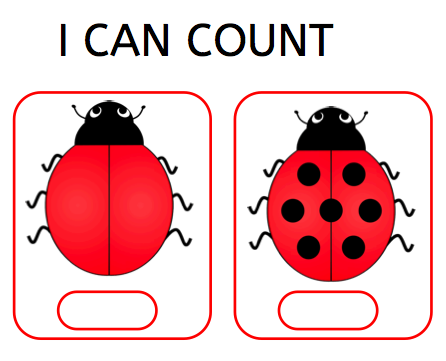
    Today we offer a colored freebie: I can count! Many children with dyscalculia have trouble with exact counting. This booklet will help them. The children have to count the dots on the ladybug and write down the amount. The file is presented as a mini notebook, but if you want to, you can also cut out the cards and laminate them. It might be a good idea to give these booklets as homework.

    DOWNLOAD

    The ladybird pictures are from edupic.net, a great resource for teachers.

    Check out our other freebies!

  • Einstein’s riddle

    Einstein’s riddle

    Einstein's riddle, reading, logical thinking, dyslexia, parents, children, freebie

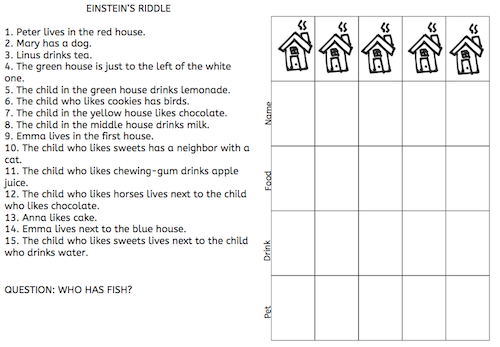
    A lot is said about Einstein. Much of it cannot be proved. Such as the theory that Einstein is the inventor of the logical puzzles, also called “Einstein’s Puzzle”. Whether this is true or not, is not important here. There are many variations of the Einstein puzzle. Einstein is said to have claimed that only 2% of the world population can solve this puzzle. We make the bold antithesis that anyone who can read and combine carefully, can solve this puzzle. Even children – although they just might need some help according to age and reading experience.
    We have converted the Einstein riddle into a child-friendly version. There is no smoking and no drinking alcohol, but there are sweets and non-alcoholic beverages. The question remains the same: Who has fish?

    DOWNLOAD

    Have fun combining!

  • Monster reading

    Monster reading

    Monster reading, reading, dyslexia, parents, children, worksheets, freebie

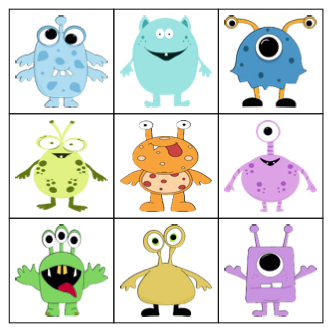
    Today’s freebie are monster reading puzzles. First, the children cut out the pictures. Then, they read the instructions and place the images in the correct place. This trains attention, visual and spatial perception and accurate reading. Cutting and glueing the pictures is good for fine motor skills. An alternative is to read the instructions to the children. This trains careful listening.
    We like these reading puzzles a lot, because children practise different perceptions and accurate reading or listening. Also, the children have great fun and are happy when all the pictures are in the correct place.

    DOWNLOAD (3,8 MB)

    Check out our other freebies

  • Debunking the Myths about Dyslexia

    Debunking the Myths about Dyslexia

    Debunking, myth, dyslexia

    There are many signs or clues to dyslexia which are discussed in depth on this website; however it is also important to be aware of the misconceptions and myths surrounding the disorder. There are several myths regarding dyslexia. We have highlighted some of the more common ones.

    Myth: Smart people cannot be dyslexic or have a learning disability.
    Fact: Dyslexia and intelligence are NOT connected. Many dyslexic individuals are very bright and creative who will accomplish amazing things as adults.
    Myth: Dyslexia does not exist.
    Fact: There has been 30 years of documented, scientific evidence and research proving the existence of dyslexia. It is one of the most common learning disabilities to affect children.
    Myth: Dyslexia is rare.
    Fact: In the United States, NIH research has shown that dyslexia affects 20%, or 1 in every 5 people. Some people may have more mild forms, while others may experience it more severely. Dyslexia is one of the most common cause of reading difficulties in elementary school children because only 1 in 10 dyslexics will qualify for an IEP and special education that will allow them to get the help in reading that they need.

    CONTINUE READING

  • Literacy: Helping Kids Write

    Literacy: Helping Kids Write

    Literacy, writing, dyslexia, parents, children

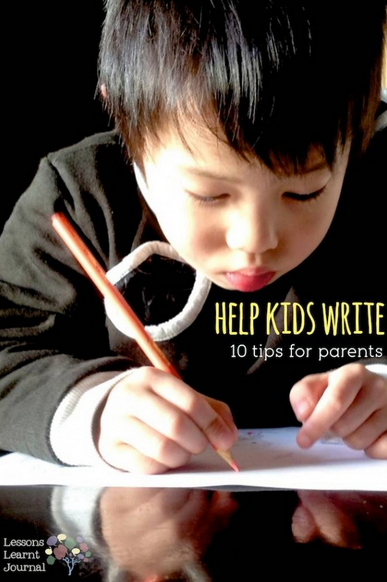
    Read how Pauline helps her children to be better writers: Literacy – Helping Kids Write

    I’m notorious for keeping numerous notebooks. I’m even more notorious for keeping little keepsakes loosely tucked into the pages of those notebooks. Lately, those little keepsakes comprise anything with N&M’s emergent literacy; their writing in particular. That first letter to a friend enclosed in an envelope, that first church attendance card filled in by M with his name and that drawing with N’s name written at the top left hand corner of the page.

    Whenever people write, they have something to say. This is no different with children who are learning to write.

    Being able to write enables children to express their thoughts and experiences. Learning to write is a huge task. As with all other aspects of literacy, when kids write, they have to think about many things, simultaneously. Writing, like other aspects of literacy, is not easy and can be understandably frustrating and discouraging. Children need plenty of feedback and encouragement.

    Here are a few ways parents can help kids write:

    1. Focus on the good things rather than the mistakes. Mistakes are part of the process of learning, but by focusing on the good things, children are more likely to remain confident and be prepared to take risks and enjoy writing while they develop their writing skills.

    2. Let kids see you writing all sorts of things. E.g. shopping lists, cards, letters, emails, filling out forms, etc.

    CONTINUE READING
  • Visual sequencing

    Visual sequencing

    Visual sequencing, perception, dyslexia, worksheets, parents, children

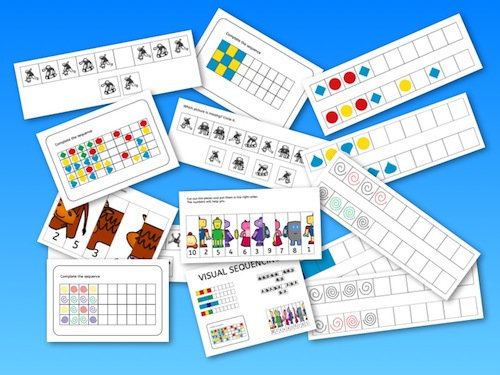
    Visual sequencing is the ability to organize visual impressions in a certain order. This is an important prerequisite for good writing, reading and arithmetic. Children who have difficulties with visual sequencing often exchange letters while writing or have difficulties with writing down numbers. Today we are offering a freebie containing various exercises to train visual sequencing.

    DOWNLOAD

    Check out our other freebies

  • Early signs of dyslexia

    Early signs of dyslexia

    Early signs of dyslexia, dyslexia, story, parents, children, teacher

    While browsing the web we came across this story:

    A DYSLEXIA STORY – Early signs of dyslexia

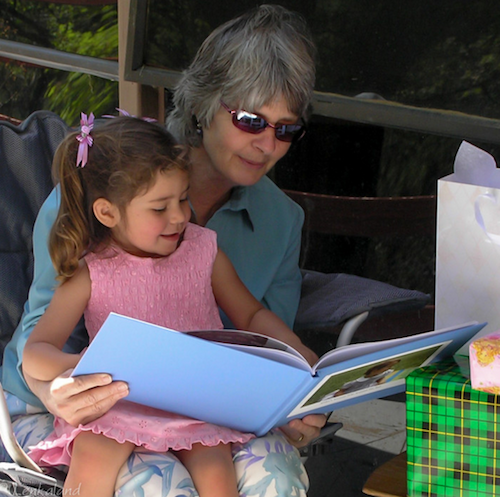
    I looked forward to reading with my daughter. We would cuddle together with a stack of books and she would say, “again, again” and we would lose ourselves in favorite stories.

    I was shocked when that never happened. What is it about reading to children, I thought, that’s so complicated? Reading together is overrated.

    Because, with her, she had only passing interest in books. When we did sit together, she pulled the book out of my hands to flip through pages at random. Beginning, end, middle. Whatever. Done.

    We were most successful with books filled with random words and images like cat, dog, horse, cow. Why did so many books have stories?

    CONTINUE READING

  • Letters recognition

    Letters recognition

    Letters recognition, dyslexia, reading, parents, children, worksheets

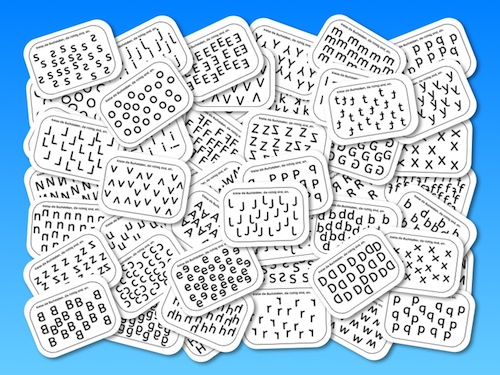
    Today’s freebie offers you lots and lots of worksheets to practice letters. Print out the worksheets and if you feel like it, cut out the cards and laminate them. Children can practice all upper case and lower case letters. They have to recognize which letters are correct. Sometimes the letters are mirrored or standing upside down. These exercises will help your child to better recognize single letters which helps to become a better reader.

    DOWNLOAD

    CHECK OUT OUR OTHER FREEBIES 


  • Spirals – Tracing and Recognizing

    Spirals – Tracing and Recognizing

    spirals, tracing, dyslexia, dyscalculia, parents, children, fine motory skills, worksheet

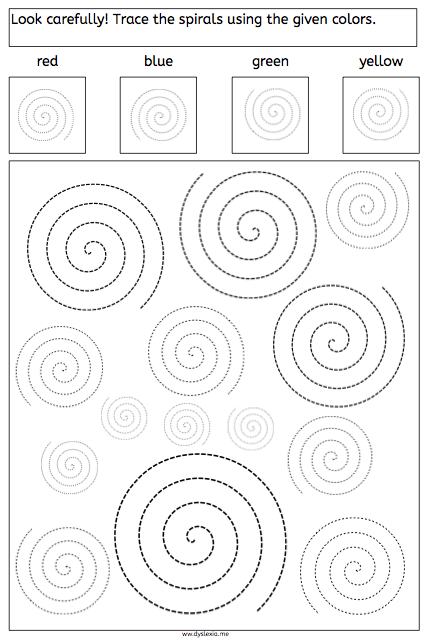
    It’s been a while but today we offer a new freebie: Spirals – Tracing and recognizing. The first two pages are for warming up: Trace the spirals, use different colors, draw your own spirals. On the 3rd page you have to recognize the different spirals and trace them in the given color. These exercises train attention, hand-eye-coordination, visual and spatial perception. While the children are tracing the spirals, you can also check how they are holding the pen. For younger children: Let them trace the spirals with their fingers first, so they get a feeling for the form.

    DOWNLOAD

    CHECK OUT OUR OTHER FREEBIES