Author: Steph

  • TextProject – Free reading texts for teachers, students, tutors, and parents
    TextProject – Free reading texts for teachers, students, tutors, and parents

    TextProject is a website offering high-quality student texts and teacher guides, all of which are available for free download. Text for students, vocabulary lessons and lists, professional development modules and videos – TextProject provides a world of open-access resources for teachers, teacher educators, parents, tutors, and students.

    Some examples of the resources you’ll find:

    BeginningReads™

    TextProject’s BeginningReads program supports teachers, parents, and tutors in helping children develop their reading skills. The goal of BeginningReads is to connect students’ oral language knowledge with written language. Ten levels (of 12 books each) are available. More information: click here.

    FYI for kids

    A collection of engaging and high-quality magazine articles designed to enhance the Common Core classroom’s reading repertoire. More information: click here.

    SummerReads™

    Students who don’t read much over the summer show a decline in reading performance from the end of one grade to the start of the next. Research shows that even reading 4 or 5 books over the summer helps to prevent the summer slump. SummerReads are accessible, engaging texts for at-risk readers… for FREE! And there are enough texts for an entire summer of reading. More information: click here.

    But there is even more!  Check it out here: Textproject.org

  • Dinosaur perception training

    Dinosaur perception training

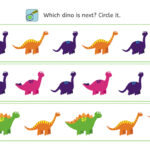
    Kids + dinosaurs = fun! Enjoy our new free no-prep printables with dinosaurs. Kids will have fun and train their visual and spatial perception, patterning, and counting up to 5.

    Dinosaur, perception training, children, freebie, no prep printable, parents, school, teacher, dyslexia, dyscalculia, AFS-method

    Visual and spatial perception:

    Dinosaur, perception training, children, freebie, no prep printable, parents, school, teacher, dyslexia, dyscalculia, AFS-method

    Patterning:

    Dinosaur, perception training, children, freebie, no prep printable, parents, school, teacher, dyslexia, dyscalculia, AFS-method

    Counting till 5:

    Dinosaur, perception training, children, freebie, no prep printable, parents, school, teacher, dyslexia, dyscalculia, AFS-method

    Download: Dinosaur perception training

    You want even more dinosaurs? Check out this free online game: Dinosaur – Find the pairs! You can choose different levels. The game can be played in any browser on any computer, smartphone or tablet.

  • What is dyslexia?

    What is dyslexia?

    Dyslexia affects up to 1 in 5 people, but the experience of dyslexia isn’t always the same. This difficulty in processing language exists along a spectrum — one that doesn’t necessarily fit with labels like “normal” and “defective.” Kelli Sandman-Hurley urges us to think again about dyslexic brain function and to celebrate the neurodiversity of the human brain.

    Dr. Sally Shaywitz recently wrote, “In the case of dyslexia, (while there is always the desire for more), there is currently sufficient knowledge to do a far better job in identifying, intervening in and accommodating dyslexia. There is an unacceptable and harmful wide gap between the robust existing science of dyslexia and how this knowledge is implemented, typically not implemented, by schools. In dyslexia, there is not a knowledge gap but rather an action gap. As a consequence, dyslexic children frequently go unidentified, unremediated, and unaccommodated, with great harm to the children, to their families, and to society. Educators must act to translate this body of converging science into policy and practice. Our children’s lives and futures (human capital) are too precious to waste.” We could not agree more!

    Watch this compelling video and then visit “What is dyslexia?” on Ed.ted for more information, discussions, and links.

  • ReadWorks: Free resources for reading comprehension

    ReadWorks: Free resources for reading comprehension

    Can children learn reading comprehension? Of course, they can. Thanks to ReadWorks, this is not even expensive. In fact, it is completely free. This non-profit site offers research-proven tools so that students can improve their academic achievement.

    ReadWorks provides research-based units, lessons, and authentic, leveled non-fiction and literary passages online, for free, to be shared broadly. The curriculum is aligned to the Common Core State Standards and the standards of all 50 states. Most importantly, ReadWorks is faithful to the most effective research-proven instructional practices in reading comprehension.

    ReadWorks, reading, reading comprehension, dyslexia, parents, children

    ReadWorks is completely free. You only need to register to access all the resources.

    More information: ReadWorks.org

    Take a tour of the site: Click here

  • Storyline Online

    Storyline Online

    Reading to children has been repeatedly shown to improve their reading, writing, and communication skills, logical thinking, concentration, and general academic aptitude… as well as inspire a love of reading. The Screen Actors Guild Foundation records well-known actors reading children’s books and makes graphically dynamic videos so that children around the world can be read to with just the click of a Storyline Online video book image. The videos are free, and there is no need to register. Enjoy!

    STORYLINE ONLINE

  • 1500 free worksheets

    1500 free worksheets

    The American Dyslexia Association offers more than 1500 free worksheets on its website. The worksheets follow the AFS-method , a very successful method to help children with dyslexia and dyscalculia. If a child has dyslexia or dyscalculia, it is not enough to work on the mistakes. The child also has to learn to be attentive all the time when reading, writing, and calculating. Furthermore, it is important to train the child’s perception to improve reading, writing, and calculating skills.

    Dyslexia, worksheets, free, parents, children, homeschooling, reading, writing, AFS-method


    Access the worksheets

  • Dyslexia – Information in 18 languages

    Dyslexia – Information in 18 languages

    Dyslexia, Information in 18 languages, parents, children, information

    The American Dyslexia Association promotes the interests of people with dyslexia and dyscalculia. It is important to inform people about these themes. Dr. Astrid Kopp-Duller, president of ADA, always stresses how important it is to help children with dyslexia and dyscalculia on a pedagogical-didactic level. Because it needs to be said time and again: THESE CHILDREN ARE NOT ILL OR DISABLED, they simply need another method to learn how to read, write and calculate.

    To reach as many people as possible, some basic information about dyslexia and dyscalculia is now available in 18 languages:

    Do you know an adult, a child, a family who may be interested? Please, hand them this information. The more people are informed and the earlier children are helped, the better!

  • New freebie: I spy … superheroes!

    New freebie: I spy … superheroes!

    New freebie: I spy ... superheroes, I spy, dyslexia, dyscalculia, AFS-method, perception, visual perception, spatial perception, worksheet, parents, children, homeschooling, freebie

    Here is another “I spy…” freebie. Children simply love them. This time it is about “I spy … superheroes”. Print them out, color, count and simply enjoy all the fun. At the same time, children train attention, visual perception and fine motor skills.

    Grab this freebie here: I spy … superheroes

    More freebies

  • New freebie: I spy … spring

    New freebie: I spy … spring

    I spy ... spring, freebie, dyslexia, worksheet, parents, children, download, homeschooling, free, ADA, American Dyslexia Association

    Spring is in the air, so we thought it was about time for a new freebie. Give your children some coloring pencils and let them color and search. Then they count how many they found of each object. Use this opportunity to talk about “more than…”, “less than…”, etc. This exercise trains attention, visual and spatial perception and fine motor skills – important skills for reading, writing and arithmetics.

    Grab this freebie here: I spy … spring! (ca. 3,9 MB)

    More freebies