According to the International Federation of Dyslexia and Dyscalculia Associations, 1 in 5 people are affected by dyslexia. This is a learning difference that affects an individual’s ability to read and spell words.
Dyslexia affects more males than females
You may have heard that dyslexia affects more males than females. This is true.
You do not grow out of dyslexia
Dyslexia is a lifelong language-based learning difference that affects the brain’s ability to process written language.
It is the most common learning difference
Dyslexia is a learning difference that affects the way you think, read, and write. It is the most common learning difference, affecting one in five people.
80% of those in Special Education are dyslexics
People who are dyslexic often have difficulty processing what they see on the page or hear in their head into words they can understand and say out loud.
Some of the most brilliant people had dyslexia
Albert Einstein, Pablo Picasso, Winston Churchill, and Thomas Edison were all dyslexic. They had trouble reading and sometimes writing.
New IFDDA members
The International Federation of Dyslexia and Dyscalculia Associations keeps growing. Read about its newest members:
Erik Arnesen, a music teacher at a New York City public school (PS 18) in Park Terrace, Manhattan, remembered hearing how some children had difficulty decoding printed letters that looked alike when reversed. At the time, he only had a vague idea that dyslexia meant seeing letters and numbers jumbled, out of order, or turned around. He decided to write a song about the subject, and subsequently created a video with the children singing and acting it out. His YouTube channel is called Mr. Arnesen School Songs and features the children starring in several musically inspired educational videos. Mr. Arnesen’s YouTube channel also has songs about opposites, manners, science, music, and more. It can be found here: https://www.youtube.com/user/fearless5009
Albert Einstein, Nikola Tesla, Michael Faraday, Stephen Hawking, Steve Jobs, Robin Williams, Henry Ford, Da Vinci, Newton, Walt Disney, Thomas Edison, Picasso, John Lennon, Winston Churchill, Alexander Bell, Thomas Jefferson, John F. Kennedy, Woodrow Wilson, George Washington, the Wright Brothers, Mohammed Ali, and many more.
Now for the famous dyslexic people who are alive:
Richard Branson, Cher, Whoopi Goldberg, Tom Cruise, Andy Warhol, Anthony Hopkins, Ozzie Osborne, Steven Spielberg, Sylvester Stallone, and many more.
What do they all have in common? They struggled at school. Yes, they did not get A’s or 10 out of 10, and yet they became geniuses in their field. So, why?
The reason why dyslexia is a gift is that we use the right side of our brains. Sally Shaywitz of Yale University put dyslexic and non-dyslexic people in a study using an fMRI tunnel and proved this.
About 10% of the world’s population suffers from the gift of dyslexia and has this right-brain gift that is fit for creativity. In a study, the Cass Base Business School in the UK showed that dyslexic people are five times more likely to be innovators compared to non-dyslexic people, and this is why: We can see things that others cannot.
So, the key is to know you have a gift and not worry about not doing so well at school, but rather concentrate on doing things you excel at and love. Non-dyslexic people, who make up about 90% of society, suffer from the gift of using the left brain, which is great for sequential things.
So, great for the educational system and getting A’s and 10 out of 10. This is a massive gift in its own right.
Yin and Yang. The ancient Chinese knew that for every positive, there must be a negative. In science, for every negative, there must be a positive.
So, if you believe in Yin and Yang, know that because you are struggling at school means that you have a huge gift on the other side. It turns out that, as discussed before, it is because we, as dyslexic people, use the right side of the brain.
For the full video that explains above in more detail:
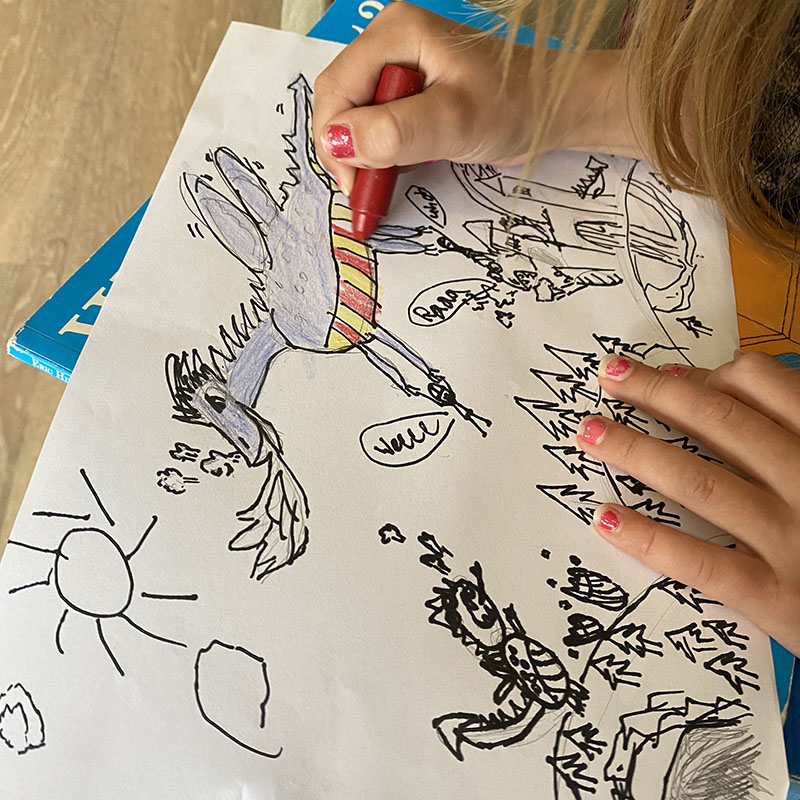
Does your child love to doodle and draw? Do they learn best through pictures? Here’s a surprising way to nurture their creative skills and build their confidence – it’s called cartooning!
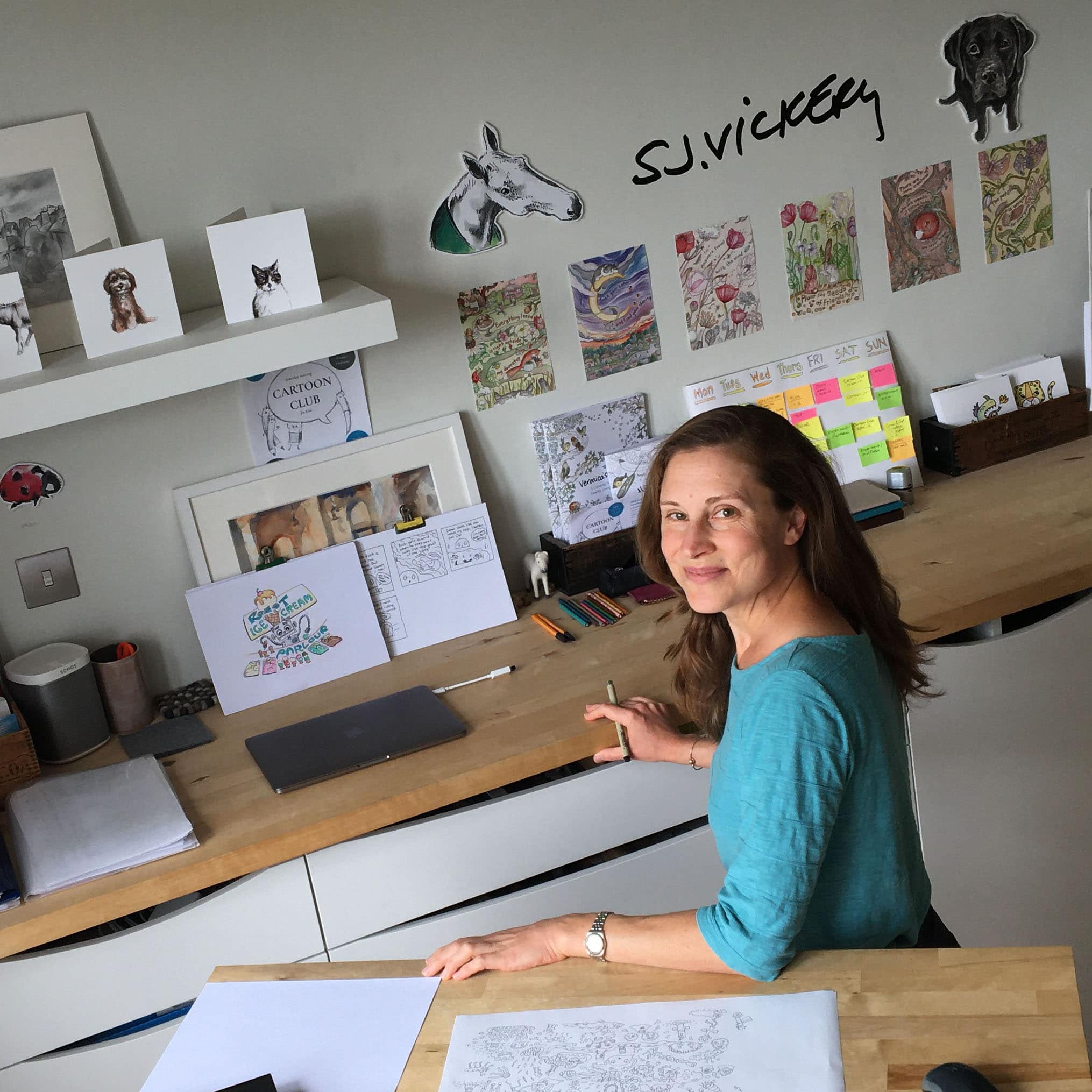
Meet artist, Sarah Jane Vickery. She’s taken the skills she learned during her own struggles with dyslexia, to develop Cartoon Club – a program that helps kids build confidence through the ageless art of cartooning.
Cartoon Club started out as an after-school activity in local schools but quickly grew in popularity with the children to become a program of weekly online art classes as well as a Cartoon Club Game and Online Course.
Sarah believes that a creative mindset is not just about thinking outside of the box and inventing new things, it’s also key to expressing thoughts, processing ideas and telling your own story. These are the tools that children develop by cartooning. By fostering the skills of creative thinking, children build confidence to adapt and change, not just when they are drawing, but in everyday life too.
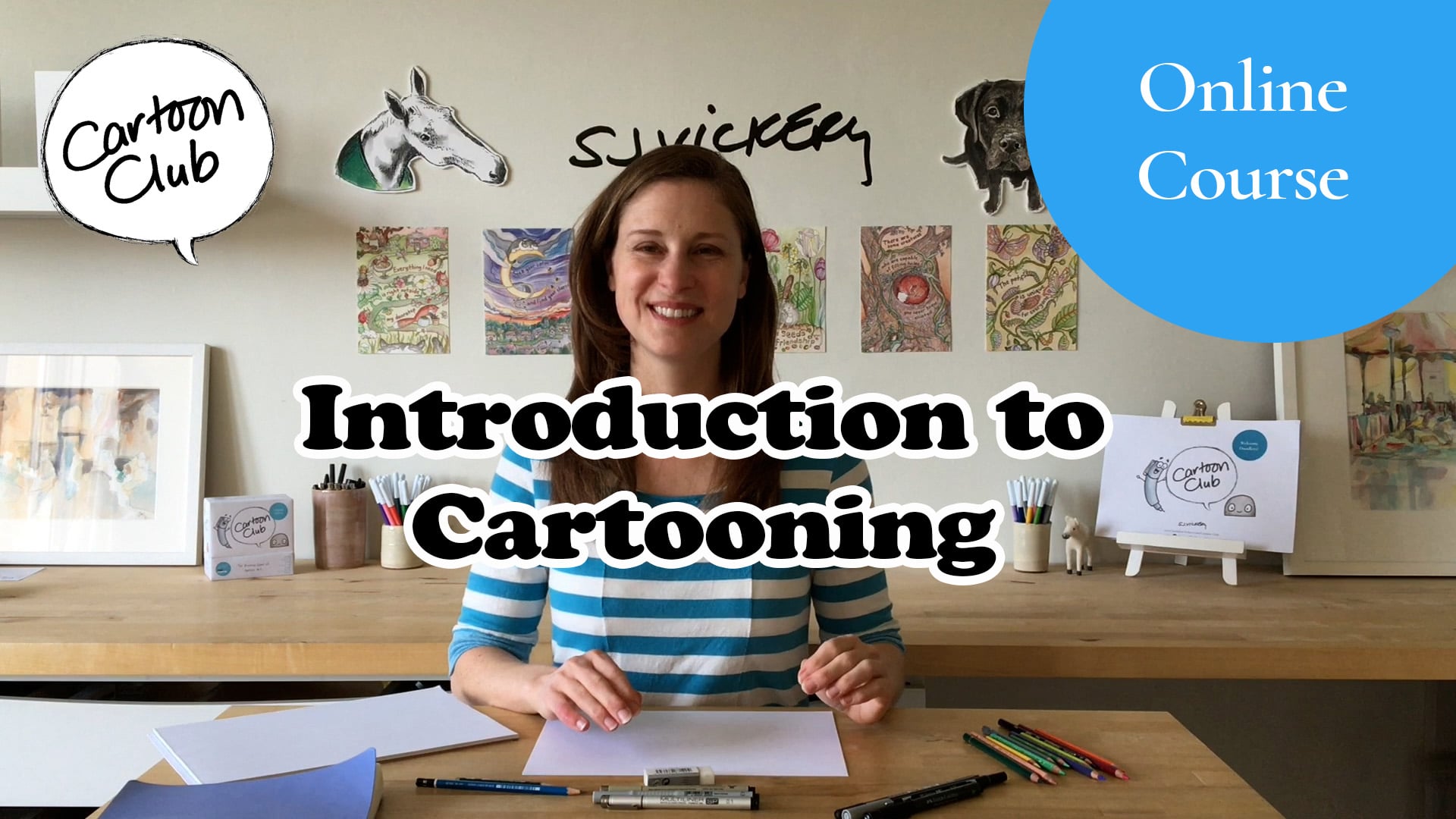
In order to reach more children, Sarah has developed the Introduction to Cartooning Online Course. Based on her Cartoon Club class, it’s more than just a step-by-step instruction on how to draw. Sarah explains how she approaches each drawing, how she plays with ideas to design interesting characters, and the types of questions she asks herself when she get stuck or her picture isn’t working out how she wants. Her goal is to give children the skills to be creative with their drawings and have the confidence to solve challenges when they’re working on their own.
Cartooning has the connotation of being light-hearted or even silly, but it’s that very freedom to think outside of the box that Sarah says enables students to free their imagination and come up with new ideas they never thought possible. It’s a real confidence boost for dyslexic children who are often very strong visual learners.
The Online Course has lots of creative challenges for children. In one exercise, Sarah shows children how to brainstorm to develop their ideas from a simple starting topic into a complete cartoon scene. That’s another great thing about cartooning – you don’t have to take so seriously that it stifles in your creativity. In fact, it is quite the opposite. Parents say that they are amazed at how imaginative their children are and what they are able to produce from the topics Sarah presents in Cartoon Club.
Sarah says that “as someone with dyslexia myself, I have always struggled to communicate in words. Drawing and cartooning have always made it so much easier. I find it’s this combination of brainstorming, juxtaposing different ideas and translating that into a cartoon narrative picture, that enables me to develop and communicate my ideas so much more effectively.”
If you’d like to learn more, Sarah has given us a little taste of what you’ll learn in the Online Course. If you’re wondering if it’s right for you, you can grab your pencil and have a go at drawing along with her in the FREE Course Taster. This sample exercise is one on Capturing Expression. It’s about 20 minutes long and all you need is a pencil and paper. It’s a lot of fun and you’re going to be surprised at what your children can produce. You can have a go too!
Online Course Description
This is an online cartooning course for anyone who loves to doodle and get creative. If you want to not only improve your drawing skills but also create your own cool characters and draw fantastic cartoon scenes, this is the course for you!
Who’s the Course for?
The course is aimed at both beginners, who have not done a lot of cartooning before, as well as keen doodlers who want to develop their own style. This online cartooning course is based on my Cartoon Club for Kids (ages 8-12) and Discover Your Inner Cartoonist (adult) online art classes. So no matter your age, if you enjoy putting pen to paper, I think you’ll be surprised at just how creative you can be!
What will you learn?
The fun way to be drawing simple cartoons in no time
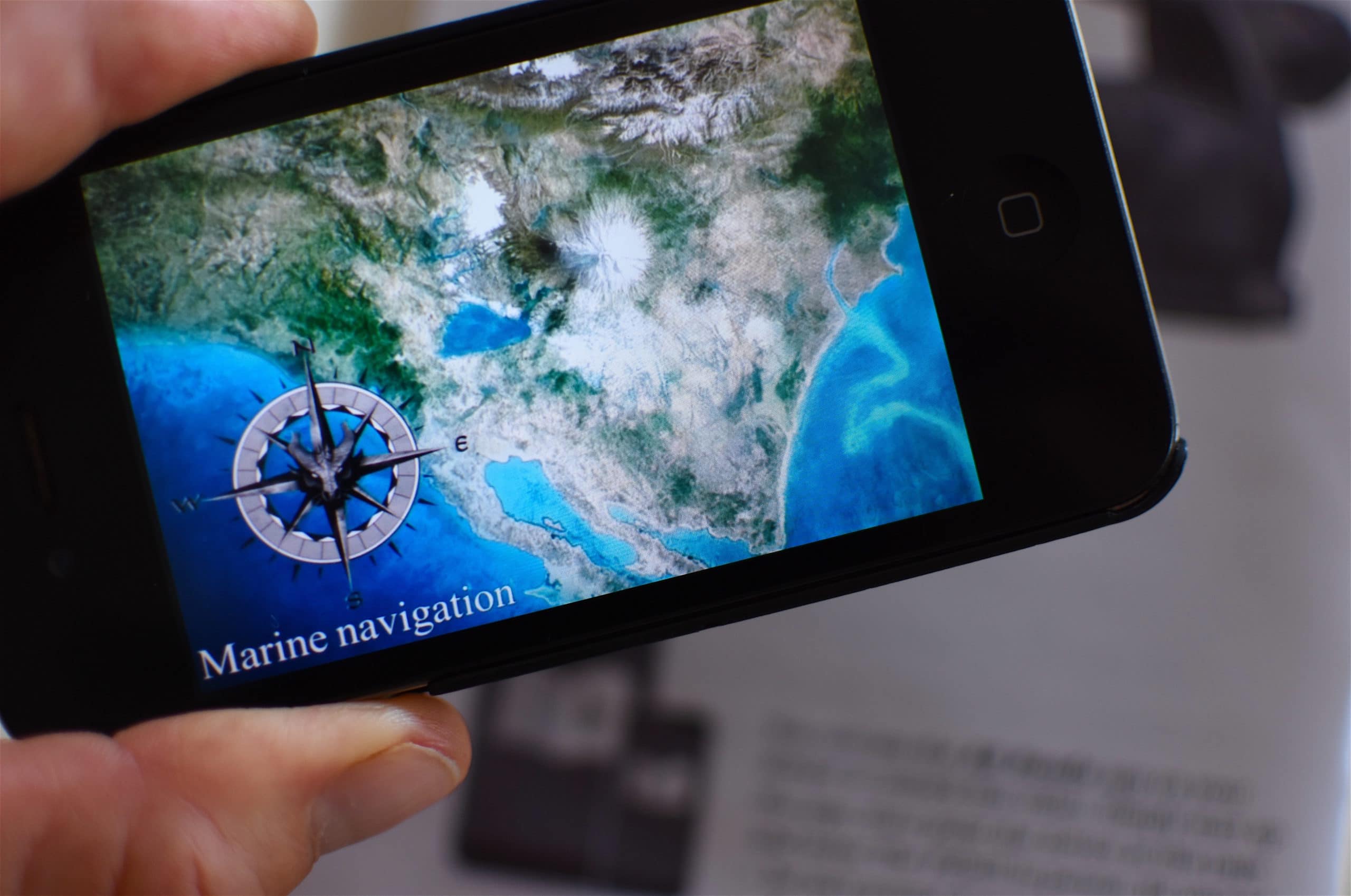
The Dragon Defenders series of five middle-grade novels underwent its worldwide release on Amazon in February this year, with an overhaul of its text to make it dyslexia-friendly. In New Zealand, where author James Russell resides, the Dragon Defenders series is something of a phenomenon, outselling many of the major children’s book franchises. Over 50,000 copies have been sold in a country where just 5000 books constitute best-sellers. The books are unique in that they include digital content with the use of an app. Readers download the free app AR Reads (AR stands for ‘augmented reality’) from the App Store or Google Play onto any device.
In each of the Dragon Defenders novels, there are four or five pages where readers can use the app – marked with a symbol of a tablet or a phone at the bottom. Readers point their device at that page, and the digital content is unlocked. It may be that a code is cracked before the reader’s eyes, or a video plays a message from the bad guy. It can be a 2D or 3D animation, a news story, or a simple audio file where the user overhears a telephone conversation.
“No one had seen anything like it before,” says Russell. “It was intended as a bit of fun, but then something amazing happened. I started to receive a huge amount of emails from parents saying it was incredibly effective with their reluctant readers; the augmented reality was drawing them through the book.” Many of those emails came from parents whose children were dyslexic, and they were overjoyed to see their children voluntarily reading for pleasure.
View of the AR app in use
“I knew nothing about dyslexia,” says Russell. “Then, our son was diagnosed, and suddenly a whole world was revealed. A chance meeting with a dyslexia advocate in a library in Christchurch led to my learning about the types of fonts, spacing, kerning, and justification that make reading more accessible for dyslexic children and adults. My first thought was: why isn’t this universal, used everywhere, widely known? It’s the very definition of a no-brainer.” Russell sought advice from specialists and made the changes to his Dragon Defenders series so that when they were released onto the global platform, they were immediately accessible to those readers.
They’re also available on Kindle, and Russell was delighted to find that the app works just as well on e-reader screens.
Temple Grandin was nonverbal until the age of four. Today, she is a professor of animal science at Colorado State University, and one of the leading authorities on livestock facility design, as well as an autism awareness advocate.
Temple Grandin shares 4 tips on how to deal with sensory overload.
1. Allow protective gear like headphones part of the time
2. Help de-sensitize through experiences where the person is allowed to control exposure
3. Slow down when you talk
4. Check out the clinical study: “Environmental Enrichment as an Effective Treatment of Autism”
http://DyslexicAdvantage.org “Don’t listen to what anyone tells you what you can or cannot do…there is no dyslexia ceiling. Doesn’t exist unless you create it in your own mind.” – MIT Professor of Chemistry and Biology Catherine Drennan, PhD. Dr Drennan also shares how she is able to read molecular spatial configurations like how she learned to read. The Conference was made possible by a generous grant from the Emily Hall Tremaine Foundation
Reading is the key to success. Anyone who reads well and who understands what has been read automatically learns the rules of correct spelling.
Precise, accurate reading is a prerequisite for writing and learning. The specific design for children of the Easy Reading Card makes reading easy and fun.
Scientific studies have shown that a majority of individuals that exhibit reading problems are affected by subjective visual perception. When reading, the visual channels have to work precisely timed together so that there is no overlap of visual information.
Science has proven the positive effects of the influences of colors while reading. Especially the color blue leads to a phasic activity of the channels, which leads to an increase in reading achievement, reading comprehension and reading speed. The color thus supports the sub-processes of the visual sensors.
Teachers from around the world are already using the Easy Reading Card when working with children.
On behalf of 3 Paws Up, It is my honor to share our story with the readers of the American Dyslexia Association:
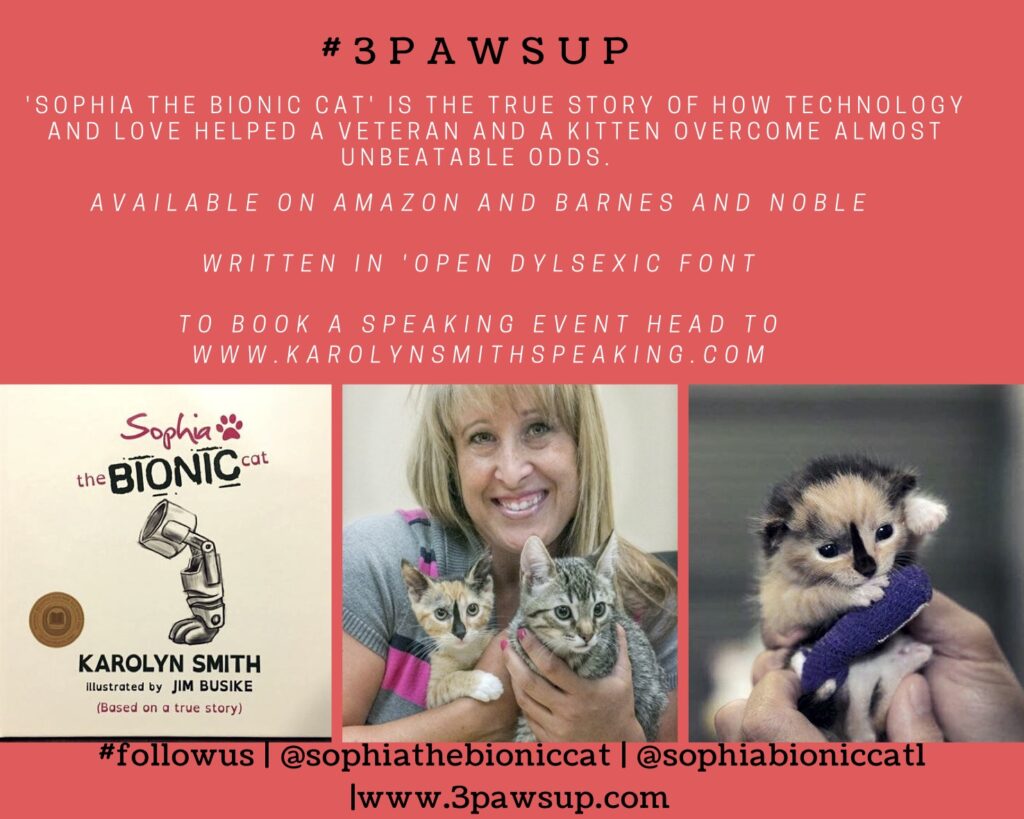
My name is Karolyn Smith, I am the 2014 Veterans of the Year for the 71st District of California, Author of ‘Sophia the Bionic Cat’, Public Speaker and 3D inventor.
I was born and raised in San Diego and am the daughter of a Vietnam Veteran and the granddaughter of two WWII Veterans. For the longest time as a youth, I found my calling as a velodrome cyclist and went to my first Olympic Trials at 19, but failed to make the team. A year later, I would be invited to move down to Australia, where I would be the only woman racing on behalf of the USA. That year abroad at such a young age gave me a lifetime of experience that would help me out later in life.
Shortly after the horrific events unfolded on September 11, 2001, I would hang up my bicycle and, at the tender age of 29, enlist in the United States Army as a Military Police Officer. As I found myself the oldest enlistee in basic training, I also found myself the most advanced, which allowed me to experience leadership responsibilities and advanced training that my peers didn’t experience. I would graduate top of my class and 18 weeks later be stationed in Hauau, Germany with the most historic Military Police unit in the Army, the 18th MP Brigade. Six months later, I would deploy.
In April of 2004, with the 127th Military Police Company (709th MP Bat, 18th MP Brigade), I deployed in Support of Operation Iraqi Freedom, and would break the first of many glass ceilings in my life; I was a crew serve machine gunner. After 13 roadside bombs, mortar attacks, and sniper attacks that took the life of my Team Leader….we suffered, I suffered. When we came home a year later…We had lost two.
I came home with injuries, PTS(d), spinal injuries, and a mild traumatic brain injury that were left untreated by the VA system because they were not used to a woman who had been in combat. After 11 years of suffering, my life was saved by a private non-profit called Operation MEND UCLA, which provided advanced medical care, including a bio-tech spinal fusion, which is creating my own genetic bone back into my spine. Once that searing pain was gone, a little kitten by the name of Sophia waddled, skipped, and hopped into my life…with her best friend in tow.
Sophia was an 8-day-old premature kitten found abandoned in a field here in San Diego. She was found with her umbilical cord wrapped around her paw and with no mother, food, or shelter found around her. Sophia was taken to the San Diego Humane Society, where an amputation was performed of her right rear paw, but because she was born premature and it was evident she never received the vital mother’s milk, the amputation was proving too much, and she was not recovering from the surgery. On that same day, a young male kitten was brought into the shelter as part of a litter. This young male was pulled out of his litter and placed with Sophia because the Nursery Advisory saw something in him that was unique and thought he might be able to help encourage little Sophia; he was then placed in her enclosure, and something magical happened.
Leonidas snuggled up to Sophia and never left her side for nearly a week. He could often be found cleaning her ear of her amputated side, but not her ear of her un-amputated side. Within a week, Sophia began to lift her head…and then she began to eat…then she began to crawl….Soon, they would both be put up for adoption as a bonded pair.
As I was recovering from my surgery, I saw a Facebook post from the San Diego Humane Society, and there were these two faces- two little fluffy, furry faces cuddling each other, and then I read the story and cried. I cried because Sophia’s story was my story; just replace the name, and I was drawn to her. I called the Humane Society and asked about adopting her, and they said I would need to adopt both, and I was hooked- who would break up a sweetheart couple anyway! When I walked into the Humane Society, they knew who I was by that time, as I had already been selected as the 2014 Veteran of the Year for the 71st District of California. They created the byline “Disabled Veteran adopts disabled Kitten,” and in partnership with the Humane Society and Fresh Step cat litter, we would create our first PSA commercial: https://www.youtube.com/watch?v=eY2F1vUju3c
As my twelve-year career in high-threat risk mitigation (in and out of the military) would teach me, I knew that Sophia’s good leg would, at some point, have to fail. While my degrees were not in engineering, they were in Homeland Security and Risk Mitigation. What I did know is that if you use what you do know, and not focus on what you don’t know, you can apply skills and help solve any issues that come your way. I started researching companies that created prosthetics for animals and was amazed that no one had created a prosthetic for cats. So in partnership with Fablab San Diego, I created the first ever 3D printed Prototype prosthetic for cats, and started with little Sophia! The first one in history!
Every time I went to the lab, there would be kids asking about the story, which gave me the idea of writing a children’s book, as I don’t have kids of my own; my injuries prevented that gift for me. So I created “Sophia the Bionic Cat” https://www.amazon.com/dp/1684193451?tag=legasthenie0c-20 which is now also available on Barnes and Noble (online and in stores!). This book is based on the true story of how this journey of mine, Sophia, and Leonidas unfolded in a way that we hope inspires children, but we took one more step. We found a person who created the “open-dyslexic” font, and our book, to this point, is the only true story children’s book that is written in this font. I chose this method of font because when I get tired, I noticed that when I am reading, my brain injury can often act like it’s dyslexic, which can be a result of a traumatic brain injury, and that is what I deal with. I wanted my book to show a range of topics, but in a way that lends power to the topic instead of powerless feelings about the topic. So, while reading the book, if the reader has dyslexia, they will read the book the way I wrote it; if they don’t, they won’t notice anything other than a true story about how technology and love help overcome.
From our book, we created 3 Paws Up, an approved 501(c)3 here in San Diego that will have ‘Ambassadors’ hand deliver our book (and other inspirational true stories that we help other Veterans create) to children in critical care hospitals, nationwide.
I’m writing the second book in Sophia’s series as we have just partnered with the Colorado School of Mines, the number 2 school of engineering in the US as we continue to enhance Sophia’s prototype so other animals around the nation can also have a better life through what we discover. I spend my time now as a public speaker telling my story, and I am honored to be able to stand on stages around the nation and share my life, it’s a way for me to heal and a way to open the minds of those who would never consider using the ‘open-dyslexic’ font in their projects, but now we get to talk not just about me, but about all of you, and I’m honored to be able to help do that. I can’t begin to express my truest thanks to the American Dyslexia Association for accepting our project, ‘Sophia the Bionic Cat’ as worthy of the ADA’s seal of approval. It’s through innovative projects and collaborative partnerships that we can create dialogue that can bring the best solutions.
As an Amazon Associate I earn from qualifying purchases.