Category: Freebies

  • 750 Cloze tests

    750 Cloze tests

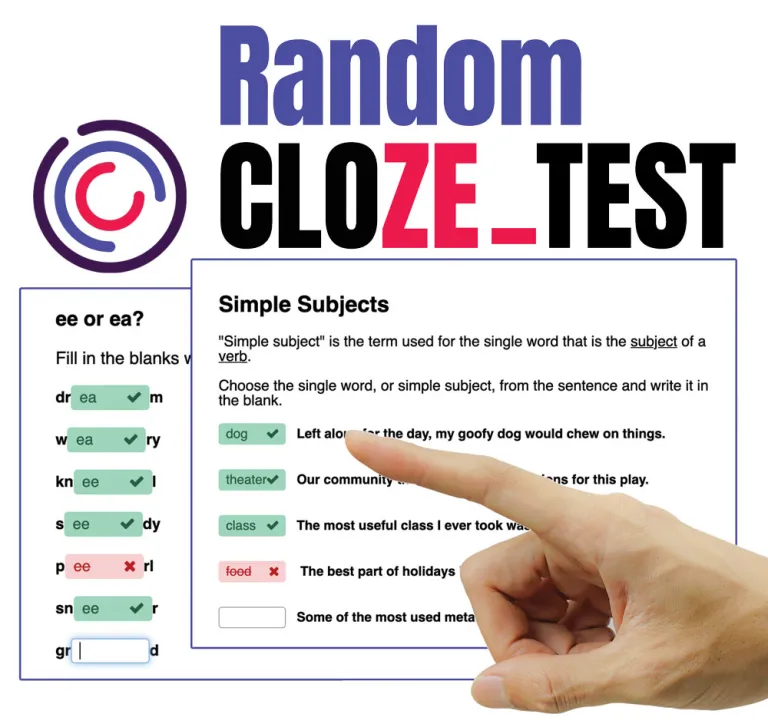
    On Cloze-test.com we currently have 750 Cloze tests to solve.

    As always – there are no ads and no tracking. Please feel free to use them for school or at home.

    What is a cloze test?

    A cloze test is a test in which one is asked to supply words that have been removed from a passage in order to measure one’s ability to comprehend text.

    definition from Oxford

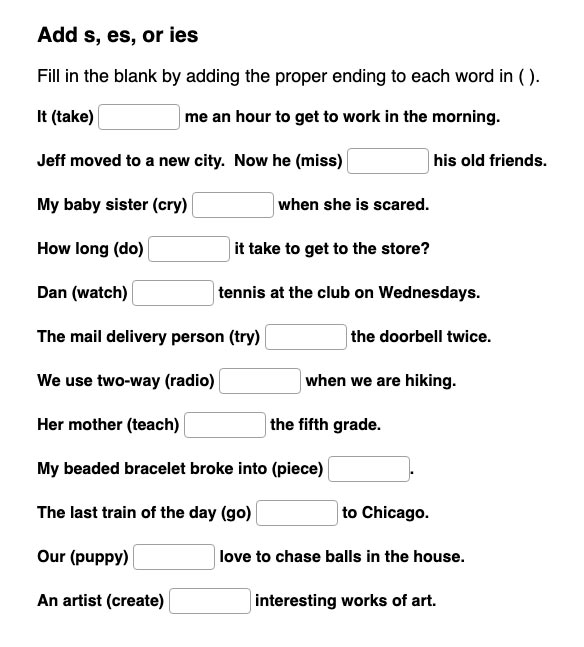
    A cloze test is a way of testing comprehension by removing words or letters from a passage or sentence and then asking the reader/learner to supply the missing elements. For this reason, it is also sometimes referred to as a gap-fill exercise.

    Cöoze test

    With cloze tests you can pursue different learning goals:

    • Cloze tests generally promote and improve reading and text comprehension.
    • With cloze tests you have to read carefully and recognize which word, which ending or which letter is missing.
    • Grammar and spelling are practiced in a fun and playful way with Cloze tests.
    • Cloze-test.com also improves your vocabulary.
    • The software approach chosen here gives immediate feedback.

    The use is free of charge and free of advertising. Registration is not required.

    https://www.cloze-test.com

  • Challenge Your Observation Skills: Spot the 10 Differences!

    Challenge Your Observation Skills: Spot the 10 Differences!

    Written by Office ADA Games/Activities, Dyslexia, Visual Perception Training

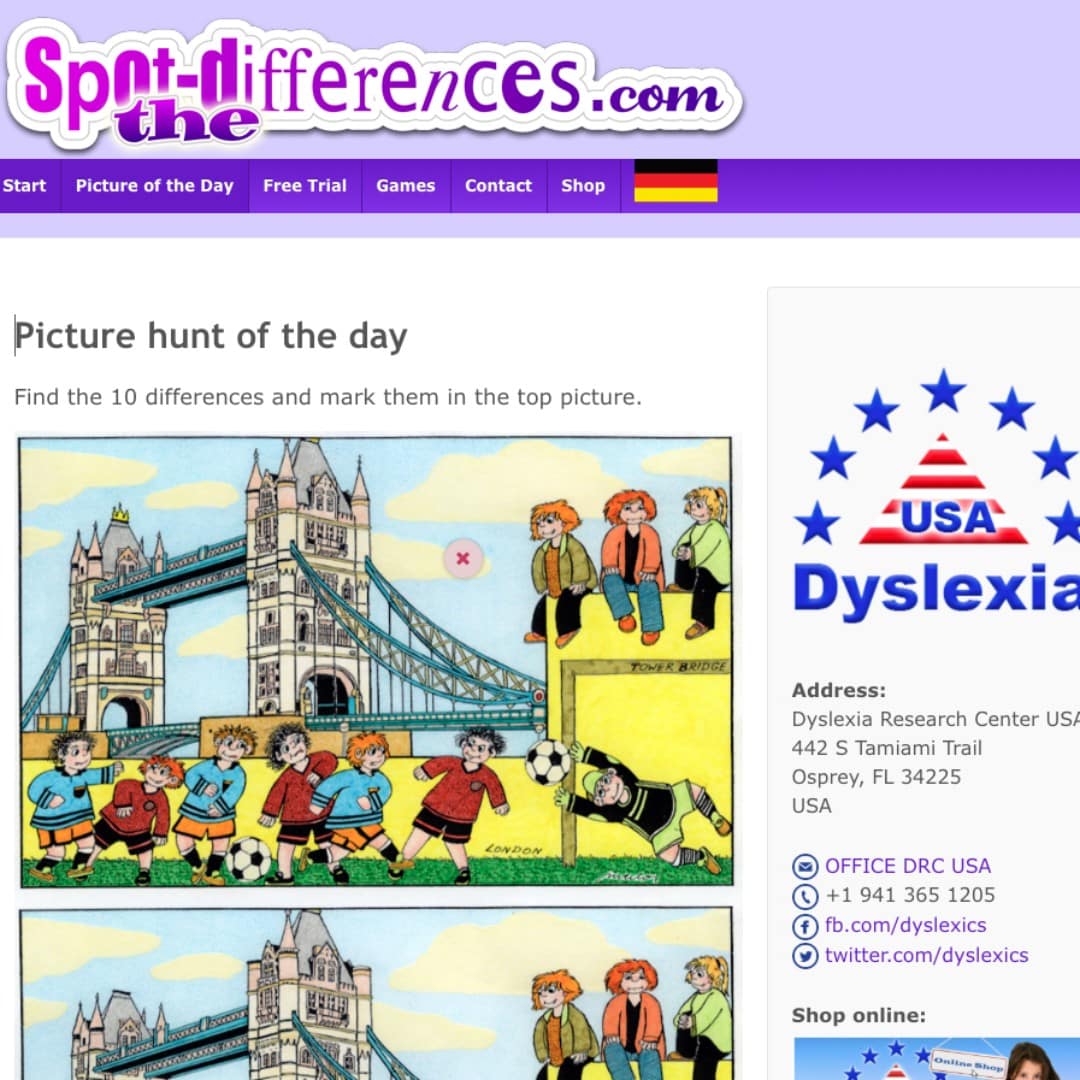
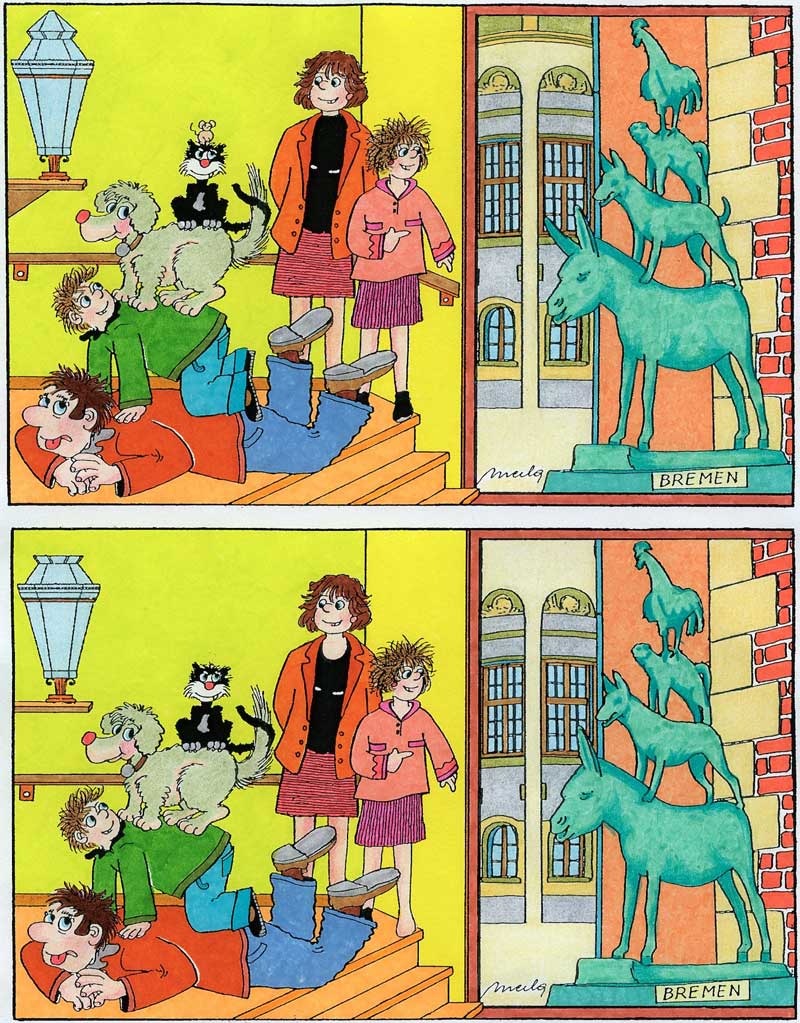
    Are you ready to put your observation skills to the test? Our popular “Spot the Differences” puzzles offer a fun and engaging way to sharpen visual perception—one picture at a time!

    How It Works

    Each puzzle presents you with two seemingly identical illustrations. Your mission: find the 10 differences between them! Simply compare the images and mark what’s missing in the lower picture.

    What makes our puzzles special:

    • A new picture every day – Fresh challenges keep things exciting
    • No timers, no pressure – Work at your own pace and enjoy the process
    • Flexible formats – Solve online in your browser, or download as a PDF for printing
    • Solutions included – Download with or without the answer key

    Why Spot the Differences Is Essential for Dyslexic Children

    For children with dyslexia, “Spot the Differences” isn’t just a game—it’s valuable training for the brain. Here’s why these puzzles are particularly beneficial:

    Strengthens Visual Perception Many dyslexic children experience differences in how they perceive visual information. Regularly practicing with these puzzles helps train the eyes and brain to notice subtle details—a skill that directly transfers to distinguishing between similar letters like b/d, p/q, or m/n.

    Improves Focused Attention According to the AFS-Method, attention is one of the three key areas to address in dyslexia training. Spot the Differences puzzles naturally encourage sustained focus and concentration as children systematically scan and compare images.

    Develops Visual Memory To find differences, children must hold visual information in their working memory while comparing it to what they see. This strengthens the same cognitive processes needed for reading and spelling.

    Builds Confidence Through Success With no time pressure and achievable goals, children experience the satisfaction of completing each puzzle. This positive reinforcement builds self-esteem—something many dyslexic children need after struggling in traditional academic settings.

    Trains Systematic Scanning Children learn to examine images methodically, moving from left to right and top to bottom. This organized visual scanning approach supports better reading habits and reduces the tendency to skip words or lines.

    Fun Without Frustration Unlike traditional worksheets that may trigger anxiety, these colorful puzzles feel like play. When learning feels like fun, children stay engaged longer and retain more.

    Get Started Today!

    Free Trial: Try 10 puzzles completely free to see if your child enjoys them.

    Lifetime Access: For just a one-time fee of $5, unlock ALL 250+ Spot the Differences puzzles—forever! Use them online anytime, or download for offline use and printing.

    👉 Get Lifetime Access Now

    Whether you’re a parent looking for engaging activities, a teacher seeking classroom resources, or a Certified Dyslexia Trainer building your toolkit—these puzzles are a valuable addition to any visual perception training program.

    Questions? Feel free to reach out—we’re happy to help!

    https://www.spot-differences.com/

  • Children’s Confidence Boosted Thanks to Dyslexic Artist’s Reading and Learning Resource

    Children’s Confidence Boosted Thanks to Dyslexic Artist’s Reading and Learning Resource

    by Rossie Stone

    MY NAME IS ROSSIE STONE. WHAT HAPPENED TO ME IN HIGH SCHOOL CHANGED ME FOREVER.

    Rossie Strathclyde TEDX photo.jpg

    All my way through school, I struggled with processing information through words, both spoken and written. Listening to the teacher was really hard, as was following and remembering information from books.

     After being at the bottom of the class throughout primary school, I was eventually identified as dyslexic. Though it was a relief to be assured the problem wasn’t stupidity, the diagnosis didn’t make high school any easier. Or exams.

    Kickstarter (Story) Export 09.png

    Eventually, I had a eureka moment. It struck me that if understanding information through text was so hard, I could try turning my revision notes into something I had never found difficult to read: COMICS.

     To my surprise, it was not only highly enjoyable (in a way, I expected that) but highly effective too. Suddenly, the information was getting into my head and staying there, the way I assumed it was for people who take in knowledge more conventionally.

     When it came to my exam, I did my best to remember the notes from my Revision Comic. I was delighted to find how easy that was. I remembered all the pictures and parts of the story in the comic that contained the facts I needed. Even so, I wasn’t expecting to come back with my very first GRADE A in an academic exam!

    It wasn’t the Grade A that filled me with confidence, though, but the realization that I COULD access information – and could have been doing it all along – when it was presented in a way that worked for me.

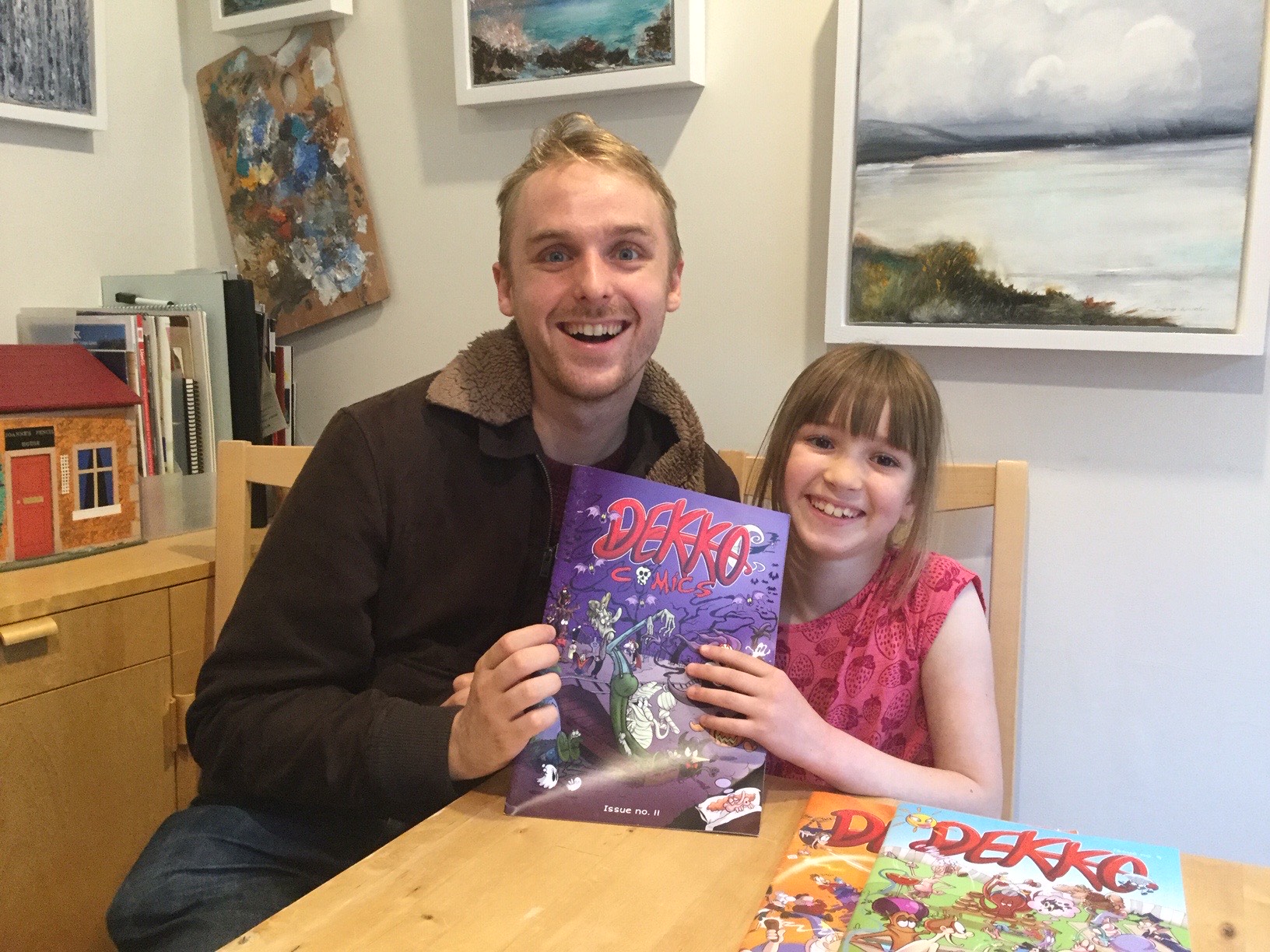
     Since then, I have made my revision technique into a series of comics more accessible to a younger age, the years when I felt I really missed out.

     These comics turn school subjects like maths, literacy, science, and history into pure entertainment in the form of visual stories.

    Continue reading the article, here: https://dekkocomics.com/blog/improving-confidence-through-comics

    The comics can be found on our website, here:
     
  • Ross Linnett’s Journey from Struggling Student to International Business Owner of Recite Me

    Ross Linnett’s Journey from Struggling Student to International Business Owner of Recite Me

    Ross Linnett, Founder and CEO of Recite Me, can still remember his first day of school with surprising clarity.

    He recalls, “I was way ahead of everyone else in regard to reading. I think I was reading from around the age of 2, but from age 4 and 5 I was in a special reading class. You had to be pretty bad at English to get into this class!”

    At that point, growing up in the mid 80s in north east England, Ross and his parents had never heard of dyslexia. Perhaps his teachers didn’t either. Knowledge of dyslexia still had a long way to go, but it quickly became known that Ross needed extra help.

    Ross explains, “It was a less pressured environment, so I didn’t feel like I was getting into trouble. If a teacher really took their time with me, I could excel. It was obvious then that I needed an adjustment.”

    Despite the clear signs that Ross needed extra assistance in the classroom and even dyslexia testing, support from his school was minimal. Ross recalls, “One teacher even told me, ‘Don’t be stupid, you don’t have dyslexia,’ and a dyslexia specialist himself once looked at my school essay and told me I didn’t have dyslexia.”

    During this disorienting time in school, Ross credits his talent in sports for building his confidence in school despite his struggles with reading and writing. “You never really get bullied at school if you’re good at sport, and it also gives you a lot of confidence,” Ross says, “But the thought of reading aloud used to send shivers down my spine. I’d be dreading it all day. It was the equivalent of jumping off a 100ft cliff.”

    It wasn’t until Ross became President of the Students’ Union at Northumbria University that he forced himself to speak publicly and face his dyslexia head-on. As he explains, “I was presenting at the Students’ Union when somebody pointed out that their father specialized in dyslexia and suggested I get tested for it. I got myself tested at university, and they confirmed I had dyslexia.”

    Ross soon learned that he wasn’t alone. As one of the most common learning disabilities in the world, common vision impairments and learning disabilities mean that millions of people around the world struggle with web accessibility, leading them to miss out on the valuable resources of the Internet, including career development, socialization, learning tools, and engaging with businesses.

    The need for portable, cloud-based software that would make online content accessible to a variety of needs, including dyslexia and common vision impairments, became crucial. It was from this experience that Recite Me was born.

    “We were involved with the Disability Discrimination Act as a Student Union at the time, but I was very aware that employers had to make the adjustments. It meant that every organization, under the Disability Discrimination Act in the United Kingdom, had the responsibility to cater to people with dyslexia or visual impairments, in the same way that buildings had to install ramps for people with physical disabilities. Everyone had to do it, but nobody was because the technology wasn’t there, so that’s when I came up with Recite Me.”

    Since its early days, Recite Me’s software has been improving the web experience for millions of customers around the world who live with vision impairments, disabilities, or dyslexia. As businesses continue to move their operations online, and with an aging population, we expect our software to become even more vital in the future.

    Ross adds, “When you get diagnosed later in life, you tend to question things more. It made me realize how negatively dyslexia had shaped my life up until that point.” Despite a difficult time at school, Ross has certainly not let dyslexia hold him back.

    After much success in the UK, Recite Me is now expanding its operations to the US. Part of this expansion plan included opening a new office in nearby Naples, inside the Naples Accelerator. Despite our growth, our original mission remains at the forefront: to support and aid those with dyslexia or impairments around the world.

    http://www.reciteme.com

    Article written by Rachel Holbrook

  • Free app for spelling: FCJ Spelling App

    Free app for spelling: FCJ Spelling App

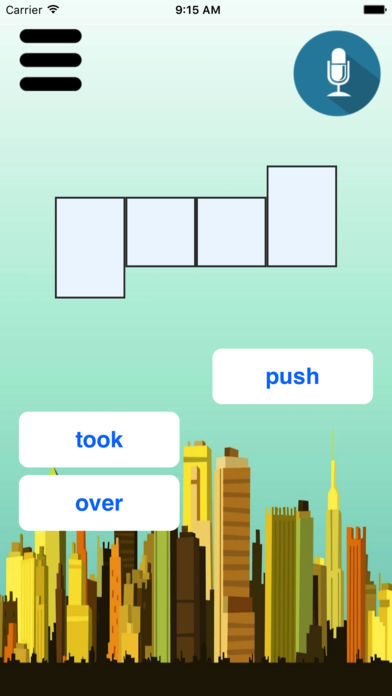
    FCJ Spelling is an app designed to help people improve their spelling with a special emphasis on dyslexia. It contains 10 exercises, customizable words, the option of a color overlay, and a fun word card game.
    The app allows teachers to monitor their students’ results remotely. Once all the students in a class have been added, the teacher can view all their students’ results with the press of a single button. All results are encrypted and private.
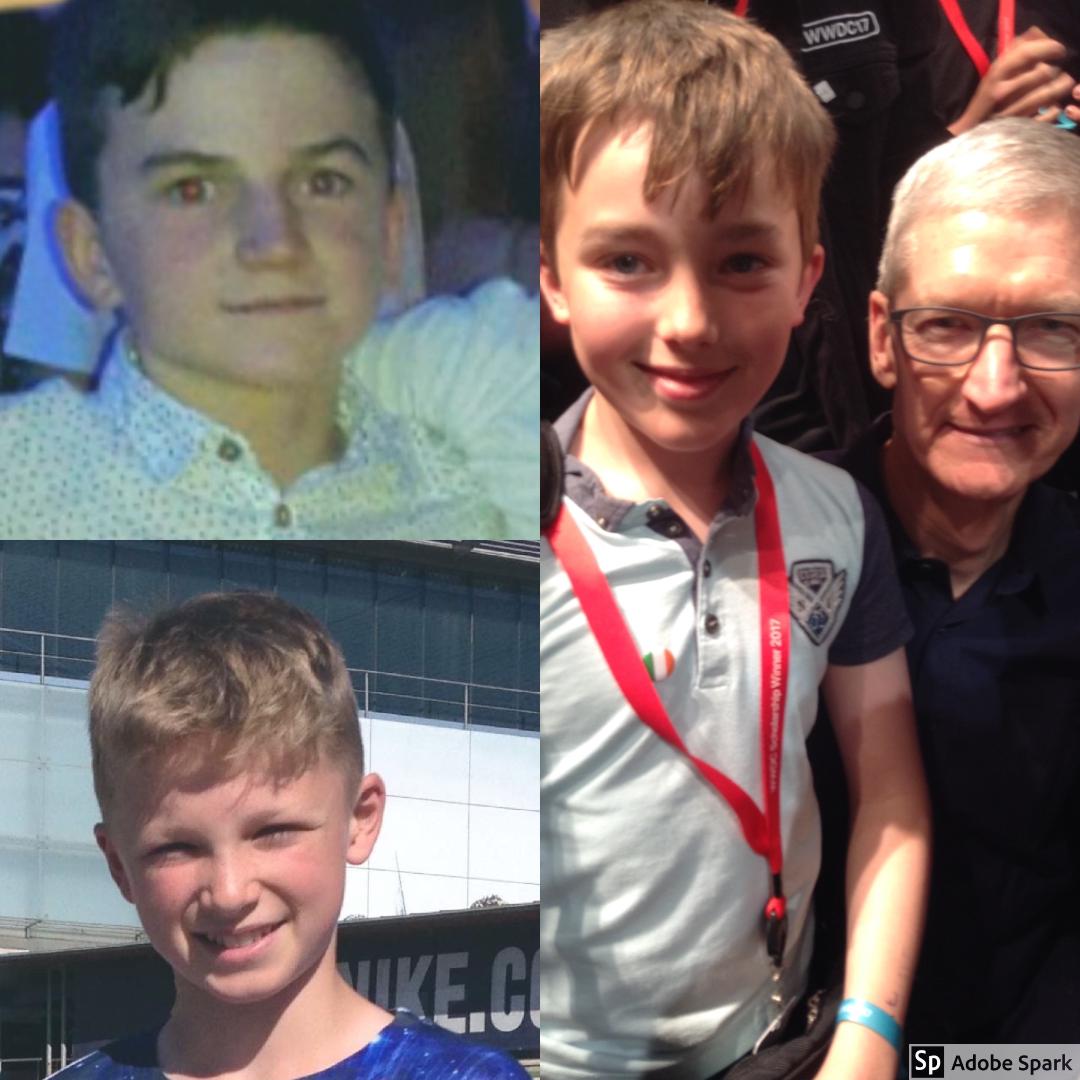
    The app was developed by three 13-year-old Irish students: Billy Lee and Eamon Lalor, and was programmed by Niall Kehoe. The team would welcome any suggestions on how they might improve the app in later editions.
    The app is available on the iOS App Store free of charge at the link below, and the authors hope to release an Android version in the near future.
    Apple iTunes store:
  • Free dyslexia-friendly science eLearning website, totallearn.co.uk

    Free dyslexia-friendly science eLearning website, totallearn.co.uk

    Studying for exams is a chore for everyone, but it can be much more difficult if the text is not accessible to the learner. eLearning has a role to play in helping these students to learn.

    The website totallearn.co.uk is developing a large number of science eLearning modules to help with study. These are made accessible by having a “click to hear” function.

    All text on the totallearn website can be clicked on and will be read aloud to the user.

    The developer, Michael Collard, is a former science teacher who is able to describe difficult concepts in a clear, straightforward manner.

    There is also a science blog on the site that is equally accessible and updated several times a week.

    The developer welcomes comments and requests as the website develops. Write him at: [email protected]

  • Dinosaur perception training

    Dinosaur perception training

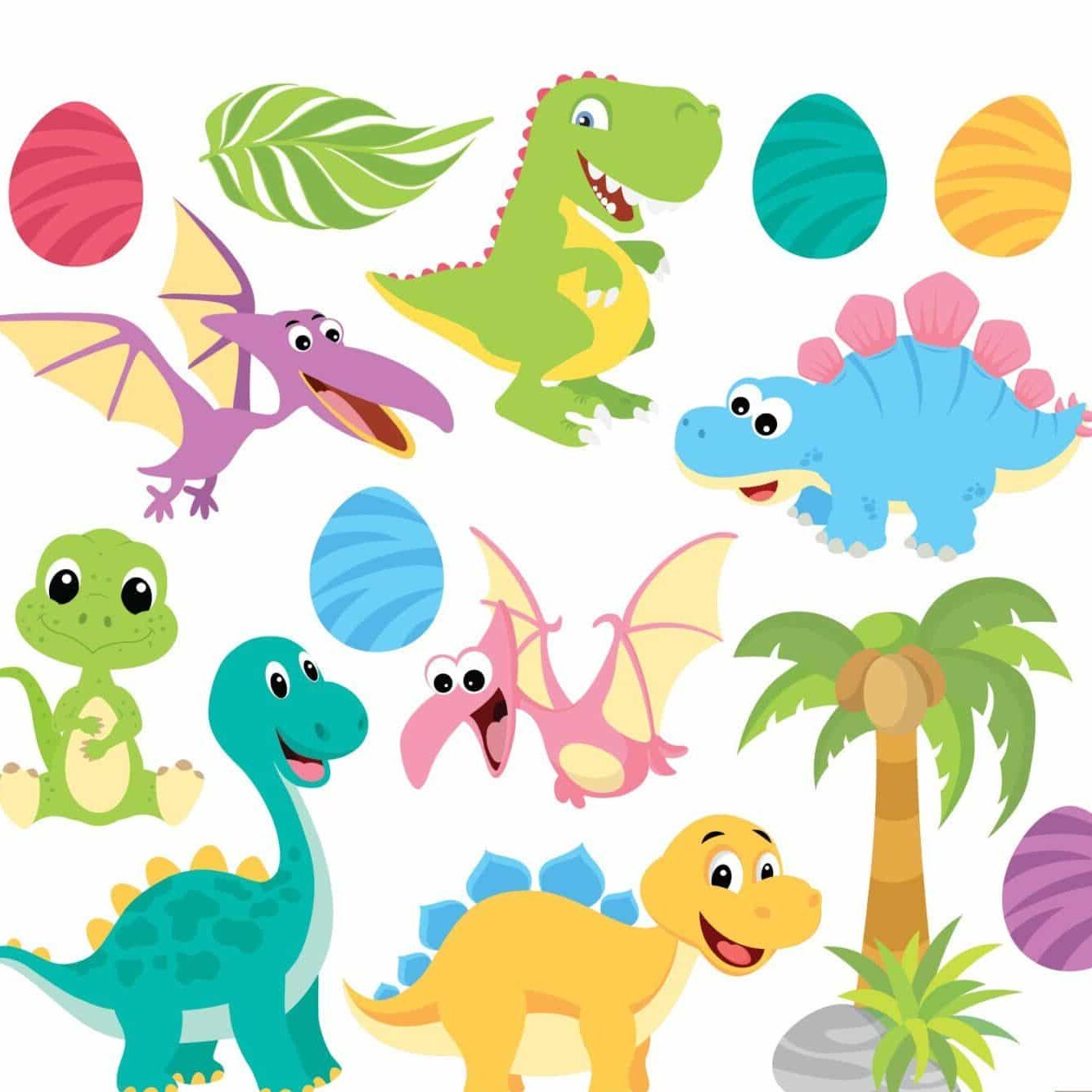
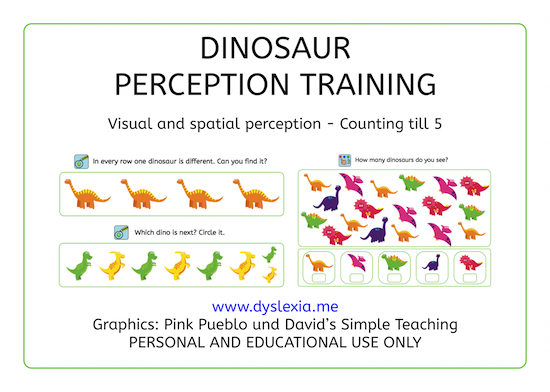
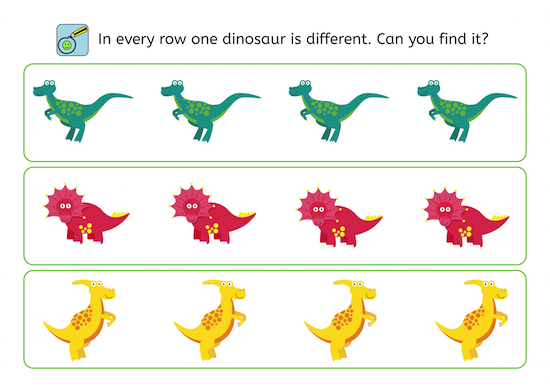
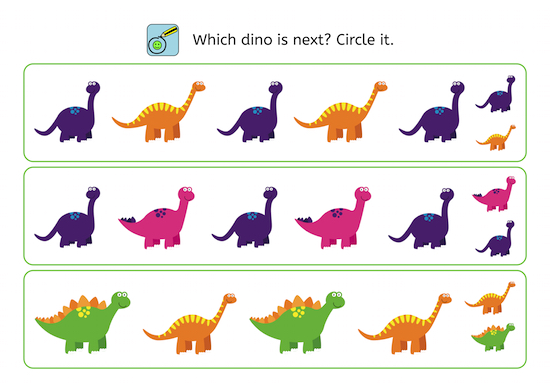
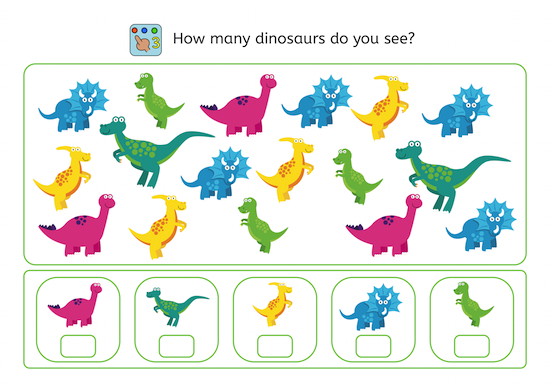
    Kids + dinosaurs = fun! Enjoy our new free no-prep printables with dinosaurs. Kids will have fun and train their visual and spatial perception, patterning, and counting up to 5.

    Dinosaur, perception training, children, freebie, no prep printable, parents, school, teacher, dyslexia, dyscalculia, AFS-method

    Visual and spatial perception:

    Dinosaur, perception training, children, freebie, no prep printable, parents, school, teacher, dyslexia, dyscalculia, AFS-method

    Patterning:

    Dinosaur, perception training, children, freebie, no prep printable, parents, school, teacher, dyslexia, dyscalculia, AFS-method

    Counting till 5:

    Dinosaur, perception training, children, freebie, no prep printable, parents, school, teacher, dyslexia, dyscalculia, AFS-method

    Download: Dinosaur perception training

    You want even more dinosaurs? Check out this free online game: Dinosaur – Find the pairs! You can choose different levels. The game can be played in any browser on any computer, smartphone or tablet.

  • Put Your Best Text Forward Online – Grammarly.com

    Put Your Best Text Forward Online – Grammarly.com

    Grammarly

    How many emails did you send today? What about Facebook updates or tweets?

    Online communication is more important than ever. According to research by the email management company AWeber, over 90 percent of teens today prefer to communicate via email, text, and Facebook. Texting and social networking are increasingly our primary modes of talking to each other; in fact, a 2012 study found that 40 percent of Americans would rather text than call, while 30 percent prefer to connect with friends online instead of face-to-face.

    Unfortunately, typical spelling and grammar checker tools aren’t available to you where you write most—online. Here are 5 tips for helping people with dyslexia to write better on the Web.

    1) Create a short proofreading checklist for yourself. What kinds of errors do you most want to find and fix? Typically, people struggle with a few areas of grammar and spelling more than others. Maybe homonyms (they’re/their/there) trip you up, or maybe you have trouble remembering when to use a comma. Understanding your strengths and weaknesses as a writer is the first step to improving your prose.

    2) Look for one kind of error at a time. Trying to fix everything all at once is a great way…to make yourself feel overwhelmed and frustrated. Instead of proofreading for all errors at once, break the task down into more manageable chunks. Start with end punctuation first (periods, exclamation points, and question marks), then move on to other punctuation (commas, semicolons, apostrophes, etc.), and finally tackle spelling. Pay closest attention to the problem areas you identified in step one.

    3) Read aloud (or use text-to-speech to read aloud) to locate misspelled or missing words. Reading your emails or tweets out loud may make you feel a little sill, but according to the Writing Center at UNC-Chapel Hill, it’s one of the best ways to catch errors that you might otherwise miss. “Most people have far more experience listening to and speaking English than they do reading and editing it on the printed page. When you read your draft out loud or listen to someone else read it, your brain gets the information in a new way, and you may notice things that you didn’t see before.” If you’d rather have someone else read your text, there are a number of free text-to-speech programs available such as Natural Reader.

    4) Step away and look again later. After you’ve proofread a piece of writing, take a break, step away, and then come back to it with fresh eyes. The longer the work, the more time you should take between passes. Shorter pieces of writing, such as tweets or status updates, may only require a coffee break, but important emails, blog posts, and other documents may need to rest overnight.

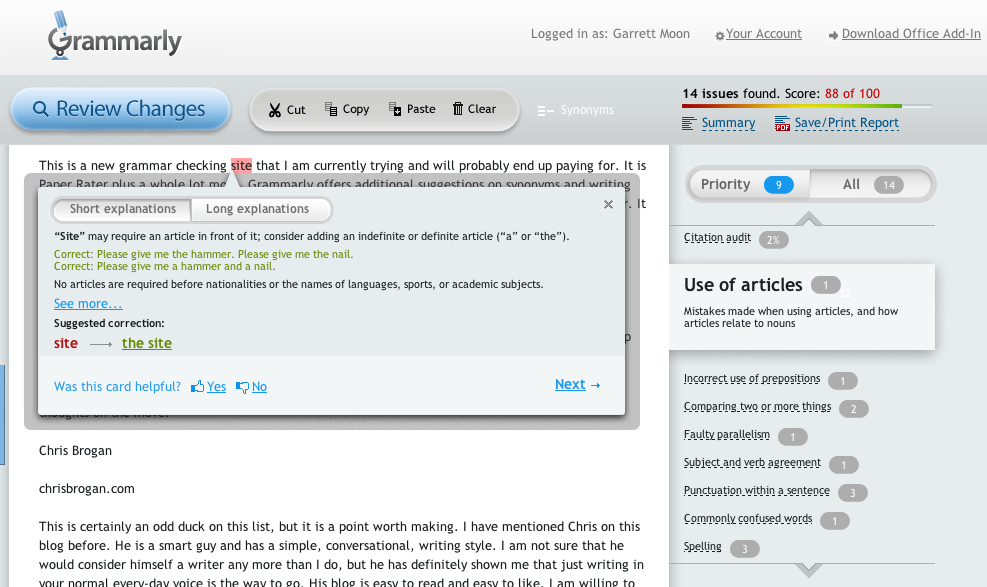
    5) Use online grammar checking tools. American Wordspeller is a phonetic dictionary that allows users to look up words based on how they sound, not how they’re spelled. Another great tool is Grammarly Lite, a free browser extension for Chrome, Firefox 4+ and Safari browsers that alerts you to potential grammar mistakes before you post or hit “send.” It also catches contextual spelling errors (typing “horse” when you meant “house,” for example) and has a built-in thesaurus for those times when the right word eludes you.

    Without non-verbal cues like tone of voice or facial expressions, text-based communications rely entirely on the quality of your writing. Put your best text forward!

    Blog Post provided by Grammarly.com

    Grammarly improves communication among the world’s 2+ billion native and non-native English writers. Our flagship product, the Grammarly® Editor, corrects contextual spelling mistakes, checks for more than 250 common grammar errors, enhances vocabulary usage, and provides citation suggestions. More than 4 million registered users worldwide trust Grammarly’s products, which are also licensed by more than 350 leading universities and corporations. Grammarly is a privately-held company with offices in San Francisco and Kiev.

  • 1500 free worksheets

    1500 free worksheets

    The American Dyslexia Association offers more than 1500 free worksheets on its website. The worksheets follow the AFS-method , a very successful method to help children with dyslexia and dyscalculia. If a child has dyslexia or dyscalculia, it is not enough to work on the mistakes. The child also has to learn to be attentive all the time when reading, writing, and calculating. Furthermore, it is important to train the child’s perception to improve reading, writing, and calculating skills.

    Dyslexia, worksheets, free, parents, children, homeschooling, reading, writing, AFS-method


    Access the worksheets