Category: Freebies

  • How Common Are Learning Disabilities in Children?

    A learning disability is a lifelong neurological condition that affects the way a person receives and processes information in their brain. In addition to making it tougher to succeed in the classroom, having a learning disability can also affect your social life. There are more than 4.6 million Americans that have a learning disability, and around 5 percent of the total population enrolled in public schools has had learning disabilities identified. Children with learning disabilities can thrive in school and beyond with early intervention and support.

    Some common learning disabilities that present themselves include dyslexia, Attention Deficit Hyperactivity Disorder (ADHD), language-based learning, and problems with sensory or auditory processing. It is important to note that over half of all children who receive special education support also have a learning disability. Children with learning disabilities struggle with reading and learn best through direct instruction. They can succeed given the appropriate support and a conducive learning environment.
    – See more at: http://www.johncardinaloconnorschool.org/how-common-are-learning-disabilities-in-children-infographic/#sthash.9Y27eIEg.dpuf

    by http://www.johncardinaloconnorschool.org

    Infographic Learning Disabilities

  • Get your FREE Special Edition of “The Hypnotist” by Alyssa Devine Released for Readers with Dyslexia

     Special Edition of “The Hypnotist” by Alyssa Devine for Readers with Dyslexia

    Theodore Jerome Cohen (aka ‘Alyssa Devine’) is giving away a FREE hardcopy of his book “The Hypnotist” in the special edition for readers with dyslexia to one lucky reader of ADA’s blog.

    You can find out more about the book here: Special Edition of “The Hypnotist” by Alyssa Devine Released for Readers with Dyslexia

    If you want to enter the contest, please send an e-mail to:
    [email protected]

    The winner will be announced after Christmas. So hurry to send us an e-mail!

    Happy Holidays from Dr. Ted Cohen and the American Dyslexia Association!

    UPDATE: Congratulations to the winner! Alex K. from California.

  • Share Your Story – Scholarship Opportunity for Dyslexic Students

    Dyslexia Scholarship

    October kicks off Dyslexia Awareness Month and Hanlon Law is offering a $2,000 scholarship opportunity for both perspective and current college students with dyslexia. After his son was diagnosed with dyslexia, Will Hanlon became dedicated to raising awareness for this learning disability.

    Overcoming the obstacles created by dyslexia can lead to tremendous accomplishments never thought possible when someone was initially diagnosed. Many leaders in various industries have been diagnosed with dyslexia, but they did not let this disability hinder their goals and dreams. Just to name a few notable people who have been diagnosed with dyslexia:

    • Richard Branson, the head of Virgin Records and Virgin Atlantic Airways
    • Charles Schwab, the creator of the discount brokerage business
    • John Chambers, the CEO of Cisco
    • David Boies, the celebrated trial attorney, best known as the guy who beat Microsoft

    These dyslexics are proof that the problem can shape a very creative mind and a diagnosis doesn’t have to hinder one’s ambitions. Will Hanlon, inspired by his son as well as the many other success stories, is helping students accomplish their dreams by creating this scholarship.

    Applying for the Scholarship:

    What obstacles have you faced with dyslexia? What are your academic goals? In order to apply, applicants are asked to write a 500+ word essay sharing their story and submit their application by June 30, 2016. Check out all of the scholarship details here and apply today:

    http://www.criminalattorneytampa.net/dyslexia-scholarship/

  • Harvard Graduate School of Education is seeking middle school students for study

    Dear parent(s)/guardian(s),

    My name is Courtney Pollack and I’m a doctoral student at the Harvard Graduate School of Education. I am currently seeking middle school students who live in the Boston area to participate in a study on arithmetic and the brain. If your child struggles in both math and reading, he or she may be eligible to participate!

    Harvard_Education

    What is the goal of the study?
    The goal of the study is to understand what parts of the brain are active when students solve arithmetic problems. This research will help us better understand needs of children and adolescents who struggle with reading and math.

    Who can participate?
    Your child may be eligible to participate if he/she is:
    – 12-14 years old
    – A native English speaker
    – Has a diagnosis of both math and reading disorders
    – Does not have a diagnosis of ADHD

    What does the study involve?
    If your child is eligible, we would invite you and your child to come to the Massachusetts Institute of Technology for one neuroimaging session that is about 2 hours long, including set-up, practice, and scanning. During the session, your child would solve arithmetic problems and identify numbers while having pictures taken of his or her brain.

    It is your choice whether or not to permit your child to participate in this research. If you choose to allow him or her to participate, you may change your mind and have him or her leave the study at any time. Refusal to participate or stopping participation will involve no penalty or loss of benefits to which you are entitled.

    Is there compensation?
    For participating, your child would receive $30 in Amazon gift cards. Parking would be free or reimbursed.

    I’m interested! How do I learn more?
    To learn more and determine if your child is eligible, please contact me at the email address or phone number below. If you are not interested, there is nothing for you to do.

    Thank you for your consideration!

    Courtney Pollack, Ed.M.
    Harvard Graduate School of Education
    Cambridge, MA
    617.971.8638
    http://scholar.harvard.edu/cpollack/home
    [email protected]

  • Dinosaur perception training

    Dinosaur perception training

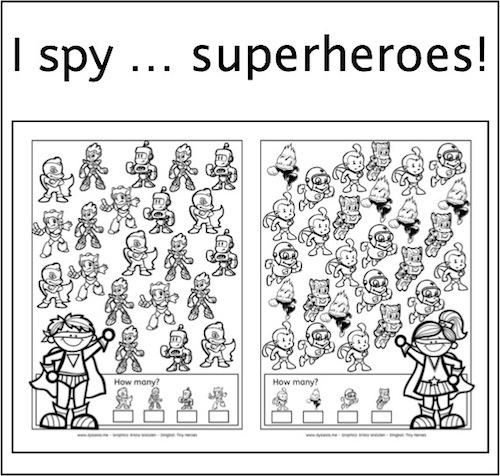
    Kids + dinosaurs = fun! Enjoy our new free no-prep printables with dinosaurs. Kids will have fun and train their visual and spatial perception, patterning, and counting up to 5.

    Dinosaur, perception training, children, freebie, no prep printable, parents, school, teacher, dyslexia, dyscalculia, AFS-method

    Visual and spatial perception:

    Dinosaur, perception training, children, freebie, no prep printable, parents, school, teacher, dyslexia, dyscalculia, AFS-method

    Patterning:

    Dinosaur, perception training, children, freebie, no prep printable, parents, school, teacher, dyslexia, dyscalculia, AFS-method

    Counting till 5:

    Dinosaur, perception training, children, freebie, no prep printable, parents, school, teacher, dyslexia, dyscalculia, AFS-method

    Download: Dinosaur perception training

    You want even more dinosaurs? Check out this free online game: Dinosaur – Find the pairs! You can choose different levels. The game can be played in any browser on any computer, smartphone or tablet.

  • FREE Copies of “Renvyle Revisited, an Irish Odyssey” by Chris Stanton

    Renvyle Revisited an Irish Odyssey
    Our thanks goes out to dyslexic author Chris Stanton, who is giving out 10 FREE copies of his book “Renvyle Revisited, an Irish Odyssey” to download as an Apple Audiobook. E-Mail us at [email protected] and claim your FREE copy by February 28th, 2015!

    Audiobook Description:

    Your narrator for the adventure is me an American, the sort of fellow the Irish might refer to as a boyo. The times recounted are before Ireland joined the European Union, when it was the ‘old sod.’ If you’ve ever wondered what it would be like to visit relatives in Ireland, my stories will be warm and enlightening. There is something magical about visiting where, but for a generation or two, you’d be living and laughing everyday with cousins. Renvyle Revisited an Irish Odyssey is a bit of a mystery. I had told my American first cousins on my mother’s Kilkenny side a story about their father and I promised to tell another about his adventure a generation earlier in Ireland with my father’s Connemara side of the family. The thing of it is, I didn’t know exactly what I was promising. I had not reasoned out what it meant. The payoff is that you will learn more Irish history by accident than most will learn on purpose. It took me more than nine hours and forty-five minutes of talking to get to the bottom of it or at least my version. The mystery regarded a grudge with non-family that was renewed with my visit 17 years later. How Irish is that? To make sense of the revisited story one needs to know about the Irish Civil War, and hardly anyone of Irish descent a generation or two American has a clue about it. My grandfather’s generation lived The Irish War for Independence. They fought the Irish Civil War vicariously. They witnessed Èamon de Valera, titular President of Ireland, fundraising for The Independence War. Generally, Americans who knew Èamon did not hold him in high regard. Dev was judged a duplicitous fellow, accepted in the name of unity when facing greater evil, England.

  • Dyslexia Materials Offers Mindful and Multisensory Resources and Advice for Students with Dyslexia

    Dyslexia Materials

    There are a multitude of tools and resources available on the Internet for students with dyslexia, but finding the best sites can be very challenging. This blog features a summary of Dr. Erica Warren’s site, Dyslexia Materials.

    What is Dyslexia Materials?

    Dyslexia Materials is a comprehensive site that was created to offer teachers, homeschoolers, therapists and individuals with dyslexia free advice, resources and multisensory educational materials.

    Who is the Author of Dyslexia Materials?

    Dr. Erica Warren, a learning specialist, educational therapist, and personal trainer for the brain who lives and works in New York, created Dyslexia Materials. Dr. Warren has a master’s degree in educational psychology and a doctorate in a combination of school psychology, special education and adult education. Her “secret weapon,” however, is reported to be her undergraduate degree in fine arts.

    Dr. Warren has worked one on one with students in her private practice for over 15 years and her main goal is to help struggling learners kindle a joy for learning, strengthen challenging areas of cognition and develop compensatory learning strategies so each student can maximize his or her learning potential.

    Tell Me More About the Free Resources, Links and Advice:

    Dyslexia Materials presents a multitude of free advice, links and resources for a dyslexic population of learners as well as their service providers. Here you can peruse through a comprehensive offering of videos, podcasts, blogs, webinars, organizations, articles, technology, colleges, camps, schools, and more. Dr. Warren even shares other tools that she uses in her own private practice.

    What Products are for Sale?

    Dyslexia Materials also offers a large selection of game-like, multisensory products for purchase, with many products featuring free samples. All of the materials are available as digital downloads and a select few are offered as hard goods. These tools integrate enjoyable activities to teach challenging academic content in the areas of reading, writing, and math. Other fun and engaging materials focus on weak areas of cognition so that areas of deficit can be remediated. These brain games develop organization, memory, sequencing, language processing, visual processing, auditory processing, processing speed and more.

    To Learn More:

    To learn more, come visit www.dyslexiamaterials.com
    If you have any questions, you can reach Dr. Warren @ [email protected]

  • Put Your Best Text Forward Online – Grammarly.com

    Put Your Best Text Forward Online – Grammarly.com

    Grammarly

    How many emails did you send today? What about Facebook updates or tweets?

    Online communication is more important than ever. According to research by the email management company AWeber, over 90 percent of teens today prefer to communicate via email, text, and Facebook. Texting and social networking are increasingly our primary modes of talking to each other; in fact, a 2012 study found that 40 percent of Americans would rather text than call, while 30 percent prefer to connect with friends online instead of face-to-face.

    Unfortunately, typical spelling and grammar checker tools aren’t available to you where you write most—online. Here are 5 tips for helping people with dyslexia to write better on the Web.

    1) Create a short proofreading checklist for yourself. What kinds of errors do you most want to find and fix? Typically, people struggle with a few areas of grammar and spelling more than others. Maybe homonyms (they’re/their/there) trip you up, or maybe you have trouble remembering when to use a comma. Understanding your strengths and weaknesses as a writer is the first step to improving your prose.

    2) Look for one kind of error at a time. Trying to fix everything all at once is a great way…to make yourself feel overwhelmed and frustrated. Instead of proofreading for all errors at once, break the task down into more manageable chunks. Start with end punctuation first (periods, exclamation points, and question marks), then move on to other punctuation (commas, semicolons, apostrophes, etc.), and finally tackle spelling. Pay closest attention to the problem areas you identified in step one.

    3) Read aloud (or use text-to-speech to read aloud) to locate misspelled or missing words. Reading your emails or tweets out loud may make you feel a little sill, but according to the Writing Center at UNC-Chapel Hill, it’s one of the best ways to catch errors that you might otherwise miss. “Most people have far more experience listening to and speaking English than they do reading and editing it on the printed page. When you read your draft out loud or listen to someone else read it, your brain gets the information in a new way, and you may notice things that you didn’t see before.” If you’d rather have someone else read your text, there are a number of free text-to-speech programs available such as Natural Reader.

    4) Step away and look again later. After you’ve proofread a piece of writing, take a break, step away, and then come back to it with fresh eyes. The longer the work, the more time you should take between passes. Shorter pieces of writing, such as tweets or status updates, may only require a coffee break, but important emails, blog posts, and other documents may need to rest overnight.

    5) Use online grammar checking tools. American Wordspeller is a phonetic dictionary that allows users to look up words based on how they sound, not how they’re spelled. Another great tool is Grammarly Lite, a free browser extension for Chrome, Firefox 4+ and Safari browsers that alerts you to potential grammar mistakes before you post or hit “send.” It also catches contextual spelling errors (typing “horse” when you meant “house,” for example) and has a built-in thesaurus for those times when the right word eludes you.

    Without non-verbal cues like tone of voice or facial expressions, text-based communications rely entirely on the quality of your writing. Put your best text forward!

    Blog Post provided by Grammarly.com

    Grammarly improves communication among the world’s 2+ billion native and non-native English writers. Our flagship product, the Grammarly® Editor, corrects contextual spelling mistakes, checks for more than 250 common grammar errors, enhances vocabulary usage, and provides citation suggestions. More than 4 million registered users worldwide trust Grammarly’s products, which are also licensed by more than 350 leading universities and corporations. Grammarly is a privately-held company with offices in San Francisco and Kiev.

  • 1500 free worksheets

    1500 free worksheets

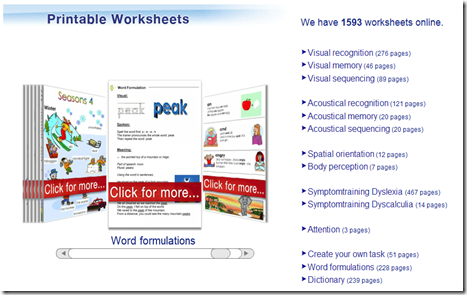
    The American Dyslexia Association offers more than 1500 free worksheets on its website. The worksheets follow the AFS-method , a very successful method to help children with dyslexia and dyscalculia. If a child has dyslexia or dyscalculia, it is not enough to work on the mistakes. The child also has to learn to be attentive all the time when reading, writing, and calculating. Furthermore, it is important to train the child’s perception to improve reading, writing, and calculating skills.

    Dyslexia, worksheets, free, parents, children, homeschooling, reading, writing, AFS-method


    Access the worksheets