Temple Grandin was nonverbal until the age of four. Today, she is a professor of animal science at Colorado State University, and one of the leading authorities on livestock facility design, as well as an autism awareness advocate.
Temple Grandin shares 4 tips on how to deal with sensory overload.
1. Allow protective gear like headphones part of the time
2. Help de-sensitize through experiences where the person is allowed to control exposure
3. Slow down when you talk
4. Check out the clinical study: “Environmental Enrichment as an Effective Treatment of Autism”
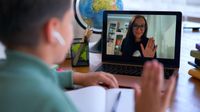
Autistic students may need additional support to cope with the changing routines and shifts between distance and in-person learning.
The Covid-19 pandemic has created numerous challenges for students, educators, parents, and community members. Unfortunately, these challenges could lead to increased achievement gaps in our most at-risk populations. The shift in school settings, the dependency on technology for most instructional delivery, and a multitude of social and emotional challenges could negatively impact students in a variety of ways. And the negative impact may be greater for autistic students. To reduce the impact, educators should create positive learning environments in a variety of settings to maximize instructional time.
REMOTE SETTING
Last spring, when the pandemic forced schools to change gears mid-semester, mistakes were made and lessons learned, which provided a blueprint for now and into the future. This blueprint revealed the need for a back-to-basics approach in public education, specifically special education. When serving autistic students in a remote setting, educators should focus on the following points.
1. Relationships: Maintaining, building, and reinforcing positive relationships between you and your autistic students increases the likelihood of success for remote learning. This is your opportunity to show that you truly “know your who” and personalize communication to best meet students’ needs. For some students, this may include daily phone calls or FaceTime. For others, this may involve Google Meet sessions with you, classmates, or other school staff members. If your students are verbal, provide time during instructional sessions to share positive events, discuss nonsensitive challenges, tell jokes, and just laugh.
2. Consistency: Expect the unexpected was a common theme in 2020, but that does not give teachers permission to overlook the need for a consistent daily and weekly schedule. Autistic students often struggle with change, which makes consistency essential. Checklists should be used to further structure the environment and provide consistency. Work with the family to create a daily schedule, which should incorporate visuals as needed. Students of all abilities are already overwhelmed with a wave of information, so do your best to simplify and streamline your classwork schedule to make processing easier for autistic students.
3. Social skills: Educators should now be more confident addressing social skill gaps and the hidden curriculum. Luckily, educators now have access to social stories on numerous websites. A simple Google search provides social stories related to quarantines, health procedures, masks, and more. For students who need substantial support, visuals may yield the best results. Students with stronger communication skills may need more detailed social stories from experts such as Carol Gray, state agencies, or other sources. Parents and teachers alike should use positive reinforcements to increase expected at-home behaviors and build a growth mindset.
4. Fluid instruction: Your goal is to maximize instructional time; therefore, accept the fact that your lesson planning needs to be fluid. Autistic students may have sensory, social, or emotional challenges that have been exacerbated by the pandemic. Recognize this and do your best to provide instruction and learning opportunities that do not add stressors. Emphasize quality over quantity, provide direct instruction as needed, and consider using this time for interventions, extended learning activities, and relevant assignments.
TRANSITION PHASE
As more and more schools shift back to in-person learning, special education teachers should emphasize the need for a coordinated strategy. To bridge the gap between home and the school, the individualized education program (IEP) team can meet virtually to coordinate a strategy that provides plenty of preview and prep for the student, supports (checklists, behavior trackers, social stories, and more), walk-throughs of the school day, and a gradual transition back to the classroom. If possible, autistic students should have a designated safe space and trusted adult before transitioning back. Sensory changes, such as different noise levels or hallway traffic, need to be recognized, and adequate supports should be provided. Teachers should be in consistent contact with occupational therapists, school psychologists, speech pathologists, and the special education director throughout this phase.
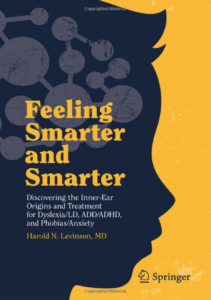
Feeling Smarter and Smarter: Discovering the Inner-Ear Origins and Treatment for Dyslexia/LD, ADD/ADHD, and Phobias/Anxiety by Harold N. Levinson, MD
In this groundbreaking book written for both lay and professional readers, Dr. Harold Levinson, a renowned psychiatrist and clinical researcher, provides his long-awaited follow-up work about truly understanding and successfully treating children and adults with many and diverse dyslexia-related disorders such as those found on the cover.
This fascinating, life-changing title is primarily about helping children who suffer from varied combinations and severities of previously unexplained (“inner-ear/cerebellar-determined”) symptoms resulting in difficulties with:
reading, writing, spelling, math, memory, speech, sense of direction and time
grammar, concentration/activity-level, balance and coordination
headaches, nausea, dizziness, ringing ears, and motion-sickness
frustration levels and feeling dumb, ugly, klutzy, phobic, and depressed
impulsivity, cutting class, dropping out of school, and substance abuse
bullying and being bullied as well as anger and social interactions
later becoming emotionally traumatized and scarred dysfunctional adults
Feeling Smarter and Smarter is thus also about and for the millions of frustrated and failing adults who are often overwhelmed by similar and even more complicated symptoms—as well as for their dedicated healers. Having laid the initial foundations for his many current insights in an earlier bestseller, Smart But Feeling Dumb, Dr. Levinson now presents a compelling range of enlightening new cases and data as well as a large number of highly original discoveries—such as his challenging illumination that: “All the above dyslexia-related manifestations are primarily ‘inner-ear’ or cerebellar-vestibular—not cerebrally or thinking-brain— determined and so do not impair IQ and have a favorable outcome.”
And an “ingeniously clear” and explanatory theory of symptom formation, including the triggering of phobias and anxiety, has been formulated by Dr. Levinson using a simple analogy: “I can rapidly but transiently induce the entire dyslexia syndrome in perfectly normal individuals by spinning them around until their brain signals become dizzy or scrambled. And then mandating they perform varied reading, writing, conentration-demanding…tasks.” In other words, dyslexia is recognized to be a complex multi-symptomatic syndrome encompassing all of the above mentioned symptoms—and many more. Clearly, it’s not just a pure reading disorder as now also recognized by the American Psychiatric Association’s (APA’s) diagnostic manual, DSM-V.
This syndrome results when diverse normal thinking brain and related processors fail to descramble the “dizzy” or distorted signals received from a fine-tuning signal impairment within the inner-ear and its supercomputer—the cerebellum, man’s lower “little brain.”[1]
Most important, all the dyslexia/inner-ear based impairments and their symptoms were discovered by Dr. Levinson to respond rapidly and often dramatically when treated with simple and safe inner-ear enhancing medications and nutrients—thus enabling bright but dumb-feeling children and adults to feel smarter and smarter. In addition, by clarifying and more effectively utilizing a diverse range of educational and non-medical therapies which enhance inner-ear and/or cerebral compensation, all dyslexics can be best helped.
Using the above mentioned spinning analogy in order to better explain improvements, Levinson states: “The dyslexia-like or inner-ear/cerebellar syndrome triggered by spinning normal individuals till dizzy signals arise can be minimized or prevented by pretreatment and/or treatment immediately following symptom formation, using anti-vertigo or inner-ear-enhancing meds and non-med therapies.”
Additionally, Dr. Levinson discovered and similarly treated the relatively “minor” inner-ear/cerebellar dysfunction found associated with ASD or autism as well as traumatic brain injury and other major disorders. This enabled overall improvements, albeit the primary impairments persisted.
In summary, this book’s content is highly unique. Its many patient-derived insights are fully capable of explaining and successfully treating all the known dyslexic symptoms and their determining mechanisms as well as clarifying all data and theories characterizing the dyslexia syndrome—including the frequently overlapping attention deficits and phobias. Significantly, most all of Dr Levinson’s highly original inner-ear/cerebellar concepts—considered “decades ahead of their time”— have been independently validated via hundreds of referenced neuroimaging and other studies.
To order this “life-improving” book from Amazon or its publisher, Springer, log onto Dr. Levinson’s website: dyslexiaonline.com
1 This theory was considered “ingenious” because it replaced and resolved several long held mistaken concepts—previously leading to scientific dead ends and paradoxes. For example, it was mistakenly believed:1-that dyslexia was a pure reading disorder of primary cerebral origin, despite its typical “symptomatic impurity” and the absence of cerebral neurological signs as well as the presence of only inner-ear/cerebellar signs, and 2-that all the many non-reading symptoms found among dyslexics were considered “co-morbid”—meaning they were/are believed due to separate non-dyslexic cerebral-related processing impairments—rather than due to a common inner-ear/cerebellar origin akin to the way the diabetic syndrome is caused by a common underlying insulin deficiency. So the illuminated paradoxes to be resolved were: 1-How could dyslexics have normal and even genius IQ’s and improve if they had so many separate and irreparable cerebral processing impairments? They couldn’t! Indeed, their IQ’s would approach zero, 2-How could dyslexia be due to a primary and irreversible cerebral impairment akin to Alexia in the presence of only inner-ear/cerebellar neurological signs and mechanism? It can’t! , 3-How could spinning, which destabilizes only the inner-ear/cerebellar signals, create all the dyslexia-related symptoms and how might inner-ear-enhancing meds “cure” them? This would be impossible if the dyslexia syndrome was of a primary cerebral origin affecting multiple sites of primary brain functioning.
A learning disability is a lifelong neurological condition that affects the way a person receives and processes information in their brain. In addition to making it tougher to succeed in the classroom, having a learning disability can also affect your social life. There are more than 4.6 million Americans that have a learning disability, and around 5 percent of the total population enrolled in public schools has had learning disabilities identified. Children with learning disabilities can thrive in school and beyond with early intervention and support.
Some common learning disabilities that present themselves include dyslexia, Attention Deficit Hyperactivity Disorder (ADHD), language-based learning, and problems with sensory or auditory processing. It is important to note that over half of all children who receive special education support also have a learning disability. Children with learning disabilities struggle with reading and learn best through direct instruction. They can succeed given the appropriate support and a conducive learning environment.
– See more at: http://www.johncardinaloconnorschool.org/how-common-are-learning-disabilities-in-children-infographic/#sthash.9Y27eIEg.dpuf
by http://www.johncardinaloconnorschool.org
Will you be welcoming a student with Autism Spectrum Disorder (ASD) into your classroom this fall? If this is your first experience having a child with ASD in your classroom, you may be a tad nervous (well, likely more than just a tad). You may be wondering how in the world you are going to meet this one child’s needs while balancing the needs of the other children in your classroom. How will you handle the behaviors? What do the parents expect? Children with ASD often come with a barrage of service providers such as Speech/Language Pathologists, Occupational Therapists, Behavioral Consultants, and sometimes a 1:1 para-professional– how are we all going to be working together? You may be worrying about your lack of training in autism and be unsure if you are equipped to meet the needs of the child. Well, take a deep breath. With the proper perspective and some planning and preparation, this may be the most rewarding experience of your teaching career. CONTINUE READING
“Best Kept Secret” is a documentary worth watching about a teacher in New Jersey who works with autistic students to help them prepare to live in the world once they graduate from school.
The students attend JFK High School in Newark, a public school for students with a wide range of special needs. Administrators there answer the phone by saying, “This is John F. Kennedy High School, Newark’s Best Kept Secret.”
The documentary follows Janet Mino, who has been teaching young autistic men for four years at the school, and several students for a year and a half before they graduated in 2012. Newark Mayor Cory Booker has visited the high school and met the students featured in the film. READ MORE HERE
Fun Foods for Kids & Grownups: Your essential guide to family fun & good health by Linda Davis Kyle introduces its menu highlights through a fantasy story, “Adventures in Abunda Gardens,” that not only intrigues youngsters to try the recipes from the magical gardens, but also brings families together for the joy of reading, bonding, and exchanging ideas. With its smart-start recipes, it helps avoid “good-for-you” and “bad- for-you” traps, fosters a rational attitude about foods, and enhances high self-esteem and emotional stability.
It offers tips for staying trim and encourages adults to model the beauty of exercise and fitness for their children. It also nurtures learning with fun facts and historical data, shares a wealth of additional reading materials, includes a useful appendix, a handy index, and outlines sample menu ‘highlights’ for two weeks. Most of all, it reminds its readers to make every day a celebration of life and good health.
Equine Therapy is an experiential, evidence-based therapy involving horses. The client works with the horses, along with a certified horse specialist and therapist, to help achieve the client’s goals. EAP is appropriate for individuals of all ages, as well as groups, families, and couples.
Ideal for kids and families struggling with:
Addiction
ADHD
Autism
Eating Disorders
Family Conflict
Learning Disabilities
Social Anxieties
Through a series of activities, participants identify with the horses and learn how to better communicate with others. Participants work on problem-solving games, such as moving the horse through an obstacle course. Activities help clients learn to trust their thought processes as well as work in a team to think and act outside their comfort zone.
Equine Therapy increases empathy through grooming activities and caring for the horses. The horses keep the participants in the moment, focused on a task, and completely honest. All EAP sessions are facilitated by a licensed therapist or a Marriage and Family Therapist Intern under the supervision of a BBS licensed supervisor.
BIG Heart Ranch in Malibu, California, is a facility specializing in healing youth and adults struggling with mental health and everyday issues through Equine Assisted Psychotherapy (EAP) and Equine Assisted Growth and Learning (EAGL). Cofounder Suzi Landolphi is certified in EAP, and cofounder and Program Director Brian Goldberg is a Certified Equine Specialist. Together with their staff and animals, they provide various animal-assisted therapies.