Category: Dyscalculia

  • Sharjah Center for Learning Difficulties joins IFDDA

    Sharjah Center for Learning Difficulties joins IFDDA

    The International Federation of Dyslexia and Dyscalculia Associations welcomes a new member: the Sharjah Center for Learning Difficulties (SCLD) in the United Arab Emirates.

    This is our first member in the Arab world, and it is a government center, which makes it a rare kind of partner. Most dyslexia and dyscalculia organizations start as parent initiatives or volunteer groups. The Sharjah Center was created by decree of the Ruler of Sharjah, with its own legal personality and its own budget, to serve people with learning differences of every age and every nationality living in the UAE. That is the kind of institutional backing our field rarely gets.

    Who they are

    The Sharjah Center for Learning Difficulties was established by Emiri Decree No. 49 of 2016, issued by His Highness Sheikh Dr. Sultan bin Muhammad Al Qasimi, Member of the Supreme Council and Ruler of Sharjah. It operates under the supervision of Sharjah City for Humanitarian Services, whose Director-General, Sheikha Jamila bint Mohammed Al Qasimi, chairs the center. The center is located in the Wasit suburb of Sharjah and is directed by Dr. Hanadi Al Suwaidi.

    In their own words, from their membership application:

    The Sharjah center for learning difficulties supports individuals with learning difficulties and their families. We provide assessment and diagnosis, counselling, and educational, psychological, and social support. We also work with schools and other educational institutions to raise awareness, build professional capacity, and promote the inclusion and empowerment of individuals with learning difficulties.

    The center’s slogan is “We are your advocates to education.” Its stated vision is to be the leading center for advocacy, inclusion, and empowerment of people with learning differences in the UAE and the Arab world. In practice, the center:

    • assesses and diagnoses children and adults with learning differences and monitors the progress of enrolled students,
    • offers family counseling, career advice, social and psychological support, and a self-advocacy program,
    • provides speech and language services, assistive technology, and further specialist support under one roof,
    • trains teachers and specialists, advises schools and institutions, and runs school visits and a parents council,
    • and has hosted three Learning Difficulties Conferences and two virtual forums, alongside lectures, workshops, and its own publications.

    Why it matters for IFDDA

    Our members exchange knowledge, methods, and experience across borders. With the Sharjah Center, the federation gains its first member in the Gulf region and the Arabic-speaking world, and a partner that combines diagnosis, support, teacher training, and public awareness in a single publicly funded institution.

    Most of what is published about dyslexia and dyscalculia describes learners of English. Arabic has its own script and its own challenges, and a center that assesses and supports Arabic-speaking learners every day brings knowledge to the federation that most of our members do not have. We look forward to learning from it.

    You can find the Sharjah Center for Learning Difficulties at scld.ae, and all IFDDA members at ifdda.org.

    If you run a non-profit dyslexia or dyscalculia organization and would like to join the federation, membership is free. Apply at ifdda.org.

  • The Dyscalculia Network joins IFDDA

    The Dyscalculia Network joins IFDDA

    The International Federation of Dyslexia and Dyscalculia Associations welcomes a new member: The Dyscalculia Network CIC, based in England.

    Dyscalculia is in the name of our federation, but around the world it is still the quieter half. Dyslexia has associations, awareness weeks, and specialist teachers in most countries. Dyscalculia rarely does. That is why this membership matters to us more than most.

    Who they are

    The Dyscalculia Network was founded in 2019 by two math teachers and learning difficulty specialists, Cat Eadle and Rob Jennings. It is a not-for-profit community interest company, run by volunteers, that supports and advocates for children and adults with dyscalculia and math learning difficulties. Its patron is Baroness Deborah Bull.

    In their own words:

    The Dyscalculia Network is a volunteer-led not for profit community interest company that supports, educates, and advocates for individuals with dyscalculia and maths learning difficulties. It bridges the gap between research and practice by hosting the only exclusively dyscalculia UK-based postcode finder for assessors and tutors; providing educational support, practical tips, toolkits, and resources for parents, students, and educators; advocating for dyscalculic adults by promoting workplace accessibility, inclusive recruitment, and reasonable adjustments; and leading campaigns to raise awareness of dyscalculia and offering training for schools, workplaces, and community services.

    What sets the Network apart is how much of its work is aimed at adults. Most dyscalculia support ends with school. The Dyscalculia Network runs an Adults with Dyscalculia Advisory Board made up of people who live with dyscalculia themselves, and their experience shapes what the organization does. Alongside that, the Network:

    • runs the UK’s only dedicated directory of dyscalculia specialist assessors and tutors,
    • provides training for schools, workplaces, and community organizations on how to accommodate people with dyscalculia and math learning difficulties,
    • campaigns for better provision for children and adults with dyscalculia,
    • and set up two annual awareness days that are now fixed points in the calendar: Dyscalculia Day on March 3 and Maths Anxiety Awareness Day on November 10.

    Why it matters for IFDDA

    Our members exchange knowledge, methods, and experience across borders. With The Dyscalculia Network, the federation gains a partner with deep practical expertise in math learning difficulties and a working model for adult support that other members can learn from. We are looking forward to sharing their awareness days with our international audience and to bringing dyscalculia the attention it deserves.

    You can find The Dyscalculia Network at dyscalculianetwork.com, and all IFDDA members at ifdda.org.

    If you run a non-profit dyslexia or dyscalculia organization and would like to join the federation, membership is free. Apply at ifdda.org.

  • Dyslexia Research Center Online Shop

    Dyslexia Research Center Online Shop

    Check out our online dyslexia and dyscalculia shop for educational tools like Mathe4matics and Letters2Words card games, and the EasyReading Card.

    http://dyslexics.com

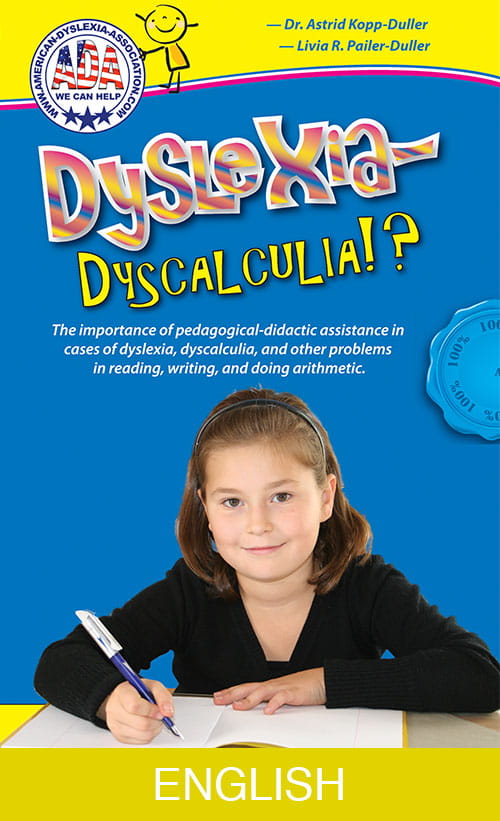
    Also featured in our online shop is Dyslexia-Dyscalculia!?, a publication authored by Dr. Astrid Kopp-Duller and Dr. Livia R. Pailer-Duller, which describes the necessity of intervention on a didactic level.

  • 13 Simple Ways to Practice Addition and Subtraction

    13 Simple Ways to Practice Addition and Subtraction

    In my day, we just memorized math. I don’t know that I ever really truly understood much of what math was nor was I able to compute higher-level skills until I started teaching math and learned how to be flexible with numbers. Flexibility with numbers is a key foundational skill for young learners, and those who don’t have it struggle from early on. When it is hard to figure out what 7 + 4 =, a child will become easily frustrated, leading to the oh so often felt and heard, “I’m just no good at math.” It isn’t about memorization and speed (puuuhhhleeeease – stop with the timed tests!) with basic addition and subtraction – it is about developing strategies that lead to fluency, automaticity, and understanding.

    There are a number of ways to accomplish this, but one thing I am passionate about is making sure instruction is developmentally appropriate. Research tells us that learning through play is most appropriate for early childhood students (and that designation goes through age 8 or 9, depending on where you look), and the kids are way more engaged when they’re playing games. To develop strategic thinking, use lots of concrete representations to start, then move to the more abstract (for example, start with dot dice and move on to numeral dice). So, here are 13 ways to practice simple addition and subtraction that are sure to please.

    Way 1. Dice –

    There are so many different kinds of dice you can get now, and if you can’t find the ones you want, there’s DIY wood block dice!  Place value blocks, ten frames, dots, numerals of any range with any number of sides, big and wooden dice, colorful dice, foam dice… Just search for dice online – but be prepared to get lost in that rabbit hole! Lots of work with making five and ten is required in K/1 and this can easily be done with addition (and frankly, subtraction, too – think fact families) and dice. Tenzi is a great way to have multiple players with a target number in a fast-paced, fun game.

    2. Deck of Cards –

    Pull out the numbered cards and only use those. You can use them in a number of ways – simply flip two cards and add or subtract, play make five or make ten go fish, addition/subtraction war (flip two cards each, whoever has the most/least wins all four cards, repeat) or any of a number of other card games.

    3. Dominoes –

    This low prep way to practice addition and subtraction involves simply giving students a bin of dominoes and having them pull one at a time. Then, they either add or subtract using the two sides of the domino. It is important, as with all of these ideas, to encourage strategy use. They should subitize the numbers, use counting on strategy, think about a rekenrek or a ten frame – playing these while simply counting all the dots won’t improve their skills at all.

    Way 4. Hopscotch  –

    Need to get some wiggles out? Go out to the playground or make an indoor tape hopscotch board and give each square a number 0-10. The directions can vary based on your students’ abilities and be used to find the missing addend or subtrahend (“What goes with 6 to make 10?” and they hop to the 4) or to do more basic addition and subtraction (toss two small pebbles or sticks and add/subtract the two numbers). Ready to up the challenge factor? Have kids make the target number a different way after they give you the first way or make a target number with three addends.

    5. Musical Chairs –

    This is another movement activity for math where you simply put number models on index cards – one per chair. Then play musical chairs like you always would, but kids have to answer their problems correctly to stay in the game as well!

    Continue article here:

    https://educationtothecore.com/2021/01/13-simple-ways-to-practice-addition-and-subtraction/

  • Dyslexia – Dyscalculia!?

    Dyslexia – Dyscalculia!?

    The authors, Dr. Astrid Kopp-Duller and Dr. Livia R. Pailer-Duller, describe in this publication the necessity of intervention at the educational-didactic level, which is of preeminent importance for success in the training of people who have problems with reading, writing, or calculating.
    Information on ordering is found here:
    https://www.dyslexia-dyscalculia.com/
    Available in English, German, and Spanish.
    It is a fact that many people who simply have problems with learning how to read, write, or do arithmetic continue to undergo only psychological or medical therapy, and don’t receive the educational-didactic assistance that they actually need. In cases of problems with reading, writing, or calculating, only the specially trained educator will be able to help these people using educational methods that have been developed through educational-didactic research.
  • 10 Ways to Help Kids Overcome Math Anxiety
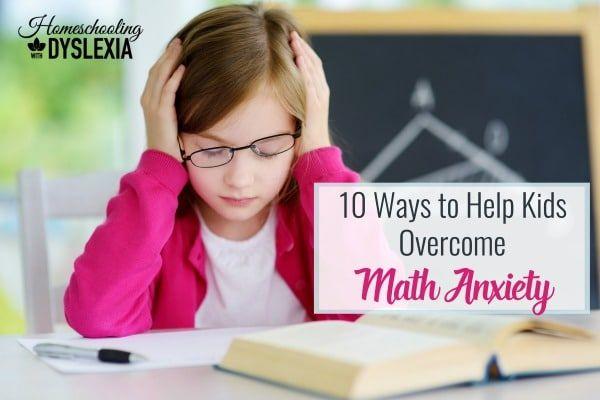
    10 Ways to Help Kids Overcome Math Anxiety

    For kids who struggle with math – the ones who have trouble with math no matter what they try – it is not uncommon to feel anxiety when even simply thinking about math. As the mom of a handful of kids who struggle with math, sometimes called dyscalculia, I have had a ton of practice helping them not only to figure out how to solve math problems but to overcome their unnecessary worrying about math. Whether your child is six or 16, these 10 tips will help them to build their confidence and ability in math class.

    10 Ways to Help Kids With Math Anxiety

    Overcome Math Anxiety

    Normalize their challenges.  I often laughingly refer to myself as my kids’ life coach.  How encouraging is it to a struggling learner to hear that many students have a hard time with math. Research shows that up to 50% of students nationwide are experiencing some degree of math difficulty.  Remind kids that “All kids can learn math, we just need to figure out how you learn best.”

    Continue reading here: https://homeschoolingwithdyslexia.com/help-kids-math-anxiety/

  • Dyscalculia and Brain Activity-The Connection,  by Shradha Kalyani Kabra
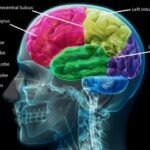
    Dyscalculia and Brain Activity-The Connection, by Shradha Kalyani Kabra

    The fear of Mathematics and numbers is called Dyscalculia, which is a learning disability, also termed as number blindness. Extensive studies have recorded that nearly 7% of the population with average intelligence have the problem. The innate number sense of the human brain is not in sync in dyscalculics, as numerical ability relies on special brain networks.

    The theory that separates Dyscalculia from other deficiencies of memory and language is that the approximate number sense gets severely affected. A common symptom that defines the problem is the inability to recognize the place value system. The mathematical ability of people who are unable to grasp the recognition pattern of small numbers is impaired significantly.

    Brain Function In Dyscalculia Sufferers

    The inability to properly estimate and grasp quantifiable figures is the hallmark of Dyscalculia. The disability signifies the inability or impaired ability to recognize small numbers. The brain scans of persons suffering from this issue show that the intraparietal sulci show less activity and are less connected with the greater brain when dealing with numbers.

    Other learning disabilities like dyslexia and aligned problems like ADHD and autism spectrum disorder are also common in dyscalculics.  The treatment becomes a little complex as it is difficult to separate the issues. These comorbidities often make the diagnosis difficult.  The neuronal basis of Dyscalculia is not widely studied due to this phenomenon. Several neuroimaging studies have detailed the representation and processing of numerical information, but no comprehensive and conclusive findings are available. There are many forms of Dyscalculia, and some of them are associated with demonstrated alterations in metabolism, brain structure, and function.

    Image Source: dyscalculiamathdisability.weebly.com

    Developmental Dyscalculia

    Developmental Dyscalculia tends to present as abnormalities in the parietal cortex and involves the cortical and subcortical regions. Recent studies have given clarity on brain activity during number processing as well as calculation. The IPS or intraparietal sulcus is known to be the centre for numerical processing. Research has illustrated that the IPS is activated when mathematical tasks and even simple counting exercises are carried out.

    Memory, perceptual, spatial and motor functions are also involved in the process. Attention is also a key factor. The cognitive processes that are involved in calculation tasks add to the complexity. Developmental Dyscalculia (DD) demonstrates deficits in core brain regions associated with number processing. The brain activation pattern is also not adequate in children afflicted with DD. The gap is bridged with the child resorting to finger counting and memory to compensate.

    The need for remediation measures and education for children with special needs is the need of the hour. There are some steps taken in this direction by experts, but the gap is much more significant than the remedy. Urgent intervention is needed to collate research findings and create practical special education resources to help children suffering from DD.

    Practical Application of Research in Educational Processes for Special Needs

    The first step is to recognize that the child has a problem. Unfortunately, the children suffering from Developmental Dyscalculia are not even diagnosed in time to help them. They are often labelled as slow or below average and are left to fend on their own. The need of the hour is to educate parents and educationists alike about the existence of DD and how it affects the child.

    Academic and emotional negligence often tortures the otherwise intelligent child. They are special and hence need proper guidance and help, more than the other children. They may be subjected to bullying and rampant ignoring in the classroom. Teachers need to be sensitized about the occurrence and issues related to Dyscalculia as they are prone to dismiss the condition as a lack of general intelligence. There are few practical steps that can be taken to ensure that the child finds a way to cope with the problem and even overcome it to a certain extent.

    Continue reading here: https://numberdyslexia.com/dyscalculia-and-brain-activity-the-connection/

  • Free dyslexia-friendly science eLearning website, totallearn.co.uk

    Free dyslexia-friendly science eLearning website, totallearn.co.uk

    Studying for exams is a chore for everyone, but it can be much more difficult if the text is not accessible to the learner. eLearning has a role to play in helping these students to learn.

    The website totallearn.co.uk is developing a large number of science eLearning modules to help with study. These are made accessible by having a “click to hear” function.

    All text on the totallearn website can be clicked on and will be read aloud to the user.

    The developer, Michael Collard, is a former science teacher who is able to describe difficult concepts in a clear, straightforward manner.

    There is also a science blog on the site that is equally accessible and updated several times a week.

    The developer welcomes comments and requests as the website develops. Write him at: [email protected]

  • Understanding dyslexia: Learn how to best help your child

    Understanding dyslexia: Learn how to best help your child

    Just what is dyslexia?

    There are many misconceptions out there.

    familymagazineletters

    “Dyslexia is a type of specific learning disorder that impacts reading,” said Dr. Sheldon H. Horowitz, director of learning disability resources at the National Center for Learning Disabilities. “It is not a disease, nor is it contagious. It is not something that goes away — you don’t outgrow it — and it is not the result of watching too much TV, laziness, vision or
    hearing problems, or low intelligence.

    “The medical community refers to it as a disorder, and the educational community refers to it as a specific learning disability. Others are dyscalculia if the area of weakness is math, dysgraphia if the problem is writing and written expression.”

    Because dyslexia is not a disease, there is not “one treatment for dyslexia. It can’t be cured, especially because dyslexia is not a medical or psychological problem,” said Livia R. Pailer-Duller, executive director of the American Dyslexia Association. “It needs to be addressed through training of the attention span, of sensory perceptions, and the practice of reading and spelling on the educational level.”

    Rather, “dyslexia is a genetic disposition, which means that dyslexia is inherited,” she said. “Dyslexic individuals have different sensory perceptions. These different sensory perceptions are the reason why the attention of dyslexic people diminishes when they come in contact with letters, which in turn causes them to make errors in reading and spelling.”

    What it is

    There is no one profile of dyslexia, but typically, people have trouble sounding out words, blending letter sounds into words while reading, mastering the rules of spelling and grammar, and expressing what they know in written formats, Horowitz said.
    “Some people with dyslexia are accurate readers at a slower pace but struggle to understand what they have read because they expend all of their mental resources figuring out what the words are and keeping track of what they are reading,” he said. “Others are slow, labored readers, but do OK with comprehension.

    “People with dyslexia do not have vision problems that are causing them to struggle in reading. The problem stems from the way that printed text and the sounds of the language are processed in their brains. It’s not that their brains can’t do this processing; it’s that it is done in ways that are inefficient.”

    Also, dyslexia is not intelligence-related.

    “Dyslexics are not less intelligent than non-dyslexics — quite the opposite is often true,” Pailer-Duller said. “However, dyslexics often score low on intelligence tests because these tests attempt to measure intelligence by measuring sensory perceptions. But these are different in dyslexic individuals, which does not make them stupid, just that the test is inadequate.”

    How to help

    For people with dyslexia, “parents are absolutely critical and family support is hugely important,” Horowitz said. “Remember: dyslexia is what the child has, not who they are. They have areas of strength and interest just like everyone else, and in some cases, because they work so hard to compensate for their areas of challenge, they can be very high achievers and role models for their peers and for the general community.
    Parents need to understand as much as they can about dyslexia, abandon any feelings of guilt, and help their child to become a strong and effective self-advocate.”

    Schools are not required to give dyslexics extra help, but in some states, an individualized education plan is possible where dyslexic students receive help on standardized testing, Pailer-Duller said.

    As an example, “a dyslexic child with reading problems can receive additional assistance for reading instructions to solve math problems.
    However, dyslexic students have to do the reading portion of the standardized test themselves — without help.
    So this partial help does not go a long way,” she said.

    Teachers who are knowledgeable about dyslexia can do a lot within the school setting to help a dyslexic child.

    “Examples are that grading focuses on content and expression, and not on spelling. Teachers should avoid calling on dyslexic children to read aloud in front of the whole class if the child is not comfortable with it,” Pailer-Duller said. “It is very important to understand that the schoolteacher can only do so much. A dyslexic child will always need additional individualized training, either with a specialist or with parents.”

    Written by Melissa Erickson from Family Magazine, April 2014 issue, Gatehouse Media