Tag: dyslexia-friendly

  • The Dragon Defenders Are a Unique, Dyslexic-friendly Children’s Book Series

    The Dragon Defenders Are a Unique, Dyslexic-friendly Children’s Book Series

    The Dragon Defenders series of five middle-grade novels underwent its worldwide release on Amazon in February this year, with an overhaul of its text to make it dyslexia-friendly.
    In New Zealand, where author James Russell resides, the Dragon Defenders series is something of a phenomenon, outselling many of the major children’s book franchises.
    Over 50,000 copies have been sold in a country where just 5000 books constitute best-sellers.
    The books are unique in that they include digital content with the use of an app. Readers download the free app AR Reads (AR stands for ‘augmented reality’) from the App Store or Google Play onto any device.

    In each of the Dragon Defenders novels, there are four or five pages where readers can use the app – marked with a symbol of a tablet or a phone at the bottom. Readers point their device at that page, and the digital content is unlocked. It may be that a code is cracked before the reader’s eyes, or a video plays a message from the bad guy. It can be a 2D or 3D animation, a news story, or a simple audio file where the user overhears a telephone
    conversation.


    “No one had seen anything like it before,” says Russell. “It was intended as a bit of fun, but then something amazing happened. I started to receive a huge amount of emails from parents saying it was incredibly effective with their reluctant readers; the augmented reality was drawing them through the book.”
    Many of those emails came from parents whose children were dyslexic, and they were overjoyed to see their children voluntarily reading for pleasure.
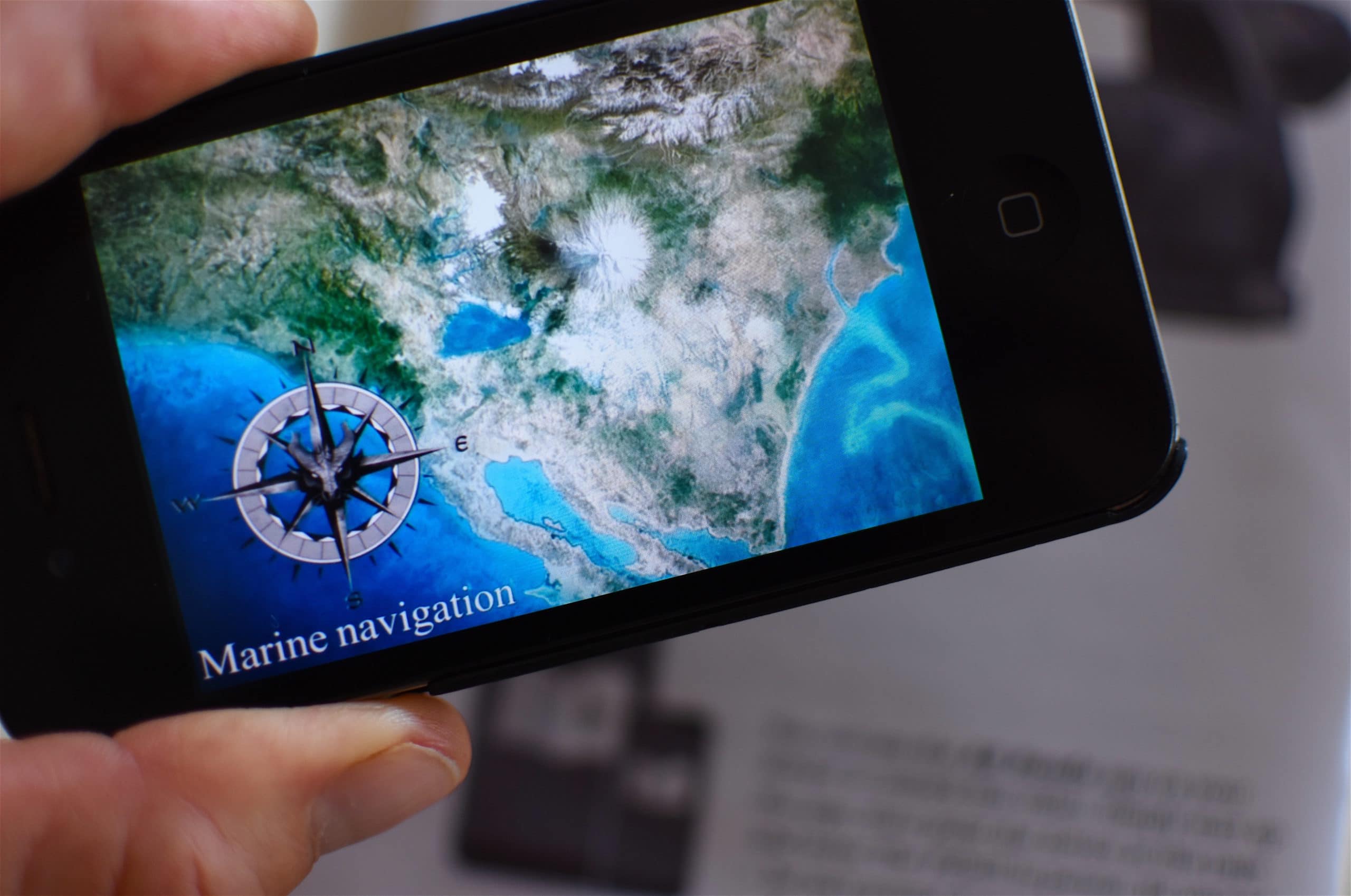
    View of the AR app in use

    “I knew nothing about dyslexia,” says Russell. “Then, our son was diagnosed, and suddenly a whole world was revealed. A chance meeting with a dyslexia advocate in a library in Christchurch led to my learning about the types of fonts, spacing, kerning, and justification that make reading more accessible for dyslexic children and adults. My first thought was: why isn’t this universal, used everywhere, widely known? It’s the very definition of a no-brainer.” Russell sought advice from specialists and made the changes to his Dragon Defenders series so that when they were released onto the global platform, they were immediately accessible to those readers.

    They’re also available on Kindle, and Russell was delighted to find that the app works just as well on e-reader screens.

    See more at
    https://www.youtube.com/watch?v=lh9zWzt9pMY


    He also set about narrating and recording the first two books of the series as audiobooks, which are now available on all audiobook retail platforms.

    To find out more, visit:https://dragonbrothersbooks.com/pages/augmented-reality

    The books are available on Amazon.
    The first book in the series is at:
    https://www.amazon.com/gp/product/B08QMLJLQM

  • Danny the Dragon by Robert Z. Hicks

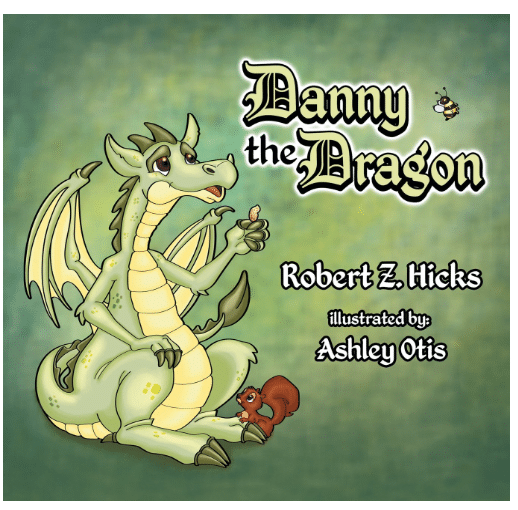
    Danny the Dragon by Robert Z. Hicks

    My children’s rhyming story picture book, Danny the Dragon, was at the Page Design department of my publisher when I picked up the Winter Bulletin of the Society of Children’s Book Writers and Illustrators. (SCBWI) An article by Dr. Theodore Cohen, PhD, “Are Authors Giving Up On 20% of Their Readers?” caught my attention.

    Dr. Cohen discussed things that helped children with language-based learning disabilities, especially those with dyslexia.

    Some of the things that Dr. Cohen mentioned, like a font that keeps space between letters (sans serif) spacing out lines of text, and enlarging the text, I had already implemented in my previous books. These readability elements help any child, not just those struggling to read. Prompted by his article, I informed our publisher we wanted Arial font, which is sans serif, and no right justification which can create irregular spacing between words.

    An email to the American Dyslexia Association asking for suggestions for making my book “dyslexic friendly” resulted in a response confirming our choice of font, and giving a suggestion to avoid “noise” behind letters, such as text over artwork. I was pleased that the American Dyslexia Association offered to look at my books.

    I was delighted to receive a message from American Dyslexia Association with the information that they had “tested” my books on school children, especially one girl said “she was delighted.”  In fact, the girl asked for two of the books to be read again! My books, especially Danny the Dragon, are now approved by the American Dyslexia Association.

    A serendipity occurred when I went online to see what Open Dyslexic font looked like. I found an article by dyslexia expert Dr. Guinevere Eden, a professor at Georgetown University and director of its Center for the Study of Learning. In the context of discussing the lack of research validating “dyslexic friendly” fonts, Dr. Eden stated: “The fundamental problem of dyslexia is in mapping the shapes of letters to the right sound units or phonemes.”

    The ”right sound units or phonemes” jumped out at me, because I had already learned that rhyming helps children make the connection for phonemic awareness!  And, my books are stories in rhyme!

    Another search of rhyming and dyslexia uncovered research by Usha Goswami, Professor of Cognitive Developmental Neuroscience at Cambridge. Dr. Goswami asserts: “Children who are dyslexic struggle with speech rhythm.” She suggests that children can overcome dyslexia by learning nursery rhymes, dancing, and singing, because the condition is caused by a lack of rhythm patterns in the brain.

    Rhyming with rhythm is what I do!

    Danny the Dragon is a rhyming story picture book with a rhythmic beat!

    “Danny the Dragon” is available on Barnes and Noble, and Amazon: https://www.amazon.com/Danny-Dragon-Robert-Z-Hicks/dp/1641912839

    To preview Robert’s books, visit his website at www.robertzhicks.com.

    Robert Z. Hicks

    “Mr. Bob”