
Tag: Reading

  • Mastering Word Formulation: How the AFS Method is Transforming Language Learning for Dyslexic Individuals

    Mastering Word Formulation: How the AFS Method is Transforming Language Learning for Dyslexic Individuals

    In the ever-evolving landscape of educational resources, innovative tools that cater to diverse learning needs are invaluable. For the millions of individuals worldwide who struggle with dyslexia, finding the right approach to language learning can make the difference between frustration and success.

    Enter Wordformulation.com — a platform dedicated to enhancing language acquisition through the proven AFS Method. Developed by Dr. Astrid Kopp-Duller, this structured approach to word formulation offers hope and practical solutions for individuals with dyslexia and other learning challenges.

    What Is the AFS Method?

    The AFS Method is far more than just another learning technique. Standing for Attention, Function, and Symptom training, it represents a comprehensive, research-backed approach designed specifically to address the unique challenges faced by dyslexic individuals.

    Here’s how each component works:

    Attention Training focuses on helping learners concentrate when working with letters, words, and symbols. Dyslexic individuals often experience attention lapses specifically when dealing with written language — not due to lack of effort, but because their brains process information differently.

    Function Training targets the underlying sensory perceptions that are essential for reading and writing. This includes visual differentiation, auditory memory, spatial orientation, and other cognitive functions that form the foundation of literacy skills.

    Symptom Training addresses the actual difficulties in reading and writing — but only after attention and functional skills have been strengthened. This is crucial: traditional approaches often jump straight to symptom training, which is why they frequently fail dyslexic learners.

    By addressing all three areas in a coordinated manner, the AFS Method ensures that learners receive targeted support tailored to their specific needs.

    Exploring Wordformulation.com

    Wordformulation.com serves as a practical treasure trove of resources for teaching and training in the English language. The platform offers a variety of exercises and materials designed with flexibility in mind — resources can be used both online and offline, accommodating educators, learners, and parents in various settings.

    The website is thoughtfully organized into grammatical categories:

    This structure allows users to focus on specific areas of interest or difficulty, making it easy to create customized learning paths based on individual needs.

    Why This Matters for Dyslexic Learners

    Dyslexia presents unique challenges in language acquisition that often require specialized strategies to overcome. Traditional teaching methods — which typically involve repetitive practice of the same material — rarely work for dyslexic learners. In fact, they often lead to frustration, decreased self-esteem, and a growing aversion to reading and writing.

    The AFS Method, as implemented on Wordformulation.com, takes a fundamentally different approach. By first strengthening attention and functional skills, learners build a solid foundation that makes symptom-level work (actual reading and writing practice) far more effective.

    The benefits extend beyond just improved literacy skills:

    • Increased confidence as learners experience genuine progress
    • Reduced frustration through appropriately targeted exercises
    • Better self-understanding as individuals learn how their minds work
    • Long-term skill development rather than short-term memorization

    Practical Application in Daily Learning

    One of the greatest strengths of Wordformulation.com is its practicality. The resources are designed for ease of use by:

    • Educators looking for effective classroom materials
    • Parents supporting their child’s learning journey at home
    • Learners themselves working independently to improve their skills

    Exercises can be completed online or printed for offline practice, accommodating various learning environments and preferences. The platform’s user-friendly interface ensures effortless navigation through different sections, making it a convenient tool for both daily practice and long-term learning strategies.

    The Science Behind the Success

    The development of the AFS Method by Dr. Astrid Kopp-Duller is grounded in decades of intensive work with individuals facing learning challenges. Since 1995, this approach has been refined through real-world experience with thousands of learners, contributing to its proven effectiveness.

    The method acknowledges a fundamental truth that many educational approaches overlook: dyslexic individuals are not “weak students” — they are people with a different way of processing information. This shift in perspective is transformative, both for the learners themselves and for those who support them.

    Getting Started

    Whether you’re an educator seeking effective teaching materials, a parent supporting your child’s learning journey, or a learner striving to improve your language skills, Wordformulation.com offers resources that can make a meaningful difference.

    The platform is free to explore, and the structured organization makes it easy to find exactly what you need. Start by identifying areas of difficulty, then work through the relevant exercises systematically.

    Remember: progress in language learning, especially for dyslexic individuals, is rarely linear. Celebrate small victories, maintain consistency, and trust in the process.

    Conclusion

    In a world where literacy is fundamental to success, tools like Wordformulation.com and approaches like the AFS Method are more important than ever. By offering specialized, research-backed resources that address the root causes of reading and writing difficulties, these platforms are helping countless individuals unlock their full potential.

    Explore Wordformulation.com today and discover how a different approach to language learning can open new doors for you or someone you care about.


    For more information about the AFS Method and comprehensive training in supporting dyslexic learners, visit www.dyslexiacertificate.com

    Wordformulation.com is a resource provided by the Austrian Dyslexia Association (EÖDL), celebrating 30 years of service to individuals with dyslexia and dyscalculia.

  • Unlocking the Pages – “Words Tangled” by Olivia Von Holt

    Unlocking the Pages – “Words Tangled” by Olivia Von Holt

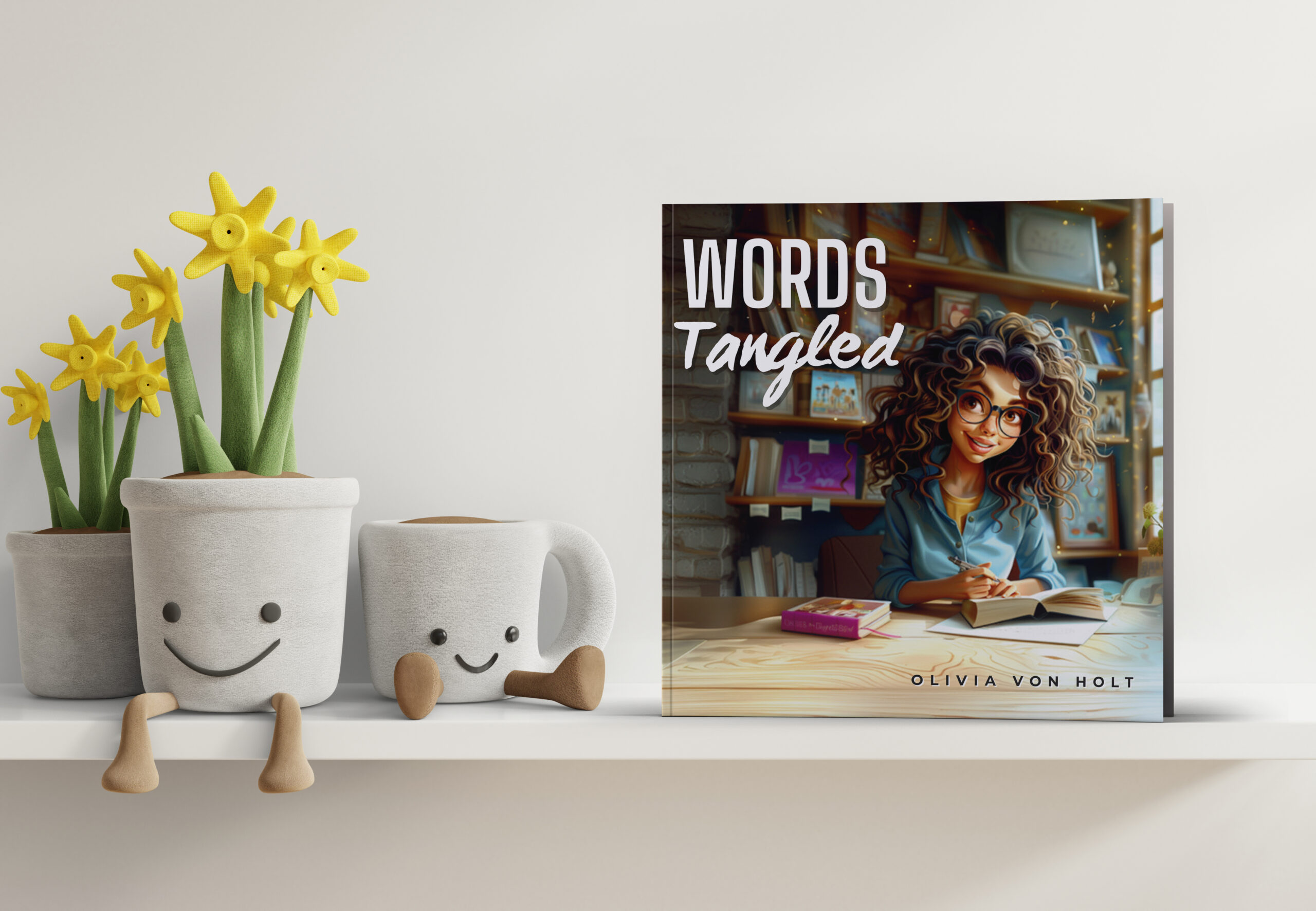
    Today, we dive into something deeply personal and incredibly important: the latest children’s book by Olivia Von Holt, “Words Tangled.” This narrative is not just another book; it stands as a beacon of hope and a tool for empowerment, especially for young readers navigating the challenging waves of dyslexia.

    The Heart of “Words Tangled”

    Crafted from Olivia’s own experiences, “Words Tangled” portrays the journey of a young girl growing up in two different cultures while grappling with dyslexia. This book aims to provide more than just a story; it’s designed as a strategic aid to help children and their caregivers understand and manage learning disabilities.

    Why This Book Matters for Dyslexics

    Dyslexia, a language-based learning disability, significantly impacts reading, writing, and spelling. Those with dyslexia often struggle with phonological processing, making it difficult to decode words, which affects their reading fluency and comprehension. “Words Tangled” introduces characters and scenarios that resonate with these challenges, making the invisible hurdles of dyslexia visible and comprehensible.

    Tools and Motivation Embedded in the Story

    A core element of Olivia Von Holt’s “Words Tangled” is the integration of multi-sensory learning strategies, which are crucial for readers with dyslexia. These multi-sensory teaching methods involve using sight, sound, and touch to help connect language to words, benefiting those who struggle with traditional reading methods. This approach aligns with educational strategies that emphasize engaging multiple senses to enhance learning and retention for children with dyslexia.

    Overall, “Words Tangled” by Olivia Von Holt is more than just a book; it’s a journey and a tool designed to inspire, educate, and support not only children with dyslexia but also parents, educators, and anyone involved in nurturing challenged readers. By sharing personal experiences and expert insights, Olivia aims to empower and equip her readers with the knowledge and tools they need to succeed and thrive despite their learning differences.

    For those interested in exploring more or purchasing “Words Tangled,” it is available on Amazon and directly from Olivia’s website at www.oliviavonholt.com. For further inquiries, Olivia can be contacted at [email protected], and for more interactive updates, follow her on Facebook. Join Olivia Von Holt in spreading the word and making a difference. Let’s open the world of reading to all children, showing them that with the right tools and understanding, every page is within reach.

  • Giving Gifts That Matter

    Giving Gifts That Matter

    By Linda Davis-Kyle

    Sometime ago when I entered my acupuncturist’s well-lit, but tiny, four-chair waiting room filled with the fragrance of frankincense, a mom and her two children were getting settled. The mom’s lap served as a comfy chair for her daughter who was about two years old. The little pink bow in her daughter’s curly golden hair was about to fall off. The mom raised and tightened the bow. She struggled a bit to hold the daughter and a small electronic game to pacify her son who leaned against her. His right hand clutched tightly to the inside of his mom’s left elbow. His dark blue jeans, red cotton shirt, and red sneakers were new and well cared for, just as both children obviously were.

    The mom and I smiled at each other and said, “Hello.” The youngsters and I simply smiled at each other, as I sat down.

    When I began to proofread a manuscript, the handsome little blue-eyed fellow immediately lost interest in the electronic game and abandoned his mom’s arm. He came near, leaned over between my work and me, and peered at my words with deep interest. I held my manuscript, in its portfolio that kept it sturdy and offered him my pen and the blank back side of several pages so that he could “write.”

    Ecstatic to be offered these tools and loving the attention, he scribbled lots of little waves, peaks, valleys, curves, and circles with joy for quite some time. I turned pages for him as if he were playing at a piano recital. He hugged my pen to his heart each time he finished a page. Sometimes he laughed a little between “sentences.” His mom, baby sister, and I watched as he filled almost four pages.

    When this young “writer” completed his pleasant task, I asked him to tell me about what he had written. He said, “Oh. It’s a story!” Then he proceeded to “read” about his mom, his dad, his little sister, and their dog and even their goldfish. His totally surprised mom looked on in awe and smiled from ear to ear.

    I swiftly gave this precious young “writer-in-the-making” the pages of his story along with my pen when the acupuncturist called me. As I said, “Goodbye,” my sincere hope was that his mom would continue to offer such writing fun to him daily.

    In Getting Teens to Write: Writing for Real, I quote Octavia Estelle Butler who said, “… write every day, no excuses.”

    Dyslexics and non-dyslexics alike often feel joy when they “write” at a tender age. Many writers of many ages feel joy when they write to express themselves. When we as parents, grandparents, step parents, single parents, foster parents, educators, teachers, homeschoolers, writing coaches, and friends give the gift of undivided attention to aspiring writers, we help them to see themselves in a positive light.

    If any struggles arise, if we give encouragement, then we give them a precious gift that can help them to keep on keeping on and never give up their dream to write.

    The following account appears in Helping Dyslexics to Write: Using Mind Maps for Fun.

    In Bloodchild and Other Stories, Octavia Estelle Butler said, “I pecked my stories out two fingered on the Remington portable typewriter” that she had begged her mother to buy for her when she was 10. Filled with ambition and drive, Butler also says that in junior high she asked Mr. Pfaff, her science teacher, to type one of her stories “the way it was supposed to be” for submission to a science fiction magazine. At age 12, she wrote the influential version for her Patternist series of science fiction novels.

    Butler reached an enviable height of success as she continued to write each day, year after year. Think how fortunate she was to have help to keep her dream alive and to see it bloom.

    Perseverance comes more easily when aspiring dyslexic and non-dyslexic writers are given thoughtful attention and useful instruction.

    Just like the seedlings that grow and thrive beautifully when they receive fresh air, gentle sun, clean water, and love from their gardeners, the very young, the ‘tweens, the teens, and those beyond, who long to write, will succeed when given the greatest gifts of all—attention, careful instruction, thoughtful evaluation to help them get on track and stay on task, and genuine admiration from those who care about enhancing and protecting their excellent mental, emotional, physical, and spiritual health.

    Having someone who truly cares and believes in aspiring writers helps them enormously to believe in themselves. And when they do believe in themselves, they can conquer obstacle after obstacle to win their writing goals and even go on to help other writers win, too.

    Sources

    Butler, Octavia Estelle. Bloodchild and Other Stories. New York: Seven Stories Press, 2005, p. 127.

    Davis-Kyle, Linda. Getting Teens to Write: Writing for Real. Austin: WritngNow.com, 2022.

    _______________. Helping Dyslexics to Write: Using Mind Maps for Fun. In progress. Excerpt reprinted here with permission.

    Linda Davis-Kyle, MA in English, has written several hundred general interest and fitness and health articles published in more than a dozen countries in North America, Europe, Africa, Asia, and Australia. WritingNow.com introduces her current ebooks available—Teaching English to Children, Getting Ready to Write, Getting Teens to Write, and Good Food Recipes for Your Kids to Make with Your Help. Her ebooks in progress are Helping Dyslexics to Write, Writing about Your Pets #1, Writing about Your Pets #2, and Writing about Classic Animal Films.

    Giving Gifts That Matter
    https://www.dyslexia.me/wp-content/uploads/2023/01/GivingGiftsThatMatter-ByLDK.pdf
  • Where and How Children Learn: My Experience with Discovering an Optimal Learning Experience

    Where and How Children Learn: My Experience with Discovering an Optimal Learning Experience

    Written by Annie Lacey

    Where: The Inner Universe of a Student With Divergent Learning 

    It was not too long ago, when my bright, creative third grader began to dread going to school, meeting each weekday morning with resistance, which at times was fierce.

    The human need to belong to a group is rooted in survival. School age children feel this instinct acutely – at home, on the playground, and of course, in the classroom. For many students with learning differences, the primary objective in a traditional classroom is not learning, but acting, so as not to appear unlike the others. And still, it is not uncommon for these students to be the bullseye for bullies. More frustratingly, efforts to help these students (special classes, tutors, adjusted seating, etc.) often serve only to further define the separateness and validate to the child that they are different

    I would know, I lived this through my daughter. I am the Director of Admissions for Oakland School, and my daughter, Hadley, is also a student here. I will never forget picking her up after her first day at Oakland School Summer Camp, watching her bounce into the car, gleaming, ‘Mom! These kids are just like me!’ 

    What I failed to fully appreciate until that moment was exactly how difficult her previous school experience had been for her.

    I was witnessing a child who had just set down the cumulative weight of years of punishing self-talk because she was the only one in her class who couldn’t keep up, had a tutor, and in her mind was un-like everyone else. At Oakland, Hadley discovered a place where learning did not equate to the emotional pain of embarrassment and struggle. Hadley was relieved.

    Margaret Shepherd, the founder of Oakland School, understood that learning in a traditional classroom is strained, if not near impossible, for a child who learns differently. She believed when a child feels truly safe in their environment, they can flourish. In the summer of 1950, Shepherd converted her historical family farm into Oakland School, a small co-ed day school and overnight summer camp program for elementary through middle school students. Set upon  a backdrop of rolling hills, forests, horses and other farm animals, Oakland began by first bringing children who didn’t learn like everyone else, together. 

    How: Implementing The Oakland Way 

    Oakland School is founded on a commitment to the individual learner, and a community that backs this mission. Small class sizes and one-to-one instruction are hallmarks of an Oakland School Education. 

    At Oakland School children become confident self-advocates, curious learners, and grow moral character. ‘Where every student thrives’ is not just an idea, it’s a promise we have been keeping for the better part of a century. 

    The Oakland Way is grounded in the belief that once phonics foundations are solid, confidence is established, and the learning process can accelerate. The program uses a synthesis of several pioneering approaches including: 

    Oakland School teachers are well versed in these techniques, and most have advanced degrees and specializations – and some, decades of experience working with children who learn differently.  One example is Oakland School’s horseback riding instructor, Sarah Bailey. For close to 30 years Sarah has been guiding Oakland students to respect, care for and ride a horse – helping these children to build confidence, set goals, focus, and work as a team. Believing children can – and will – attain success is at the core of an Oakland School education.

    As Director of Admissions, the best part of my job is giving prospective students and their families a tour of the grounds. Oakland School, once just an 18th century farmhouse with outbuildings set on 450 acres, is a welcoming environment in every sense. Class sizes are small with an emphasis on multisensory and experiential learning. Foundations are built through individualized learning plans that are calibrated regularly. Children work at their own pace and to their own strengths.

    Almost always on our tours we see a teacher working one-to-one with a student, children working independently or in small groups – with at least one volunteer eager to share what they love most about Oakland School. It is usually at this point of the tour, when, just like my daughter, the prospective student and family realize that learning can – and should – be a wonderful experience.

  • When You Write p I See d

    by Margaret DeMarchi

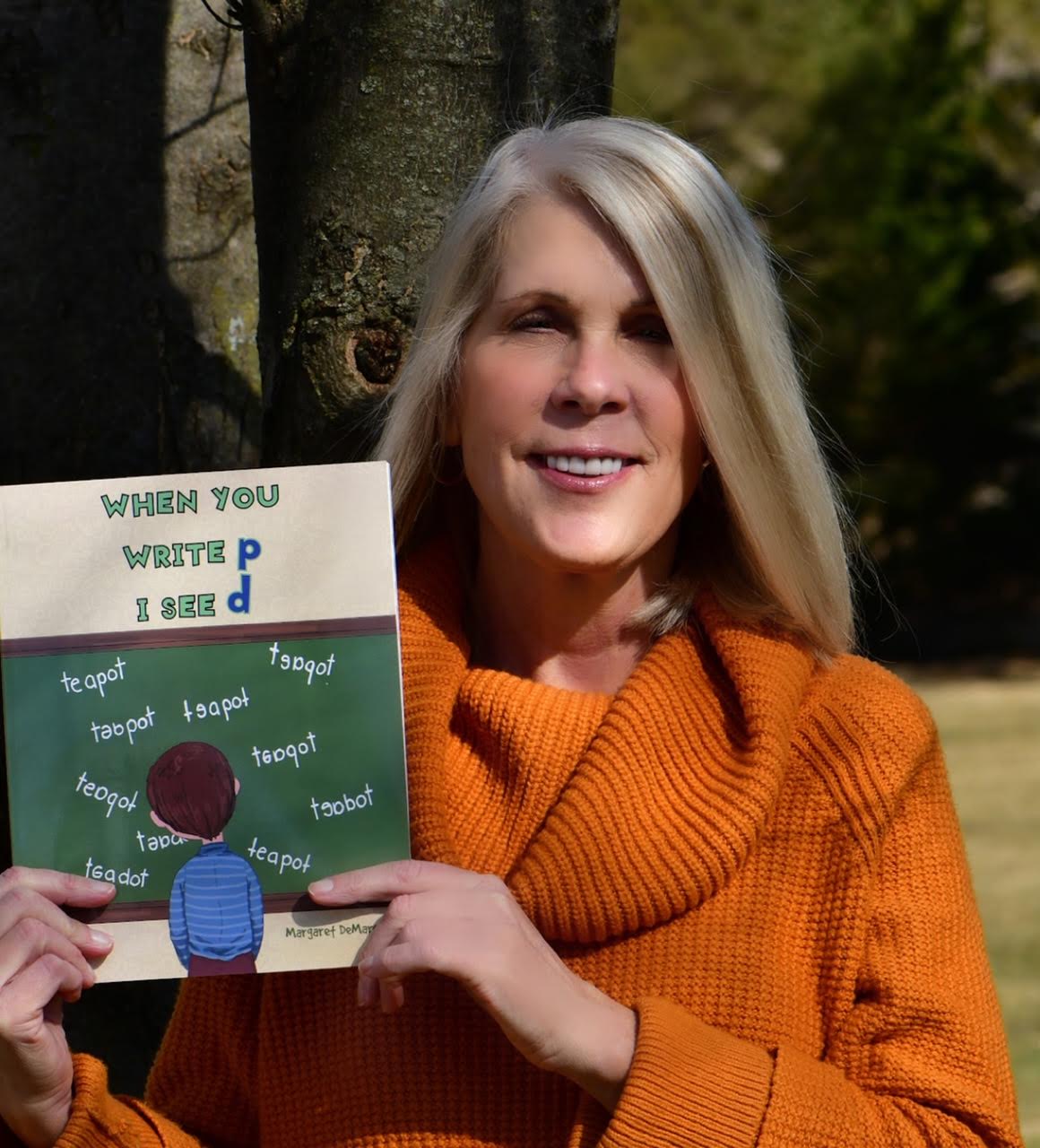
    Attention to the social and emotional well-being of children has come to the forefront of education in recent years with good reason. As a special education teacher for the first 25 years of my teaching career, one of the greatest challenges I faced each day was helping children with dyslexia to believe in themselves and, most importantly, their ability to learn. While there is now a wealth of information to support and inform adults and educational professionals about dyslexia, little is available to help children understand and cope with their disability. Quite simply, I wrote When You Write p I See d to fill that void and to provide young children a necessary foundation of confidence and create a positive self-image to help them overcome the social and emotional challenges they face every day due to dyslexia or other learning disabilities. In short, the goal of this book is to empower students with the knowledge that they are not ‘dumb’ or ‘stupid’, but simply need to learn in a way that is different than their peers, and that’s okay! So often students, particularly those who are dyslexic, feel isolated and alone, that they are the only ones facing these challenges as they quietly watch their classmates quickly and easily decode a text or story and wonder why the same task seems so difficult or even impossible for them. With each passing grade level, feelings of insecurity and self-doubt grow until giving up, or acting out, seems the best choice.

    This story works to empower young learners, giving them the confidence to believe in themselves and achieve academic success by showcasing a character they can relate to, someone who looks like them, and faces the same challenges dealing with dyslexia. The character doubts himself, but learns he is special, smart and ultimately, successful, learning how to read and all the joy that accomplishment brings. A serious topic, dyslexia is shared in a kid-friendly story, with illustrations and a rhyming, engaging tone children will enjoy. Learning about new things, reading stories filled with fun and imagination is not out of reach for any student. Learning should be fun and my story, When You Write p I See d, shows every student that it is possible to enjoy reading and be a successful student.

    Amazon: https://www.amazon.com/When-You-Write-Margaret- Demarchi/dp/1637109652/ref=sr_1_1?keywords=When+You+Write+p+I+See+d&qid=1639059835& sr=8-1

    Barnes & Noble: https://www.barnesandnoble.com/w/when-you-write-p-i-see-d-margaret- demarchi/1140670262?ean=978163710965

  • 8 Fun Exercises To Improve Speech And Vocabulary To Try At Home

    Written by Lily Brooks

    Anyone who has ever had a speech therapy session knows that it is an insightful and helpful experience. Speech therapists have spent years advising their patients about how to improve their speech, voice, and communication skills on an individual level. However, there are some techniques that can also be done at home between sessions with your therapist or independently. In this blog post, we will discuss 8 different techniques for improving your kid’s speech quality at home! Speech therapy may also be necessary in some cases of dyslexia if problems with articulation persist. The following fun exercises can be done to improve speech and vocabulary in any child regardless if professional intervention is required by a speech therapist.

    1. Introduce a new word to your child every day

    If your child is able to learn new words, then this technique can be helpful! Introducing a word every day forces them to think about the meaning of that word and how they say it. It also gives you an opportunity to point out similarities between different words (e.g., shoe and chew).

    This exercise should not take more than one minute per day. You can use a word list as an easy way to find new words for introduction each day! Learning new words can help children to be more expressive and feel confident in their abilities to communicate!

    2. Play games with your child that increase their vocabulary

    Many games and activities will help your child to be more expressive! For example, you can play “I Spy” or Guess Who. Ask questions that require a lot of words (e.g., What is this? How many colors are there in the sky?)

    Playing these types of games encourages children to use their vocabulary and gives them the opportunity to express themselves.

    3. Encourage your child to read more often and in different genres, like magazines or comics

    Reading books or magazines is great for children because it allows them to be exposed to new words and ideas. You can also encourage your child to read in different genres, like comics! 

    This will help make reading more fun and they may learn something new from the book that they wouldn’t have found in a typical novel.

    4. Use puppets as a fun way for children to practice conversation skills

    A puppet is a perfect way to engage children in conversation and it is easier for them to express themselves. Puppets are also really fun because parents can act out the part of the puppet too! 

    This will help your child feel more confident about speaking with others while getting lots of practice at communication. (Note: Puppets are for children that have speech delays and need to work on their language skills.)

    5. Get kids involved in cooking so they can learn about healthy food choices and how to prepare them 

    Use cooking as a way to get your kids involved in healthy eating and making wise food choices. 

    Some ways you can do this are by having them read through cookbooks with recipes that appeal to their interests or letting them spend time looking at online recipe ideas on the internet. This will help give them information about what they should eat, and what they should avoid. 

    More importantly, it will let them explore the science of cooking so that when they grow up they’ll know how to cook for themselves or learn new recipes on their own!

    6. Have kids act out stories from books or movies together 

    Have kids act out stories from books or movies together – one person should be the narrator while the others are characters in the story. 

    We’ll teach you how to have kids act out stories from books or movies together! One person should be the narrator while the others are characters in the story.  For example, one child is a character and another is an obstacle in the way. The narrator should tell them what to say and how they’re feeling as their emotions change throughout the scene, while the other child takes on a different role like a best friend or bully, depending on what’s going in that part of the story.

    7. Practice tongue twisters to improve their articulation

    Kids should practice tongue twisters to improve articulation. 

    Here are some fun ones: “How much wood would a woodchuck chuck if the woodchuck could chuck wood?” and “What’s in the red box with hornets?” These will help your child improve articulation, and they’re a lot of fun to say.

    8. Read books aloud for at least 5 minutes each day and let them draw or scribble something related to the reading material

    Children should read books aloud with an adult, or one-on-one. This will help them improve their articulation and reading skills while also improving their oral language. 

    Additionally, children can draw something related to the book they are reading. Research has shown that this activity facilitates the development of drawing skills in early childhood as well as improves literacy and language skills. This technique is ideal for children with dyslexia because it helps them improve their reading skills while boosting vocabulary.

    Nasal speech therapy activities should be done at home to help children with speech disorders. 

    The best way for parents and teachers to work on nasal speech therapy is by reading books aloud. Reading a story from the point of view of different characters can also help kids improve their articulation skills without even realizing it!

    ____________________________________________________________________

    Why these techniques work: These speech therapy techniques are a great way to help improve articulation and reading skills in children, who may have trouble with their oral communication due to developmental delays or other health issues. They’re also easy to implement at home, making them an ideal choice for parents of young kids. 

    Speech therapy is a really great way for your child to learn more about themselves, what they want in life, and how they can go after those things. 

    But you don’t always need access to professional help from a therapist – there are many things that you can do at home with your child.

    Children may be struggling in school because they cannot get their thoughts out when talking to others. This is a big reason why so many children have speech delays and need speech therapy help from professionals – but there are lots of ways for parents to work on these skills, too! 

  • Kids Can’t Wait: Strategies to Support Struggling Readers

    By Kyle Redford – YCDC Education Editor

    Strategies to Support Struggling Readers Which Don’t Require a Ph.D. in Neuropsychology

    I have a confession to make.  It involves a basic failure on my behalf.  What’s worse, my failure impacted students whom I care deeply about: students with dyslexia and other language-based learning challenges. It involved waiting for test results before putting accommodations in place for students who were struggling in my class. Of course I didn’t fail them intentionally, and by about the third time I got an evaluation back that pretty much said what I imagined it would, I started putting help in place for the student right away. The discovery of my own blind spot led me to wonder if other teachers were accidentally failing their students in similar ways.

    For many years, this is what I did: I would identify a student who was having problems, make some basic observations about what was particularly difficult for him, and then request further information about the student in the form of screening, special tests, and/or a learning evaluation.  I would then wait for a report before taking further action. I  am often haunted by memories of a particular former eighth-grade history student whose contributions to our discussions put him at the top of the class, but his written answers on tests and essays were always weak and minimalist and put him only in the high C range.  At the time, I thought it was sufficient to label this descrepancy and recommend that he get a formal evaluation.  I suspected a test would reveal that he was dyslexic.  His English teacher concurred.  Unfortunately, his father would have nothing to do with outside testing, so my brilliant student received low Bs in my class and never got the help he needed to express what he knew.

    But really, what was I waiting for? If asked, I would have responded that I needed more specific information about the student before I could know best how to support him. To many readers, I am sure that response sounds legitimate and reasonable. However, my confession is aimed at fellow teachers who will understand why my delay was unnecessary.  I know that I am not alone when I admit that I can usually make general assumptions about what a learning evaluation is going to say before the results are in.  Most often the report confirms what I had intuitively guessed about the student.  As personally validating and satisfying as that confirmation often is, it should not be a prerequisite to providing timely critical accommodations to my students.

    Immediately employing accommodations makes sense for many reasons.  First, evaluations take time to schedule and complete.  Why waste time waiting to have suspicions confirmed before helping a student?  Secondly, there are those untidy problems of cost and access.  Testing and evaluations are expensive and for many an unobtainable luxury.  For a variety of reasons, public schools can be stingy with these resources, and many independent schools wrongly assume that parents can afford this expense on top of the cost of the school’s tuition.  Consequently, many students who need the help that an evaluation can provide are denied it.

    I need to be clear about something—I remain an enthusiastic proponent of testing and evaluations.  Teachers are greatly assisted by the critical information that they yield. Outside testing provided by learning specialists offers a unique opportunity to isolate many classroom variables and specifically reveal and identify students’ academic strengths and weaknesses. Additionally, testing helps assess how extreme students’ gaps are, and what level of response is necessary.  That information is a real gift to teachers, parents, and most importantly, students, and it is a gift that keeps on giving because tests allow future teachers to understand the student’s profile.  Lastly, evaluations are required for students to qualify for accommodations on high-stakes tests such as SATs, ACTs and state exams.  All indentified students should be provided access to them.

    For A Student Struggling with Understanding the Classroom Reading Assignments

    • Suggest listening to audiobooks or identify a willing adult to read the assigned book to the student.  Recommend that students read along with the audiobook version or to follow the words alongside the reader.  The more often a struggling reader is exposed to the way they words look, the better. Exposure to the page helps students learn the architecture of sentences.  This also helps with spelling and conventions.
    • Suggest use of assistive technologies currently available that read material aloud to the student.  The Kindle, the iPad, or Google’s Nexus tablet, would be examples of this kind of technology, but there are many similar devices being introduced into the market all the time. Click here to read a comparison of these tablets.
    • If the book/content has been made into a film or covered in a film, suggest that the student watch it to help give a context to the story or content.
    • Offer extra time to finish reading assignments. Dyslexic and struggling readers need more time to read assigned material.
    • Provide class syllabuses in advance. Allow the student to read assignments ahead over the school breaks and the summer. This can help the student get a head start so that when the school year takes on its full momentum she is prepared and has had an opportunity to work ahead to absorb the increased volume of work.
    • Recommend reading books with larger fonts.  Hardback versions from the library are visually easier and E-readers offers the ability to adjust the font size as well.
    • Recommend books that may be shorter or less dense but equally rich in ideas and story for independent reading time. (Click here for a kid-tested reading list.) It is important to recommend the book with enthusiasm, the same enthusiasm typically reserved for more sophisticated titles. Read well-written, easier books yourself, out loud to the class, and recommend them to all students so the struggling students can read them without shame.  The objective is to get struggling readers to read AND to like it. (For more on creating a classroom culture for struggling readers, click here.)
    • Recommend graphic novels. (Click here for a listing of kid-approved ones.) Graphic novels provide struggling readers with a way of strengthening their vocabularies, build their reading confidence, and foster their appreciation of story. Graphic novels can also help support a reader’s understanding of everything from Greek Mythology to Shakespheare.Dictating ideas to an adult can help a student get started with their writing by generating an idea bank that they can draw from. (They also won’t get caught up  worrying about how to spell those words)

    Continue reading: http://www.dyslexia.yale.edu/resources/educators/instruction/kids-cant-wait-strategies-to-support-struggling-readers/

  • Dyslexia and the Brain

    Dyslexia and the Brain

    Researchers are continually conducting studies to learn more about the causes of dyslexia, early identification of dyslexia, and the most effective treatments for dyslexia.

    Developmental dyslexia is associated with difficulty in processing the orthography (the written form) and phonology (the sound structure) of language. As a way to understand the origin of these problems, neuroimaging studies have examined brain anatomy and function of people with and without dyslexia. These studies are also contributing to our understanding of the role of the brain in dyslexia, which can provide useful information for developing successful reading interventions and pinpointing certain genes that may also be involved.

    What is brain imaging?

    A number of techniques are available to visualize brain anatomy and function. A commonly used tool is magnetic resonance imaging (MRI), which creates images that can reveal information about brain anatomy (e.g., the amount of gray and white matter, the integrity of white matter), brain metabolites (chemicals used in the brain for communication between brain cells), and brain function (where large pools of neurons are active). Functional MRI (fMRI) is based on the physiological principle that activity in the brain (where neurons are “firing”) is associated with an increase of blood flow to that specific part of the brain. The MRI signal bears indirect information about increases in blood flow. From this signal, researchers infer the location and amount of activity that is associated with a task, such as reading single words, that the research participants are performing in the scanner. Data from these studies are typically collected on groups of people rather than individuals for research purposes only—not to diagnose individuals with dyslexia.

    Which brain areas are involved in reading?

    Since reading is a cultural invention that arose after the evolution of modern humans, no single location within the brain serves as a reading center. Instead, brain regions that sub serve other functions, such as spoken language and object recognition, are redirected (rather than innately specified) for the purpose of reading (Dehaene & Cohen, 2007). Reading involves multiple cognitive processes, two of which have been of particular interest to researchers: 1) grapheme-phoneme mapping in which combinations of letters (graphemes) are mapped onto their corresponding sounds (phonemes) and the words are thus “decoded,” and 2) visual word form recognition for mapping of familiar words onto their mental representations. Together, these processes allow us to pronounce words and gain access to meaning. In accordance with these cognitive processes, studies in adults and children have demonstrated that reading is supported by a network of regions in the left hemisphere (Price, 2012), including the occipito-temporal, temporo-parietal, and inferior frontal cortices. The occipito-temporal cortex holds the “visual word form area.” Both the temporo-parietal and inferior frontal cortices play a role in phonological and semantic processing of words, with inferior frontal cortex also involved in the formation of speech sounds. These areas have been shown to change as we age (Turkeltaub, et al., 2003) and are altered in people with dyslexia (Richlan et al., 2011).

    What have brain images revealed about brain structure in dyslexia?

    Evidence of a connection between dyslexia and the structure of the brain was first discovered by examining the anatomy of brains of deceased adults who had dyslexia during their lifetimes. The left-greater-than-right asymmetry typically seen in the left hemisphere temporal lobe (planum temporale) was not found in these brains (Galaburda & Kemper, 1979), and ectopias (a displacement of brain tissue to the surface of the brain) were noted (Galaburda, et al., 1985). Then investigators began to use MRI to search for structural images in the brains of research volunteers with and without dyslexia. Current imaging techniques have revealed less gray and white matter volume and altered white matter integrity in left hemisphere occipito-temporal and temporo-parietal areas. Researchers are still investigating how these findings are influenced by a person’s language and writing systems.

    What have brain images revealed about brain function in dyslexia?

    Early functional studies were limited to adults because they employed invasive techniques that require radioactive materials. The field of human brain mapping greatly benefited from the invention of fMRI. fMRI does not require the use of radioactive tracers, so it is safe for children and adults and can be used repeatedly which facilitates longitudinal studies of development and intervention. First used to study dyslexia in 1996 (Eden et al., 1996), fMRI has since been widely used to study the brain’s role in reading and its components (phonology, orthography, and semantics). Studies from different countries have converged in findings of altered left-hemisphere areas (Richlan et al., 2011), including ventral occipito-temporal, temporo-parietal, and inferior frontal cortices (and their connections). Results of these studies confirm the universality of dyslexia across different world languages.

    Continue reading article: https://dyslexiaida.org/dyslexia-and-the-brain-fact-sheet/

  • What is dyslexia and what can be done to help?

    by David Morgan | 2 April 2019

    Dyslexia can make learning to read a real challenge, but dyslexics are often exceptionally bright children, with incredible potential. We find that – with the right targeted support – every dyslexic can crack the code and start reading and writing well.

    If your child is struggling with dyslexia, he or she isn’t alone. According to Chris Horn of the University of South Carolina, an estimated 6 to 10 percent of today’s students face this learning challenge. Some say that the percentage could be even closer to 20, since many people struggle with their reading and exhibit dyslexic patterns, but do not fit exact testing criteria.

    20% is roughly the number of adults who have passed through the school system and not learned to read in the USA, according to the National Center for Education Statistics. Such statistics shed light on just how widespread reading difficulties are. However, this doesn’t change the fact that it can feel scary and overwhelming— especially when you’ve just received a diagnosis of dyslexia for yourself or your child.

    But what does a diagnosis of dyslexia mean? Does it mean that learning to read is impossible? Is dyslexia a lifetime disability?

    At Helping Children to Read, our answer is a resounding “no!”

    Instead, our research has shown that almost all dyslexics can learn to read and spell. In fact, we have not had a single dyslexic not learn to read well on completion of our home support process in recent years. Most can reach the middle or top of their class. It is our experience that with the right tools, every child can gain the skills they need to read fluently and well. It is our mission to get those tools into the hands of every child.

    Rethinking dyslexia: a label, not a diagnosis

    When someone is given a dyslexia diagnosis, our greatest worry is that they take it as a label of disability, with a sentence of lifetime reading struggles. Some specialists will suggest this is the case, and say that a dyslexic child should accept the situation and switch to using “practical” tools like read-to-me software as a workaround.

    We understand that if you have not seen dyslexics learn to read, then that would seem like good advice. But we could not disagree more with that view!

    Learning with conventional phonics is often hard for dyslexics, but there are new and different strategies. If you support the decoding of words in the right way, children with dyslexia can still become proficient at it quite quickly, with good comprehension. By using trainertext visual phonics to help with the decoding and by addressing other causes of difficulty, we fundamentally change the way that dyslexics approach the written word. Once that switch of strategy has occurred, their reading can start to fly.

    Continue reading article here:

    https://www.helpingchildrentoread.com/articles/what-is-dyslexia/