TextProject is a website offering high-quality student texts and teacher guides, all of which are available for free download. Text for students, vocabulary lessons and lists, professional development modules and videos – TextProject provides a world of open-access resources for teachers, teacher educators, parents, tutors, and students.
Some examples of the resources you’ll find:
BeginningReads™
TextProject’s BeginningReads program supports teachers, parents, and tutors in helping children develop their reading skills. The goal of BeginningReads is to connect students’ oral language knowledge with written language. Ten levels (of 12 books each) are available. More information: click here.
FYI for kids
A collection of engaging and high-quality magazine articles designed to enhance the Common Core classroom’s reading repertoire. More information: click here.
SummerReads™
Students who don’t read much over the summer show a decline in reading performance from the end of one grade to the start of the next. Research shows that even reading 4 or 5 books over the summer helps to prevent the summer slump. SummerReads are accessible, engaging texts for at-risk readers… for FREE! And there are enough texts for an entire summer of reading. More information: click here.
Dyslexia affects up to 1 in 5 people, but the experience of dyslexia isn’t always the same. This difficulty in processing language exists along a spectrum — one that doesn’t necessarily fit with labels like “normal” and “defective.” Kelli Sandman-Hurley urges us to think again about dyslexic brain function and to celebrate the neurodiversity of the human brain.
Dr. Sally Shaywitz recently wrote, “In the case of dyslexia, (while there is always the desire for more), there is currently sufficient knowledge to do a far better job in identifying, intervening in, and accommodating dyslexia. There is an unacceptable and harmful wide gap between the robust existing science of dyslexia and how this knowledge is implemented, typically not implemented, by schools. In dyslexia, there is not a knowledge gap but rather an action gap. As a consequence, dyslexic children frequently go unidentified, unremediated, and unaccommodated, with great harm to the children, to their families, and to society. Educators must act to translate this body of converging science into policy and practice. Our children’s lives and futures (human capital) are too precious to waste.” We could not agree more!
Watch this compelling video and then visit “What is dyslexia?” on Ed.ted for more information, discussions, and links.
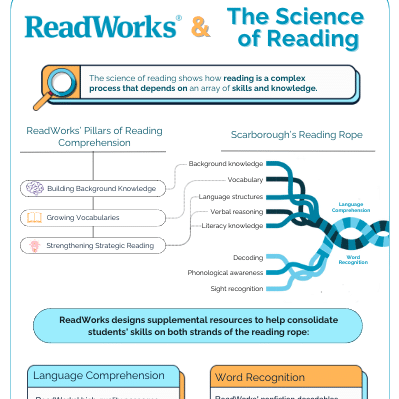
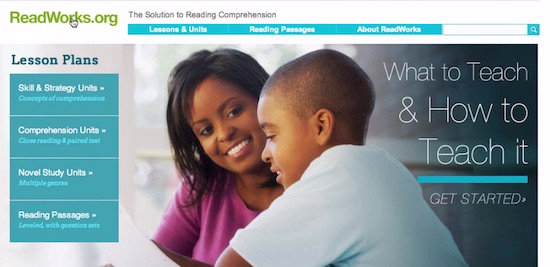
Can children learn reading comprehension? Of course, they can. Thanks to ReadWorks, this is not even expensive. In fact, it is completely free. This non-profit site offers research-proven tools so that students can improve their academic achievement.
ReadWorks provides research-based units, lessons, and authentic, leveled non-fiction and literary passages online, for free, to be shared broadly. The curriculum is aligned to the Common Core State Standards and the standards of all 50 states. Most importantly, ReadWorks is faithful to the most effective research-proven instructional practices in reading comprehension.
ReadWorks is completely free. You only need to register to access all the resources.
Reading to children has been repeatedly shown to improve their reading, writing, and communication skills, logical thinking, concentration, and general academic aptitude… as well as inspire a love of reading. The Screen Actors Guild Foundation records well-known actors reading children’s books and makes graphically dynamic videos so that children around the world can be read to with just the click of a Storyline Online video book image. The videos are free, and there is no need to register. Enjoy!
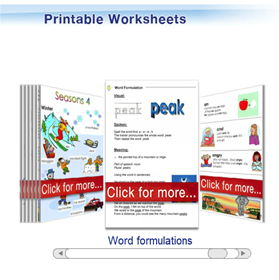
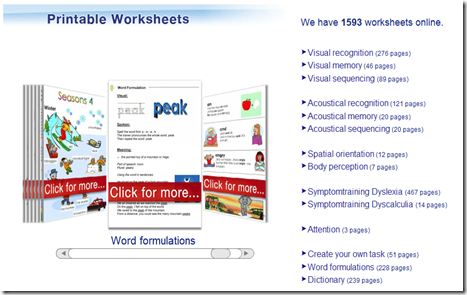
The American Dyslexia Association offers more than 1,500 free worksheets on its website. They are built on the AFS method, the approach used worldwide in individualized dyslexia and dyscalculia training. Everything is free to download, and you may use it at school, at home, or in tutoring.
When a child has dyslexia or dyscalculia, correcting the errors alone changes very little. The errors are the visible end of a longer chain. A child also has to be able to hold attention through a whole page, and the senses that carry reading, writing, and calculating have to be trained alongside the schoolwork itself. That is the reasoning behind the way these worksheets are organized.
What the worksheets cover
AFS stands for Attention, Function, and Symptom, and the collection follows those three areas.
Attention. Short, focused exercises that ask a child to stay with one task and notice detail. Find the shape, spot the difference, match the pair, complete the pattern.
Function. Training for the sensory perceptions that reading and arithmetic rest on: visual and spatial perception, visual and auditory sequencing, differentiation, and memory. This is the part most worksheet collections leave out entirely.
Symptom. The schoolwork itself. Letter recognition, reading, spelling patterns, number decomposition, counting, and the four basic operations.
Who they are for
Most sheets suit children in kindergarten through the elementary grades, roughly ages 5 to 11, and many work well with older children who need to rebuild a foundation without being handed material that looks babyish. Parents, classroom teachers, homeschooling families, tutors, and Certified Dyslexia Trainers all use them. No account and no sign-up is required.
How to use them so they actually help
Short and often beats long and rare. Ten focused minutes a day does more than an hour on Sunday.
Take all three areas, not just the last one. A child who only ever practices spelling is practicing the symptom while the cause stays where it was.
Stop while it is still going well. Ending on success is what makes a child willing to sit down again tomorrow.
Watch how the child works, not only what the answer is. Where the eye jumps, where attention slips, and which errors repeat tell you more than a score.
Print rather than fill in on screen where you can. Handling the paper, tracing, cutting, and coloring are part of the exercise.
More free material on this blog
The worksheet library is not the only free resource here. Our own printable freebies are published regularly and cover perception training, counting, tracing, and seasonal activities. For handwriting practice you can build your own sheets with the handwriting worksheet generator, and there is a matching tool for printable math worksheets if arithmetic is the harder subject at your kitchen table. The freebies overview page collects the lot.
If you want to work this way professionally
Worksheets support training, but they do not replace knowing which area a particular child needs. That is what the AFS-Test establishes and what trainers learn to read. If you work with children and want the full picture, the ADA-accredited certification for dyslexia trainers teaches the testing and the training together, and the first lesson is free to read.
More free material: our complete list of free dyslexia resources for parents and teachers covers worksheets, generators, daily exercises, a free math app, and a parents portal, plus how much daily practice a child needs.
More on this topic: the worksheets are free because the American Dyslexia Association is a 501(c)(3) public charity, supported by donations and memberships. Read what ADA’s 501(c)(3) dyslexia charity status means.
New for Halloween: download 10 free Halloween worksheets that train seeing, hearing, counting, and reading, with an answer key for parents and teachers.
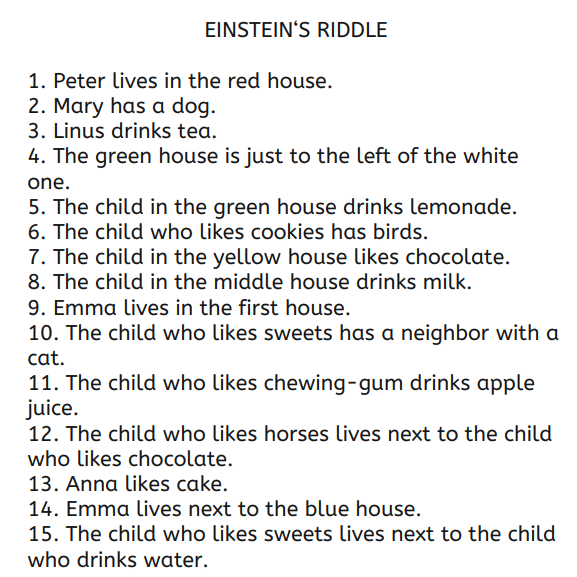
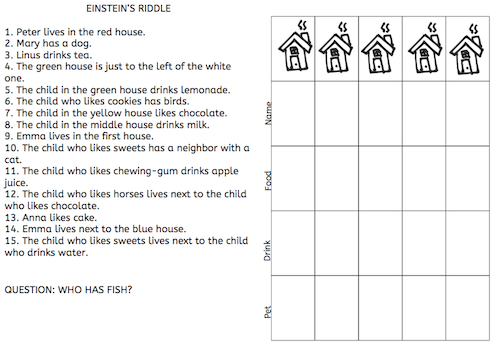
Einstein is said to have claimed that only 2 percent of the world can solve this puzzle. There is no evidence he wrote it, and no evidence for the 2 percent either. We will make the opposite claim: anyone who reads carefully and combines patiently can solve it. Children can too, with a little help depending on age and reading experience.
We rewrote the classic riddle in a version for children. No smoking and no alcohol, sweets and soft drinks instead. The question stays the same: who owns the fish?
It is a logic grid puzzle, sometimes called a zebra puzzle. You are given five houses in a row, each with a different color, a different owner, a different drink, a different sweet, and a different pet. A list of clues tells you how these things relate to one another. Nothing is guessed. Every single answer can be derived from the clues, and there is exactly one solution.
How to solve it
The trick is not cleverness. It is a system. Anyone who works through it in order will get there.
Draw the grid. Five columns for the five houses, one row for each category. Everything you learn goes into the grid, never into your head.
Start with the clues that fix a position. Any clue that names a specific house, or the middle, or the first one on the left, is a free answer. Fill those in first.
Then use the clues that link two things. If the person who drinks milk sits next to the green house, you may not know where yet, but you know they are neighbors.
Cross out what is impossible. This is the part most people skip and it is where the puzzle is actually won. Every time you place something, five other options die.
Go around again. Each new entry unlocks a clue that was useless a moment ago. Read the whole list again after every entry.
Why we put a logic puzzle on a dyslexia blog
Because of what it asks for. Reading a clue exactly as it is written, holding several conditions in mind at once, working in an ordered sequence, and staying with a task long enough to finish it are the same skills that carry reading and arithmetic. A puzzle trains them without any of it looking like schoolwork, and a child who has spent the school day being corrected gets to be the one who is right.
Read the clues aloud together if the reading itself is the hard part. The point of the exercise is the combining, not the decoding, and there is no reason a child should fail at the first step for the wrong reason.
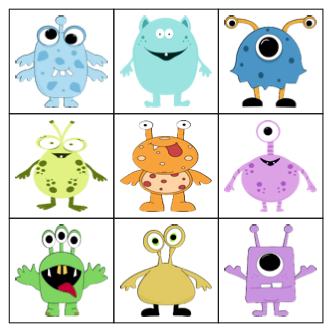
Today’s freebie is monster reading puzzles. First, the children cut out the pictures. Then, they read the instructions and place the images in the correct place. This trains attention, visual and spatial perception, and accurate reading. Cutting and gluing the pictures is good for fine motor skills. An alternative is to read the instructions to the children. This trains careful listening. We like these reading puzzles a lot, because children practice different perceptions and accurate reading or listening. Also, the children have great fun and are happy when all the pictures are in the correct place.
Today’s freebie offers you lots and lots of worksheets to practice letters. Print out the worksheets, and if you feel like it, cut out the cards and laminate them. Children can practice all upper-case and lower-case letters. They have to recognize which letters are correct. Sometimes the letters are mirrored or standing upside down. These exercises will help your child to better recognize single letters, which helps them become a better reader.
Fluent readers are readers who not only sound good while they’re reading, but who also understand what they’re reading. And by “good,” I mean that when they read, they sound natural and conversational, not choppy or disconnected. We all know how hard it is to listen to non-fluent reading, and we all know how fluent reading should sound. But how do we help them get from non-fluent to fluent? What should parents do when their kids are not fluent readers? And more importantly, what can parents do to help their children read more fluently? CONTINUE READING
As an Amazon Associate I earn from qualifying purchases.