Category: News

  • A message from Tomos Roberts, Author of “The Horse Lord” and “Rose’s Story”

    A message from Tomos Roberts, Author of “The Horse Lord” and “Rose’s Story”

    I was diagnosed with dyslexia at age 7. It was my mother who noticed it to start off with, as I had been able to get past my lack of reading by memorizing books from people reading them to me. The big issue at this time was reading, which I found incredibly hard, and that meant my writing was reams behind my classmates.

    This all came to a head with my mum sending me to go and see a specialist teacher on the weekends, who helped me start to untangle the strange symbols into letters, and then into words, but by this time, I was far behind my friends in my writing. The good news was that as soon as I understood the letters I could read the words, in some fashion, and from there I started to fully grasp the English language and catapulted forwards with my reading, going from the worst in my class to one of the best readers – all in the space of a year or two and kindling a new found love of books that remains to this day. Sad to say, though, I wasn’t out of the woods; in fact, this is where the real issue with my dyslexia started.

    Now I could read, articulate myself as well as the best of them, and had no real downside to my reading, so no obvious outward expression of my dyslexia until I started to write, and it was there I really showed how severe I had it. The fact was that most teachers, classmates, and the like couldn’t understand anything I wrote, so I stopped writing and did the bare minimum of notes in class, which was fine due to my ability to memorize things fairly well. I could still cope in class, but writing each year became more and more of an issue as the assessments got longer and longer, and my ability to string a coherent sentence together got weaker and weaker, resulting in the need for a scribe for my GCSE and A-levels. An issue that was slightly embarrassing at the time. But because I was good verbally and my recall was fine, I was able to sit for my exams, which I passed, and then I went to university. During my exam years I had stopped having specialist support lessons and help from teachers to try and improve my writing because of the severity of my writing meant that I had reached a point where the staff of the school I was at, as well as the staff at my university, didn’t know what to do me, being in the top 1% of dyslexic in the world. But although my writing structure could not improve, having a scribe in the exams allowed me to speak the answers, and as I could read and memorize things, this was fine. However, my lack of writing made it harder to really relate to people work-wise, as people couldn’t understand my emails, and most people find my text messages difficult to decipher!!

    My biggest issue at university, which was almost a forewarning for my later life, was that the majority of people don’t understand dyslexia and definitely don’t understand that it comes at different levels. My dissertation brought down my overall final grade at university because my dissertation tutor had no idea how bad I was and assumed I was like the majority of dyslexics he had seen with a “mild case,” as he put it, but saying that I finished uni, got my degree in History, and set off to join the army. A job I had been working towards for five years, mainly because I had realized at 14, during my first job, that the inability to write coherent sentences without someone checking them puts a big black mark against getting a lot of jobs. So I got myself fit and had always been good at sports, and assumed my life would center on practical things outdoors – a career without writing. An idea I assume a lot of dyslexics have – to get me as far away from writing as possible. Anyway, as fate would have it, it was because of my dyslexia that the army failed me during my officer assessment. I actually have a letter from them acknowledging that my dyslexia is the problem, and as they don’t have to comply with discrimination laws, that was the end of the road for me.

    A sting that took a long time to get over – I found it hard to accept that something I was born with would stop me from doing a career that I thought I was meant to do.

    From this point on though, a very strange thing happened, I started writing, creative writing, maybe to help better myself or to prove to myself that I could, I don’t know but I started writing reams and reams of stuff and then landed on my series, Riders of the North, and I wrote all three books back to back; the two short stories and the main full novel story. It was at this time that some of my family and friends heard about what I was doing and wanted to read them, to which I hesitantly obliged. Strangely enough, they seemed to like them with comments like “that’s good,” “very visual,” “great battle scenes, very bloody” started coming back to me, followed by “You should try to get that published.”

    Which leads me to here, probably the most severely dyslexic person you will meet who is an author with two books and a very small but still respectable audience, now trying to hit the big time and show the world that even if you are born with something that stops you from doing something, you still can. I shouldn’t be a writer. It’s crazy, if we bumped into each other in the street and you asked me to write down something for you, I probably couldn’t – or if I did, you wouldn’t understand it, but here I am with two books because of hard work and a good team around me. And it’s put me almost into a position that I believe I was born to occupy; writing my stories is something I really enjoy doing. It takes a lot of editing to get it to publication, but I want to show that with perseverance, it can be done. I have no contacts to make my route easy, no parent in publishing, no rich family to underwrite me, just a computer and a ton of hard work sprinkled with a bit of luck, and a heap load of dyslexia, which has made me so creative, something I now realize, and a good editor. So if you are dyslexic or know how hard dyslexia is to deal with, then please help me get my books out there to an even wider audience, and share them with your friends. If I can do it, anyone can, and I hope sharing my story will inspire others.

    Kindle USA: https://www.amazon.com/dp/B00O3JX8NK?tag=legasthenie0c-20
    Kindle UK: https://www.amazon.co.uk/s?k=tomos+roberts
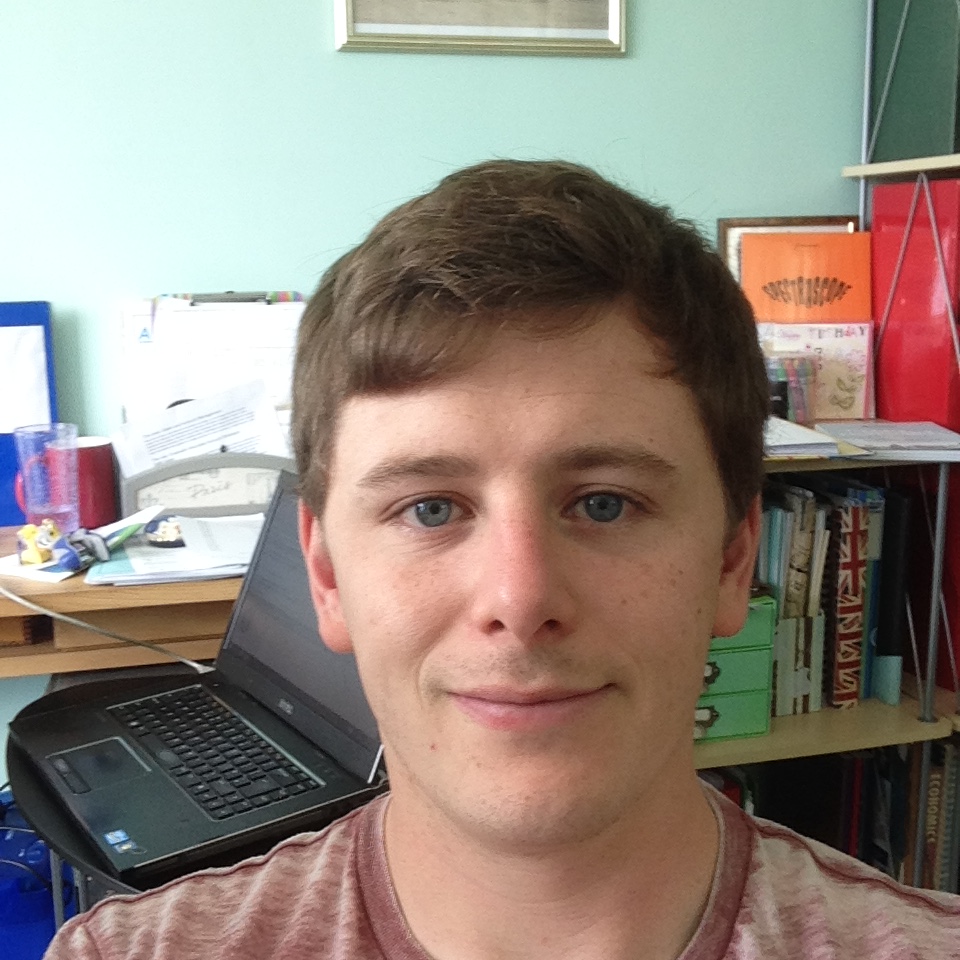
    Tomos Roberts
    Tomos Roberts

    Tomos Roberts’ Website: https://ridersofthenorth.com/
  • Can Print-on-Demand (POD) Publishing Mean More Books for Readers with Dyslexia?

    Can Print-on-Demand (POD) Publishing Mean More Books for Readers with Dyslexia?

    By Theodore J. Cohen, PhD (aka ‘Alyssa Devine’)
    Award-Winning Author of The Hypnotist

    Anyone who’s self-published a book in the last ten years (or more), or who has ordered a book from Amazon, Barnes & Noble, Apple, or Kobo, among other online retailers, is probably familiar with the term print-on-demand, or POD, publishing. Simply put, the book you order isn’t printed until you order it . . . it is ‘printed on (your) demand’.

    That’s a tectonic shift from the way the retail book business used to be run. In the past, when a book was published, whether by a legacy publisher or so-called ‘vanity press’, a fixed number of books was printed and literally put on the shelf (or packed in boxes and stored in warehouses or garages) in hopes they eventually would find buyers. Today, thanks to advancements in printing technology, that’s no longer the case for those of us who publish our own books. (Legacy publishers still print thousands of books for distribution through their retail outlets, and eBooks are a completely different story altogether.) Our books—that is, those usually published by so-called ‘indie’ authors—are available ‘on demand’, thanks to a multitude of POD publishing houses around the US. If you want to see one of these presses in operation—and they truly are a marvel to behold—take a look at this Website:

    So, whether you want to purchase one or a hundred copies of a book available on demand, your order is not printed until it’s received and payment is tendered.

    How can this benefit readers with dyslexia? Well, I’m sure you’ve noticed that there are not many books with interiors specifically designed for readers with dyslexia. In fact, I recently did a search on Goodreads’ Website, and was able to find only a few books, including The New Testament, King James Version, printed in OpenDyslexic.

    https://www.amazon.com/dp/1481290886?tag=legasthenie0c-20

    For more books, check out these two Goodreads groups:

    https://www.goodreads.com/group/show/158134-dyslexia-friendly-publishing

    https://www.goodreads.com/group/show/75371-dyslexics-untie

    The fact is, despite one in five people being dyslexic, most books are not printed for dyslexics, something of which many of you are painfully aware. To some extent, those who labor under this condition compensate for it by adjusting the typeface of the eBook they are reading (perhaps trying such typefaces as Arial, Comic Sans, Verdana, and others), increasing the spacing of the letters and/or the lines, using left-justification only (if that is even an option), changing the color of the letters (e.g., using blue-colored text on a white background or even trying black on a light blue/pink/yellow background), and other ‘tricks’. And when it comes to paperbacks, options are slim to none. Unless someone has gone to great lengths, it’s highly unlikely you’ll encounter special colors for type and paper. Finally, in the case of Kindle readers, there is very little flexibility when it comes to the typefaces that can be displayed, unless you apply a ‘fix’ to your Kindle. (There is a ‘fix’, by the way, that does not require hacking, but few will go to the trouble.)

    So, how do we address the problem?

    Well, a step in the right direction would be to make more POD books available in formats that are ‘dyslexic friendly’, something I recently attempted using the interior of my Young Adult (YA) novel, The Hypnotist. I published this book earlier this year in Kindle and paperback formats under the pen name ‘Alyssa Devine’.

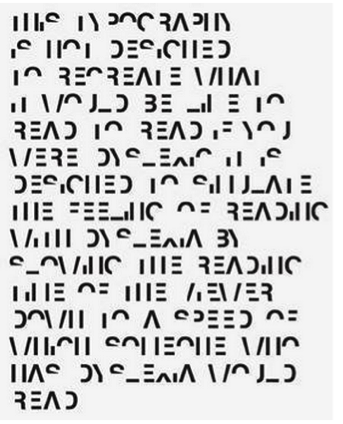
    Know, first, I am not dyslexic. But I came to appreciate the problems readers with dyslexia face not long ago when I read about the work of UK graphic designer Daniel Britton. Britton created a typeface that is intended to recreate for non-dyslexic readers the frustration and embarrassment people with dyslexia experience when they attempt to read newspapers, books, and other literature that most people are able to read every day of their lives. An example of simple text rendered in this typeface is shown below:

    Typeface Britton
    Typeface Britton

    It’s not easy to read, is it?! You can read more about Britton and his work at the following site:

    http://danielbritton.info/195836/2165784/design/dyslexia

    His work also was discussed recently in this article on CNN:

    http://www.cnn.com/2015/06/17/living/dyslexia-graphic-design-typeface-daniel-britton/index.html

    It was Britton’s work that inspired me to move forward with the creation of a special edition of The Hypnotist for readers with dyslexia.

    The first thing I had to do was select the font I was going to use. Without boring you with the details, I’ll refer the interested reader, as my professors used to say, to the following blog I wrote, which should answer most of your questions (and then some):

    https://www.goodreads.com/author/show/3251724.Theodore_Jerome_Cohen/blog

    Suffice it to say, I selected OpenDyslexicAlta as my typeface of choice (the same one used in the version of The New Testament cited above). Frankly, the idea of using a typeface specifically designed for people with dyslexia appealed to me, and if it were to be free (‘open source’), so much the better. The Open Dyslexic typefaces fit the bill, here. Bottom heavy, with unique character shapes, help make it more difficult for the reader to confuse letters. You can read more here:

    http://opendyslexic.org/

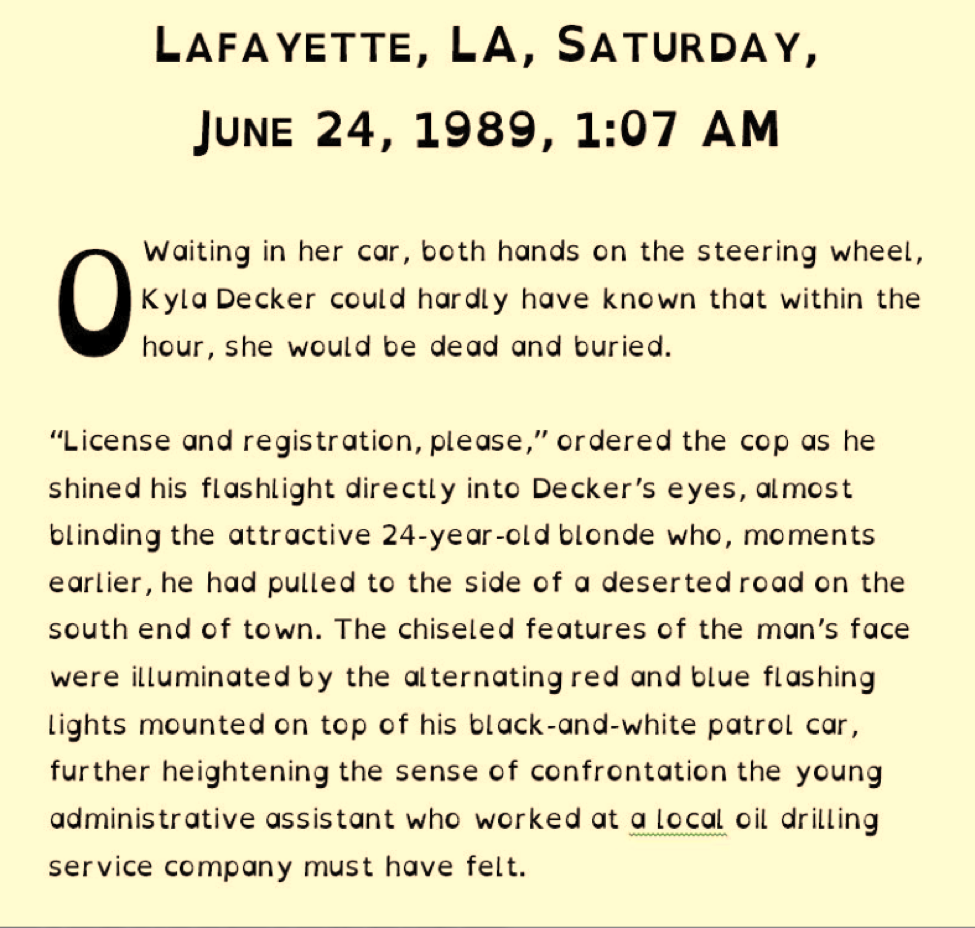
    Once the font was selected, I quickly eliminated the text’s right justification, which I learned could confuse dyslexics, substituted OpenDyslexicAlta for the regular text’s Georgia typeface, adjusted the font size, and voila, that was it. Total elapsed time: about two hours.

    OpenDyslexicAlta
    OpenDyslexicAlta

    Now it was just a matter of obtaining a new piece of royalty-free artwork and configuring a special front cover (another two hours), and it was completed…the new edition was ready for uploading to Amazon’s CreateSpace for approval.

    By the way, I felt it only right to include the following statement on the book’s Amazon.com Web page:

    “This special edition of The Hypnotist is printed using OpenDyslexicAlta developed by Abelardo (Abbie) Gonzale: “Your brain can sometimes do funny things to letters. OpenDyslexicAlta tries to help prevent some of these things from happening. Letters have heavy weighted bottoms to add a kind of ‘gravity’ to each letter, helping to keep your brain from rotating them around in ways that can make them look like other letters. Consistently weighted bottoms can also help reinforce the line of text. The unique shapes of each letter can help prevent flipping and swapping.” You can get a good idea what the print looks like by using the LookInside feature on this Web page. Will the use of OpenDyslexicAlta help everyone with dyslexia? No. Because the expression of dyslexia in an individual is as unique as the individual him- or herself, no guarantee can be made that the use of OpenDyslexicAlta will help any given person with readability. This special edition of The Hypnotist, however, is intended, at the least, to provide an option to those readers with dyslexia who might be helped when reading books printed using the OpenDyslexicAlta typeface.”

    You’ll find the special edition of The Hypnotist for dyslexics here:

    https://www.amazon.com/dp/1514789337?tag=legasthenie0c-20

    [NB: the LookInside feature may or may not be active when you read this; it often takes several days before the feature comes ‘live’.]

    Importantly, CreateSpace’s editors approved the book within 12 hours of submittal (actually, overnight), so theoretically, what was conceived as a project over dinner with my wife and editor, Susan, could have resulted in the book being available for sale on Amazon.com the next morning. That I waited until I was able to review a proof copy of the paperback edition three days later is simply good practice. (CreateSpace also gave me the option of reviewing the interior and cover online, but you never know what the final product will look like until you hold it in your hand.)

    So, to my question: Can print-on-demand publishing mean more books for readers with dyslexia? It can…if…IF…POD publishers, especially indie authors/publishers, take the time to create special editions for the 20% of the population that would benefit from access to books tailored to their needs.

    Theodore J. Cohen, PhD
    Theodore J. Cohen, PhD

    Editor’s note: The author welcomes your comments and feedback; you may reach him by e-mail through either of his Websites:

    http://www.theodore-cohen-novels.com/bio-contact.html

    http://alyssadevinenovels.com/contact.html

  • How to Inspire Students to Write
By Linda Davis-Kyle

    How to Inspire Students to Write By Linda Davis-Kyle

    HOW TO INSPIRE STUDENTS TO WRITE
    By Linda Davis-Kyle

    As a youth, Lisa Shontea Nichols (b.d. May 18, 1966) endured from her speech teacher the words, “Miss Nichols, you should never speak in public,” and from her composition teacher, “Miss Nichols, you’re the weakest writer I ever met in my entire life.” 1

    Rising above Denigrating Criticism

    Yet, about three decades later, Lisa is a world-renowned transformational speaker who addresses audiences of 10,000 plus, and she is a bestselling author of six books with a seventh—Abundance Now: Amplify Your Life & Achieve Prosperity Today—ready for release at the time of this writing. As Lisa puts it, she “writes bestsellers, not books.” She is a co-author of Living Proof: Celebrating the Gifts That Came Wrapped in Sandpaper and the author of No Matter What! 9 Steps to Living the Life You Love and Unbreakable Spirit: Rise Above the Impossible. Not only is she a world-renowned speaker and bestselling author, but Lisa is also the founder and CEO of the multi-million dollar company Motivating the Masses, Inc.

    Hearing Discouraging Comments May Be Quite Common

    While aspiring writers can find a multitude of teachers and established writers making discouraging comments about and to youthful writers, I, as a contrarian on the matter, feel that it is important to encourage young learners to write as soon as they show any interest in writing. Some parents may see their very young children—who have enjoyed hearing stories read to them—sit with a notepad and draw wavy lines before the youngsters can read for themselves or even know the alphabet. When asked, “What are you doing?” they very well may say proudly, “I’m writing a story.” When such an action happens, parents I have known capitalize on that moment and encourage those efforts.

    Appreciating Astute Parents, Grandparents, and Teachers

    From the tiny bit I know from Richard Bandler, the great and wonderful co-creator of Neuro-Linguistic Programming, I suspect he would praise the parent or teacher who fosters the growth of thought in youngsters and their keen desire to put pencil to paper to write. Bandler likely would say that the words spoken are of supreme importance to young and mature alike who are inspired to write. To make it clear, neither Bandler nor I are talking about false praise. I’m referring to looking for and finding something good in the young writers’ compositions, theme papers, articles, stories, poems, songs, and books. Some careless comments can, in a sense, “hypnotize” and devalue the efforts of youthful writers.

    Acknowledging the Impact of Positive Effort and Encouragement

    Some who seem to tell youngsters they are not experienced enough to write, they have not seen enough of the world to write, they have no voice or style to write, may be wholly and completely correct in their assumption. I believe, though, that offering constructive criticism with thoughtful suggestions is totally welcome. Young writers learn to write by writing and being nurtured in their efforts. Giving harsh criticism can crush the spirit of some young writers. It is akin to pulling on a sprouting plant, uprooting it, and killing it before it has a chance to develop strong roots and flourish. Thoughtful communication and correction are to the students as water and sunlight are to the emerging sprouts. Why destroy enthusiasm in any eager writers—young or mature—who choose to share their talent with the world? Why try to stymy the love of a budding talent that needs only attention, direction, and their own devotion to their worthy goal?

    Encouraging and Fostering the Love of Writing

    One learns by taking lessons, by observing others doing their chosen activity, and by diving into the activity with passion. I prefer to encourage young writers. I say to young and mature writers alike that “no matter what anyone says to try to dissuade you or what anyone does to put obstacles in your path, keep studying and reading and working to improve your craft.” 

    Motivating with Encouraging Words from the Heart

    Not all teachers are like Lisa’s. Encouragement can come from the hearts of caring teachers, parents, grandparents, and mentors. Reading and writing daily can keep would-be writers energized. Practicing step by step can help eager writers-in-the-making conquer obstacles that arise not only in writing but also in life. Adults who choose to be their mentors can guide and support teens to improve their writing through serious application of some fun ways of looking at writing. If your teens choose to continue to use some of the modest approaches to writing, such as warm-ups (which seasoned writers may or may not use) while exploring and learning more complicated techniques to polish their talents, all the while, who knows where their writing will lead them as they go forth into the world?

    Looking Inside the Writing World of Some Teens

    Had Jake Marcionette’s mother not encouraged Jake, he would not be a triumphant author with his published books, such as Just Jake #1 and Just Jake: Dog Eat Dog #2.
    His mother “encouraged” him. Actually, he explains that she “forced” him to write an hour and a half each day. As a successfully published author, though, force is no longer part of the equation. Marcionette says he “loves writing” now. 
    Rachel Parent’s family encouraged Rachel with her passion to help bring the important anti-GMO message to her peers, her country, and the world. Had her parents not supported her efforts, Rachel would not have had the opportunity to meet with Canada’s Health Minister Rona Ambrose to speak her mind.

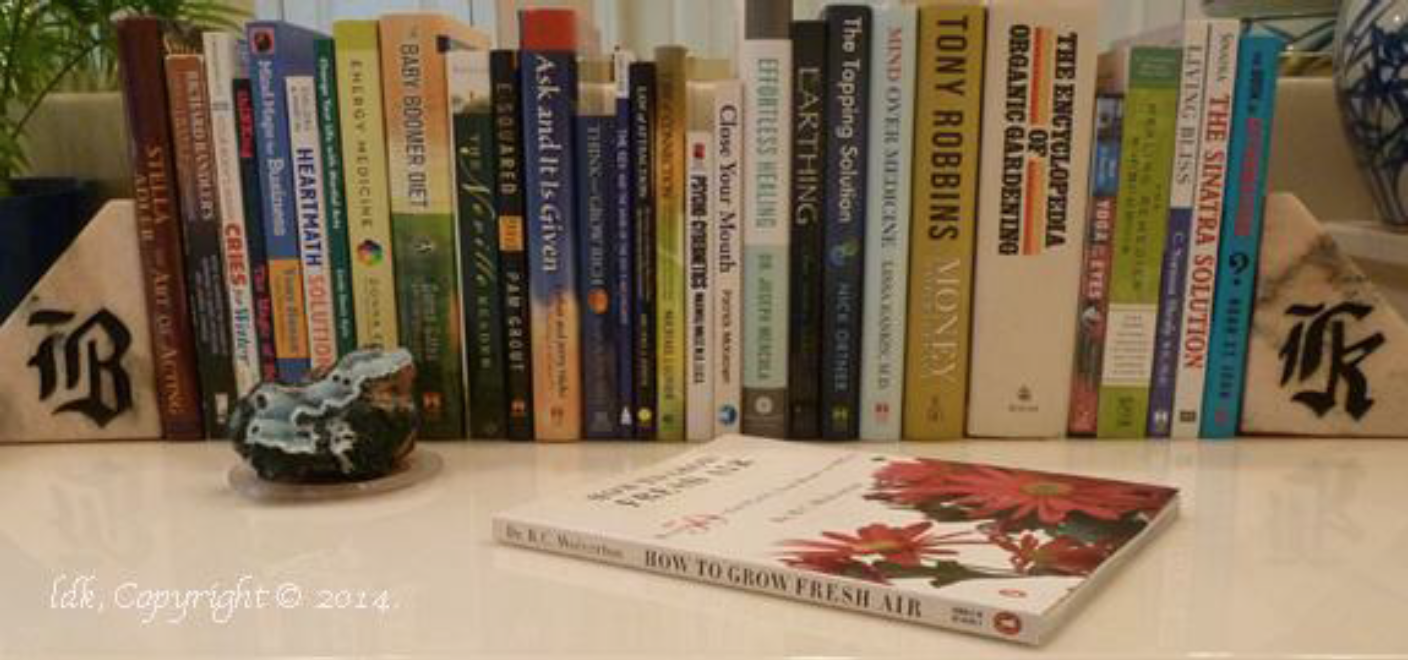
    Books are one of our greatest treasures. Photo by Linda Davis-Kyle, Copyright © 2014.
    Books are one of our greatest treasures. Photo by Linda Davis-Kyle, Copyright © 2014.

    Putting Writing Rules to Good Use

    Sure. It’s good to have a handle on grammar and the parts of speech before one dives right in to write. The late Gary Provost says, “…you cannot write well without [the rules of grammar].” 
    And, as I say in The Busy English Teacher… “recognizing parts of speech and how writers put the words to work can contribute to great fun and relevant learning for eager scholars. An abundance of practice researching, reading, and noting spelling awaits them around every corner. When given a little nudge in the right direction to motivate them, teens may be amazed at their own power. Young learners can experience the joy of learning. They can stretch their thinking when given fun challenges and exciting opportunities to explore. They can accept challenges they have not even thought of accepting before if presented in a non-threatening and fun way.” by

    Writing Even before Becoming Supersaturated in Rules

    Making a bold effort to keep the joy of writing alive, some educators do not intrude on the creative process for quite some time. Montessori schools, with which I am familiar, maintain an initial hands-off policy and just let budding writers write. After the young learners are comfortable with their masterpieces, their teachers, known as guides, gently introduce patterns and rules of spelling and grammar while still managing not to stifle the creativity of the young writers. Some students may excel in spite of harsh criticism, or even because of it, as Lisa has. Nevertheless, some teachers may choose to nurture rather than negate the writing of young students to help them achieve their dreams. If they wish, teachers can leave a legacy of kindness. Their kindness can live to connect with the hearts of their students to help sustain their inner power long after the teachers have gone.

    Sources

    1 Nichols, Lisa. “Questions That Will Stir Your Soul,” YouTube ~ https://www.youtube.com/watch?v=JuKCwS8wmls 24:32.
    2 ldk, The Writer’s Friend, p. 14.
    3 Marcionette, Jake. http://www.cbsnews.com/news/thirteen-year-old-author-writes-own-success-story/
    4 Provost, Gary. 100 Ways to Improve Your Writing. New York: Mentor, 1985, p. 107.
    5 ldk, The Busy English Teacher’s Fun Activities & Exercises for Pre-Teens: Grammar Mind Maps, Fitness Games & More. Amazon Kindle Book.

    About the Author

    Linda Davis-Kyle, MA, has been published in North America, Europe, Africa, Asia, and Australia in professional journals such as Modern Drama in Canada, Chem Matters in the USA, Jewish Affairs in the Republic of South Africa, and Studies in English Literature in Japan, and in magazines such as Common Ground in Canada and Green Farm Natural Health in the United Kingdom. She is also the author of “Exploring ‘Treasure Storehouses’ of the World,” found on the American Dyslexia Association website. Davis-Kyle’s Amazon Kindle book, The Busy English Teacher’s Fun Activities & Exercises for Pre-Teens, is the perfect time-saving gift for overworked educators. It is overflowing with fun learning exercises that nurture the minds, bodies, and spirits of young learners.

    Find it on Amazon: Books by Linda Davis-Kyle

  • Should you homeschool your dyslexic child? by Catherine Attia

    Should you homeschool your dyslexic child? by Catherine Attia

    For many, homeschooling is basically a day at home. You could be doing homework during the day and watching TV during lunch. Whether it is doing school work during the week or weekend, homeschooling gives you opportunities that you don’t have in public school. It is time to spend with your family, get your school year done earlier, and take some more educational trips. It is integral that homeschooling continues to be a part of our country and society. Many others may argue that home schoolers are cut off from kids their age, but these are some of the things that can be easily solved. Homeschooling should be a the ideal way to educate children because it offers various types of freedom to the students, such as religious freedom, because students do better on standardized tests and in academics, and because it makes students have more self-confidence, and they feel better about themselves.

    Should you homeschool your dyslexic child?
    Should you homeschool your dyslexic child?

    One reason that students should be home-schooled is that it creates more freedom, such as educational, religious, and emotional freedom. As stated in the article, “The Pros and Cons of Homeschooling,” for educational freedom, “Most home-schooled students have the choice to study and learn what they want, when they want, for as long as they want,”(1). Educational freedom means that you get to learn what you want, when you want, and for as long as you want. This is good because if the student excels in adding and subtracting fractions, then they could move on and finish their school day earlier than other kids. Also, “Homeschooling provides the opportunity for parents to incorporate their beliefs into their daily lives” (The Pros and Cons of Homeschooling; 1). This evidence demonstrates my reason because being able to teach your children about your faith and beliefs. Many parents do home-school for religious purposes. For example, children and students that I watch on YouTube are home-schooled due to religious purposes. Finally, related to the topic of emotional freedom, The Pros and Cons of Homeschooling for Educational Freedom stated “According to studies, self-esteem plummets in middle school girls. However, similar studies of home-schooled girls have shown that self-esteem remains intact and that these girls continue to thrive.” To summarize what the quote said, the self-esteem of kids or girls in middle school drops for various reasons. If they are homeschooled, then self-esteem increases, and they continue to thrive. This evidence supports my claim because students who get bullied often feel so depressed, they don’t want to continue to try to succeed, and they feel worthless. The opposite is true for home-schooled children. Since they are not bullied, they continue to want to succeed. Which leads me to my next point.

    Another reason students should be home-schooled is because of better test scores and academic performance. As stated in the Seattle Times, “Among the positives are better test scores, fewer dropouts, and higher graduation rates” (1). This proves my reason because students have better test scores and standardized tests, such as NJASK. They are succeeding in academics further than students in public or private schools. In the East Brunswick school district, I have learned that in order for you to make it into an honor class, for example, Verbal Gate, you must do well on the NJASK. Home-schooled children may have a greater chance of being a part of an honors class. This proves my argument because the better students do in academics, the more parents would want to homeschool their child. Also, “According to one study, children who were home-schooled achieved an average 1100 out of a possible 1600 on the SAT, a popular college entrance exam.” (Facts on File Issues/controversies Homeschooling pg. 2) Just to recap home- schooled children get an 1100 out of a possible 1600 on the SAT. The SAT is an exam that most students take in the 11th grade. This test is what colleges look at to see if you are good enough for their school. This is good because students who are home schooled have a greater shot at attending schools like the Ivy League. One example of an Ivy League school is Harvard. Many people have said that if you attend a good college, then you will get a good career, which will lead to a good life.

    The final reason I think students should be educated at home is because they are able to receive more sleep. As stated in the Washington Post, “A new study of a few thousand students found that home-schoolers get more sleep than students at traditional public and private schools.” (1) This is very good because of appearance and health matters. In appearance, many students, including myself, have dark circles under their eyes due to lack of sleep. Not as many home-schooled children have this because they are able to get more sleep. This is bad for health-related matters because if students do not get enough sleep, then they won’t function properly and they won’t do as well in school. Also “55 percent of teens who were home-schooled got the optimal amount of sleep per week. 24.5 percent of students at traditional public and private schools got the optimal amount of sleep per week.” (Washington Post pg. 2) This is very good because if more than half of the home schooled teenagers get the recommended 45 hours of sleep per week then I may ask my parents to switch me to homeschooling.

    The lesser researched side may say that homeschooling is bad because it can cut children off from kids their age, but I argue that this statement is wrong. According to Homeschooling companion.com, “One of the more serious negative effects of homeschooling is that children can miss out on the opportunity to interact with other children. This can stunt their development socially as they do not learn how to communicate or behave in group settings. This is obviously a vital skill in living and working as an adult,” (1) This statement can be true, but there are other solutions of interaction, such as team sports. Another con of homeschooling is that the child can miss experiences, such as field trips. This situation can also easily be solved if the parent is committed to homeschooling their child. They can also then take them to the museum.

    Clearly, these are debatable reasons. But when you look at the facts it is obvious that one view makes much more sense than the other. It is essential that parents consider to home school their child because they offer various types of freedom to the students, because students do better in standardized test and in academics, and because they make students have more self-confidence. Sure, many others may argue that it is a waste of money or that it takes too much time, but they are wrong because of what I’ve explained. Sure, homeschooling may not be right for every child, but it might be right for you. You could be the one to homeschool your future or current children.

    I am very excited for you to read and learn from this article. I would like you to get to know me. First I am only in middle school, 7th grade to be exact. Also the reason I was offered an opportunity to present my essay on the blog of the American Dyslexia Association was because of my Language Arts teacher. She wanted us to send our essays out to people so they can learn about our topics. My topic included “Should dyslexic students be homeschooled.” My classmates and I all thought nobody would listen to us because we are just 7th graders. But when I received a reply from the Executive Director of ADA, I was astonished. So thank you so much to my Language Arts teacher for helping me write the essay and ADA for giving me the opportunity to write this blog article and to inform you about the pros of homeschooling a dyslexic child.

    By Catherine Attia, 7th grade, middle school

    Editor’s note: Parents who decide to homeschool a dyslexic child often want more than encouragement, they want method. The Certified Dyslexia Trainer Program covers exactly that in 48 lessons, built on the AFS method used by more than 17,000 certified trainers in 64 countries.

  • Overcoming the Shame of My Learning Disability

    Overcoming the Shame of My Learning Disability

    By Leana Greene
    CEO of KidsInTheHouse.com

    I think I was 6 years old when I realized I was different. I tried harder than anyone else to please, but I could not spell words or learn how to put letters together to read.

    Leana Greene
    Leana Greene

    How do you not feel stupid when everyone else is learning something that you can’t grasp at the same pace? The shame of not being able to read out loud without stuttering or misspelling something on the blackboard in front of the class was almost unbearable. The fear of being called on by the teacher was paralyzing and made me act out and have panic attacks. My math teacher berated me because she thought I was being careless when I accidentally reversed numbers. I spent countless hours with frustrated but well-meaning adults who wanted to help me but just thought I wasn’t trying hard enough. All of these experiences sent me the message that I was not good enough.

    Being different as a child is not an easy thing, and it can scar your self-esteem for a lifetime. I think that the compounding effect is that you feel ashamed about it, and so your anxiety about trying to do something makes having the disability even harder. While many people struggle with the diagnosis of a learning disability, I think parents of children with learning disabilities might have an even bigger challenge addressing the psychological effects of it.

    As a parent, it is important to really talk to your child and address what is happening. According to pediatric neuropsychologist at UCLA, Sandra Loo, PhD, the first step for any parent who has a child with learning difficulties is to get the right diagnosis. Getting an early diagnosis will help your child get the proper interventions and accommodations, like extra time in school. It’s a good idea to get a complete evaluation because many children have more than one learning disability — around 25 percent of children with Dyslexia also have ADHD. Another way of addressing what is happening is by discussing your own areas where you feel inadequate in order to make it easier for your child to share his or her problems. Sharing my struggles about my disability with my kids has encouraged them to share not only a good grade but also the inevitable challenges of trying to perform in school.

    Most people with learning disabilities, like dyslexia, have a hard time doing well in school, but they often are successful post-education. Dyslexia/ADD specialist and leader of Renaissance Mind learning facility, Angela Gonzales, MD, explains that often the traditional academic environment does not suit a non-traditional learner, but children with learning disabilities have a style of thinking that is a gift later in life. She says, “These are highly visual, spatial, and conceptual learners that have the ability to distort perception and perceive it as reality. That’s a problem in school, but in the real world, this style of thinking allows you to be a Lego builder extraordinaire. It allows you to be an artist. As you get older, it allows you to be the best architect, movie producer, musician, or actor you can be.” While parents need to have realistic expectations about what their child can accomplish in school, they also need to make an effort to understand the different ways their child processes information and appreciate that their child, who is struggling with academics, is actually a gifted and capable individual with an incredible imagination. As Einstein said, “Imagination is more important than knowledge.” Communicating this way of thinking with your child may take some of the pressure off and make school bearable.

    Finding people who have faced the same struggles as your child may also be helpful in working through a disability. For me, it has been helpful recognizing that there are other Dyslexic entrepreneurs like Ingvar Kamprad, founder of Ikea, Paul Orfala, founder of Kinko’s, David Neeleman, founder of JetBlue, Charles Schwab, Tommy Hilfiger, and Ben Foss of Intel. Having a role model is important, and if your child has the opportunity to know that there are other people out there facing the same challenges, he or she will feel less alone and know they can succeed.

    For years, I tried to hide my learning disability because I didn’t want it to define me, and maybe I was still ashamed. Many parents have to deal with this seesaw. On the one hand, you want to help your child create a positive label for being different, but on the other hand, you do not want that label to solely define your child. Once you begin being labeled as just “John with ADD” or “Jane with Dyslexia,” it increases the shame and fear of being different. Even for those who have learned to embrace their learning disability, it is always difficult and hurtful to be labeled by others.

    How a child sees his or her disability is dependent on how that disability is explained and communicated by family members. Harvard-trained child and adult psychiatrist and ADHD Specialist, Edward Hallowell, explains the importance of framing learning disabilities in a positive way and communicating with your child that he or she is not so much “disabled” as “different”. Parents need to be sensitive to the fact that kids may not want to be defined as different all of the time, and give their kids an opportunity to be defined by other achievements. A way of doing this is to help your child find at least one other activity in which he or she can excel. That activity may be drawing, music, or sports. Whatever it is, helping your child recognize that he or she has both strengths and weaknesses makes life easier. It also gives children the opportunity to see themselves as more than their disability and more than a label.

    I think it is important for parents to understand that it is not only the learning disability that causes problems, but also the anxiety and paralysis that compound the learning disability. Acting defiantly may be a way of protecting oneself from the fear of failure, and it is good if parents can recognize those signs in their children. Even today, as I go into the doctor’s office and have to fill out a form with no spellcheck or person there to correct my spelling, I can feel that same childhood panic attack and sweat coming down my back, and this is after years of openly talking about my dyslexia.

    Ultimately, I have found ways to work through my disability, and parents should know that, with the proper help, their kids will as well. In the words of clinical neuropsychologist and faculty of Harvard Medical School, Jerome Schultz, PhD, “If we’re starting with a base of failure and fear and frustration, it’s hard to build anything on that foundation. So we really have to turn this cycle around, and it’s quite possible to do.” Many studies are proving that children with learning disabilities can overcome adversity, and this could be the reason why so many dyslexic people and others with learning disabilities end up excelling and becoming entrepreneurs.

    Resources:

    Leana.com – Leana Greene’s Website
    KidsintheHouse.com – World’s Largest Parenting Video Library

    Follow KidsInTheHouse.com on Twitter: www.x.com/KidsintheHouse

  • EasyReading™: A Dyslexia-Dedicated Font with a “Design for All”

    EasyReading™: A Dyslexia-Dedicated Font with a “Design for All”

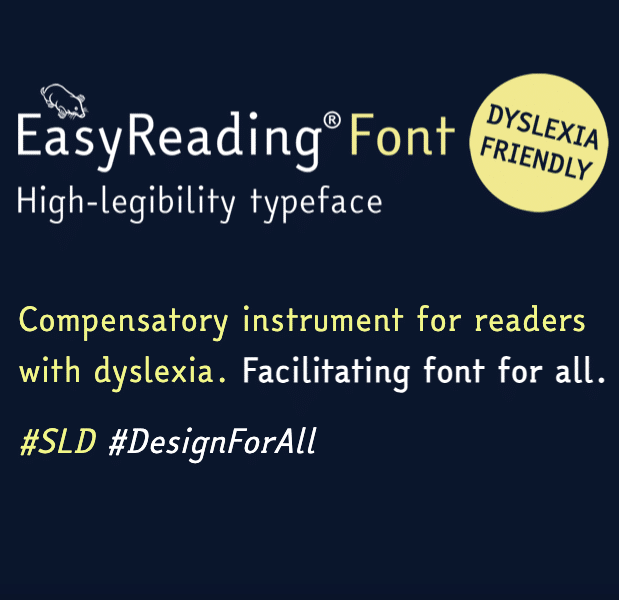
    Easyreading Font
    EasyReading Font

    Dyslexia-dedicated fonts usually feature an extreme design, which renders them “exclusive”, making reading harder for all other readers. The EasyReading™ font has been created through the “Design for All” technology, whereby diversity is not considered an obstacle, but rather an asset, improving word comprehension for all readers. This feature renders EasyReading™ an effective offsetting tool for dyslexic readers and an improved font for all other readers. This is why it does not bear a name directly linked to dyslexia.

    The EasyReading™ font design counters the crowding effect and the visual misunderstanding of similarly-shaped letters (see website http://www.easyreading.it/en/caratteristiche-grafiche/prova to write a sample with the EasyReading font).

    EasyReading™ was scientifically studied through the research “Easyreading™ as a compensating tool for readers with dyslexia: a comparison between Times New Roman and Easyreading™ in Good Readers and Dyslexic Fourth Grade Children”. This autonomous and independent research has been carried out on a valuable number of candidates and draws the conclusion that: “the EasyReading™ font renders reading easier both for dyslexics and unimpaired readers, therefore can be considered a compensating tool for dyslexic readers and a simplifying font for all readers”.

    References: the research has been published in the scientific magazine: “Dislessia. Giornale italiano di ricerca clinica e applicative” (Volume 10, n. 2, May 2013). The scientific board sees the presence of the major Italian researchers in the industry.

    Written by the designer of the EasyReading font, Mr. Federico Alfonsetti

    www.easyreading.it/en

  • Definition and Deflection and Dyslexia by Chris Stanton

    Definition and Deflection and Dyslexia by Chris Stanton

    What does being a dyslexic mean to someone learning he is one at age 42? Very little, and I am speaking with the exclusive authority of being me. What does it mean to a lad having so much trouble learning to read that a private school kicked him out, but then a public school teacher provided him with patient attention? Life-changing good! In this case, I am speaking of my younger brother, a wide-ranging, avid reader, with an unconventional problem-solving mind.

    I became a dyslexic at the age of 42, the result of running into my senior year high school English teacher. She was an exceptional teacher. In the course of our conversation, she told me that I was the most dyslexic student she ever had. I asked why hadn’t she told me? Obviously, she understood I was asking why hadn’t she helped me? She said she’d told my parents at a teacher conference, “and that didn’t go well.” She figured smart, affable me would acquire a secretary and I would be fine.

    I had been married three years when my wife announced, as revelation, “You know all those (Odd? Crazy? Funny? Sad?) stories you’ve told – they are true!” I’m still married, so I cannot divulge how downhill that conversation went. My teacher encounter ten years later was no revelation to my wife; she had been telling me I was dyslexic forever.

    Shortly after I had the teacher encounter, my wife and I picked up my older brother at the airport. We stopped for lunch. In the course of our what’s-going-on-in-our-lives conversation, I told the story of learning I am dyslexic. That factoid revision was angrily scoffed at by older brother. No good comes (later in life) from opening the dyslexic closet.

    I think my brother assumed dyslexia was synonymous with illiteracy. I think he also took it as criticism, since I had asked him and others for help when I was a kid, and was blown off. They had their lives; I wasn’t their job. I am a middle child; what can I tell ya.

    So how does a kid go from being the dumbest kid in class in grades 2 through 7, and graduate from a good university? Seventh grade in public school was brutal, too, but there I had friends. I knew in 7th grade that the school was seriously considering holding me back, but I tested way above their expectations on a battery of tests.

    The best class I ever had was University Freshman English. The teacher, a middle-aged woman, announced, “All writing assignments will be about a subject of your choosing. If you lack a fascination, you will neither be a good writer nor a good thinker.” She was an enthusiastic delight, visiting each student asking the same question, “What are you trying to say?”

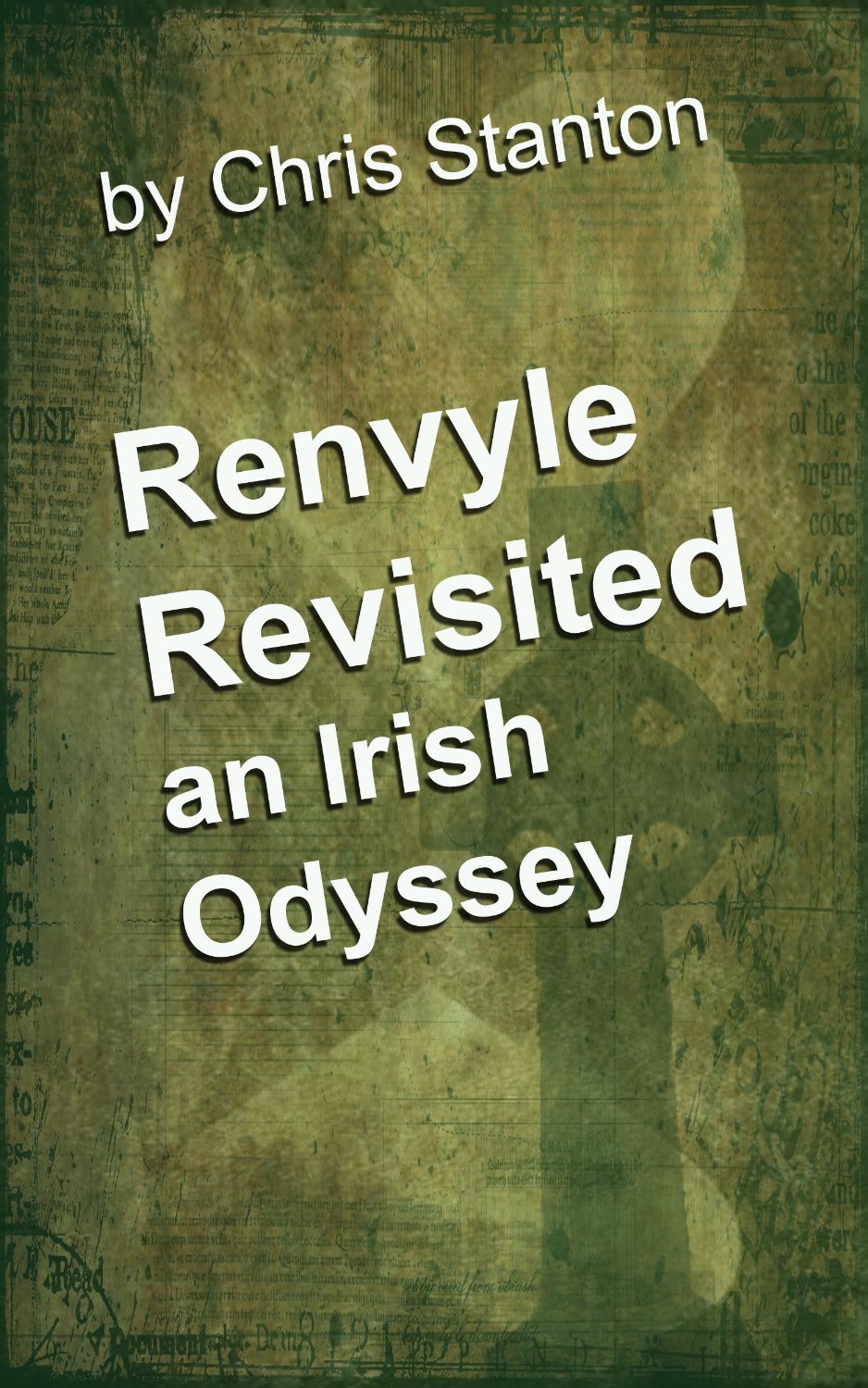
    I have written an Apple iBook, “Renvyle Revisited, an Irish Odyssey,” that neatly provides text and audio together. It also can be had at Amazon on Kindle and Audible.

    A central theme of the book is story telling. The stories are not respectful of authority and ideologies – or what might be described as conventions. The book is a celebration of a youth finding his way from where he came.

    If you know a dyslexic, have them read the blog stories and then hopefully the book.

    Renvyle Revisited an Irish Odyssey

    By Chris Stanton

    Please subscribe to my blog – it’s free: https://irishodyssey.wordpress.com
    Scroll down to the earliest blog entries; they concern dyslexia.

    Chris Stanton
  • If the Walls Could Speak By Deirdre M. Silvestri

    If the Walls Could Speak By Deirdre M. Silvestri

    It’s a beautiful, clear spring day, and soon the cherry blossoms will fall from the trees and blanket the ground like snow. This season promises to be extraordinary, but it won’t be the same without Da, who passed away at Christmastime. Finn O’Brine stares out the window, taking it all in. He can’t believe his father will never spend time with him again. And he can’t believe there’s a bat at his window—talking to him.

    Before his death, Mr. O’Brine told Finn many stories about colossal dragons, sorcery, and the magic of Wickum Mannor in Ireland—but they couldn’t possibly be real, right? Wrong! Magic runs in the O’Brine family; it’s part of their heritage.

    Now thirteen, Finn will begin to show signs of his magical inheritance any day now. It’s time for Finn, his twin sister, Neave, his younger brother, Jack, and his mother, Ailish, to leave the comfort of their home in America and journey to Wickum Manor themselves. They expect a summer-long adventure, but the O’Brine children may not be as ready as they think. With all the fantastic things to experience and discover on the four-hundred-acre estate, will Finn want to enroll at the magical Wickum Academy, or will he choose to return to his friends and classes in America at summer’s end?

    Deirdre M. Silvestri, author of children’s and YA books, was born in Sarsfield Barracks, Limerick City, Ireland. Because of dyslexia, her lifelong dream of becoming an author seemed dim. However, as her children grew, Silvestri often told them they could do anything. If the Walls Could Speak is Silvestri’s first book, the first installment of the realization of her dream.

    Get your copy on Amazon: If the Walls Could Speak By Deirdre M. Silvestri

  • Study at the University of Nottingham (UK): The Inclusion of Students with Dyslexia in Higher Education – A systematic review

    Study at the University of Nottingham (UK): The Inclusion of Students with Dyslexia in Higher Education – A systematic review

    Uni

    What is the study about?

    The study summarizes the available evidence on the forms of teaching, support, and adjustment that students with dyslexia find useful for their inclusion in Higher Education.

    Why did we do this study?

    The number of students with disabilities and learning difficulties enrolled in Higher Education is on the rise. Universities have a duty to become inclusive environments for an increasingly diverse student population. Several researchers have conducted small-scale studies on forms of teaching, support, and adjustment that can enhance dyslexic students’ opportunities to succeed in Higher Education. However, to date, no attempt has been made to bring together all this evidence and answer the question: what does research say about how we can effectively foster dyslexic students’ inclusion in Higher Education?

    How did we do the study?

    We did a systematic review, a type of study that allows one to retrieve, critically appraise, and synthesize the available evidence on a type of intervention, teaching approach, or form of support. We searched databases, journals, and websites to retrieve all published research focusing on the inclusion of students with dyslexia in Higher Education. We appraised each study for the quality of the evidence produced therein, and then generated a summary.

    What did we find?

    We identified 15 studies dealing with the inclusion of students with dyslexia in Higher Education. The majority of them consisted of qualitative interview studies in which students had been asked about their experience of inclusion at the university. The results indicate that students with dyslexia develop many study skills and coping strategies to independently overcome the difficulties and barriers that they come across in their learning journey. Help from others (including fellow students, family, and friends) is often very important. Awareness of one’s own strengths, weaknesses, and preferred learning styles helps students to develop effective study strategies. Many of them report that becoming aware of their own dyslexia was the first important step in this direction.

    For the students, it was important to meet teachers who were sensitive to their learning needs and ready to provide adjustments in teaching and assessment. Some teachers’ lack of dyslexia awareness had a significantly negative impact on the students’ learning experience. Useful teaching approaches were those that took into account learners’ differences (student-centered approach) and sought their active contribution (interactive teaching approach). The provision of study materials in multiple formats enhanced course accessibility. Teaching modalities that partly or totally relied on Information and Communication Technologies helped the students gain control over their learning process. For instance, electronic learning environments allowed students to access content at their own pace, hence reducing the gap with non-dyslexic students. Finally, there is some evidence that Universal Design for Learning can be used to simultaneously accommodate the needs of students with diverse needs (including those with and without dyslexia) and thus foster learning environments that are inclusive for all.

    The full report can be downloaded at: http://onlinelibrary.wiley.com/doi/10.1002/dys.1484/abstract

    Dr. Marco Pino
    Research fellow

    Sue Ryder Care Centre for the Study of Supportive, Palliative and End of Life Care
    School of Health Sciences
    The University of Nottingham

    Room B58, Queen’s Medical Centre
    Nottingham NG7 2UH
    t: +44 (0)115 8230494
    https://www.researchgate.net/profile/Marco_Pino

    Follow us:
    youtube.com/nottmuniversity