Tag: parents

  • I wonder what it’s like to be dyslexic by Sam Barclay

    A beautiful, design led experience of what it feels like to struggle with reading.

    Introduction

    People all over the world struggle with reading for a variety of reasons, including dyslexia, lack of education and an unfamiliar language to name a few. People with reading difficulty are often capable of thinking in ways that others aren’t and as a result are capable of true greatness, yet these people are often misunderstood and treated unfairly as a result.

    Failing to encourage those with reading difficulties in a way that makes sense to them can limit (and in many cases damage) their ability to progress.

    Great effort has been made to provide tools aimed at improving a persons reading but very little has been done to give those around them an understanding of what it really feels like to struggle in such a way.

    About the book

    What it’s like to be dyslexic

    This book aims to provide the reader with a beautiful, design led experience of what it feels like to struggle with reading.

    For you

    Enjoy thumbing through the pages of this book with your favourite cup of coffee. Enjoy the books beautiful typographic theories that are sure to give you a completely different outlook on reading.

    Put it on your coffee table, stack it on your bookshelf or pass it on to a friend. If five people pick the book up in it’s lifetime, chances are that one of those five will impact positively on another persons life as a result, whether they know it or not.

    For your business

    As stated in the Equality Act 2010, disability discrimination legislation prohibits discrimination against disabled people in employment and in the provision of goods and services. This includes those with dyslexia.

    With or without legislation, many businesses require staff and customers to read a great deal – whether it be T&C’s, returns policies, reports, daily emails… the list goes on.

    Helping staff to truly understand what it might feel like for a colleague or customer to struggle with reading will greatly improve your business.

    For your school/college/university

    The impact of dyslexia is rarely seen in greater force than in education. Students that cannot learn to read have enormous difficulty reading to learn.

    If those around them – be it their teachers, parents or fellow students – can begin to understand what it feels like for them to be face to face with a page of text, the positive impact on their self esteem will be felt for the rest of their lives.

    What people are saying…

    “An excellent body of research and development that has successfully been translated into the final piece. Thoughtful and considered typography and layout that is quite simple. A joy to look at and read.”
    – The International Society of Typographic Design

    “This book demonstrates very clearly the range of trials and tribulations experienced by someone struggling to make sense of the written word. In my opinion this is a ‘must have’ resource for both parents and professionals wanting to support and understand the difficulties experienced by people trying to master the craft of reading especially in this information-rich world and when literacy achievements in this country are apparently at an all time low.” – Jeannie Low Ying (retired Assistant Principal Educational Pychologist)

    “This book should be put on the compulsory reading list for all training teachers in a bid to eradicate the ignorance that still exists towards Dyslexia” – Julie Roche (Deputy Head Principal)

    I need your help!

    With your help, this book can become available all over the world.

    More Information:

    http://www.kickstarter.com/projects/1150582455/i-wonder-what-its-like-to-be-dyslexic
    http://karenbarclay.com/everything-else/dyslexia-a-very-positive-thing-to-have-a-beautiful-book-and-a-nuffy-pecker-day/

  • Monster reading

    Monster reading

    Monster reading, reading, dyslexia, parents, children, worksheets, freebie

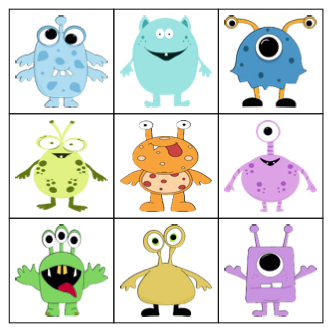
    Today’s freebie are monster reading puzzles. First, the children cut out the pictures. Then, they read the instructions and place the images in the correct place. This trains attention, visual and spatial perception and accurate reading. Cutting and glueing the pictures is good for fine motor skills. An alternative is to read the instructions to the children. This trains careful listening.
    We like these reading puzzles a lot, because children practise different perceptions and accurate reading or listening. Also, the children have great fun and are happy when all the pictures are in the correct place.

    DOWNLOAD (3,8 MB)

    Check out our other freebies

  • Debunking the Myths about Dyslexia

    Debunking the Myths about Dyslexia

    There are many signs or clues to dyslexia, which are discussed in depth on this website; however, it is also important to be aware of the misconceptions and myths surrounding the disorder. There are several myths regarding dyslexia. We have highlighted some of the more common ones.

    Myth: Smart people cannot be dyslexic or have a learning disability.
    Fact: Dyslexia and intelligence are NOT connected. Many dyslexic individuals are very bright and creative, and they will accomplish amazing things as adults.
    Myth: Dyslexia does not exist.
    Fact: There has been 30 years of documented, scientific evidence and research proving the existence of dyslexia. It is one of the most common learning disabilities to affect children.
    Myth: Dyslexia is rare.
    Fact: In the United States, NIH research has shown that dyslexia affects 20%, or 1 in every 5 people. Some people may have milder forms, while others may experience it more severely. Dyslexia is one of the most common causes of reading difficulties in elementary school children because only 1 in 10 dyslexics will qualify for an IEP and special education that will allow them to get the help in reading that they need.

    CONTINUE READING

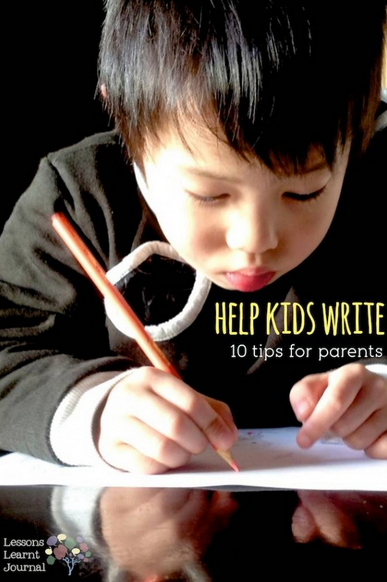
  • Literacy: Helping Kids Write

    Literacy: Helping Kids Write

    Literacy, writing, dyslexia, parents, children

    Read how Pauline helps her children to be better writers: Literacy – Helping Kids Write

    I’m notorious for keeping numerous notebooks. I’m even more notorious for keeping little keepsakes loosely tucked into the pages of those notebooks. Lately, those little keepsakes comprise anything with N&M’s emergent literacy; their writing in particular. That first letter to a friend enclosed in an envelope, that first church attendance card filled in by M with his name and that drawing with N’s name written at the top left hand corner of the page.

    Whenever people write, they have something to say. This is no different with children who are learning to write.

    Being able to write enables children to express their thoughts and experiences. Learning to write is a huge task. As with all other aspects of literacy, when kids write, they have to think about many things, simultaneously. Writing, like other aspects of literacy, is not easy and can be understandably frustrating and discouraging. Children need plenty of feedback and encouragement.

    Here are a few ways parents can help kids write:

    1. Focus on the good things rather than the mistakes. Mistakes are part of the process of learning, but by focusing on the good things, children are more likely to remain confident and be prepared to take risks and enjoy writing while they develop their writing skills.

    2. Let kids see you writing all sorts of things. E.g. shopping lists, cards, letters, emails, filling out forms, etc.

    CONTINUE READING

  • Visual sequencing

    Visual sequencing

    Visual sequencing, perception, dyslexia, worksheets, parents, children

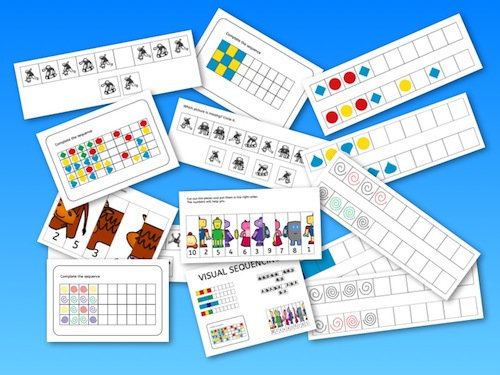
    Visual sequencing is the ability to organize visual impressions in a certain order. This is an important prerequisite for good writing, reading and arithmetic. Children who have difficulties with visual sequencing often exchange letters while writing or have difficulties with writing down numbers. Today we are offering a freebie containing various exercises to train visual sequencing.

    DOWNLOAD

    Check out our other freebies

  • Early signs of dyslexia

    Early signs of dyslexia

    Early signs of dyslexia, dyslexia, story, parents, children, teacher

    While browsing the web we came across this story:

    A DYSLEXIA STORY – Early signs of dyslexia

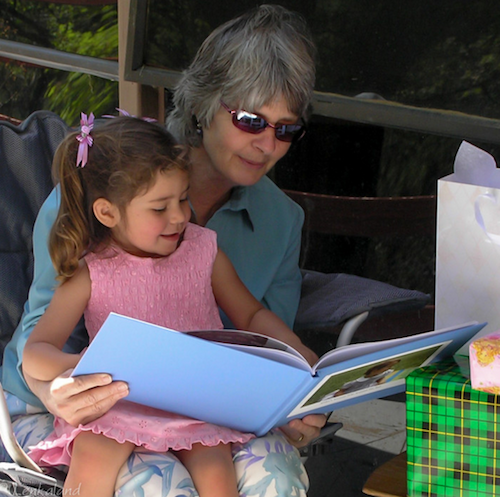
    I looked forward to reading with my daughter. We would cuddle together with a stack of books and she would say, “again, again” and we would lose ourselves in favorite stories.

    I was shocked when that never happened. What is it about reading to children, I thought, that’s so complicated? Reading together is overrated.

    Because, with her, she had only passing interest in books. When we did sit together, she pulled the book out of my hands to flip through pages at random. Beginning, end, middle. Whatever. Done.

    We were most successful with books filled with random words and images like cat, dog, horse, cow. Why did so many books have stories?

    CONTINUE READING

  • Letters recognition

    Letters recognition

    Letters recognition, dyslexia, reading, parents, children, worksheets

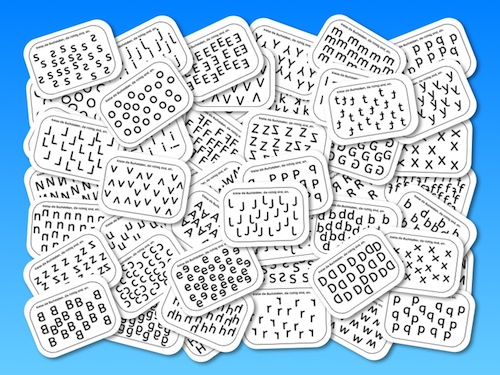
    Today’s freebie offers you lots and lots of worksheets to practice letters. Print out the worksheets and if you feel like it, cut out the cards and laminate them. Children can practice all upper case and lower case letters. They have to recognize which letters are correct. Sometimes the letters are mirrored or standing upside down. These exercises will help your child to better recognize single letters which helps to become a better reader.

    DOWNLOAD

    CHECK OUT OUR OTHER FREEBIES 


  • Spirals – Tracing and Recognizing

    Spirals – Tracing and Recognizing

    spirals, tracing, dyslexia, dyscalculia, parents, children, fine motory skills, worksheet

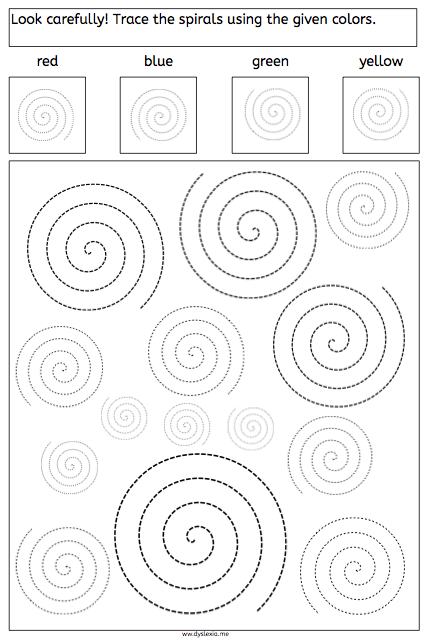
    It’s been a while but today we offer a new freebie: Spirals – Tracing and recognizing. The first two pages are for warming up: Trace the spirals, use different colors, draw your own spirals. On the 3rd page you have to recognize the different spirals and trace them in the given color. These exercises train attention, hand-eye-coordination, visual and spatial perception. While the children are tracing the spirals, you can also check how they are holding the pen. For younger children: Let them trace the spirals with their fingers first, so they get a feeling for the form.

    DOWNLOAD

    CHECK OUT OUR OTHER FREEBIES

  • Embracing dyslexia

    Embracing dyslexia

    Embracing Dyslexia, Dyslexia, parents, children, teacher, school, help, education

    Embracing Dyslexia is a thoughtful and moving exploration of dyslexia from an insider’s perspective, weaving together interviews with parents, adult dyslexics, researchers, educators and experts to provide an accurate portrayal of a learning difference that affects between 15-20% of the population.

    Parents share emotional stories of their frustration over failing to understand why their children were struggling with reading, writing, and spelling and the life-altering impact the word dyslexia had on their lives.

    Adult dyslexics courageously open up and speak candidly about their dyslexia, sharing their struggles and successes they had in school and in their adult lives.

    Experts and educators define what dyslexia is and illustrate why early dyslexia screening for all children is vital. They also share how effective tutoring, classroom accommodations, and recognizing and fostering the natural gifts and abilities of a child with dyslexia can take them from feeling stupid and experiencing failure on a daily basis to believing in themselves and knowing that they can be successful.

    Watch the complete movie at www.embracingdyslexia.com

    Embracing Dyslexia – The trailer: