Tag: parents

  • Turning the Page: How Adults Can Help Teens Rediscover the Joy of Reading

    Turning the Page: How Adults Can Help Teens Rediscover the Joy of Reading

    By Dr. Lisa R. Hassler

    Parents hope to instill a love of reading that lasts a lifetime with their children. Reading is an essential skill that promotes cognitive, social, and emotional development, and is a crucial tool for academic and professional success. As parents, we understand this, so we stock our shelves with beautifully illustrated picture books and read to our little ones, snuggled on our laps or tucked in their beds. However, somewhere along the way, they stop consuming books as they did when they were younger, and they lose the love. As a parent and teacher, I often wonder: does the love of reading ever return?

    It made me curious, so I delved a little deeper into the relationship between teens and books. In this article, you’ll learn about teenage reading habits, banned books, the impact of COVID, the rise of BookTok, as well as fun tips. Consider this information to help regain your teenager’s love of reading.

    What does the Research Say?

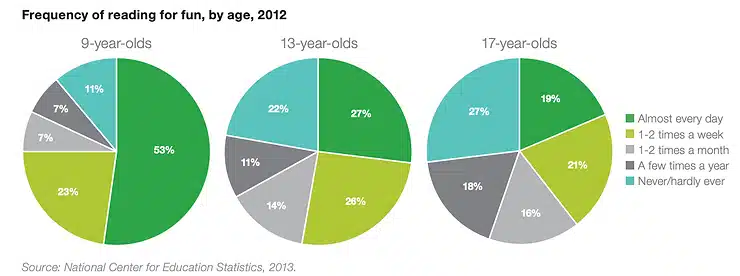
    The number of adolescents who read every day significantly decreases as they transition from childhood to adolescence. Studies show a consistent decline in daily reading as children grow older, with a sharp drop by age nine that does not typically recover throughout adolescence (Scholastic, 2019). The Scholastic 2013 report indicated a decline in daily reading from 48% of 6- to 8-year-olds to 24% of 15- to 17-year-olds, while the National Center for Education Statistics (NCES) revealed a decrease from 53% of 9-year-olds to 19% of 17-year-olds (2013). Additionally, NCES indicated a decrease in the proportion of tweens and teens who read for pleasure at least once a week since 1984, from 81% to 76% among 9-year-olds, 70% to 53% among 13-year-olds, and 64% to 40% among 17-year-olds (2013). Furthermore, the percentage of teenagers who say they never or hardly ever read has increased from 8% of 13-year-olds and 9% of 17-year-olds in 1984 to 22% and 27%, respectively, at present (NCES, 2013).

    Parent involvement matters. Half of parents with children under 12 read with their children every day, and 60% of children aged 8 and under read every day (Common Sense Media, 2013). Additionally, Scholastic estimates that 34% of 6- to 17-year-olds read every day, and there is a strong correlation between parents who set aside daily reading time and children who frequently read (2013). Specifically, 57% of parents of frequent readers establish daily reading time, while only 16% of parents of infrequent readers do the same.

    Continue reading here:

    https://www.drlisarhassler.com/post/turning-the-page-how-adults-can-help-teens-rediscover-the-joy-of-reading

  • How to Inspire Students to Write
By Linda Davis-Kyle

    How to Inspire Students to Write By Linda Davis-Kyle

    HOW TO INSPIRE STUDENTS TO WRITE
    By Linda Davis-Kyle

    As a youth, Lisa Shontea Nichols (b.d. May 18, 1966) endured from her speech teacher the words, “Miss Nichols, you should never speak in public,” and from her composition teacher, “Miss Nichols, you’re the weakest writer I ever met in my entire life.” 1

    Rising above Denigrating Criticism

    Yet, about three decades later, Lisa is a world-renowned transformational speaker who addresses audiences of 10,000 plus, and she is a bestselling author of six books with a seventh—Abundance Now: Amplify Your Life & Achieve Prosperity Today—ready for release at the time of this writing. As Lisa puts it, she “writes bestsellers, not books.” She is a co-author of Living Proof: Celebrating the Gifts That Came Wrapped in Sandpaper and the author of No Matter What! 9 Steps to Living the Life You Love and Unbreakable Spirit: Rise Above the Impossible. Not only is she a world-renowned speaker and bestselling author, but Lisa is also the founder and CEO of the multi-million dollar company Motivating the Masses, Inc.

    Hearing Discouraging Comments May Be Quite Common

    While aspiring writers can find a multitude of teachers and established writers making discouraging comments about and to youthful writers, I, as a contrarian on the matter, feel that it is important to encourage young learners to write as soon as they show any interest in writing. Some parents may see their very young children—who have enjoyed hearing stories read to them—sit with a notepad and draw wavy lines before the youngsters can read for themselves or even know the alphabet. When asked, “What are you doing?” they very well may say proudly, “I’m writing a story.” When such an action happens, parents I have known capitalize on that moment and encourage those efforts.

    Appreciating Astute Parents, Grandparents, and Teachers

    From the tiny bit I know from Richard Bandler, the great and wonderful co-creator of Neuro-Linguistic Programming, I suspect he would praise the parent or teacher who fosters the growth of thought in youngsters and their keen desire to put pencil to paper to write. Bandler likely would say that the words spoken are of supreme importance to young and mature alike who are inspired to write. To make it clear, neither Bandler nor I are talking about false praise. I’m referring to looking for and finding something good in the young writers’ compositions, theme papers, articles, stories, poems, songs, and books. Some careless comments can, in a sense, “hypnotize” and devalue the efforts of youthful writers.

    Acknowledging the Impact of Positive Effort and Encouragement

    Some who seem to tell youngsters they are not experienced enough to write, they have not seen enough of the world to write, they have no voice or style to write, may be wholly and completely correct in their assumption. I believe, though, that offering constructive criticism with thoughtful suggestions is totally welcome. Young writers learn to write by writing and being nurtured in their efforts. Giving harsh criticism can crush the spirit of some young writers. It is akin to pulling on a sprouting plant, uprooting it, and killing it before it has a chance to develop strong roots and flourish. Thoughtful communication and correction are to the students as water and sunlight are to the emerging sprouts. Why destroy enthusiasm in any eager writers—young or mature—who choose to share their talent with the world? Why try to stymy the love of a budding talent that needs only attention, direction, and their own devotion to their worthy goal?

    Encouraging and Fostering the Love of Writing

    One learns by taking lessons, by observing others doing their chosen activity, and by diving into the activity with passion. I prefer to encourage young writers. I say to young and mature writers alike that “no matter what anyone says to try to dissuade you or what anyone does to put obstacles in your path, keep studying and reading and working to improve your craft.” 

    Motivating with Encouraging Words from the Heart

    Not all teachers are like Lisa’s. Encouragement can come from the hearts of caring teachers, parents, grandparents, and mentors. Reading and writing daily can keep would-be writers energized. Practicing step by step can help eager writers-in-the-making conquer obstacles that arise not only in writing but also in life. Adults who choose to be their mentors can guide and support teens to improve their writing through serious application of some fun ways of looking at writing. If your teens choose to continue to use some of the modest approaches to writing, such as warm-ups (which seasoned writers may or may not use) while exploring and learning more complicated techniques to polish their talents, all the while, who knows where their writing will lead them as they go forth into the world?

    Looking Inside the Writing World of Some Teens

    Had Jake Marcionette’s mother not encouraged Jake, he would not be a triumphant author with his published books, such as Just Jake #1 and Just Jake: Dog Eat Dog #2.
    His mother “encouraged” him. Actually, he explains that she “forced” him to write an hour and a half each day. As a successfully published author, though, force is no longer part of the equation. Marcionette says he “loves writing” now. 
    Rachel Parent’s family encouraged Rachel with her passion to help bring the important anti-GMO message to her peers, her country, and the world. Had her parents not supported her efforts, Rachel would not have had the opportunity to meet with Canada’s Health Minister Rona Ambrose to speak her mind.

    Books are one of our greatest treasures. Photo by Linda Davis-Kyle, Copyright © 2014.
    Books are one of our greatest treasures. Photo by Linda Davis-Kyle, Copyright © 2014.

    Putting Writing Rules to Good Use

    Sure. It’s good to have a handle on grammar and the parts of speech before one dives right in to write. The late Gary Provost says, “…you cannot write well without [the rules of grammar].” 
    And, as I say in The Busy English Teacher… “recognizing parts of speech and how writers put the words to work can contribute to great fun and relevant learning for eager scholars. An abundance of practice researching, reading, and noting spelling awaits them around every corner. When given a little nudge in the right direction to motivate them, teens may be amazed at their own power. Young learners can experience the joy of learning. They can stretch their thinking when given fun challenges and exciting opportunities to explore. They can accept challenges they have not even thought of accepting before if presented in a non-threatening and fun way.” by

    Writing Even before Becoming Supersaturated in Rules

    Making a bold effort to keep the joy of writing alive, some educators do not intrude on the creative process for quite some time. Montessori schools, with which I am familiar, maintain an initial hands-off policy and just let budding writers write. After the young learners are comfortable with their masterpieces, their teachers, known as guides, gently introduce patterns and rules of spelling and grammar while still managing not to stifle the creativity of the young writers. Some students may excel in spite of harsh criticism, or even because of it, as Lisa has. Nevertheless, some teachers may choose to nurture rather than negate the writing of young students to help them achieve their dreams. If they wish, teachers can leave a legacy of kindness. Their kindness can live to connect with the hearts of their students to help sustain their inner power long after the teachers have gone.

    Sources

    1 Nichols, Lisa. “Questions That Will Stir Your Soul,” YouTube ~ https://www.youtube.com/watch?v=JuKCwS8wmls 24:32.
    2 ldk, The Writer’s Friend, p. 14.
    3 Marcionette, Jake. http://www.cbsnews.com/news/thirteen-year-old-author-writes-own-success-story/
    4 Provost, Gary. 100 Ways to Improve Your Writing. New York: Mentor, 1985, p. 107.
    5 ldk, The Busy English Teacher’s Fun Activities & Exercises for Pre-Teens: Grammar Mind Maps, Fitness Games & More. Amazon Kindle Book.

    About the Author

    Linda Davis-Kyle, MA, has been published in North America, Europe, Africa, Asia, and Australia in professional journals such as Modern Drama in Canada, Chem Matters in the USA, Jewish Affairs in the Republic of South Africa, and Studies in English Literature in Japan, and in magazines such as Common Ground in Canada and Green Farm Natural Health in the United Kingdom. She is also the author of “Exploring ‘Treasure Storehouses’ of the World,” found on the American Dyslexia Association website. Davis-Kyle’s Amazon Kindle book, The Busy English Teacher’s Fun Activities & Exercises for Pre-Teens, is the perfect time-saving gift for overworked educators. It is overflowing with fun learning exercises that nurture the minds, bodies, and spirits of young learners.

  • TextProject – Free reading texts for teachers, students, tutors, and parents

    TextProject – Free reading texts for teachers, students, tutors, and parents

    TextProject is a website offering high-quality student texts and teacher guides, all of which are available for free download. Text for students, vocabulary lessons and lists, professional development modules and videos – TextProject provides a world of open-access resources for teachers, teacher educators, parents, tutors, and students.

    Some examples of the resources you’ll find:

    BeginningReads™

    TextProject’s BeginningReads program supports teachers, parents, and tutors in helping children develop their reading skills. The goal of BeginningReads is to connect students’ oral language knowledge with written language. Ten levels (of 12 books each) are available. More information: click here.

    FYI for kids

    A collection of engaging and high-quality magazine articles designed to enhance the Common Core classroom’s reading repertoire. More information: click here.

    SummerReads™

    Students who don’t read much over the summer show a decline in reading performance from the end of one grade to the start of the next. Research shows that even reading 4 or 5 books over the summer helps to prevent the summer slump. SummerReads are accessible, engaging texts for at-risk readers… for FREE! And there are enough texts for an entire summer of reading. More information: click here.

    But there is even more!  Check it out here: Textproject.org

  • Dinosaur perception training

    Dinosaur perception training

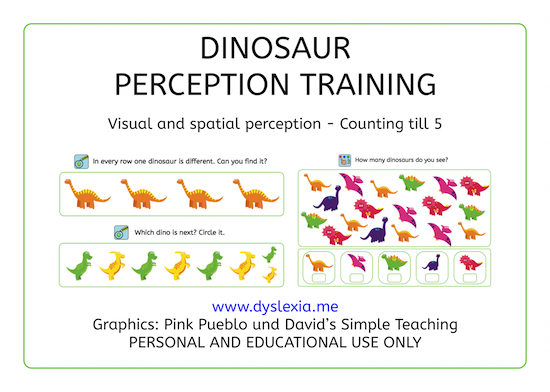
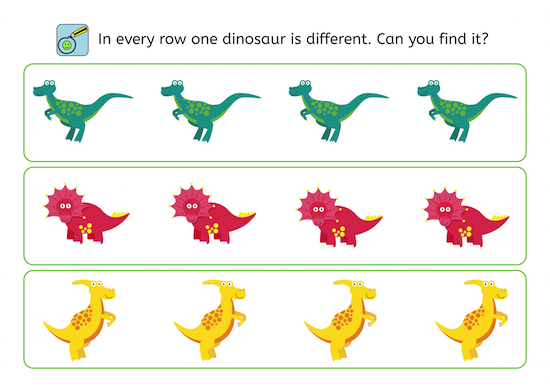
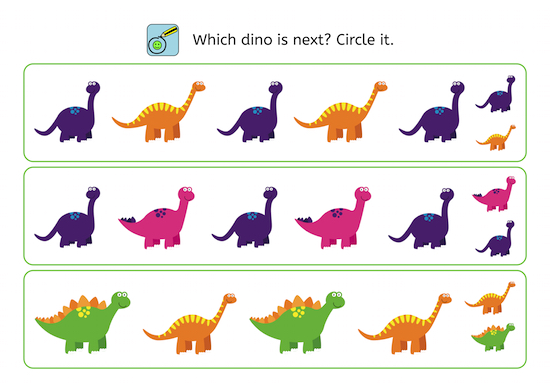
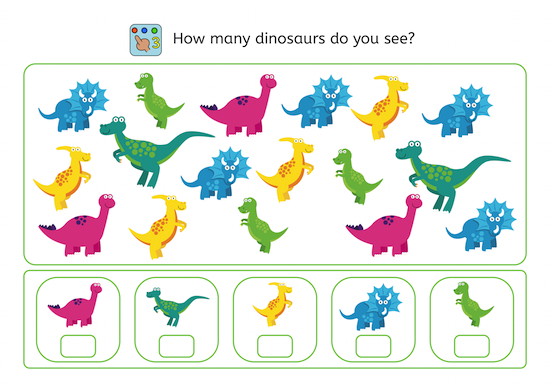
    Kids + dinosaurs = fun! Enjoy our new free no-prep printables with dinosaurs. Kids will have fun and train their visual and spatial perception, patterning, and counting up to 5.

    Dinosaur, perception training, children, freebie, no prep printable, parents, school, teacher, dyslexia, dyscalculia, AFS-method

    Visual and spatial perception:

    Dinosaur, perception training, children, freebie, no prep printable, parents, school, teacher, dyslexia, dyscalculia, AFS-method

    Patterning:

    Dinosaur, perception training, children, freebie, no prep printable, parents, school, teacher, dyslexia, dyscalculia, AFS-method

    Counting till 5:

    Dinosaur, perception training, children, freebie, no prep printable, parents, school, teacher, dyslexia, dyscalculia, AFS-method

    Download: Dinosaur perception training

    You want even more dinosaurs? Check out this free online game: Dinosaur – Find the pairs! You can choose different levels. The game can be played in any browser on any computer, smartphone or tablet.

  • Overcoming the Shame of My Learning Disability

    Overcoming the Shame of My Learning Disability

    By Leana Greene
    CEO of KidsInTheHouse.com

    I think I was 6 years old when I realized I was different. I tried harder than anyone else to please, but I could not spell words or learn how to put letters together to read.

    Leana Greene
    Leana Greene

    How do you not feel stupid when everyone else is learning something that you can’t grasp at the same pace? The shame of not being able to read out loud without stuttering or misspelling something on the blackboard in front of the class was almost unbearable. The fear of being called on by the teacher was paralyzing and made me act out and have panic attacks. My math teacher berated me because she thought I was being careless when I accidentally reversed numbers. I spent countless hours with frustrated but well-meaning adults who wanted to help me but just thought I wasn’t trying hard enough. All of these experiences sent me the message that I was not good enough.

    Being different as a child is not an easy thing, and it can scar your self-esteem for a lifetime. I think that the compounding effect is that you feel ashamed about it, and so your anxiety about trying to do something makes having the disability even harder. While many people struggle with the diagnosis of a learning disability, I think parents of children with learning disabilities might have an even bigger challenge addressing the psychological effects of it.

    As a parent, it is important to really talk to your child and address what is happening. According to pediatric neuropsychologist at UCLA, Sandra Loo, PhD, the first step for any parent who has a child with learning difficulties is to get the right diagnosis. Getting an early diagnosis will help your child get the proper interventions and accommodations, like extra time in school. It’s a good idea to get a complete evaluation because many children have more than one learning disability — around 25 percent of children with Dyslexia also have ADHD. Another way of addressing what is happening is by discussing your own areas where you feel inadequate in order to make it easier for your child to share his or her problems. Sharing my struggles about my disability with my kids has encouraged them to share not only a good grade but also the inevitable challenges of trying to perform in school.

    Most people with learning disabilities, like dyslexia, have a hard time doing well in school, but they often are successful post-education. Dyslexia/ADD specialist and leader of Renaissance Mind learning facility, Angela Gonzales, MD, explains that often the traditional academic environment does not suit a non-traditional learner, but children with learning disabilities have a style of thinking that is a gift later in life. She says, “These are highly visual, spatial, and conceptual learners that have the ability to distort perception and perceive it as reality. That’s a problem in school, but in the real world, this style of thinking allows you to be a Lego builder extraordinaire. It allows you to be an artist. As you get older, it allows you to be the best architect, movie producer, musician, or actor you can be.” While parents need to have realistic expectations about what their child can accomplish in school, they also need to make an effort to understand the different ways their child processes information and appreciate that their child, who is struggling with academics, is actually a gifted and capable individual with an incredible imagination. As Einstein said, “Imagination is more important than knowledge.” Communicating this way of thinking with your child may take some of the pressure off and make school bearable.

    Finding people who have faced the same struggles as your child may also be helpful in working through a disability. For me, it has been helpful recognizing that there are other Dyslexic entrepreneurs like Ingvar Kamprad, founder of Ikea, Paul Orfala, founder of Kinko’s, David Neeleman, founder of JetBlue, Charles Schwab, Tommy Hilfiger, and Ben Foss of Intel. Having a role model is important, and if your child has the opportunity to know that there are other people out there facing the same challenges, he or she will feel less alone and know they can succeed.

    For years, I tried to hide my learning disability because I didn’t want it to define me, and maybe I was still ashamed. Many parents have to deal with this seesaw. On the one hand, you want to help your child create a positive label for being different, but on the other hand, you do not want that label to solely define your child. Once you begin being labeled as just “John with ADD” or “Jane with Dyslexia,” it increases the shame and fear of being different. Even for those who have learned to embrace their learning disability, it is always difficult and hurtful to be labeled by others.

    How a child sees his or her disability is dependent on how that disability is explained and communicated by family members. Harvard-trained child and adult psychiatrist and ADHD Specialist, Edward Hallowell, explains the importance of framing learning disabilities in a positive way and communicating with your child that he or she is not so much “disabled” as “different”. Parents need to be sensitive to the fact that kids may not want to be defined as different all of the time, and give their kids an opportunity to be defined by other achievements. A way of doing this is to help your child find at least one other activity in which he or she can excel. That activity may be drawing, music, or sports. Whatever it is, helping your child recognize that he or she has both strengths and weaknesses makes life easier. It also gives children the opportunity to see themselves as more than their disability and more than a label.

    I think it is important for parents to understand that it is not only the learning disability that causes problems, but also the anxiety and paralysis that compound the learning disability. Acting defiantly may be a way of protecting oneself from the fear of failure, and it is good if parents can recognize those signs in their children. Even today, as I go into the doctor’s office and have to fill out a form with no spellcheck or person there to correct my spelling, I can feel that same childhood panic attack and sweat coming down my back, and this is after years of openly talking about my dyslexia.

    Ultimately, I have found ways to work through my disability, and parents should know that, with the proper help, their kids will as well. In the words of clinical neuropsychologist and faculty of Harvard Medical School, Jerome Schultz, PhD, “If we’re starting with a base of failure and fear and frustration, it’s hard to build anything on that foundation. So we really have to turn this cycle around, and it’s quite possible to do.” Many studies are proving that children with learning disabilities can overcome adversity, and this could be the reason why so many dyslexic people and others with learning disabilities end up excelling and becoming entrepreneurs.

    Resources:

    Leana.com – Leana Greene’s Website
    KidsintheHouse.com – World’s Largest Parenting Video Library

    Follow KidsInTheHouse.com on Twitter: www.x.com/KidsintheHouse

  • ReadWorks: Free resources for reading comprehension

    ReadWorks: Free resources for reading comprehension

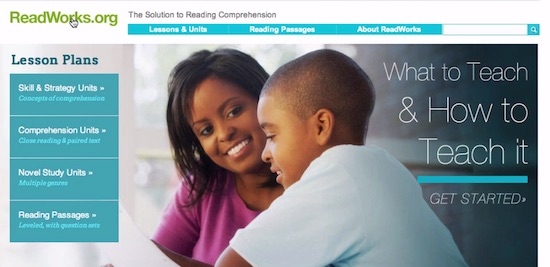
    Can children learn reading comprehension? Of course, they can. Thanks to ReadWorks, this is not even expensive. In fact, it is completely free. This non-profit site offers research-proven tools so that students can improve their academic achievement.

    ReadWorks provides research-based units, lessons, and authentic, leveled non-fiction and literary passages online, for free, to be shared broadly. The curriculum is aligned to the Common Core State Standards and the standards of all 50 states. Most importantly, ReadWorks is faithful to the most effective research-proven instructional practices in reading comprehension.

    ReadWorks, reading, reading comprehension, dyslexia, parents, children

    ReadWorks is completely free. You only need to register to access all the resources.

    More information: ReadWorks.org

    Take a tour of the site: Click here

  • Storyline Online

    Storyline Online

    Reading to children has been repeatedly shown to improve their reading, writing, and communication skills, logical thinking, concentration, and general academic aptitude… as well as inspire a love of reading. The Screen Actors Guild Foundation records well-known actors reading children’s books and makes graphically dynamic videos so that children around the world can be read to with just the click of a Storyline Online video book image. The videos are free, and there is no need to register. Enjoy!

    STORYLINE ONLINE

  • 1500 free worksheets

    1500 free worksheets

    The American Dyslexia Association offers more than 1500 free worksheets on its website. The worksheets follow the AFS-method , a very successful method to help children with dyslexia and dyscalculia. If a child has dyslexia or dyscalculia, it is not enough to work on the mistakes. The child also has to learn to be attentive all the time when reading, writing, and calculating. Furthermore, it is important to train the child’s perception to improve reading, writing, and calculating skills.

    Dyslexia, worksheets, free, parents, children, homeschooling, reading, writing, AFS-method


    Access the worksheets

  • Dyslexia – Information in 18 languages

    Dyslexia – Information in 18 languages

    The American Dyslexia Association promotes the interests of people with dyslexia and dyscalculia. It is important to inform people about these themes. Dr. Astrid Kopp-Duller, president of ADA, always stresses how important it is to help children with dyslexia and dyscalculia on a pedagogical-didactic level. Because it needs to be said time and again: THESE CHILDREN ARE NOT ILL OR DISABLED, they simply need another method to learn how to read, write, and calculate.

    To reach as many people as possible, some basic information about dyslexia and dyscalculia is now available in 18 languages:

    Do you know an adult, a child, a family who may be interested? Please, hand them this information. The more people are informed and the earlier children are helped, the better!