Dyslexia affects up to 1 in 5 people, but the experience of dyslexia isn’t always the same. This difficulty in processing language exists along a spectrum — one that doesn’t necessarily fit with labels like “normal” and “defective.” Kelli Sandman-Hurley urges us to think again about dyslexic brain function and to celebrate the neurodiversity of the human brain.
Dr. Sally Shaywitz recently wrote, “In the case of dyslexia, (while there is always the desire for more), there is currently sufficient knowledge to do a far better job in identifying, intervening in, and accommodating dyslexia. There is an unacceptable and harmful wide gap between the robust existing science of dyslexia and how this knowledge is implemented, typically not implemented, by schools. In dyslexia, there is not a knowledge gap but rather an action gap. As a consequence, dyslexic children frequently go unidentified, unremediated, and unaccommodated, with great harm to the children, to their families, and to society. Educators must act to translate this body of converging science into policy and practice. Our children’s lives and futures (human capital) are too precious to waste.” We could not agree more!
Watch this compelling video and then visit “What is dyslexia?” on Ed.ted for more information, discussions, and links.
I think I was 6 years old when I realized I was different. I tried harder than anyone else to please, but I could not spell words or learn how to put letters together to read.
Leana Greene
How do you not feel stupid when everyone else is learning something that you can’t grasp at the same pace? The shame of not being able to read out loud without stuttering or misspelling something on the blackboard in front of the class was almost unbearable. The fear of being called on by the teacher was paralyzing and made me act out and have panic attacks. My math teacher berated me because she thought I was being careless when I accidentally reversed numbers. I spent countless hours with frustrated but well-meaning adults who wanted to help me but just thought I wasn’t trying hard enough. All of these experiences sent me the message that I was not good enough.
Being different as a child is not an easy thing, and it can scar your self-esteem for a lifetime. I think that the compounding effect is that you feel ashamed about it, and so your anxiety about trying to do something makes having the disability even harder. While many people struggle with the diagnosis of a learning disability, I think parents of children with learning disabilities might have an even bigger challenge addressing the psychological effects of it.
As a parent, it is important to really talk to your child and address what is happening. According to pediatric neuropsychologist at UCLA, Sandra Loo, PhD, the first step for any parent who has a child with learning difficulties is to get the right diagnosis. Getting an early diagnosis will help your child get the proper interventions and accommodations, like extra time in school. It’s a good idea to get a complete evaluation because many children have more than one learning disability — around 25 percent of children with Dyslexia also have ADHD. Another way of addressing what is happening is by discussing your own areas where you feel inadequate in order to make it easier for your child to share his or her problems. Sharing my struggles about my disability with my kids has encouraged them to share not only a good grade but also the inevitable challenges of trying to perform in school.
Most people with learning disabilities, like dyslexia, have a hard time doing well in school, but they often are successful post-education. Dyslexia/ADD specialist and leader of Renaissance Mind learning facility, Angela Gonzales, MD, explains that often the traditional academic environment does not suit a non-traditional learner, but children with learning disabilities have a style of thinking that is a gift later in life. She says, “These are highly visual, spatial, and conceptual learners that have the ability to distort perception and perceive it as reality. That’s a problem in school, but in the real world, this style of thinking allows you to be a Lego builder extraordinaire. It allows you to be an artist. As you get older, it allows you to be the best architect, movie producer, musician, or actor you can be.” While parents need to have realistic expectations about what their child can accomplish in school, they also need to make an effort to understand the different ways their child processes information and appreciate that their child, who is struggling with academics, is actually a gifted and capable individual with an incredible imagination. As Einstein said, “Imagination is more important than knowledge.” Communicating this way of thinking with your child may take some of the pressure off and make school bearable.
Finding people who have faced the same struggles as your child may also be helpful in working through a disability. For me, it has been helpful recognizing that there are other Dyslexic entrepreneurs like Ingvar Kamprad, founder of Ikea, Paul Orfala, founder of Kinko’s, David Neeleman, founder of JetBlue, Charles Schwab, Tommy Hilfiger, and Ben Foss of Intel. Having a role model is important, and if your child has the opportunity to know that there are other people out there facing the same challenges, he or she will feel less alone and know they can succeed.
For years, I tried to hide my learning disability because I didn’t want it to define me, and maybe I was still ashamed. Many parents have to deal with this seesaw. On the one hand, you want to help your child create a positive label for being different, but on the other hand, you do not want that label to solely define your child. Once you begin being labeled as just “John with ADD” or “Jane with Dyslexia,” it increases the shame and fear of being different. Even for those who have learned to embrace their learning disability, it is always difficult and hurtful to be labeled by others.
How a child sees his or her disability is dependent on how that disability is explained and communicated by family members. Harvard-trained child and adult psychiatrist and ADHD Specialist, Edward Hallowell, explains the importance of framing learning disabilities in a positive way and communicating with your child that he or she is not so much “disabled” as “different”. Parents need to be sensitive to the fact that kids may not want to be defined as different all of the time, and give their kids an opportunity to be defined by other achievements. A way of doing this is to help your child find at least one other activity in which he or she can excel. That activity may be drawing, music, or sports. Whatever it is, helping your child recognize that he or she has both strengths and weaknesses makes life easier. It also gives children the opportunity to see themselves as more than their disability and more than a label.
I think it is important for parents to understand that it is not only the learning disability that causes problems, but also the anxiety and paralysis that compound the learning disability. Acting defiantly may be a way of protecting oneself from the fear of failure, and it is good if parents can recognize those signs in their children. Even today, as I go into the doctor’s office and have to fill out a form with no spellcheck or person there to correct my spelling, I can feel that same childhood panic attack and sweat coming down my back, and this is after years of openly talking about my dyslexia.
Ultimately, I have found ways to work through my disability, and parents should know that, with the proper help, their kids will as well. In the words of clinical neuropsychologist and faculty of Harvard Medical School, Jerome Schultz, PhD, “If we’re starting with a base of failure and fear and frustration, it’s hard to build anything on that foundation. So we really have to turn this cycle around, and it’s quite possible to do.” Many studies are proving that children with learning disabilities can overcome adversity, and this could be the reason why so many dyslexic people and others with learning disabilities end up excelling and becoming entrepreneurs.
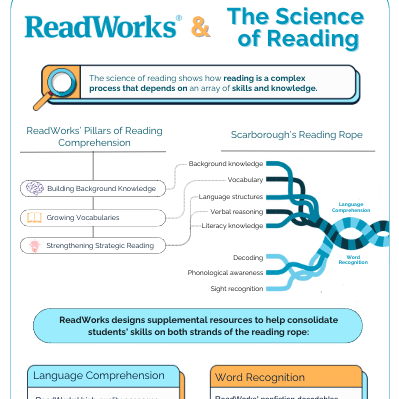
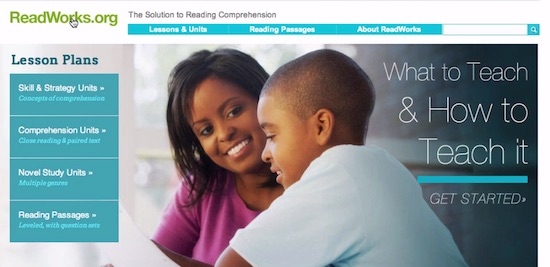
Can children learn reading comprehension? Of course, they can. Thanks to ReadWorks, this is not even expensive. In fact, it is completely free. This non-profit site offers research-proven tools so that students can improve their academic achievement.
ReadWorks provides research-based units, lessons, and authentic, leveled non-fiction and literary passages online, for free, to be shared broadly. The curriculum is aligned to the Common Core State Standards and the standards of all 50 states. Most importantly, ReadWorks is faithful to the most effective research-proven instructional practices in reading comprehension.
ReadWorks is completely free. You only need to register to access all the resources.
Reading to children has been repeatedly shown to improve their reading, writing, and communication skills, logical thinking, concentration, and general academic aptitude… as well as inspire a love of reading. The Screen Actors Guild Foundation records well-known actors reading children’s books and makes graphically dynamic videos so that children around the world can be read to with just the click of a Storyline Online video book image. The videos are free, and there is no need to register. Enjoy!
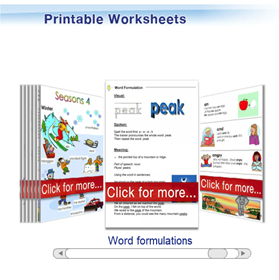
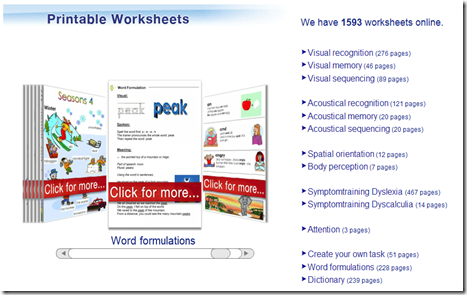
The American Dyslexia Association offers more than 1,500 free worksheets on its website. They are built on the AFS method, the approach used worldwide in individualized dyslexia and dyscalculia training. Everything is free to download, and you may use it at school, at home, or in tutoring.
When a child has dyslexia or dyscalculia, correcting the errors alone changes very little. The errors are the visible end of a longer chain. A child also has to be able to hold attention through a whole page, and the senses that carry reading, writing, and calculating have to be trained alongside the schoolwork itself. That is the reasoning behind the way these worksheets are organized.
What the worksheets cover
AFS stands for Attention, Function, and Symptom, and the collection follows those three areas.
Attention. Short, focused exercises that ask a child to stay with one task and notice detail. Find the shape, spot the difference, match the pair, complete the pattern.
Function. Training for the sensory perceptions that reading and arithmetic rest on: visual and spatial perception, visual and auditory sequencing, differentiation, and memory. This is the part most worksheet collections leave out entirely.
Symptom. The schoolwork itself. Letter recognition, reading, spelling patterns, number decomposition, counting, and the four basic operations.
Who they are for
Most sheets suit children in kindergarten through the elementary grades, roughly ages 5 to 11, and many work well with older children who need to rebuild a foundation without being handed material that looks babyish. Parents, classroom teachers, homeschooling families, tutors, and Certified Dyslexia Trainers all use them. No account and no sign-up is required.
How to use them so they actually help
Short and often beats long and rare. Ten focused minutes a day does more than an hour on Sunday.
Take all three areas, not just the last one. A child who only ever practices spelling is practicing the symptom while the cause stays where it was.
Stop while it is still going well. Ending on success is what makes a child willing to sit down again tomorrow.
Watch how the child works, not only what the answer is. Where the eye jumps, where attention slips, and which errors repeat tell you more than a score.
Print rather than fill in on screen where you can. Handling the paper, tracing, cutting, and coloring are part of the exercise.
More free material on this blog
The worksheet library is not the only free resource here. Our own printable freebies are published regularly and cover perception training, counting, tracing, and seasonal activities. For handwriting practice you can build your own sheets with the handwriting worksheet generator, and there is a matching tool for printable math worksheets if arithmetic is the harder subject at your kitchen table. The freebies overview page collects the lot.
If you want to work this way professionally
Worksheets support training, but they do not replace knowing which area a particular child needs. That is what the AFS-Test establishes and what trainers learn to read. If you work with children and want the full picture, the ADA-accredited certification for dyslexia trainers teaches the testing and the training together, and the first lesson is free to read.
More free material: our complete list of free dyslexia resources for parents and teachers covers worksheets, generators, daily exercises, a free math app, and a parents portal, plus how much daily practice a child needs.
More on this topic: the worksheets are free because the American Dyslexia Association is a 501(c)(3) public charity, supported by donations and memberships. Read what ADA’s 501(c)(3) dyslexia charity status means.
The American Dyslexia Association promotes the interests of people with dyslexia and dyscalculia. It is important to inform people about these themes. Dr. Astrid Kopp-Duller, president of ADA, always stresses how important it is to help children with dyslexia and dyscalculia on a pedagogical-didactic level. Because it needs to be said time and again: THESE CHILDREN ARE NOT ILL OR DISABLED, they simply need another method to learn how to read, write, and calculate.
To reach as many people as possible, some basic information about dyslexia and dyscalculia is now available in 18 languages:
Do you know an adult, a child, a family who may be interested? Please, hand them this information. The more people are informed and the earlier children are helped, the better!
Cher? Tom Cruise? Salma Hayek? Anthony Hopkins? Jamie Oliver? Albert Einstein? Agatha Christie? Alexander Graham Bell? Robin Williams? Danny Glover? John Lennon? and Muhammad Ali?
What do these famous people all have in common? As you might have guessed from the title yes it is that they are all Dyslexic.
Dyslexia is a specific learning difficulty which makes it hard for you to learn to read, write and spell correctly. We do know that developmental dyslexia is inherited, so that, thanks to our DNA, we can be born with it. Dyslexia affects around 8% to 10% of the Irish population. The National Institute of Health reports that up to 15% of the U.S. population have learning challenges.
If you have dyslexia you may have trouble with reading, writing, spelling, maths, and sometimes even music. Dyslexia can occur at any level of intelligence, and has many disguises so that teachers and parents may instead erroneously observe children lacking motivation or “not trying hard enough”.
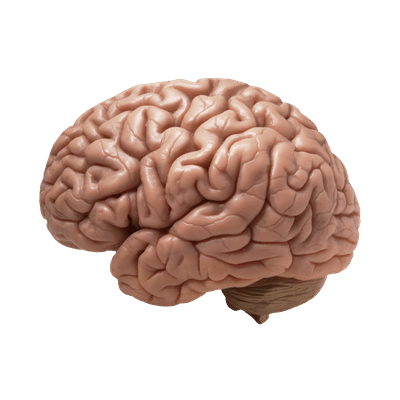
A dyslexic brain shows very little activity in areas known to be of high importance to connecting the written form of words with their phonetic components. Thus to read, people with dyslexia must create new neurological pathways. Compensation is made by using more use of a front-brain section called Broca’s area, commonly connected with other types of language speech and processing.
How might I know if I or my child has Dyslexia?
Here are a few of the main symptoms: • Delayed speech development • Speech problems, such as not being able to pronounce long words properly • Problems expressing themselves using spoken language • Little understanding or appreciation of rhyming words • Spelling that is unpredictable and inconsistent • Putting letters and figures the wrong way
A Sound Solution?
Alphamusic composer John Bram Levine believes that if you can slow the brain waves down to the Alpha state, then the useless mind chatter and negative self-talk of doubt and fear may vanish, whilst the left and right brain communicate more effectively, allowing information to be more easily absorbed, processed, and remembered. Levine studied electronics, graduating with a degree in Music Composition from Sydney University, following which he learnt meditation. He challenged himself to formulate music that could induce the same Alpha brainwave state achieved during meditation. A new genre was born: ‘Alphamusic’.
Does it work?
Stewart Holmes, a dyslexic, hated studying. ‘It was all too hard and frustrating until by accident I played ‘Silence of Peace’, an Alphamusic album, whilst revising. I felt as if a curtain surrounded the words on the page, allowing me to absorb the words and meaning freely and easily. I was astonished as no other music, whether it was new age, relaxation, classical, rock, or jazz, has ever had this effect on me.
Amy Turner-Monk was determined that her dyslexia was not going to stop her from realizing her dreams, so she applied to the Open University and asked for assistance with her learning difficulties. The dyslexia assessor recommended she use Levine’s Alphamusic whilst studying. Until her discovery, Amy could only read for 10 minutes before being tired and distracted and needing to take 30 minutes to rest before continuing, ‘it all was quite draining’. ‘Using this brain wave transforming album ‘Silence of Peace’, I found I could study for more than an hour at a time without any exhaustion.’
Although such testimonials and Cambridge University studies have shown a positive link between Levine’s Alphamusic and enhanced learning, more research needs to be done in this area, to investigate if music truly could be the golden key to solving the dyslexic puzzle. Levine is interested in hearing from anyone who would be interested in engaging in such research.
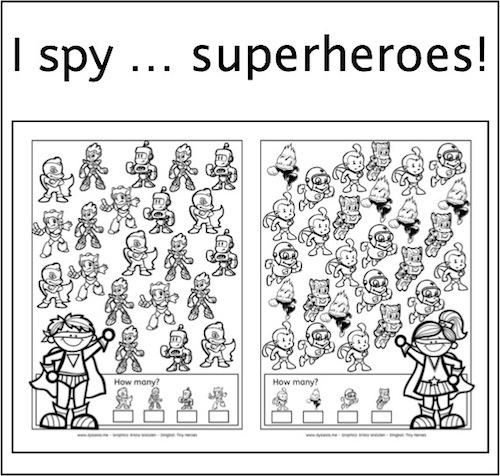
Here is another “I spy…” freebie. Children simply love them. This time it is called “I spy … superheroes”. Print, color, count, and simply enjoy all the fun. At the same time, children train attention, visual perception, and fine motor skills.
Spring is in the air, so we thought it was about time for a new freebie. Give your children some coloring pencils and let them color and search. Then, they count how many they find of each object. Use this opportunity to talk about “more than…”, “less than…”, etc. This exercise trains attention, visual, and spatial perception, and fine motor skills – important skills for reading, writing, and arithmetic.