Tag: dyslexia

  • Dyslexia – Dyscalculia!?

    Dyslexia – Dyscalculia!?

    The authors, Dr. Astrid Kopp-Duller and Dr. Livia R. Pailer-Duller, describe in this publication the necessity of intervention at the educational-didactic level, which is of preeminent importance for success in the training of people who have problems with reading, writing, or calculating.
    Information on ordering is found here:
    https://www.dyslexia-dyscalculia.com/
    Available in English, German, and Spanish.
    It is a fact that many people who simply have problems with learning how to read, write, or do arithmetic continue to undergo only psychological or medical therapy, and don’t receive the educational-didactic assistance that they actually need. In cases of problems with reading, writing, or calculating, only the specially trained educator will be able to help these people using educational methods that have been developed through educational-didactic research.
  • MIT Professor Catherine Drennan on Her Dyslexia and Its Advantages

    MIT Professor Catherine Drennan on Her Dyslexia and Its Advantages

    http://DyslexicAdvantage.org “Don’t listen to what anyone tells you what you can or cannot do…there is no dyslexia ceiling. Doesn’t exist unless you create it in your own mind.” – MIT Professor of Chemistry and Biology Catherine Drennan, PhD. Dr Drennan also shares how she is able to read molecular spatial configurations like how she learned to read. The Conference was made possible by a generous grant from the Emily Hall Tremaine Foundation

  • Dyslexia Is Done

    Dyslexia Is Done

    For over 100 years, dyslexia has had a good run. It’s caused heartache, misery, and frustration for millions. That’s over now. A fifth independent study has once again proven that dyslexics can become better readers than non-dyslexics. It takes between 20 and 40 hours of practice with a method called “Eye-Hop.”

    The Eye-Hop exercises are fun and easy to do. Through progressive levels, people move from processing one word at a time to reading 5 to 8 words at a time. This is all done with high comprehension. Amazingly, those with the worst phonological processing achieve the greatest percentage increase in their reading abilities. This appears to be due to the ability to process so much information in one glance. Like predictive text on a smartphone, the more information provided, the more certain it is of the word you’re typing.

    Eye-Hop is an element of the SuperReading Program. This course, developed in 1995, has always produced these results. The difference today is that SuperReading is now available 100% online. Nearly a year was spent creating compatible online testing, which is rigorous and accurate. Resources were also spent to perfect an online App which converts ordinary text into the Eye-Hop format almost instantly. This means that age-appropriate material of interest can be used to fulfill the hours required to overcome dyslexia.

    The online SuperReading course is easy to understand and apply. Any parent or guardian can read about a tool or watch a 3-minute video and explain it to a child in a minute or two. Coaching is available, though not required. Every child graduating the SuperReading Program has become the best reader and learner in their school in 60 days or less. In the case of some dyslexics, it has taken closer to 90 days.

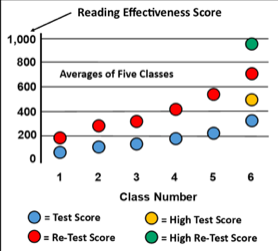
    Skill levels are measured by “Reading Effectiveness” (RE) with standardized tests. RE is reading speed multiplied by comprehension/recall (expressed as a percentage). For example, a person reading at 200 words per minute (wpm), able to recall 50% of what they read, would have an RE of 100, or 200 x .5 = 100. A person reading at 150wpm with 50% accurate recall would have an RE of 75, or 150 x .5 = 75. In plain English, RE tells us how fast we read and what we have to show for the time spent. The SuperReading Program guarantees to at least double the baseline RE scores of any person. With the online testing, this is now a much “cleaner” process than from paper. All scores are computed, graphed out, and tracked in a secure database.

    SuperReading was developed in Silicon Valley in the mid-1990s. One of the first companies to bring in the Program was Apple Computer. After 5 weeks, their Global Response Team was able to reduce 28 hours of reading each week down to 5 hours. They also reported that their engineers did a better job reading incoming emails, as their “Negative Response Rate” (NRR) dropped by 85%. The NRR was end-users complaining that the engineers did not understand their email. The first identified dyslexic to enter the Program was from the legal department at Hewlett-Packard in 1996. In a group of 25 engineers and managers, Nancy started off with the lowest RE scores in that group. 35 days later she had the highest RE scores. This would become a trend in the years to follow.

    From 1996 to 2005, hundreds of dyslexic readers came through the SuperReading Program, did their Eye-Hop exercises, and became brilliant readers. In 1996, these engineers asked to have the Program for their children. Some companies held family classes after hours. Those children quickly became the best readers in their school. Many of them were dyslexic, others had ADHD, ADD, and other learning challenges. No condition or label seemed to make any difference. They all became great readers and progressed from dreading having to read to loving it. When asked why they felt that way, most replied that it was no longer a chore, or torture. It was easy and felt like fun. Apparently, children do not run away from fun- they move toward it. Combined with memory tools and stress-free study techniques, these students thrived. After a major exam, one student commented that the memory tools made it easier than cheating! Other students agreed.

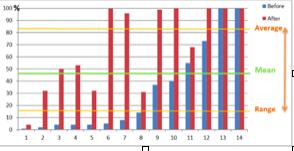
    In 2006, I moved to the UK. There I met Dr. R. Cooper, one of the UK’s leading authorities on dyslexia. At first, he dismissed the results, believing those people were not truly dyslexic; that they only thought they were. As a person who sat on the board when the UK defined dyslexia, he had been teaching teachers how to help dyslexics for 16 years. Dr. Cooper politely dismissed me. Nearly a year later, while teaching law students at the London City Law School, I had two dyslexic students take the course. They had papers from bona fide Assessors of Need proclaiming them as dyslexic. They more than tripled their initial RE scores and wrote glowing testimonials. I sent the documents and comments to Dr. Cooper, who invited me to London South Bank University to run a course for a group of dyslexic students and adults. Dr. Cooper was, in his words, “astounded at the results.” The last class was very emotional- lots of tears from people who had just finished a book for the first time in their lives. Some were in their 40s and 50s. We ran a second course, this time with a control group. We got the same results. 84% of the dyslexics ended up with higher RE scores than a group of non-dyslexic university professors! In future studies, they would be compared to their non-dyslexic peers, and 100% would end up with higher RE scores. Since 2009, the UK government has funded SuperReading for all dyslexic university students in the UK.

    The Italians have translated SuperReading into Italian and are taking it through their university system. They have seen equal success in a high school and in their dyslexia centers. You can view their latest published study. The other studies can be accessed from our website.

    The SuperReading Program is available now, at https://superreading.com, along with the unique Eye-Hop exercises. Dyslexia has had its day. Now you can have yours.

    Ron Cole
    The Reading & Learning Coach

    Soaring Students, Delighted Parents,

                  Turned-On Teachers

               www.superreading.com

  • GHOTIT Can Help Kids With Dyslexia, Dysgraphia, Spelling

    GHOTIT Can Help Kids With Dyslexia, Dysgraphia, Spelling

    Dyslexia Spelling = Phonetic Spelling + Creative Spelling

    What is Phonetic Spelling?

    When you’re dictating a word and tell your son or daughter that he should write what he hears, your child will attempt to map the sounds in the words to the sounds of the letters.

    However, English is not a phonetic language. There are a very large number of English words where there is a gap between how the word sounds and how the word is actually spelled. Not to mention, there are many times multiple correct phonetic options to a given sound (for example: k , c, ck, and qu – all sound about the same)…

    What is creative spelling?

    Given that English spelling is not phonetic, and each sound may have several spelling options, a lot of correct English spelling is dependent on the visual memory of a written word. If you have good visual memory of words, you will be able to spell a word correctly simply by writing it down, and from memory deciding if this is the correct spelling.

    But kids with dyslexia and dysgraphia have very poor and inconsistent visual memory of spelled words, and therefore, can hardly rely on their visual memory of words…. Not to mention that children with dyslexia or dysgraphia sometimes confuse the direction of letters, and though they meant to write the letter “b” actually end up writing the letter “d”…

    A child’s Creative Spelling refers to the spelling of a child who has no idea of how to spell correctly certain syllables of a word, and therefore, creatively makes them up as he writes. And each time he/she “creates” a word’s spelling, it usually ends up as a different spelling creation.

    Can a regular spell checker correct dyslexia spelling?

    English is not a phonetic language, and therefore, the “creative spelling” of a child with dyslexia or dysgraphia must be taken into account in order for a spell checker to provide value for a dyslexic child. However, the “creative” spelling of such a child is basically “noise” and therefore any computerized program, such as a regular spell checker, that tries to correct a single word at a time (and not based on the context of the sentence) is doomed to fail… That is why Microsoft spell checker many times simply fails to correct a heavily misspelled word written by a dyslexic… and the reason why dyslexic children require…

    Continue reading here: https://www.ghotit.com/ghotit-for-kids

  • Why Dyslexia Is More Than a Reading Disorder

    Why Dyslexia Is More Than a Reading Disorder

    People with dyslexia have difficulty reading letters and words; it’s a learning disability that has nothing to do with their intelligence. Until recently, researchers assumed the challenge could be traced to language difficulties, including problems processing printed words, and they focused their attention on the language parts of the brain.

    But in the latest research published in the journal Neuron, scientists led by John Gabrieli, a professor of brain and cognitive sciences at Massachusetts Institute of Technology, found that dyslexia may be due to a much broader difference in brain function. After analyzing functional MRI brain scans of people with and without dyslexia, they found that those with dyslexia were less adept at something called adaptive learning. When the brain sees something new, whether it’s a word, object, voice or experience, it expends a lot of neural energy to gather as much information about the novel stimulus as possible. But if it does this every time it hears the same voice, or encounters the same dog barking, for example, that wouldn’t be efficient. It’s therefore able to adapt and quickly triage new encounters from familiar ones.

    Gabrieli found that in the brains of dyslexics, this process wasn’t occurring when they heard the same person speak different words. Nor did it occur in other tests of the brain’s plasticity, or ability to adapt. That suggests that the trouble with reading has less to do with language specific problems but rather broader issues with adaptivity. In other words, the issues with adapting to new things may compromise skills like reading.

    Continue reading here: https://time.com/4608060/dyslexia-reading-disorder/

  • The Easy Reading Card – Easier Reading System!

    The Easy Reading Card – Easier Reading System!

    Reading is the key to success. Anyone who reads well and who understands what has been read automatically learns the rules of correct spelling.

    Precise, accurate reading is a prerequisite for writing and learning. The specific design for children of the Easy Reading Card makes reading easy and fun.

    Scientific studies have shown that a majority of individuals that exhibit reading problems are affected by subjective visual perception. When reading, the visual channels have to work precisely timed together so that there is no overlap of visual information.

    Science has proven the positive effects of the influences of colors while reading. Especially the color blue leads to a phasic activity of the channels, which leads to an increase in reading achievement, reading comprehension and reading speed. The color thus supports the sub-processes of the visual sensors.

    Teachers from around the world are already using the Easy Reading Card when working with children.

    Watch the Easy Reading Card in action:


    More info: www.easy-reading-card.com

    Order here: www.dyslexics.com 

  • Making the Impossible Possible with Homeschooling

    Making the Impossible Possible with Homeschooling

    Wolsey Hall Oxford: The Homeschooling College

    For many dyslexic children the one-size-fits-all approach of traditional classrooms doesn’t work and can leave them feeling frustrated, singled out and upset. This experience can affect the whole family and you may be left feeling helpless with little choice.

    Homeschooling is an increasingly viable option for many families. While the idea may initially seem daunting, you can tap into your child’s strengths to aid their learning and best of all, the whole process is led by them. At home they can learn at a pace to suit them and in an environment they are comfortable with. If a new concept requires several different approaches before it’s really embedded in their mind, then you have the time and space to enable that creativity. You can also explore a wide range of technology to support their learning that isn’t permitted in mainstream schools. Homeschooling is flexible and that’s key.

    Kailash’s son Innes has dyslexia and homeschools with Wolsey Hall Oxford: “Homeschooling with Wolsey Hall has been fantastic for Innes. With Wolsey designing the yearly study plan, Innes has been able to tailor his schedule of work to accommodate his dyslexia. He immerses himself in a subject for days at a time, finishes an assignment and then moves on to the next topic. This pattern of working is very effective for Innes, as his short term memory is not very good – the knowledge is placed in his long term memory, giving him a very high retention rate.”

    For many dyslexic students their low self-esteem is also a major issue. The nurturing approach of homeschooling builds this up, giving them the confidence to try new things without the ridicule of their peers should they fail.

    Becoming your child’s home educator can feel overwhelming at the start, but many parents use a combination of approaches. From finding free resources on the internet and borrowing library books to meeting up with local homeschooling groups who often organize activities and trips. Online forums are a great resource for answering tricky questions, and the many Facebook groups offer a network of support from families in a similar boat.

    While homeschooling often means one parent losing their potential income, many families run home-based businesses alongside home educating. You could also sign up for some homeschooling courses online, where your child will have their own tutor and learning support. At Wolsey Hall Oxford, we help parents to identify the best ways they can support their child in order to unlock their potential. We pride ourselves on the learning support we offer students and their families including a mentoring service and development of personal learning plans. Your Student Progress Manager is with you every step of the way to answer your queries, and your tutor will follow the pace set by your child.

    Alfie, who has dyslexia, has been homeschooling for the past three years. Last year, he achieved four IGCSEs and is now studying another four IGCSEs this year. His mum, Helen explains why it works for them: “I can honestly say that Wolsey Hall was a fantastic choice for us. We really like the structure that Wolsey provides, the assignment schedule, and the online facility. Michaela, our Student Progress Manager, has been brilliant, always there to offer support and advice. I think what has been excellent for Alfie is the structure of the learning.”

    Wolsey Hall Oxford offers a wide range of courses from Age 7 Primary right through to Secondary, IGCSE, and A Level. For more information about our Cambridge-accredited school and how we support children with additional needs such as dyslexia, visit: www.wolseyhalloxford.org.uk


    Homeschooling a child with dyslexia works best when you understand how the learning difference actually works. Parents who want that grounding can take an online dyslexia certification for homeschooling parents and learn the AFS method at their own pace.

  • KAZ – SEN/Dyslexia Typing Software

    KAZ – SEN/Dyslexia Typing Software

    If individuals with dyslexia are equipped with the correct tools, they stand a far greater chance of reaching their full potential.

    Trials and feedback from special needs teachers across the world have proven that touch typing and using a computer are formidable and even life-changing tools that open doors for individuals with dyslexia, as they present a new and powerful medium for learning and communicating – introducing them to a new, accessible academic world they can cope with and even excel in!

    The disturbances experienced by dyslexics make writing and producing a piece of work extremely challenging. The level of concentration and effort involved can be exhausting and can affect the overall structure and quality of a piece of work.

    The skill of typing can help eliminate many of these challenges and frustrations, and early acquisition familiarizes users with the keyboard, allowing them to fully appreciate the tools available to them through typing and using a computer.

    When typing:

    • The need for neat handwriting is no longer a priority.
    • Errors can be easily edited/corrected without messy crossings out, resulting in neat and presentable work.
    • Spell checkers highlight mistakes and offer alternatives.
    • Reassurance with the above automatically boosts confidence – promoting experimentation with vocabulary and spelling, and allows concentration to be focused on content.
    • Quick and accurate typing can reduce the amount of time spent on a piece of work and often increases the amount of work produced.
    • Physical dexterity is enhanced, helping with handwriting skills.
    • Reading, spelling, and vocabulary are ingrained in memory – with ‘muscle memory’, spellings become a series of finger movements and patterns on a keyboard, reducing the likelihood of transposing or misspelling words.
    • The working memory is not overloaded. Students can work at their own pace in a non-linear fashion, where they can process their thoughts first and structure them later.

    KAZ’s NEW SEN/Dyslexia typing software was developed with advice and guidance from the British Dyslexia Research Trust.

    Incorporating a multi-sensory approach throughout and available with US and UK accents and keyboards, it teaches typing skills whilst minimizing disturbances related to visual stress, by means of a unique ‘Preference Screen’ – tailoring the course to individual’s needs.

    Preferences include:-

    • A choice of colored background/filter screens – for reducing white screen glare.
    • A choice of 2 specific research-based background/filter colors – for steadying letter movement and blurring.
    • A choice of dyslexic friendly typefaces – for ease of reading.
    • A choice of font colour – for contrast from background screen colour.
    • A choice of font size – for optimum visibility, comfort and to minimize fusing and crowding of letters.
    • A choice of Keyboard for optimum visibility comfort.

    Once the user has selected their preferences and can read the sample text comfortably, these options are applied throughout the course, ensuring the learning experience is a comfortable and enjoyable one. No other typing tutor works in this way.

    The program uses a unique and proven ‘accelerated learning’ teaching method. Incorporating both ‘muscle memory’ and ‘brain balance’, it engages the major senses of sight, sound, and touch simultaneously, radically enhancing memory retention and recall, which is why it is so effective.

    Using specific combinations and progressions of just 11 words in 5 scientifically structured phrases, the method trains the fingers on both hands to work symmetrically and simultaneously – a direct result of both hemispheres of the brain working at the same time – ‘brain balance’.

    With repetition, reading, spelling, and vocabulary are ingrained to memory and with ‘muscle memory’ spellings become a series of finger movements and patterns on a keyboard, reducing the likelihood of transposing and misspelling words.

    The Course is presented in a structured but light-hearted manner to make learning fun and enjoyable. It solely focuses on teaching typing and does not include gaming or try to teach typing with other subjects, as research has proven that this splits concentration and may overload the ‘working memory’.

    The program offers both spoken and written instruction and includes ‘speaking keys’ covering the a-z keys. It is delivered in 5 short modules, in order to hold interest and concentration, and once again, avoid overloading the working memory. The student is allowed to progress at their own pace, acquiring the skill and gaining speed and accuracy without even realizing it. Additionally, a visual of the keyboard is always on the screen, encouraging the user to look up at the screen and not down at their fingers (so there is no need to cover hands or keyboard).

    The combination of KAZ’s unique ‘Preference Screen’ and its proven accelerated learning teaching method delivers a simple, yet dynamic course.

    The software is suitable for ages 6+ and is available in ‘Junior’, ‘Adult’ and ‘Corporate’, editions  – Online, as a Download, or via SCORM for LMS.

    Since launch, it has received wonderful reviews and is now promoted by the British Dyslexia Association and many SEN resellers across the world.

    www.kaz-type.com

  • Approaches to Dyslexia Training

    Approaches to Dyslexia Training

    by IFDDA.org

    I. INTRODUCTION

    The phenomenon of dyslexia is often referred to as a “learning disability”. However, these exceptional individuals just have different sensory perceptions due to genetic dispositions (Galaburda, LoTurco, Ramus, Fitch, & Rosen, 2006). Their different sensory perceptions cause them to view and experience our world differently, which can lead to significant accomplishments in arts, sports, and science – just not in reading and writing. Many researchers of different disciplines have dealt with this topic, mainly on how to address the reading and spelling issues that dyslexics have and how to render assistance. The approaches to research in dyslexia are as diverse as the various methods of training. What is needed is a comprehensive approach to dyslexia training that addresses all elements that cause the affected individuals’ problems to deliver faster and longer-lasting improvements.

    The different sensory perceptions of a dyslexic person cause his or her attention to diminish when confronted with symbols, like letters. The results are errors while reading and writing. The logical consequence is that dyslexics require assistance in all three areas: improvement of sensory perceptions, as well as enhancement of the attention span while reading and spelling, and last, but not least, practicing reading and spelling. Training techniques for dyslexics and research about such, however, tend to focus on only one (or at most two) of the three mentioned areas. Multiple studies have already proven the benefits of sensory perception training (Bonacina, Cancer, Lanzi, Lorusso, & Antonietti, 2015; Flaugnacco et al., 2015; Fraga González et al., 2015; Gori & Facoetti, 2014; Habib et al., 2016; Ikeshita-Yamazoe & Miyao, 2016; Wang et al., 2014). Other research focused on the advantageous role of attention training (Franceschini et al., 2015; Heim, Pape-Neumann, Van Ermingen-Marbach, Brinkhaus, & Grande, 2015; Valdois et al., 2015), while other scientific inquiries concentrated on increased practicing of the basic academic skills of reading and spelling (Law & Cupples, 2015; McArthur et al., 2015).

    Nevertheless, there is one approach to dyslexia training, which incorporates all three elements and, therefore, promises superior results: the so-called “AFS-Method” (A=attention, F=function/sensory perception, S=symptom). This method is open source and not a commercial program, and has been practiced by dyslexia specialists for the past 20 years in over 50 countries worldwide in different languages with much success. Kopp-Duller and Pailer-Duller (2011) conducted a long-term qualitative study investigating the effectiveness of the AFS-Method, which showed that 85% of test subjects were able to improve their reading and spelling abilities. Other researchers have also reported on the uniqueness of the AFS-Method in contrast to other standard practices for rendering assistance to dyslexics (Ablinger, 2006; Halfarová & Cigánková, 2006; Karli, 2006; Levski, 2011; Mészáros, 2011, Szimmuck, 2014; Zachbauer, 2011). A central key point of training in the AFS-Method is the concept of teaching word using multiple senses called word formulations, which was confirmed as beneficial by Aylward and Berninger from the University of Washington (Schwarz; 2004).

    Further research, specifically quantitative in nature, should be conducted on the distinctive AFS-training method to generate quantifiable and tangible results so the method gains more acceptance in the dyslexia community and thus more affected individuals would be able to benefit from it. If more educators knew how to support dyslexic children successfully, fewer children would struggle at school and ultimately would be able to remain in school longer and receive a better education as a result.

    II. CAUSE OF DYSLEXIA

    Dyslexia is a hereditary condition that causes different sensory perceptions (Galaburda et al., 2006). Dyslexic individuals see, hear, and experience the world differently from non-dyslexics. This can have an upside because dyslexics are often talented in areas like technology, art, music, and sports – just not in reading and writing. The different sensory perceptions cause the dyslexics’ attention to diminish when confronted with the abstract concept of letters. This lack of attention results in errors while reading, writing, and spelling, and in turn in poor academic performance in language studies (Kopp-Duller, 2012).

    Some research focuses on the aspect of auditory processes during reading, spelling, or writing: Bonacina et al. (2015) said that dyslexia stems from difficulties in auditory information processing, which results in impaired phonological awareness. Gori and Facoetti (2014) also agree that dyslexia is an auditory-phonological processing deficit, while Franceschini et al. (2015) said that dyslexics exhibit weak linguistic-phonological processing. Other researchers put the emphasis on the visual aspect: Wang et al. (2014) concluded that dyslexic individuals have an issue with their visual perceptual processing.

    The bottom line is that dyslexia is a multisensory integration deficit (Fraga González et al., 2015). Dyslexic children have a unique way of processing information which results in a unique behavior during the learning process (Kopp-Duller & Pailer-Duller, 2011). No manifestation of dyslexia is alike because not every dyslexic person’s sensory perceptions are affected in the same way. Some children exhibit difficulty in visual processing, others with auditory, and again others in spatial perception. This is the precise reason not every training program to better the effects to dyslexia works on any child. The training efforts always need to be individualized to reach faster improvements without frustrating the child in the process.

    III. ELEMENTS OF DYSLEXIA TRAINING

    The approaches to dyslexia training are as diverse as the approaches to research on dyslexia. Researchers from a spectrum of disciplines have made it their duty to explore this complex subject and ways how to deal with it. Neurologists focus on processes in the brain of dyslexics to better understand the problem this phenomenon causes during reading and spelling (Heim et al., 2015). Geneticists view the issue from a hereditary standpoint (Galaburda et al., 2006). Psychologists focus on diagnosing dyslexia using intelligence tests although these tests were not designed for this purpose (Habib et al., 2016). At last but not least, pedagogues discuss how to help affected children more effectively (Berninger et al., 2008).

    The success of various training programs has been well documented in countless studies, as demonstrated in the following subsections. Noticeably, training techniques tend to focus only on one aspect of the causation of dyslexia: training of attention, training of sensory perceptions, or training of symptoms, while the scientific evidence of the success of sensory perception training dominates. The question remains about what happens if dyslexia training is conducted using an individualized approach that covers all areas that cause the dyslexic child’s problems.

    A. Training of Attention

    The thoughts of a dyslexic person tend to wander, especially when they are confronted with the task of reading and writing. Dyslexic children reject these tasks because they cannot perform them well and would rather be doing something else. So they might act out and give the impression of being hyperactive. The wrong conclusion is often drawn from this behavior, that the child is hyperactive and, consequently, cannot read and write. However, the opposite is the case: The child cannot read and write, which causes him or her to misbehave. An important part of dyslexia training, therefore, is the focusing of attention. The goal of attention exercises is to give the affected individual the tools to focus his or her thoughts on the task at hand, which automatically yields positive results in reading and spelling (Kopp-Duller, 2012).

    Various training techniques can be used to bring forth the desired outcome of focusing a child’s attention. Franceschini et al. (2015) used action video games in their study to increase the attention span in children with dyslexia. Heim et al. (2015) showed that the training of visual attention improves reading abilities. Another study where the training of visual attention improved reading abilities was conducted by Valdois et al. (2015). Breteler, Arns, Peters, Giepmans, and Verhoeven (2010) used qEEG-based neurofeedback training to increase the attention span, where the subject learned to self-regulate and thus improve brain activities, and subsequently were able to reduce reading and spelling deficits. Research by Kast, Baschera, Gross, Jäncke, and Meyer (2011) revealed that phonological awareness exercises increased the focusing of the test subjects on the task at hand.

    B. Training of Sensory Perceptions

    As already discussed, dyslexics exhibit deficits in sensory perceptions, so-called functions. Logic and practice dictate that only with functioning sensory perceptions is a smooth learning process possible. The training and, therefore, improvement of these sensory perceptions leads to automatically better performances in reading and spelling, as the presented evidence from multiple studies will demonstrate. Training can focus on visual, auditory, or spatial sensory perceptions, while it is vital to find out in which areas the child has difficulty before starting with the sensory perception training (Kopp-Duller & Pailer-Duller, 2011).

    Fraga González et al. (2015) disclosed that training of letter-speech sound mapping led to substantial reading gains in dyslexic test subjects. Ikeshita-Yamazoe & Miyao (2016) used a specifically for dyslexics designed visual training tool for learning symbols, where test subjects were able to give 83% correct responses after two months in post-tests, compared to the traditional teaching method, where no correct answers were given. The overall concept of perceptual learning led to improvements in visual attention and reading in research by Gori and Facoetti (2014).

    Furthermore, Balido-Dean, Kupczynski, and Fedynich (2011), Berninger et al. (2008), in addition to Kast et al. (2011) showed that multi-sensory training using letters has positive effects on the reading and spelling abilities of dyslexic children. But even sensory perception training without the use of symbols leads to improvement of reading and spelling skills in a study by Burger, Kastenhuber, and Loidl (2001).

    A new approach to sensory perception training is the use of music. Training of basic musical rhythm perception skills had a positive impact on reading speed and accuracy in a study performed by Bonacina et al. (2015). Likewise, Flaugnacco et al. (2015) used music training to improve phonological awareness and reading skills in children with dyslexia. Habib et al. (2016) specifically used the concept of cognitivo-musical training to yield improvements in auditory attention and reading.

    C. Training of Symptoms

    Another part of dyslexia training is the improvement of reading and writing skills and, therefore, the eradication of errors while reading and spelling. This is achieved through practicing these basic academic skills. In the end, even for dyslexic children, reading and spelling can only be learned through reading and spelling (Kopp-Duller, 2012). A lack of recent investigations in this area demonstrates that the scientific community of dyslexic research has reached the consensus that dyslexia needs to be addressed on the multi-sensory level. Nonetheless, Law and Cupples (2015) found that the increased practice of reading led to improvement of real-world reading for dyslexic children. Likewise, McArthur et al. (2015) showed that practicing sight word and phonics reading leads to improvement in reading.

    IV. A COMPREHENSIVE APPROACH

    Kopp-Duller (1997), through her extensive experience in working with children who struggle in school, found that the classic method of increased practice of reading and spelling did not bring forth the desired improvement when dealing with dyslexic children. The reason for this is the sensory perceptions that are not well developed in dyslexics. These need to be activated and formed to facilitate a smooth process of learning to read and write. An altered approach to helping children who struggle with reading and spelling due to dyslexia was needed that took into account all the things that cause dyslexic children to make mistakes when reading and spelling: inattention while reading and spelling, different sensory perceptions, and errors in reading and writing.

    A. The AFS-Method

    The result was the A(=attention)F(=functions)S(=method)-Method. This method is considered comprehensive or holistic because it offers training in all areas where dyslexic children struggle and where improvement measures should focus. The AFS-Method is also considered open because it only provides the framework for dyslexia training and allows the trainer to incorporate any program, tool, or resource that can help the child. Individuality is essential in dyslexia training since every child has his or her unique difficulties and, thus, the training needs to cater to these individual problems (Kopp-Duller, 2012).

    The AFS-Method consists of three parts: Every training session should start with an attention exercise, so the child learns to focus their thoughts on the reading and spelling task. This is followed by exercises for sharpening sensory perceptions. Not every child has issues in the same perception areas. Therefore, it is critical that an assessment takes place before training starts to find out which sensory perceptions need work. Last but not least, dyslexic children also need to practice reading, spelling, and writing (Kopp-Duller & Pailer-Duller, 2011).

    Kopp-Duller (1997) also came up with the concept of so-called word formulations to integrate into symptom training. The practice of core academic skills should also be conducted by activating the senses. Word formulations involve exercises that teach children about word picture (letters make up words, what do the letters look like, etc.), word sound (letters have sounds and these sounds together form a word, etc.), and word meaning (every word has one or multiple applications, how can the word be used in a sentence, etc.). Elizabeth Aylward and Virginia Berninger from the University of Washington, as reported by Schwarz (2004), found in their research that words are not just words but that they are stored in the human brain by using neural circuits to code words in three forms. They found that the most effective way to teach dyslexic children is by showing them explicitly how letters, sounds, and meaning are interrelated.

    It is also worth mentioning that the AFS-Method is not a commercial program but is open source, unlike most training programs for dyslexia. The AFS-Method can be practiced by teachers, parents, and other professionals alike. Practice has shown that greater success in training is achieved if children see a specialist once a week for a training session, and additionally, that 10-20 minutes daily at home with their parents (Kopp-Duller & Pailer-Duller, 2011).

    B. Evaluation of the AFS-Method

    Certified dyslexia trainers in over 50 countries worldwide have been practicing the AFS-Method for over 20 years now with much success (Kopp-Duller & Pailer-Duller, 2011). International academics have discussed this distinctive approach to dyslexia training in various publications and papers and highlighted its uniqueness compared to other standard practices in the teaching of dyslexics (Ablinger, 2006; Halfarová & Cigánková, 2006; Karli, 2006; Levski, 2011; Mészáros, 2011; Szimmuck, 2014; Zachbauer, 2011). The overall consensus is that a variety of training programs for dyslexia work, but this method might bring better results because of its comprehensiveness.

    In 2008, Kopp-Duller and Pailer-Duller published a long-term qualitative study on the effectiveness of the AFS-Method. Data for the study were gathered between 2001 and 2006, and 3,370 dyslexic test subjects (71% boys, 29% girls) between the ages of 7 and 14 years (1st-4th grade: 61%, 5th-8th grade: 39%) participated. The results showed that after being instructed using the AFS-Method, all children improved their reading and spelling skills, while 85% of the participants showed significant gains in their reading and spelling abilities. The improvements were not short-term but occurred continuously over the two-year observation period. After two years of instruction, the dyslexic children had caught up with their non-dyslexic classmates and were able to fulfill the requirements at school. Parents also reported in a survey that conducted in the course of the study that their children seemed more motivated to do their school work.

    V. SUGGESTED RESEARCH AND RESULTING BENEFITS

    New programs to help dyslexic children emerge almost daily on the market of teaching aids. Most of them probably work and help dyslexic children in some cases. Scientific inquiries tend to focus on exactly such tools that have a narrow focus and only address one issue at a time, be it attention issues, individual sensory perceptions, or new ways of how to practice reading, spelling, and writing. Continuing research, however, should focus on training approaches that offer a holistic concept to tackle the problem as a whole and not investigate what can help in a niche area of training for dyslexics.

    A starting point for further research could be to conduct a quantitative study about the AFS-Method to generate quantifiable and tangible results. This might lead to a greater acceptance of this framework of dyslexia training among professionals and would promote the dissemination of dyslexia training techniques. The more educators practice this open-source method, the more children will benefit from it. Dyslexic children would be more motivated to stay in school if they had fewer failures because of inadequate teaching methods that do not cater to their needs and hence would be able to receive an adequate education. The implications for better qualifications when they enter the labor market go without saying.

    VI. CONCLUSION

    The scientific community agrees that dyslexia is a multi-sensory processing deficit that causes affected individuals to make errors while reading, spelling, and writing (Bonacina et al., 2015; Fraga González et al., 2015; Franceschini et al., 2015; Galaburda et al., 2006; Gori & Facoetti, 2014; Kopp-Duller, 2012; Kopp-Duller & Pailer-Duller, 2011; Wang et al., 2014). This is precisely why training approaches have to take into account that dyslexics have different sensory perceptions and what issues these different sensory perceptions cause: On the surface, only the symptoms are visible, namely the mistakes dyslexic children make while reading and writing. But the subject matter is more complex than that. The different sensory perceptions that dyslexic children exhibit cause them to be inattentive when they encounter letters because the concept is too abstract for them to grasp using traditional teaching methods. This inattentiveness ultimately results in erroneous reading and writing.

    Many different training approaches for dyslexia yield positive results, as was extensively demonstrated in this paper. However, training tends to focus on only one area where the dyslexic student has difficulty. Some research centers on improving the attention span of dyslexic children to teach them to focus their thoughts better on reading and spelling tasks (Breteler et al., 2010; Franceschini et al., 2015; Heim et al., 2015; Kast et al., 2011; Valdois et al., 2015). Other research focuses on sharpening the sensory perceptions to guarantee a smoother process of learning to read and write (Balido-Dean et al., 2011; Berninger et al., 2008; Bonacina et al., 2015; Burger et al., 2001; Flaugnacco et al., 2015; Fraga González et al., 2015; Gori & Facoetti, 2014; Habib et al., 2016; Ikeshita-Yamazoe & Miyao, 2016; Kast et al., 2011; Wang et al., 2014). The last camp of dyslexia research focuses on increased practice of the basic academic skills of reading and spelling (Law & Cupples, 2015; McArthur et al., 2015), although the lack of evidence in this area is promising that the scientific community has realized that traditional teaching methods do not work for most dyslexics.

    Because every manifestation of dyslexia is different, the logical implication must be that the procedure to improve symptoms of dyslexia needs to be adapted to match the dyslexic’s issues. The AFS-Method is the only training method that offers a solution to address all the areas the dyslexic child needs training in. Approaching the issue of dyslexia from a comprehensive angle seems more sensible in any case. The AFS-Method is considered not only holistic but also as open because it allows the trainer to incorporate any training program or tool in the individual areas of training: focusing of attention, sharpening of the sensory perceptions, and practicing of reading and spelling. But even the betterment of symptoms is done by using a multi-sensory concept called word formulations (Kopp-Duller, 1997). Aylward and Berninger from the University of Washington agree that words need to be taught to dyslexic children by explaining to them word picture, word sound, and word meaning (Schwarz, 2004).

    The AFS-Method has been practiced worldwide for over 20 years now, and international research agrees on the advantages of the AFS-Method (Ablinger, 2006; Halfarová & Cigánková, 2006; Karli, 2006; Levski, 2011; Mészáros, 2011; Szimmuck, 2014; Zachbauer, 2011). Kopp-Duller and Pailer-Duller (2008) investigated the benefits of the AFS method in a qualitative study. While observing 3,370 test subjects with a confirmed diagnosis of dyslexia between the ages of 7 and 14 years over a period of two years, they found that 85% of participants showed significant gains in their reading and spelling abilities, motivation was improved, and the students were able to fulfill the requirements at school.

    A good amount of research has already been conducted on the topic of dyslexia, and hopefully, researchers will continue to do so in the future to find new ways to help dyslexic individuals more effectively. However, further research into the ways on how to improve reading and spelling abilities of dyslexic children should focus on a comprehensive approach to training, like the AFS-Method. Addressing all areas where dyslexics need assistance delivers greater and longer-lasting results, as has already been found in qualitative research. But generating quantitative results about the success of the AFS-Method would prove to the education community a sophisticated way to help dyslexic students.

    If scientific research can show ways on how to train dyslexic children in practice, educators, other professionals, and parents alike would be able to facilitate a training process that brings lasting improvements for affected children. The result would be more motivated students that are able to stay in school longer and received a better education. This would allow them to achieve ultimately greater things and hopefully, lead better lives.

    Putting these approaches into practice takes structured training. The Dyslexia Trainer Certification Program teaches the AFS method in 48 self-paced online lessons and is open to teachers, learning specialists, and homeschooling parents, with no prior professional training required.

    References

    Ablinger, M. (2006). Frühkindliche motorische Entwicklungsdefizite und Rechtschreibschwäche. Salzburg, Austria: University of Salzburg.

    Balido-Dean, L., Kupczynski, L., & Fedynich, L. (2011). An analysis of dyslexic students at the elementary level. Journal of Case Studies in Education, 2, 1-11. Retrieved from http://files.eric.ed.gov/fulltext/EJ1057186.pdf

    Berninger, V., Winn, W., Stock, P., Abbott, R., Eschen, K., Lin, S., & Nagy, W. (2008). Tier 3 specialized writing instruction for students with dyslexia. Reading and Writing, 21(1-2), 95-129. doi:10.1007/s11145-007-9066-x

    Bonacina, S., Cancer, A., Lanzi, P. L., Lorusso, M. L., & Antonietti, A. (2015). Improving reading skills in students with dyslexia: The efficacy of a sublexical training with rhythmic background. Frontiers In Psychology, 6(1510), 1-8. doi:10.3389/fpsyg.2015.01510

    Breteler, M., Arns, M., Peters, S., Giepmans, I., & Verhoeven, L. (2010). Improvements in spelling after QEEG-based neurofeedback in dyslexia: A randomized controlled treatment study. Applied Psychophysiology and Biofeedback, 35(1), 5-11. doi:10.1007/s10484-009-9105-2

    Burger, T., Kastenhuber, M., Loidl, K. (2001). Evaluationsstudie zum Einsatz von Lernsoftware bei Kindern mit Lese-Rechtschreibschwäche. Retrieved from http://www.legasthenie.at/eval/studie.html

    Flaugnacco, E., Lopez, L., Terribili, C., Montico, M., Zoia, S., & Schön, D. (2015). Music training increases phonological awareness and reading skills in developmental dyslexia: A randomized control trial. PLoS ONE, 10(9), 1-17.

    Fraga González, G., Žarić, G., Tijms, J., Bonte, M., Blomert, L., & van der Molen, M. W. (2015). A randomized controlled trial on the beneficial effects of training letter-speech sound integration on reading fluency in children with dyslexia. Plos One, 10(12), e0143914–e0143914. doi:10.1371/journal.pone.0143914

    Franceschini, S., Bertoni, S., Ronconi, L., Molteni, M., Gori, S., & Facoetti, A. (2015). “Shall we play a game?”: Improving reading through action video games in developmental dyslexia. Current Developmental Disorders Reports, 2(4), 318-329. doi:10.1007/s40474-015-0064-4

    Gori, S., & Facoetti, A. (2014). Perceptual learning as a possible new approach for remediation and prevention of developmental dyslexia. Vision Research, 99(1), 78-87. doi:10.1016/j.visres.2013.11.011

    Galaburda, A. M., LoTurco, J., Ramus, F., Fitch, R. H., & Rosen, G. D. (2006). From genes to behavior in developmental dyslexia. Nature Neuroscience, 9(10), 1213-1217. doi:10.1038/nn1772

    Habib, M., Lardy, C., Desiles, T., Commeiras, C., Chobert, J., & Besson, M. (2016). Music and dyslexia: A new musical training method to improve reading and related disorders. Frontiers in Psychology, 1-15. doi:10.3389/fpsyg.2016.00026

    Halfarová, L., & Cigánková, S. (2007). Dyslexie u dospělých a výuka cizího jazyka (Dyslexia in young adults in foreign languages). Ostrava, Czech Republic: Technical University of Ostrava.

    Heim, S., Pape-Neumann, J., Van Ermingen-Marbach, M., Brinkhaus, M., & Grande, M. (2015). Shared vs. specific brain activation changes in dyslexia after training of phonology, attention, or reading. Brain Structure & Function, 220(4), 2191-2207. doi:10.1007/s00429-014-0784-y

    Ikeshita-Yamazoe, H., & Miyao, M. (2016). A visual training tool for teaching kanji to children with developmental dyslexia. Computer Assisted Language Learning, 29(1), 88-102. doi:10.1080/09588221.2014.889716

    Kast, M., Baschera, G., Gross, M., Jäncke, L., & Meyer, M. (2011). Computer-based learning of spelling skills in children with and without dyslexia. Annals of Dyslexia, 61(2), 177-200.
    doi:10.1007/s11881-011-0052-2

    Karli, D. (2006). Dyslexia in theory and practice. Klagenfurt, Austria: University of Klagenfurt.

    Kopp-Duller, A. (1997). Der legasthene Mensch (1st ed.). Klagenfurt, Austria: KLL-Verlag.

    Kopp-Duller, A. (2012). Legasthenie – Training nach der AFS-Methode (4th ed.). Klagenfurt, Austria: KLL-Verlag.

    Kopp-Duller, A. & Pailer-Duller, L. (2008). Legasthenie – Dyskalkulie !? (1st ed.). Klagenfurt, Austria: KLL-Verlag.

    Kopp-Duller, A., & Pailer-Duller, L. (2011). Dyslexia – Dyscalculia !? Osprey, FL: Dyslexia Research Center USA.

    Law, C., & Cupples, L. (2015). Thinking outside the boxes: Using current reading models to assess and treat developmental surface dyslexia. Neuropsychological Rehabilitation, 1–47. doi: 10.1080/09602011.2015.1064453

    Levski, V. (2011). Discovering and supporting dyslexia in the early years. Bulgaria, Cyprus, Italy, Romania, Slovenia, Sweden, Turkey: Education and Culture, European Commission, Socrates Comenius.

    McArthur, G., Castles, A., Kohnen, S., Larsen, L., Jones, K., Anandakumar, T., & Banales, E. (2015). Sight word and phonics training in children with dyslexia. Journal of Learning Disabilities, 48(4), 391-407. doi:10.1177/0022219413504996

    Mészáros, S. (2011). Dyslexia, as Austrian teachers see it. Budapest, Hungary: Eötvös Loránd University.

    Schwarz, J. (2004, February 12). Children must learn relationship among spoken, visual, meaning of word forms. University of Washington Today. Retrieved from http://www.washington.edu/news/

    Szimmuck, K. (2014). Interventionsmethoden für Legasthenie. Welche zentralen pädagogischen Interventionsmethoden gibt es für Kinder mit Legasthenie? Ein Vergleich. Hamburg, Germany: University of Hamburg.

    Valdois, S., Peyrin, C., Lassus-Sangosse, D., Lallier, M., Démonet, J.-F., & Kandel, S. (2014). Research report: Dyslexia in a French–Spanish bilingual girl: Behavioural and neural modulations following a visual attention span intervention. Cortex, 53, 120–145. doi:10.1016/j.cortex.2013.11.006

    Wang, Z., Cheng-Lai, A., Song, Y., Cutting, L., Jiang, Y., Lin, O., . . . Zhou, X. (2014). A perceptual learning deficit in Chinese developmental dyslexia as revealed by visual texture discrimination training. Dyslexia (Chichester, England), 20(3), 280-296. doi:10.1002/dys.1475

    Zachbauer, P. (2011). Dyslexia and high talent – When two phenomena collide. Salzburg, Austria: University of Salzburg.