
Tag: dyslexia

  • 9 Surprising Clues Of Dyslexia in Children

    9 Surprising Clues Of Dyslexia in Children

    Will Your Child Grow Out of His Reading Difficulty or Is It Dyslexia?

    Are you worried your child’s slow start to reading might indicate dyslexia?

    Is your older child struggling with reading, but you are not sure how serious it is?

    Should you act now or will your child’s reading difficulties most likely resolve naturally?

    We all know the key to helping dyslexia in children is early and intensive intervention.  If you can treat it early — in elementary school — you may short circuit a lot of frustration before bad habits are formed and while there is time to catch up.  Even in later grades, the sooner you know what you are dealing with, the better.

    About 40% of children struggle with reading at some point in their lives. It’s a complex skill that we are not born with.

    According to Yale, about a quarter of children who experience a slow start to reading will go on to be proficient readers as language processing skills mature naturally (boosting phonemic awareness) and vocabulary expands.  And so, yes, there is a risk of over-reacting to early reading problems.

    You don’t want to burden your child with programs or therapies he doesn’t need, possibly creating stress and anxieties in him by pursuing extra treatments that turn out to be unnecessary.

    However, Yale will also tell you that 15-20% of children do not grow out of their reading difficulties — they have a reading disability, loosely described as dyslexia, that will likely not resolve itself without outside help.

    If this is your child, you don’t want to sit idly if it turns out the reading problems are long-term in nature.

    The sooner you recognize the undeniable signs of dyslexia, the sooner you can take action. This may include pressing the school to at least recognize the issue and pursuing your own after-school remedies.

    If there is dyslexia in your family, you likely know there is a strong hereditary component to dyslexia and that you should act at the first sign of difficulty. Similarly, if your child has other diagnosed learning difficulties, you most likely have your answer. Reading is an amazing skill that is not easy to master, even for the most healthy of learners.

    But what if it seems just to be a reading problem?  How can parents distinguish a minor reading difficulty from dyslexia?

    Dyslexia: A Deep-Seated Reading Difficulty (That Probably Won’t Resolve Naturally)

    As an aside, dyslexia is not a condition or a disease.  There is no dyslexia gene or medical diagnosis.  Dyslexia in children is an educational evaluation arrived at through the collection of evidence, symptoms.

    The most important aspects of the dyslexia diagnosis are that the reading difficulty:

    • is not explained by other learning disabilities, and
    • will not likely resolve itself.

    Children with temporary reading difficulties need instruction, guidance and practice.  Children with dyslexia need more intensive treatment.

    Cognitive Delays Associated With Dyslexia

    Many children struggle with reading, so current reading ability is not always a reliable indicator. Your interest is what happens next — will your child go on to be a proficient and enthusiastic reader or will the reading troubles persist?

    Differentiating between a garden-variety reading difficulty and dyslexia comes down to what else is going on with your child. If there are no other apparent difficulties, and no hereditary issues, read on.  There very well could be cognitive difficulties under the surface that are impeding reading progress now and will continue to do so in the future.

    There are three types of cognitive difficulties that impede reading.  These are deep-seated difficulties that will not necessarily fade with maturity and need to be addressed if your child is to become a proficient reader.  They fall into three main categories:

    1. Language processing
    2. Working memory
    3. Attention issues

    Note, this list specifically excludes visual processing and other vision-related issues, which are no longer thought to be significant risk factors in dyslexia.  The predominant causes of dyslexia relate to language, cognitive delays in processing, working memory and/or focus that impede the ability to automatically connect text symbols on a page to language memory.

    Using This List Of Clues of Dyslexia in Children

    This list can help parents identify early signs of dyslexia (away from actual reading ability) by identifying markers or clues of the cognitive delays that are known to impede reading development and are most often associated with dyslexia in children.

    If your child is a struggling reader and one or more of the clues or symptoms below are evident, your child’s reading difficulty may not resolve itself.  The symptom suggests your child has a cognitive skill gap that is already impacting reading and is likely to continue impeding reading progress until it is treated.

    Alternatively, if your child has a reading difficulty and none of the symptoms listed below, there is a good chance he is one of the 25% who starts slowly but eventually masters reading.

    Clue #1. Difficulty Rhyming at 3-4 Years of Age

    This is a well-known dyslexia risk factor.  If you have done any research on dyslexia, this will likely not be surprising as you will be aware of it. We feel it is important to include, however, given its reliability in predicting dyslexia in children.  Rhyming is a good indicator of trouble ahead because it requires the same language processing skills needed in reading.

    Rhyming is the ability to process and manipulate language, language dexterity, which eventually leads to phonemic awareness and fluent decoding.  If your child struggles to match sounds in the middle or at the end of words, i.e. rhyming, it indicates a difficulty with processing and manipulating language. If left unresolved, it is a difficulty that will continue to impede reading progress through life.

    Clue #2. Balance or Coordination Issues

    • Late in learning to ride a bike
    • Struggles to catch a ball
    • Lacks spatial awareness on a sports field

    These are three different symptoms of the same underlying issue — sensory integration disorder that often manifests itself in learning as ADHD-PH (Predominantly Hyperactive).

    Learning to ride a bike requires balance.  If your child struggled to ride a bike “on time” (on average around 4-7 years of age), it may indicate a sensory integration issue.  Balance is a response to sensory inputs.  If those signals are out of sync, your child’s adjustments will be out of sync, making balance a challenge.

    Catching a ball requires good hand-eye coordination which, of course, requires sensory integration.  Similarly, spatial awareness — such as being able to manage your positioning on a sports field where people and the ball are constantly moving — also requires good sensory integration skills.

    Neuroscientists tell us “neurons that fire together wire together.” If sensory inputs are out of sync, even the tiniest little bit, there is noise in the brain that is disorienting, distracting, exhausting and an impediment to learning, which includes learning to read.

    Reading is a difficult skill to learn even with perfect attention skills.

    The lack of synchronicity of auditory and visual inputs creates timing issues that impede focus and make it difficult to engage.  Not only can this slow down the learning to read process, the extra effort required to read can make reading hard to do for any length of time, depriving your child of much needed reading practice.

    Therefore, if your child is a struggling reader and exhibits signs of sensory integration issues, reading could be a long term challenge.  In this case, an intervention that works on sensory integration, such as Interactive Metronome, might be appropriate.  In any case, it’s a clue that your child’s current reading  challenges may not resolve naturally.

    Continue reading:

    https://www.gemmlearning.com/blog/dyslexia/9-surprising-clues-of-dyslexia-in-children/

  • Scientists May Have Found the Real Cause of Dyslexia—And a Way to Treat It

    Scientists May Have Found the Real Cause of Dyslexia—And a Way to Treat It

    Dyslexia is often described as trying to read letters as they jump around the page. Because of its connections to reading difficulties and trouble in school, the condition is often blamed on the brain. But according to a new study published in Proceedings of the Royal Society B, the so-called learning disability may actually start in the eyes.

    As The Guardian reports, a team of French scientists say they’ve discovered a key physiological difference between the eyes of those with dyslexia and those without it. Our eyes have tiny light-receptor cells called rods and cones. The center of a region called the fovea is dominated by cones, which are also responsible for color perception.

    Just as most of us have a dominant hand, most have a dominant eye too, which has more neural connections to the brain. The study of 60 people, divided evenly between those with dyslexia and those without, found that in the eyes of non-dyslexic people, the arrangement of the cones is asymmetrical: The dominant eye has a round, cone-free hole, while the other eye has an unevenly shaped hole. However, in people with dyslexia, both eyes have the same round hole. So when they’re looking at something in front of them, such as a page in a book, their eyes perceive exact mirror images, which end up fighting for visual domination in the brain. This could explain why it’s sometimes impossible for a dyslexic person to distinguish a “b” from a “d” or an “E” from a “3”.

    These results challenge previous research that connects dyslexia to cognitive abilities. In a study published earlier this year, people with the condition were found to have a harder time remembering musical notes, faces, and spoken words. In light of the new findings, it’s unclear whether this is at the root of dyslexia or if growing up with vision-related reading difficulties affects brain plasticity.

    Continue reading article: https://www.dyslexia.me/?p=2283&preview=true

  • Dyslexia and Working Memory Go Hand in Hand—How to Help Students Remember More

    Dyslexia and Working Memory Go Hand in Hand—How to Help Students Remember More

    Brought to you by Learning Ally

    As teachers, we know that when students have certain abilities,
    they’re better prepared for school and life. Working memory is one of
    those things. We know it when we see it: Students are organized, know exactly what to do after you’ve given directions, and are able to follow in-depth discussions.

    On the flip side, there are students who need extra help to develop their working memory. As it turns out, working memory and dyslexia go hand in hand, and there’s a lot we can do to help students with dyslexia remember more.

    What is working memory?

    In short, our working memory helps us hold and use information. It’s the cognitive process we use to hold some information in our minds while we retrieve other information. It’s also involved with recalling information, from a set of directions to a story. We’re using our working memory across the day—completing step-by-step math problems, following a recipe after reading it, or doing tasks like identifying rhyming words or sounding out multisyllabic words.

    Our working memory is small; only a few bits of information will fit at any time. That’s why, when you’re working through a math problem, you may have to refer back to it a few times to retrieve the information you lost. That’s also why it’s so frustrating for kids who struggle with poor working memory—everything seems to be passing them by.

    Children with dyslexia have a higher rate of working memory concerns. The rate of poor working memory in students with dyslexia and other learning disabilities ranges from 20 to 50 percent , compared to 10 percent of students overall. So, it’s something that you’re likely to see in classrooms. Here’s how to help:

    1. Give students personal reference charts.

    Reduce the amount that students have to keep in their working memory with personal reference charts. This gives them the chance to actually think through higher-order tasks because they don’t have to take energy to recall basic information (math facts, vocabulary words, editing notations). It also helps them complete tasks faster because they aren’t relying solely on their memory to get information.

    Teacher tip: Work with students to identify what information they have trouble recalling and show them how to create a personal reference chart. This teaches them to use this strategy throughout their lives.

    2. Place anchor charts strategically.

    Anchor charts are, really, a whole-class visual reference sheet, but they can also clutter your walls and make it difficult for students to identify which information they need to use now. Consider having rotating anchor charts at a specific space in your room where you can post the anchor chart that students should be using for the task at hand.

    3. Embrace audiobooks.

    For students with dyslexia, audiobooks remove the difficulty of sounding out words. This takes the pressure off their working memory so they can understand the story or content. Using a solution like Learning Ally, which provides kids with audiobooks that have options like highlighted text, lets kids enjoy books without taxing their working memory.
  • Dyslexic Thinkers Aren’t Disabled Thinkers

    Dyslexic Thinkers Aren’t Disabled Thinkers

    In the world of reading, we know oral language is mapped on to symbols we recognize as the alphabet.

    This is a sound-symbol relationship. When an individual struggles to grasp this relationship, the label of ‘dyslexia’ is often applied, implying a learning disability. This approach assumes everyone thinks and processes incoming information alike.

    What if this is not the case? An architect ‘sees’ a building before drafting a blueprint. An engineer imagines a bridge, visualizing the piers. These visual thinkers imagine a world in three dimensions. Those with dyslexia exhibit visual and dimensional thinking as a stronger mental process.

    Now, imagine a Kindergartener being introduced to flat lines on paper that are supposed to carry sounds that have no meaning until blended together into words. In the dyslexic world, if the letter ‘R’ was three dimensional, looking down from the top, it would be a bar; from below, two small squares. Without directionality to hold the letter in place, how it is supposed to look? Lines anchor two-dimensional letters in place but what holds three-dimensions?

    Technology is changing the mental landscape. In the 14th century, few people could read so gossip was the mode of communication. Fast forward to the 20th century, with books, radio, and television engaging the visual and auditory senses, and eventually, computers and smartphones, adding touch. Today’s student thinks in all three modalities. Imagine thinking in live-action holographs, and you’d have a better idea of the mental processing of a dyslexic thinker.

    How do we teach someone who sees the world in holographic images? We begin with dimensions using real objects. By naming them, we add language, using the entire word initially.

    Before dyslexic thinkers can recognize letters in their proper position on a line, they need to examine them in dimensional space. By using pliable materials to shape symbols for 360-degree viewing, young learners begin to recognize how to place a letter properly on a line. By beginning with named objects, the entire word is connected to dimensions. Dyslexic thinkers need to take words apart to discover patterns rather than assembling these from isolated letters and sounds.

    This object – picture – sound – symbol approach creates a bridge for dimensional thinkers to move into the two-dimensional word of print and text.  Building a mental library of objects with their whole word label creates a resource for using careful observation to detect common patterns and relationship with words which do not contain a visual image such as ‘not’ or ‘is’ or words we know as function words.

    Continue reading article:

    https://www.teachthought.com/literacy/dyslexic-thinkers-arent-disabled-thinkers/

  • Dyslexia and the Brain

    Dyslexia and the Brain

    Researchers are continually conducting studies to learn more about the causes of dyslexia, early identification of dyslexia, and the most effective treatments for dyslexia.

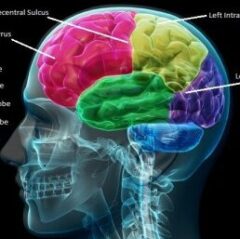
    Developmental dyslexia is associated with difficulty in processing the orthography (the written form) and phonology (the sound structure) of language. As a way to understand the origin of these problems, neuroimaging studies have examined brain anatomy and function of people with and without dyslexia. These studies are also contributing to our understanding of the role of the brain in dyslexia, which can provide useful information for developing successful reading interventions and pinpointing certain genes that may also be involved.

    What is brain imaging?

    A number of techniques are available to visualize brain anatomy and function. A commonly used tool is magnetic resonance imaging (MRI), which creates images that can reveal information about brain anatomy (e.g., the amount of gray and white matter, the integrity of white matter), brain metabolites (chemicals used in the brain for communication between brain cells), and brain function (where large pools of neurons are active). Functional MRI (fMRI) is based on the physiological principle that activity in the brain (where neurons are “firing”) is associated with an increase of blood flow to that specific part of the brain. The MRI signal bears indirect information about increases in blood flow. From this signal, researchers infer the location and amount of activity that is associated with a task, such as reading single words, that the research participants are performing in the scanner. Data from these studies are typically collected on groups of people rather than individuals for research purposes only—not to diagnose individuals with dyslexia.

    Which brain areas are involved in reading?

    Since reading is a cultural invention that arose after the evolution of modern humans, no single location within the brain serves as a reading center. Instead, brain regions that sub serve other functions, such as spoken language and object recognition, are redirected (rather than innately specified) for the purpose of reading (Dehaene & Cohen, 2007). Reading involves multiple cognitive processes, two of which have been of particular interest to researchers: 1) grapheme-phoneme mapping in which combinations of letters (graphemes) are mapped onto their corresponding sounds (phonemes) and the words are thus “decoded,” and 2) visual word form recognition for mapping of familiar words onto their mental representations. Together, these processes allow us to pronounce words and gain access to meaning. In accordance with these cognitive processes, studies in adults and children have demonstrated that reading is supported by a network of regions in the left hemisphere (Price, 2012), including the occipito-temporal, temporo-parietal, and inferior frontal cortices. The occipito-temporal cortex holds the “visual word form area.” Both the temporo-parietal and inferior frontal cortices play a role in phonological and semantic processing of words, with inferior frontal cortex also involved in the formation of speech sounds. These areas have been shown to change as we age (Turkeltaub, et al., 2003) and are altered in people with dyslexia (Richlan et al., 2011).

    What have brain images revealed about brain structure in dyslexia?

    Evidence of a connection between dyslexia and the structure of the brain was first discovered by examining the anatomy of brains of deceased adults who had dyslexia during their lifetimes. The left-greater-than-right asymmetry typically seen in the left hemisphere temporal lobe (planum temporale) was not found in these brains (Galaburda & Kemper, 1979), and ectopias (a displacement of brain tissue to the surface of the brain) were noted (Galaburda, et al., 1985). Then investigators began to use MRI to search for structural images in the brains of research volunteers with and without dyslexia. Current imaging techniques have revealed less gray and white matter volume and altered white matter integrity in left hemisphere occipito-temporal and temporo-parietal areas. Researchers are still investigating how these findings are influenced by a person’s language and writing systems.

    What have brain images revealed about brain function in dyslexia?

    Early functional studies were limited to adults because they employed invasive techniques that require radioactive materials. The field of human brain mapping greatly benefited from the invention of fMRI. fMRI does not require the use of radioactive tracers, so it is safe for children and adults and can be used repeatedly which facilitates longitudinal studies of development and intervention. First used to study dyslexia in 1996 (Eden et al., 1996), fMRI has since been widely used to study the brain’s role in reading and its components (phonology, orthography, and semantics). Studies from different countries have converged in findings of altered left-hemisphere areas (Richlan et al., 2011), including ventral occipito-temporal, temporo-parietal, and inferior frontal cortices (and their connections). Results of these studies confirm the universality of dyslexia across different world languages.

    Continue reading article: https://dyslexiaida.org/dyslexia-and-the-brain-fact-sheet/

  • Humans are born with brains ‘prewired’ to see words: Study finds connections to language areas of the brain

    Humans are born with brains ‘prewired’ to see words: Study finds connections to language areas of the brain

    Source:  Ohio State University

    Humans are born with a part of the brain that is prewired to be receptive to seeing words and letters, setting the stage at birth for people to learn how to read, a new study suggests.

    Analyzing brain scans of newborns, researchers found that this part of the brain — called the “visual word form area” (VWFA) — is connected to the language network of the brain.

    “That makes it fertile ground to develop a sensitivity to visual words — even before any exposure to language,” said Zeynep Saygin, senior author of the study and assistant professor of psychology at The Ohio State University.

    The VWFA is specialized for reading only in literate individuals. Some researchers had hypothesized that the pre-reading VWFA starts out being no different than other parts of the visual cortex that are sensitive to seeing faces, scenes or other objects, and only becomes selective to words and letters as children learn to read or at least as they learn language.

    “We found that isn’t true. Even at birth, the VWFA is more connected functionally to the language network of the brain than it is to other areas,” Saygin said. “It is an incredibly exciting finding.”

    Saygin, who is a core faculty member of Ohio State’s Chronic Brain Injury Program, conducted the study with graduate students Jin Li and Heather Hansen and assistant professor David Osher, all in psychology at Ohio State. Their results were published today in the journal Scientific Reports.

    The researchers analyzed fMRI scans of the brains of 40 newborns, all less than a week old, who were part of the Developing Human Connectome Project. They compared these to similar scans from 40 adults who participated in the separate Human Connectome Project.

    The VWFA is next to another part of visual cortex that processes faces, and it was reasonable to believe that there wasn’t any difference in these parts of the brain in newborns, Saygin said.

    As visual objects, faces have some of the same properties as words do, such as needing high spatial resolution for humans to see them correctly.

    But the researchers found that, even in newborns, the VWFA was different from the part of the visual cortex that recognizes faces, primarily because of its functional connection to the language processing part of the brain.

    “The VWFA is specialized to see words even before we’re exposed to them,” Saygin said.

    “It’s interesting to think about how and why our brains develop functional modules that are sensitive to specific things like faces, objects, and words,” said Li, who is lead author of the study.

    “Our study really emphasized the role of already having brain connections at birth to help develop functional specialization, even for an experience-dependent category like reading.”

    The study did find some differences in the VWFA in newborns and adults.

    “Our findings suggest that there likely needs to be further refinement in the VWFA as babies mature,” Saygin said.

    “Experience with spoken and written language will likely strengthen connections with specific aspects of the language circuit and further differentiate this region’s function from its neighbors as a person gains literacy.”

    Continue reading article here:

    https://www.sciencedaily.com/releases/2020/10/201022125525.htm

  • What is dyslexia and what can be done to help?

    What is dyslexia and what can be done to help?

    by David Morgan | 2 April 2019

    Dyslexia can make learning to read a real challenge, but dyslexics are often exceptionally bright children, with incredible potential. We find that – with the right targeted support – every dyslexic can crack the code and start reading and writing well.

    If your child is struggling with dyslexia, he or she isn’t alone. According to Chris Horn of the University of South Carolina, an estimated 6 to 10 percent of today’s students face this learning challenge. Some say that the percentage could be even closer to 20, since many people struggle with their reading and exhibit dyslexic patterns, but do not fit exact testing criteria.

    20% is roughly the number of adults who have passed through the school system and not learned to read in the USA, according to the National Center for Education Statistics. Such statistics shed light on just how widespread reading difficulties are. However, this doesn’t change the fact that it can feel scary and overwhelming— especially when you’ve just received a diagnosis of dyslexia for yourself or your child.

    But what does a diagnosis of dyslexia mean? Does it mean that learning to read is impossible? Is dyslexia a lifetime disability?

    At Helping Children to Read, our answer is a resounding “no!”

    Instead, our research has shown that almost all dyslexics can learn to read and spell. In fact, we have not had a single dyslexic not learn to read well on completion of our home support process in recent years. Most can reach the middle or top of their class. It is our experience that with the right tools, every child can gain the skills they need to read fluently and well. It is our mission to get those tools into the hands of every child.

    Rethinking dyslexia: a label, not a diagnosis

    When someone is given a dyslexia diagnosis, our greatest worry is that they take it as a label of disability, with a sentence of lifetime reading struggles. Some specialists will suggest this is the case, and say that a dyslexic child should accept the situation and switch to using “practical” tools like read-to-me software as a workaround.

    We understand that if you have not seen dyslexics learn to read, then that would seem like good advice. But we could not disagree more with that view!

    Learning with conventional phonics is often hard for dyslexics, but there are new and different strategies. If you support the decoding of words in the right way, children with dyslexia can still become proficient at it quite quickly, with good comprehension. By using trainertext visual phonics to help with the decoding and by addressing other causes of difficulty, we fundamentally change the way that dyslexics approach the written word. Once that switch of strategy has occurred, their reading can start to fly.

    Continue reading article here:

    https://www.helpingchildrentoread.com/articles/what-is-dyslexia/

  • We Can’t Teach Love But We Can Teach Reading

    We Can’t Teach Love But We Can Teach Reading

    Teachers can speak a lot of things into existence (a quiet line in the hallway, students sitting “criss, cross, applesauce”) but a love of reading isn’t one of them. Enthusiasm is a part of good teaching, but communicating a love of books isn’t the same thing as teaching reading. I learned that the hard way.

    When reading comes easily, it’s easy to love it

    Reading courses in my teacher preparation program centered around a love of reading. In class, we shared our own memories of learning to read, curated books lists for our classroom libraries, and debated the themes hidden in our favorite children’s books. We were taught to devote time to students reading for pleasure and to be disdainful of basal programs with scripted lessons.

    When I first began teaching, I read aloud to my class every day, gave my students time for independent reading, and facilitated discussions about their books. My approach worked well for students who entered my fourth grade class already reading well. They would sprawl around the classroom and become so absorbed in their books that they’d groan when Read to Self time was over. I had a few students who struggled with reading and they were pulled for intervention by a specialist and I never had the opportunity to see the instruction they received. So while I taught fourth grade in a high-performing school, I believed that if students were given time to read and discuss good books, their abilities would grow and a love of reading would flow naturally.

    But when reading is difficult …

    Five years ago, I moved to a school with low reading achievement. As a literacy coach, I saw teachers try the same strategies I had used, but they experienced very different results. And I quickly learned that in classrooms with children who cannot read well there are a thousand ways a Readers Workshop lesson can backfire.

    In one third grade class, a teacher began to state her teaching point, “Good readers…” only to be cut off by a student who called out, “We don’t got those in here!” The teacher handled the disruption beautifully in the moment, but afterwards she lamented, “The kid had a point.” Just two of her students were reading anywhere near grade level.

    In well-managed classrooms, independent reading periods would devolve into quiet distraction. In less-orderly rooms, students scrawled curse words in books and knocked leveled book bins to the floor. Our school’s kindergarteners had more tolerance for low-level books than the ten year olds who had been struggling for years to make sense of reading. I soon realized that independent reading is a burden, not a pleasure, for students who struggle to lift the words off the page.

    Student: Why do they always put tricky words in there?

    Although we had hundreds of books bins, only the low-level books were being used. Our mini-lessons began to feel too mini and our Guided Reading lessons felt too guided. What had seemed to be enough in my own fourth grade classroom was certainly not enough here. It seemed cruel to talk about a love of reading when students felt taunted by the squiggly lines on the page.

    The joy of cracking the code

    I began to use the time I had devoted to Guided Reading intervention for explicit phonics instruction. The scripted lessons felt dry, but I honored the instructional routines and I faked enthusiasm. My students discovered the joy in the lessons before I did.

    Continue reading here: https://www.readingrockets.org/blogs/right-read/we-can-t-teach-love-we-can-teach-reading

  • Children’s Confidence Boosted Thanks to Dyslexic Artist’s Reading and Learning Resource

    Children’s Confidence Boosted Thanks to Dyslexic Artist’s Reading and Learning Resource

    by Rossie Stone

    MY NAME IS ROSSIE STONE. WHAT HAPPENED TO ME IN HIGH SCHOOL CHANGED ME FOREVER.

    Rossie Strathclyde TEDX photo.jpg

    All my way through school, I struggled with processing information through words, both spoken and written. Listening to the teacher was really hard, as was following and remembering information from books.

     After being at the bottom of the class throughout primary school, I was eventually identified as dyslexic. Though it was a relief to be assured the problem wasn’t stupidity, the diagnosis didn’t make high school any easier. Or exams.

    Kickstarter (Story) Export 09.png

    Eventually, I had a eureka moment. It struck me that if understanding information through text was so hard, I could try turning my revision notes into something I had never found difficult to read: COMICS.

     To my surprise, it was not only highly enjoyable (in a way, I expected that) but highly effective too. Suddenly, the information was getting into my head and staying there, the way I assumed it was for people who take in knowledge more conventionally.

     When it came to my exam, I did my best to remember the notes from my Revision Comic. I was delighted to find how easy that was. I remembered all the pictures and parts of the story in the comic that contained the facts I needed. Even so, I wasn’t expecting to come back with my very first GRADE A in an academic exam!

    It wasn’t the Grade A that filled me with confidence, though, but the realization that I COULD access information – and could have been doing it all along – when it was presented in a way that worked for me.

     Since then, I have made my revision technique into a series of comics more accessible to a younger age, the years when I felt I really missed out.

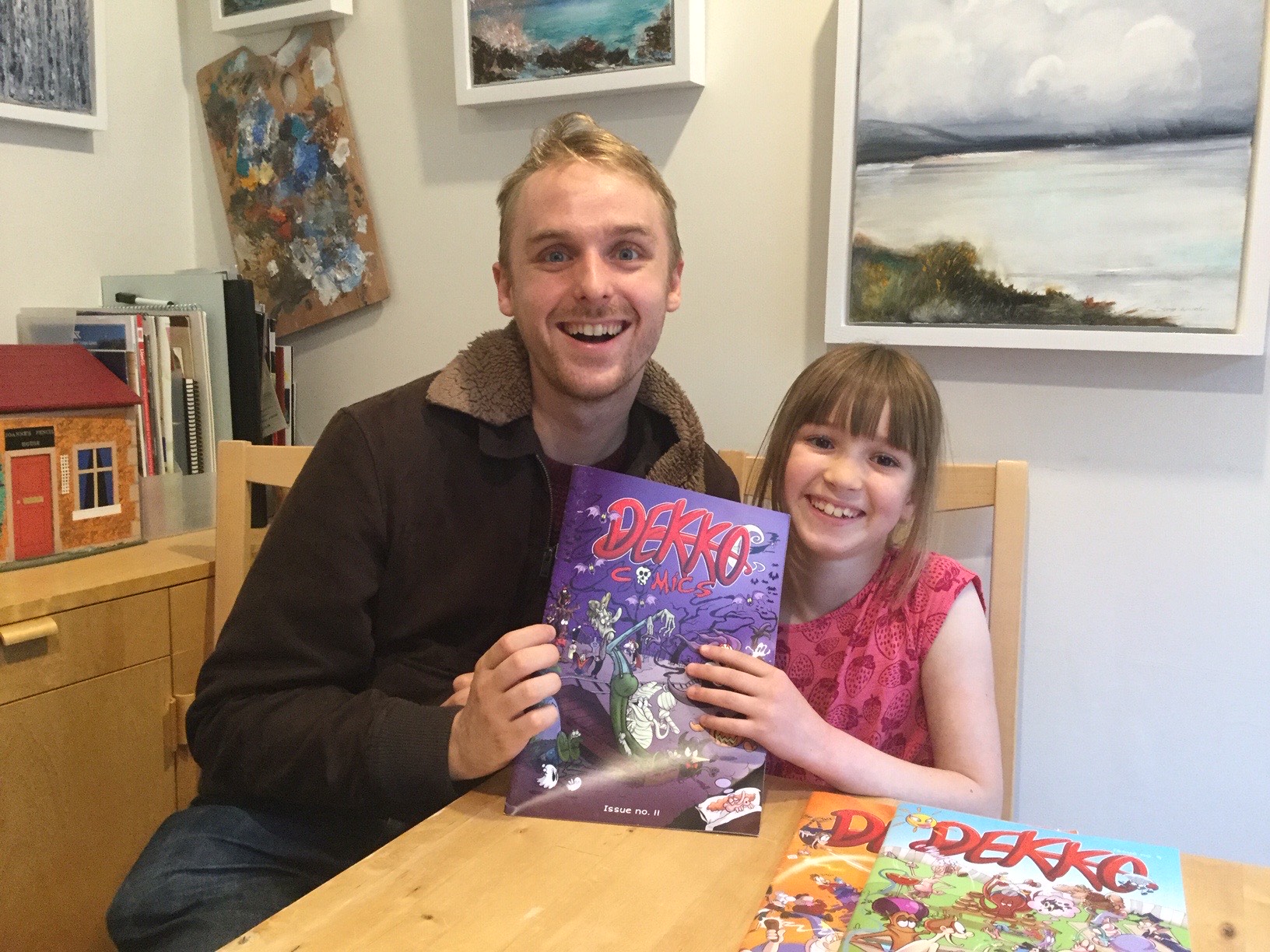
     These comics turn school subjects like maths, literacy, science, and history into pure entertainment in the form of visual stories.

    Continue reading the article, here: https://dekkocomics.com/blog/improving-confidence-through-comics

    The comics can be found on our website, here: