Tag: dyslexia

  • A NYC Class’s “Backwards” Song About Letters

    A NYC Class’s “Backwards” Song About Letters

    Erik Arnesen, a music teacher at a New York City public school (PS 18) in Park Terrace, Manhattan, remembered hearing how some children had difficulty decoding printed letters that looked alike when reversed. At the time, he only had a vague idea that dyslexia meant seeing letters and numbers jumbled, out of order, or turned around. He decided to write a song about the subject, and subsequently created a video with the children singing and acting it out. His YouTube channel is called Mr. Arnesen School Songs and features the children starring in several musically inspired educational videos. Mr. Arnesen’s YouTube channel also has songs about opposites, manners, science, music, and more. It can be found here: https://www.youtube.com/user/fearless5009

  • An Able Workforce: Attracting Differently-Abled People During the Recruitment Process

    An Able Workforce: Attracting Differently-Abled People During the Recruitment Process

    Written by Elijah Dawson

    The recent shift towards remote working has made it possible to see how differently-abled people, including those with dyslexia, can integrate into the workforce with ease. Inclusivity is beneficial to both workers and business owners. With the right solutions and accommodations in place, talented prospective employees will feel confident and safe in applying for the opportunities you are offering.

    Transform the Culture

    Any new hires who are differently abled will never feel fully accepted in the workplace if your current employees aren’t made aware of how to behave appropriately around them. The leaders within your business should also be well-trained on what to expect during day-to-day operations and how to properly intervene if a conflict arises. 

    Although in-person sensitivity seminars can be held for employees, online courses may also be made available so that the training, which is undoubtedly necessary, does not interrupt productivity. 

    Since your employees have first-hand exposure to your workplace tactics, ensure that you allow them the opportunity to provide feedback on current inclusivity measures so that you are well aware of the extent of change that is needed. 

    Rethink Recruitment 

    When recruiting any talent, including those who are differently abled, it’s vital to ensure that the job description in your posts is enticing and attractive. Be sure to effectively communicate the job’s requirements, related responsibilities, and remuneration. 

    Consider including information on your organization’s inclusivity efforts, and ensure that employee testimonials are easy to find through a Google search. It may be worthwhile to create a social media post that boasts the quality of the working environment your company is offering.

    Implement Solutions

    When hiring a differently-abled person, it’s important to open up the conversation on what accommodations they require. Let them know that your organization will do everything possible to try to make the working day manageable for them.

    • Physical comfort: If your employee’s disability is physical, ensure that your office space is accessible and easy for them to navigate. If this isn’t possible, consider allowing them to work from home and implement the necessary remote working solutions to ensure that workflow is not disrupted.
    • Schedule: As long as they are meeting deadlines, differently-abled employees may require more flexible working hours to be able to fit in the additional doctor’s appointments or physical therapies they often need. 
    • Communication: There are loads of new technologies and software that are helpful in accommodating disabilities like dyslexia. Apart from introducing these into your daily operations, consider checking if communication trends can be more inclusive. In-person or verbal communication may make things easier for those with disabilities. 

    Evaluate Processes and Procedures

    If you’ve never paid attention to inclusivity measures before, it’s possible that policies within your company have been structured in a way that does not accommodate differently-abled people very well. All procedures, including disciplinary measures, the code of conduct, recruitment and termination processes, as well as operational expectations should be scrutinized and improved where possible. 

    Differently-abled people have a plethora of talent and value to bring to their employers, and with technology making it possible to implement accommodations, it’s easier than ever to help them become integral parts of your workforce. Take a close look at your current processes and procedures to help identify how you can transform your organization into a desirable workplace for differently-abled folk, including those with dyslexia.

    The American Dyslexia Association is a non-profit organization that is geared toward improving the lives of those with dyslexia and dyscalculia. This is achieved by making information and teaching aids free and far more accessible. Find out more about these conditions at: www.dyslexia.me

    Image by Pexels

  • Running Your Own Business: 5 Tips for Parents With Dyslexia

    Running Your Own Business: 5 Tips for Parents With Dyslexia

    Written by Justin Bennett

    If you’re a parent with dyslexia, you might find it difficult to work at a traditional 9-to-5 office job. Not only does this leave you with less time to spend with your child, your supervisors may not understand your needs, leaving you to struggle with lots of tasks. To figure out the next steps in your career, you can turn to the resources from the American Dyslexia Association. In the meantime, these tips can help you make a living as an entrepreneur!

    Outline a Business Plan

    No matter what kind of business model interests you, you need to begin by crafting a business plan that you can reference in the months ahead. You’ll want to include detailed descriptions of your planned offerings, a preliminary marketing and sales strategy, your estimated expenses and projected income, and the materials and supplies you’ll need to operate your business.

    Marketing Your Company

    Once you’ve made your products or services available for purchase, you need to start marketing your offerings in order to land your first customers. You’ll want to set up a website, create social media accounts for your business, and even give people the option to sign up for email newsletter updates from your company. 

    If you really want to make your company stand out, you’ll need to create a logo to establish your brand! This is one of the easiest ways to ensure that you make a memorable impression on your customers. If you’re launching your company on a tight budget, you might not want to spring for a graphic designer – but luckily, you don’t have to! With a free online logo design tool, you can choose your favorite style and icon, and the system will give you an array of logos to choose from with the option to change the fonts and colors.

    Avoid Burnout

    When you have dyslexia, projects that might seem simple and straightforward to someone else can feel more stressful for you. As a business owner, it’s especially important for you to maintain a manageable workload so that you don’t end up getting burned out. Startup Nation recommends planning out project deliverable deadlines so that you can give yourself full days off and setting clear expectations for clients, including boundaries around when they can expect phone or email responses from you.

    Find Childcare

    As you adjust to working from home, you may find that on exceptionally busy days, it’s too hard to balance both work and childcare. You catch yourself wishing that you had someone else around to take on certain childcare responsibilities and keep your kids occupied and entertained! You might be interested in hiring a part-time nanny to look after your children when you need to attend video meetings or run work-related errands outside of the home.

    Hire Your Team

    Bringing a few additional members onto your team can make life much easier for you as an entrepreneur with dyslexia, as your employees can take on tasks that cause you undue stress. To find the right staff for your business, Tycoon Story recommends proactively seeking out freelance workers – they are likely to have flexible schedules, a wide variety of skills, and the ability to adapt to unexpected situations. Freelancers are often already accustomed to working with home-based business owners.

    Dealing with dyslexia in adulthood can be challenging, but you also have the agency to choose your own path in life. As a parent, you might realize that pursuing entrepreneurship and working from home suits you best! With these tips, you’ll be able to thrive as a business owner with dyslexia.

    Looking for resources to help you navigate your professional and personal life with dyslexia? The American Dyslexia Organization can help! Browse our blog today for articles packed with tips.

    Photo via Pexels

  • Why Dyslexia is a Gift

    Why Dyslexia is a Gift

    by Karl Leeuw

    These are some of the dyslexic people in history:

    Albert Einstein, Nikola Tesla, Michael Faraday, Stephen Hawking, Steve Jobs, Robin Williams, Henry Ford, Da Vinci, Newton, Walt Disney, Thomas Edison, Picasso, John Lennon, Winston Churchill, Alexander Bell, Thomas Jefferson, John F. Kennedy, Woodrow Wilson, George Washington, the Wright Brothers, Mohammed Ali, and many more.

    Now for the famous dyslexic people who are alive:

    Richard Branson, Cher, Whoopi Goldberg, Tom Cruise, Andy Warhol, Anthony Hopkins, Ozzie Osborne, Steven Spielberg, Sylvester Stallone, and many more.

    What do they all have in common?
    They struggled at school. Yes, they did not get A’s or 10 out of 10, and yet they became geniuses in their field.
    So, why?

    The reason why dyslexia is a gift is that we use the right side of our brains. Sally Shaywitz of Yale University put dyslexic and non-dyslexic people in a study using an fMRI tunnel and proved this.

    About 10% of the world’s population suffers from the gift of dyslexia and has this right-brain gift that is fit for creativity.
    In a study, the Cass Base Business School in the UK showed that dyslexic people are five times more likely to be innovators compared to non-dyslexic people, and this is why: We can see things that others cannot.

    So, the key is to know you have a gift and not worry about not doing so well at school, but rather concentrate on doing things you excel at and love.
    Non-dyslexic people, who make up about 90% of society, suffer from the gift of using the left brain, which is great for sequential things.

    So, great for the educational system and getting A’s and 10 out of 10. This is a massive gift in its own right.

    Yin and Yang.
    The ancient Chinese knew that for every positive, there must be a negative. In science, for every negative, there must be a positive.


    So, if you believe in Yin and Yang, know that because you are struggling at school means that you have a huge gift on the other side.
    It turns out that, as discussed before, it is because we, as dyslexic people, use the right side of the brain.

    For the full video that explains above in more detail:

  • When You Write p I See d

    When You Write p I See d

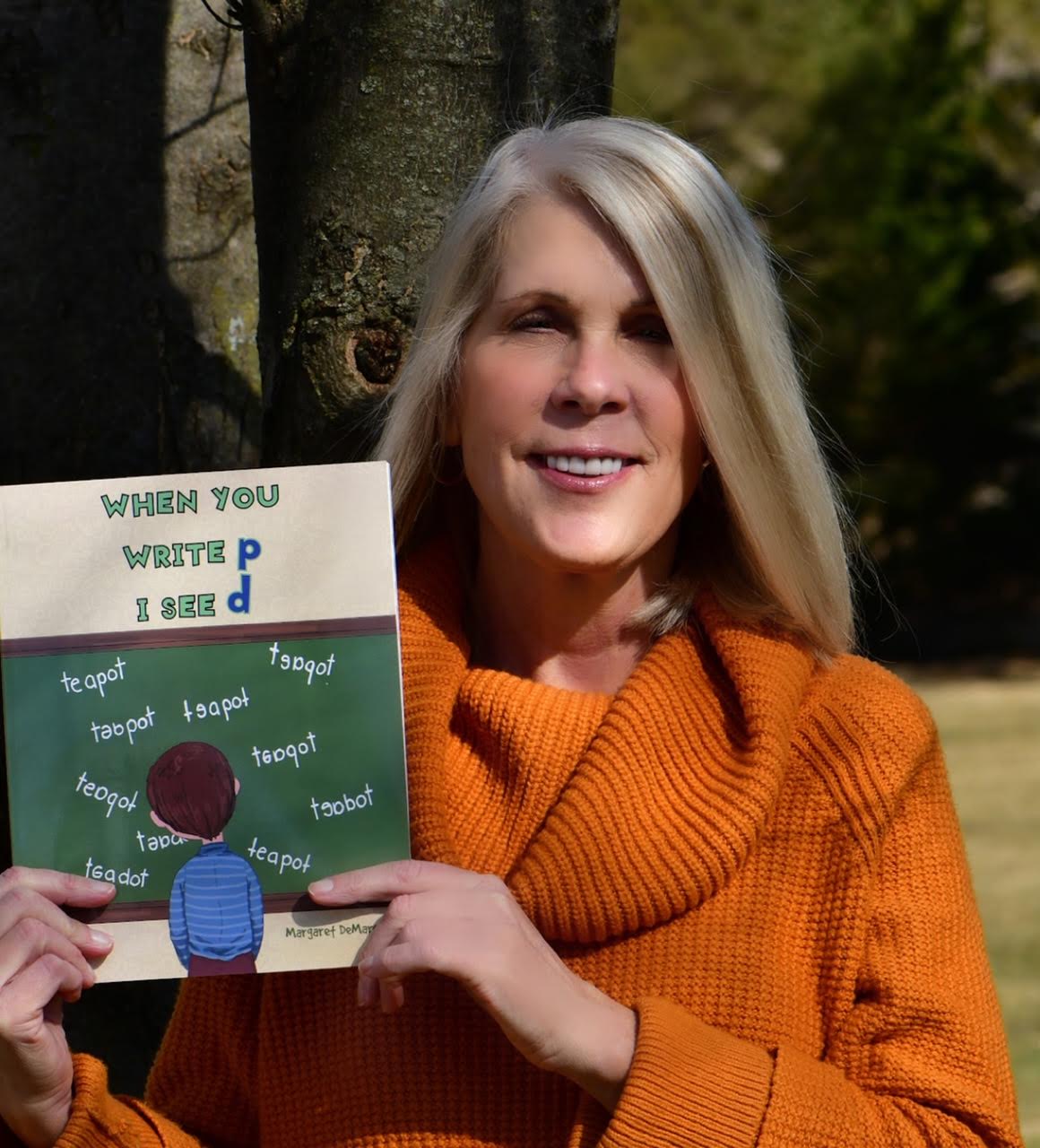
    by Margaret DeMarchi

    Attention to the social and emotional well-being of children has come to the forefront of education in recent years with good reason. As a special education teacher for the first 25 years of my teaching career, one of the greatest challenges I faced each day was helping children with dyslexia to believe in themselves and, most importantly, their ability to learn. While there is now a wealth of information to support and inform adults and educational professionals about dyslexia, little is available to help children understand and cope with their disability. Quite simply, I wrote When You Write p I See d to fill that void and to provide young children a necessary foundation of confidence and create a positive self-image to help them overcome the social and emotional challenges they face every day due to dyslexia or other learning disabilities. In short, the goal of this book is to empower students with the knowledge that they are not ‘dumb’ or ‘stupid’, but simply need to learn in a way that is different than their peers, and that’s okay! So often, students, particularly those who are dyslexic, feel isolated and alone, that they are the only ones facing these challenges as they quietly watch their classmates quickly and easily decode a text or story and wonder why the same task seems so difficult or even impossible for them. With each passing grade level, feelings of insecurity and self-doubt grow until giving up or acting out seems the best choice.

    This story works to empower young learners, giving them the confidence to believe in themselves and achieve academic success by showcasing a character they can relate to, someone who looks like them, and faces the same challenges dealing with dyslexia. The character doubts himself, but learns he is special, smart, and ultimately, successful, learning how to read and all the joy that accomplishment brings. A serious topic, dyslexia is shared in a kid-friendly story, with illustrations and a rhyming, engaging tone that children will enjoy. Learning about new things, reading stories filled with fun and imagination, is not out of reach for any student. Learning should be fun, and my story, When You Write, I See d, shows every student that it is possible to enjoy reading and be a successful student.

  • Reshoring Initiative Needs Creative Thinkers to Transform Advanced Manufacturing and the Future of Work

    Reshoring Initiative Needs Creative Thinkers to Transform Advanced Manufacturing and the Future of Work

    The COVID-19 pandemic-induced lockdowns and related global recession of 2020 have created a highly uncertain outlook for the labor market. This phenomenon has accelerated both the arrival of the future of work and the reshoring of well-paying manufacturing jobs back to the United States.

    A world of new technology is fundamentally changing how people work. The World Economic Forum’s Future of Jobs report, demonstrates how the required skills, abilities and tasks, called competencies, are shifting because of automation and labor force transformation initiatives. Their findings indicate:

    • Processing, manual, and transaction-type competencies such as coordination and time management, management of costs and finances, material resources and reading, writing, math and active listening are declining.
    • Creative, problem-solving and social competencies such as analytical thinking and innovation, active learning and learning strategies and creativity and initiative are trending up.

    To cope with this fast-changing world, businesses need more creative and out of the box thinkers to manage digital age disruptions. The country will require more people like Henry Ford, Steve Jobs, Bill Gates, Thomas Edison, and Alexander Graham Bell. All were innovative thinkers and businessmen who were or are dyslexics.

    Human Resource (HR) departments must learn how to adapt the hiring and on-boarding process to take full advantage of creative thinkers and dyslexic candidates, by not rejecting them because they do not fit the standard new applicant model. By using those outdated standards, they have been rejecting bright minds who are part of the next generation of inventors, designers and makers.

    See how a young person with Dyslexia attempts college acceptance by requesting that they give him an opportunity to prove himself.

    “I am dyslexic. I used to think it was a liability; that someone had to “take a chance on me” to give me a job or “let” me into school. I encourage you to think about how you measure ability. If you are using a process that relies solely on reading and writing effectively you are eliminating people who would be your best problem solvers. If you want new, different, better ideas you need someone who thinks differently. And for that you need someone with a brain that is wired differently”.

    Although each person with dyslexia will have unique strengths and weaknesses, the learning difficulties are best known for causing challenges with reading, writing and spelling. Once thought of as being an impediment to a successful career in business, countless high-profile CEOs and entrepreneurs are helping dispel the misconception that dyslexia is a negative condition.

    Dyslexia Handicap or Advantage?

    Dyslexia is far more common among entrepreneurs than the general public. A study by Julie Logan of the Cass Business School in London showed that 35 percent of U.S. entrepreneurs—more than twice the national average—identified themselves as dyslexic. In a survey reported by CEO Magazine, 69,000 self-made millionaires and 40% of entrepreneurs were found to show signs of dyslexia.

    Dyslexia affects about 15 percent of Americans. But this apparent weakness can also be a covert strength, especially in business. Shark Tank stars Daymond John, Barbara Corcoran and Kevin O’Leary all have dyslexia, and say it has helped them be better entrepreneurs.

    So, what is dyslexia? Dyslexia is a genetic difference in an individual’s ability to learn and process information. Focusing on the changing demand for competencies expected to emerge in the future, shows how a typical dyslexic capability could support the required shift in effort in the workplace. New collar jobs will be created that match closely to the strengths of dyslexic thinking and could provide an opportunity for organizations to bridge the skills gap of the future.

    However, the traditional approach to dyslexia in the workplace is typically directed at the remediation of dyslexic challenges. An alternative approach based on skills could allow for organizations to focus on both the remediation of learning difficulties and harnessing of strengths, better aligning a deeper understanding of dyslexic skills with organizational values.

    Continue here: 

    https://reshorenow.org/blog/reshoring-initiative-needs-creative-thinkers-to-transform-advanced-manufacturing-and-the-future-of-work/

    Reshoring Initiative needs creative thinkers to transform advanced manufacturing and the future of work
  • 8 Fun Exercises To Improve Speech And Vocabulary To Try At Home

    8 Fun Exercises To Improve Speech And Vocabulary To Try At Home

    Written by Lily Brooks

    Anyone who has ever had a speech therapy session knows that it is an insightful and helpful experience. Speech therapists have spent years advising their patients about how to improve their speech, voice, and communication skills on an individual level. However, there are some techniques that can also be done at home between sessions with your therapist or independently. In this blog post, we will discuss 8 different techniques for improving your kid’s speech quality at home! Speech therapy may also be necessary in some cases of dyslexia if problems with articulation persist. The following fun exercises can be done to improve speech and vocabulary in any child regardless if professional intervention is required by a speech therapist.

    1. Introduce a new word to your child every day

    If your child is able to learn new words, then this technique can be helpful! Introducing a word every day forces them to think about the meaning of that word and how they say it. It also gives you an opportunity to point out similarities between different words (e.g., shoe and chew).

    This exercise should not take more than one minute per day. You can use a word list as an easy way to find new words for introduction each day! Learning new words can help children to be more expressive and feel confident in their abilities to communicate!

    2. Play games with your child that increase their vocabulary

    Many games and activities will help your child to be more expressive! For example, you can play “I Spy” or Guess Who. Ask questions that require a lot of words (e.g., What is this? How many colors are there in the sky?)

    Playing these types of games encourages children to use their vocabulary and gives them the opportunity to express themselves.

    3. Encourage your child to read more often and in different genres, like magazines or comics

    Reading books or magazines is great for children because it allows them to be exposed to new words and ideas. You can also encourage your child to read in different genres, like comics! 

    This will help make reading more fun and they may learn something new from the book that they wouldn’t have found in a typical novel.

    4. Use puppets as a fun way for children to practice conversation skills

    A puppet is a perfect way to engage children in conversation and it is easier for them to express themselves. Puppets are also really fun because parents can act out the part of the puppet too! 

    This will help your child feel more confident about speaking with others while getting lots of practice at communication. (Note: Puppets are for children that have speech delays and need to work on their language skills.)

    5. Get kids involved in cooking so they can learn about healthy food choices and how to prepare them 

    Use cooking as a way to get your kids involved in healthy eating and making wise food choices. 

    Some ways you can do this are by having them read through cookbooks with recipes that appeal to their interests or letting them spend time looking at online recipe ideas on the internet. This will help give them information about what they should eat, and what they should avoid. 

    More importantly, it will let them explore the science of cooking so that when they grow up they’ll know how to cook for themselves or learn new recipes on their own!

    6. Have kids act out stories from books or movies together 

    Have kids act out stories from books or movies together – one person should be the narrator while the others are characters in the story. 

    We’ll teach you how to have kids act out stories from books or movies together! One person should be the narrator while the others are characters in the story.  For example, one child is a character and another is an obstacle in the way. The narrator should tell them what to say and how they’re feeling as their emotions change throughout the scene, while the other child takes on a different role like a best friend or bully, depending on what’s going in that part of the story.

    7. Practice tongue twisters to improve their articulation

    Kids should practice tongue twisters to improve articulation. 

    Here are some fun ones: “How much wood would a woodchuck chuck if the woodchuck could chuck wood?” and “What’s in the red box with hornets?” These will help your child improve articulation, and they’re a lot of fun to say.

    8. Read books aloud for at least 5 minutes each day and let them draw or scribble something related to the reading material

    Children should read books aloud with an adult, or one-on-one. This will help them improve their articulation and reading skills while also improving their oral language. 

    Additionally, children can draw something related to the book they are reading. Research has shown that this activity facilitates the development of drawing skills in early childhood as well as improves literacy and language skills. This technique is ideal for children with dyslexia because it helps them improve their reading skills while boosting vocabulary.

    Nasal speech therapy activities should be done at home to help children with speech disorders. 

    The best way for parents and teachers to work on nasal speech therapy is by reading books aloud. Reading a story from the point of view of different characters can also help kids improve their articulation skills without even realizing it!

    ____________________________________________________________________

    Why these techniques work: These speech therapy techniques are a great way to help improve articulation and reading skills in children, who may have trouble with their oral communication due to developmental delays or other health issues. They’re also easy to implement at home, making them an ideal choice for parents of young kids. 

    Speech therapy is a really great way for your child to learn more about themselves, what they want in life, and how they can go after those things. 

    But you don’t always need access to professional help from a therapist – there are many things that you can do at home with your child.

    Children may be struggling in school because they cannot get their thoughts out when talking to others. This is a big reason why so many children have speech delays and need speech therapy help from professionals – but there are lots of ways for parents to work on these skills, too! 

  • OSU master’s student to graduate despite severe dyslexia, dysgraphia

    OSU master’s student to graduate despite severe dyslexia, dysgraphia

    (STILLWATER, Oklahoma, May 7, 2021) — Camille Carey was told she shouldn’t go to college.

    Not that she couldn’t, but she shouldn’t.

    She was struggling to pass her high school exit exams because she couldn’t read them. She couldn’t write on them, either.

    Despite her severe dyslexia and dysgraphia, Carey eventually did pass those tests. She decided to go to college anyway, and Friday, she will earn a master’s degree in entomology and plant pathology from Oklahoma State University.

    “They told me, ‘Well, it is better if you don’t go to college,’” she said. “Well, here I am.”

    The Weatherford, Texas, native has known about her disabilities from an early age. Her mother, Barbara, realized Camille was having trouble in preschool, with the diagnosis becoming official in first grade.

    “It is all I have ever known so I don’t know anything different, but it definitely does take some time,” Carey said. 

    She has had a drive to always do well in school despite her disabilities, but Carey said none of it would have been possible without the advances in technology in recent years. 

    Carey uses screen readers such as JAWS and dictation software like Dragon Speech when writing her papers. Voice-to-text has become a major part of her life, and she can’t go anywhere without GPS because most road signs are illegible to her.

    “I have to know exactly where I’m going, so there is no real spontaneous driving with me, it is point A to point B,” Carey said. “In restaurants, I have to normally have whoever is with me to read me the restaurant menu, or I am going to be there for a very long time trying to read it.”

    Without technology, Carey has to break down a sentence word by word.

    “Sometimes I might read it backwards or sometimes I might read something or I might see the word like ‘cat,’ but I might not recognize it is ‘cat,’” Carey said. “So, normally it is like decoding it word by word and going very, very slowly.”

    When writing, she has to use technology because her penmanship is completely illegible. Carey described it as almost like writing in ancient hieroglyphics. 

    Her advisor at OSU, Dr. Wyatt Hoback, said he first noticed her handwriting in his initial meeting with Carey when she was deciding whether to go to graduate school in Stillwater.

    “I realized she was taking notes and I glanced down at those notes, and they were just lines and squiggles. I couldn’t figure it out,” said Hoback, an associate professor in the Ferguson College of Agriculture.

    Although her disabilities are a daily hindrance, Carey has persevered. While earning her bachelor’s degree at Tarleton State University in Stephenville, Texas, she became interested in entomology and the study of insects’ impact on plants.

    After her Tarleton State graduation, Carey began to work at the Noble Research Institute in Ardmore, Oklahoma, where she developed a passion for agriculture.

    “They were the ones who got me into extension and really trying to create good, meaningful research that could help producers and landowners,” Carey said.

    One day, she and some other students visited Stillwater from Ardmore to explore graduate school opportunities. She met Hoback and he saw how bright she was and how high her GPA from Tarleton was, so he decided to take a chance on her.

    “I was a little bit apprehensive, but she had such enthusiasm and drive, and we took her on,” Hoback said. “I am really glad about that decision because she is amazing.”

    Carey’s graduate projects at OSU involved working with the Agricultural Research Service Lab of the U.S. Department of Agriculture in Stillwater, where she was co-advised by Dr. Scott Armstrong. She primarily worked on sorghum research, a hardy grain that is drought-resistant and used mostly for cattle forage.

    Sorghum had been under attack over most of the past decade as aphids — pests that can drain a plant’s nutrients — had undergone a genetic switch that allowed them to start colonizing sorghum plants.

    Because sorghum is a cheaper plant, chemical application was too expensive. However, since aphids were destroying sorghum, the USDA needed research on how to make the plant less desirable to these pests. 

    “A lot of pests eat those plants so basically we are trying to create resistant plants that cows, horses and livestock can eat but the insects don’t like,” Carey said.

    Her work also included seeing if sorghum could grow under artificial lighting, as well as studying aphid reproduction, which involved at one point her having to go count aphids every single morning for 35 straight days.

    “She is always enthusiastic and accomplished probably 2½ to 3 master’s projects by herself in the period of two years despite COVID because she was so engaged and willing to put in the time and effort to figure things out,” Hoback said. 

    Carey also served as a teaching assistant for Hoback, grading papers using her screen readers and giving notes using her dictation.

    “She is just awesome and so caring that she helps students learn without making them feel like they have an inadequate knowledge of entomology,” Hoback said.

    Carey said none of this would have been possible without the help of OSU’s accessibility department, ensuring she had everything she needed to succeed.

    “Y’all are so lucky here with the accessibility department,” Carey said. “I was nervous that they weren’t really going to understand because there are not many people in graduate school who have to use screen readers all the time.

    “But they understood it 100 percent. They understood that I wasn’t trying to get an unfair advantage over the other students; I was just trying to make it on my own.”

    Technology has had its drawbacks, though. In a field that has so many scientific names, she has had to work with her professors to teach her screen readers how to say each word. Because she has to dictate her papers, Carey has to be alone lest the program pick up someone else’s voice.

    “It might take someone else maybe a week on a publication, and it is probably going to take me a month,” Carey said. “It takes me a very, very long time because I have to make sure everything is right. You are talking to the computer and listening to the computer back again. It is a constant little battle.”

    She kept at it, though, and she will get to continue her education past her master’s as well. Carey has been accepted into the doctorate program at Texas A&M, where she will continue working on her dream of being an extension agent someday.

    Carey said her mom cried seeing what she has done. Camille is not the only one in her family with these disabilities —one of her sisters has dyslexia and her father has dysgraphia.

    “There have been times where I cried and wanted to quit because it has been so hard,” Carey said. “Mom has definitely been my biggest supporter and always been there.”

    Hoback said seeing what she has done shows that earning an advanced degree in science is possible with a reading and writing disability. Carey just wants to show that no matter what anyone says you should or shouldn’t do, don’t ever give up.

    “Kids who are just like me, technology is amazing, but you have to want it,” she said. “It is going to be really hard, but you got to want it and work for it, and it is so rewarding.” 

    PHOTOS: https://flic.kr/s/aHsmVxNEUW

    MEDIA CONTACT: Jordan Bishop | Communications Specialist | 405-744-9782 | [email protected]

    Oklahoma State University is a modern land-grant university that prepares students for success. OSU has more than 34,000 students across its five-campus system and more than 24,000 on its combined Stillwater and Tulsa campuses, with students from all 50 states and around 100 nations. Established in 1890, OSU has graduated more than 275,000 students to serve the state of Oklahoma, the nation and the world.

  • When the “Different” Learner Meets Cursive

    When the “Different” Learner Meets Cursive

    by Kate Gladstone, author of READ CURSIVE FAST

    Most folks today don’t write in cursive. Some people never even pick up a pen or pencil. Writing in cursive has become rare — yet reading cursive remains an important life skill, whenever:

    • family members still use cursive, or even send greeting cards that use cursive fonts:
    • teachers use cursive, or assign work that involves reading historical documents in their original form:
    • employers, supervisors, or co-workers use cursive:
    • store signs or logos use cursive:

    Today, more and more children and adults — with and without disabilities — cannot read cursive handwriting, or can only partially and laboriously figure out a word or sentence in cursive, even if the cursive writing is clear and error-free (which is often not the case). These difficulties occur at all educational and socioeconomic levels.

                In the USA, Canada, India, and many other countries, non-readers of cursive include most people 35 and under, as well as a surprising number of older adults who have often managed to hide this problem throughout life.

    Worse yet, today’s millions of “cursive non-readers” (with or without disabilities) aren’t limited to those who were simply never taught cursive.

            Even when conventional cursive training actually does lead to reading (and writing) cursive, those “successful” learners often lose the ability sometime between the year that they are taught cursive (typically Grade 2 or 3) and the year that they leave high school.

    This situation was profiled in 2013 by one of Canada’s largest newspapers. The cursive non-readers whom that article were college freshmen. By now, almost eight years later, they must be in their mid-twenties: they have jobs, or are trying to get jobs, and probably some of them have families. (How will cursive non-readers help their children, if the school or the district or other administration mandates cursive instruction?)

    Forgetting how to decipher cursive (or never learning how to decipher it in the first place)  can happen anyone — but it more severely impacts people with dyslexia, autism, and other neurological differences that affect how we perceive and process the data that our senses provide.

    People with various neurological differences (autism, dyslexia, dysgraphia, and more)  are often very good at looking for patterns — and are extremely good at seeing patterns in the surrounding environment, without ever even having to look for the patterns! The patterns, especially visual patterns, simply jump out as them — or, I should say, simply jump out at us (because I have several of these “dys-”abilities). Therefore, we use visual patterns to try to make sense of what we are trying to learn — and we learn best when we are encouraged to use visual patterns.

          However, students who encounter cursive are often discouraged from even trying to wonder if there are visual relations between the cursive letters and their printed counterparts. The two systems of writing, appear unrelated to each other:

    Since it looks as if there is no relationship between most cursive letters and their printed counterparts, many learners frustratedly give up on even trying to use their visual/pattern-recognition strengths to “crack the code” of cursive. When the visual/pattern-recognition strengths of a learner’s brain are suddenly made useless,  he or she may feel that his/her brain has stopped working and can no longer be trusted. (Such a learner may be said to have “form constancy issues.”)

           Unfortunately, well-meaning parents and schoolteachers may accidentally push learners even further in that direction, by trying to reassure frustrated learners of cursive that “there is really no relationship between cursive and printing anyway, so don’t even bother trying to see a relationship or a reason or an explanation. Don’t even think that there could be a relationship between one style of letter and another. There is no relationship, nothing to find, is nothing to understand, so just memorize, don’t worry, and you’ll pick it up just fine, I’m sure.”

    However, “just memorizing” (without understanding) is an extremely fragile and worrisome way of trying to learn and remember. What is memorized without comprehension is quickly forgotten, as soon as lessons are over — Especially in modern times, when fewer and fewer people write cursive (or even write by hand at all) in life after school the liabilities of “just memorizing” hold true for most people, to some degree — but they almost always hold true, to a huge degree, for people whose neurology differs significantly from the average.

           When learners are told that “there is no reason, only memorization,” and when they experience no way of fully understanding the material that they must memorize , they lose trust in their own ability to even try to learn and understand: at a basic rote-memory level, and/or at any other level.

            This is especially true when the subject is cursive handwriting, because — for many students learning cursive — the cursive textbook is typically the only textbook that is full of assigned material which they cannot read (although it is in their own language), but must still copy.

    One part of the visual skills/form constancy problem is that the shapes of cursive letters are often inconsistent from word to word, in ways that can make words very hard to recognize.

              Look at these cursive words:

    In both words, the third letter is a cursive s — but the “same” cursive s is very different each time:

    A learner who has memorized the cursive s in past (where it needs to start at the bottom) is likely not to recognize the “same” cursive s in post (where it needs to start at the top):

    For any learner — but especially for one whose neurology is not the “average” that textbook publishers assume — all this can deeply shatter confidence and motivation.

    Does it have to be this way?

    Can we make cursive make sense to all learners — even if they don’t write cursive, or if they don’t write by hand at all?

    What if we showed our learners how cursive happened?

    A new book, READ CURSIVE FAST (National Autism Resources, 2021), takes this approach: offering three easy stages to lasting cognitive comprehension (not just fragile rote memorization) of what makes a cursive letter a G or a Z or an r or an s — and why. Now, learners’ visual strengths, pattern-recognition strengths, and cognitive strengths can work in synchrony instead of being neglected or frustrated,

    Step One: Show how cursive letters happened!

    When readers are allowed and encouraged to learn how cursive letters came about, remembering the cursive shapes makes cognitive/pattern-recognition sense, and does not have to rely solely on rote memory. Here’s an example for the letter G:

    READ CURSIVE FAST uses a pattern-recognition/cognitive approach to “unlock” the visuals of every cursive letter. Some letters need to be cracked in step-by-step detail, while others can be “cracked” more simply:

    When you see the print-style s hiding inside cursive s, you can see why the cursive s looks different after lowercase o versus the way it looks after lowercase a.

    Building pattern recognition and understanding into the learning task makes for faster progress and greater retention, by providing another route to comprehension. Cursive writing is not the only path to cursive reading — for many students, it is not even a reliable path.

    Step Two: Sustained Reading

    Once students recognize cursive letters alone and in words and phrases, it’s time to build automaticity and fluency with longer texts. To accomplish this, READ CURSIVE FAST uses “cursive stories”: passages written in fonts that resemble increasingly difficult styles of handwriting. Here is the opening of one story:

    ___________________________________________

    (The first four sentences of a cursive story from READ CURSIVE FAST.)

    ___________________________________________

    The beginning of each story resembles familiar printed letters, but each sentence adds more and more cursive features, carefully easing readers into understanding increasingly complex forms of cursive.

    Step Three: Reading Historical Documents

    Once students can read present-day cursive with some fluency, they will eventually want or need to read our nation’s historical documents, many of which are written in very elaborate forms of cursive.

           Today, reading historical documents is one of the most frequent reasons for needing to read cursive, but handwriting style variations in past centuries were even more frequent than they are today. This means that most students (particularly those with neurological issues) will benefit from practice with historical cursive samples once they are experienced in reading present-day cursive samples.

    Therefore, READ CURSIVE FAST includes a section specifically on historical documents. Learners reach this point are usually pleased and amazed that they can now read historical material.

    When we know how each cursive letter happened, we know (and we never forget) what makes the letter understandable. Whatever our own handwriting looks like, whatever style we use, or even if we never write by hand at all, we can make sense of every cursive letter we are shown what parts of a cursive letter make that letter make sense.

    When cursive letters make sense, we do not need to write cursive in order to read it.

    When we make sense of the interrelations of different alphabet styles — print and cursive and more — handwriting becomes …

    As the author of READ CURSIVE FAST, I look forward to seeing and hearing your own experiences and thoughts on cursive reading issues.

    The book’s website- https://readcursivefast.com
    Sample pages for free download — http://readcursivefast.com/wp-content/uploads/2021/02/RCF_Preview-1.pdf 
    Link on the publisher’s site is here: https://nationalautismresources.com/read-cursive-fast/
    Link to buy READ CURSIVE FAST directly from me: ReadCursiveFast.com/order