Tag: Lesson Series

  • Lesson 9 of 48: From Session Design to Home Practice: Using the Training Plan Effectively

    Lesson 9 of 48: From Session Design to Home Practice: Using the Training Plan Effectively

    Every Tuesday, we open up one lesson of the Dyslexia Trainer Certification Program here on the blog, all 48 of them, one week at a time. Whether you are a teacher, a parent, or an education professional, this series shows you exactly what certified dyslexia trainers learn, and how the program works from the inside.

    This week: From Session Design to Home Practice. Using the Training Plan Effectively

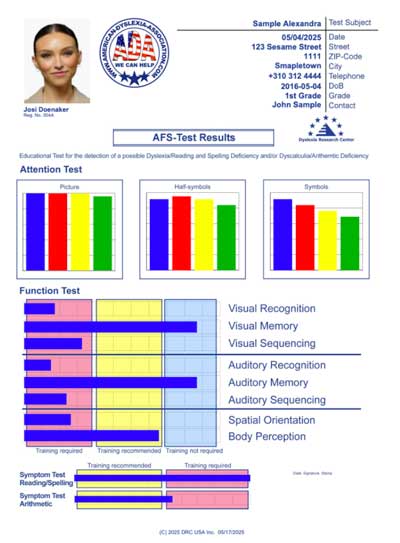
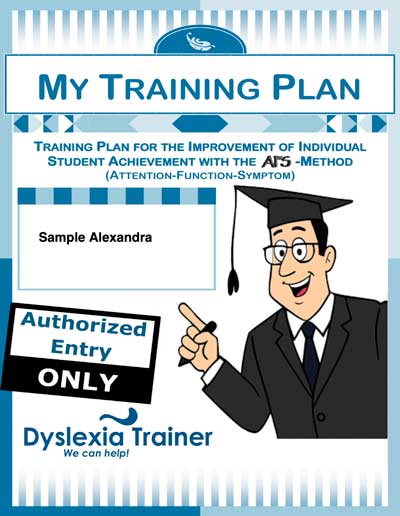
    A good training plan is a roadmap: it makes sure every session addresses attention, sensory function, and symptoms, while staying flexible for what the child needs on that particular day. This lesson covers session design, documentation, and progress monitoring, and shows how a plan generated from AFS-Test results guides the work from the most significant needs toward systematic improvement.

    What this lesson is about

    Effective training for learners with dyslexia or dyscalculia requires a structured yet flexible approach. Each session should address attention, sensory function, and symptoms, but the order and emphasis can vary depending on the child’s needs on that day.

    Documentation is an essential part of the process, allowing trainers to monitor progress, adjust plans, and ensure that all areas are addressed over time. The training plan, whether written up manually or generated via the AFS Test, serves as a roadmap to guide the process, ensuring that interventions target the most significant needs first and build systematically toward improvement.

    A training session should always include three components, attention training, function training, and symptom training, though the sequence does not need to be followed rigidly. Each session should begin with an activity that helps the child focus, but it may be necessary to return to an attention exercise later if focus is lost during other parts of the session.

    What you will learn in Lesson 9

    • How to structure a training session across attention, function, and symptoms
    • Flexible emphasis: reading what the child needs on a given day
    • Documentation that makes progress visible
    • Using AFS-Test-generated training plans as your roadmap

    About the Dyslexia Trainer Certification Program

    Since 1997, more than 17,000 dyslexia trainers in 64 countries have been certified. The certification gives you more than knowledge: all the tools you need to actually work with dyslexic children are included as well. Worksheets, training programs, assessment materials, everything ready to use in your practice. You get the whole package.

    The program is accredited by the American Dyslexia Association (ADA) and follows the training standards of the International Federation of Dyslexia and Dyscalculia Associations (IFDDA).

    Catch up and start free

    Lesson 1 is free for everyone. Register in a minute and see the program from the inside: dyslexiacertificate.com

    You can find all published lessons of this series under the tag Lesson Series.
  • Lesson 8 of 48: From Understanding to Action: Roles and Strategies in the AFS-Method

    Lesson 8 of 48: From Understanding to Action: Roles and Strategies in the AFS-Method

    Every Tuesday, we open up one lesson of the Dyslexia Trainer Certification Program here on the blog, all 48 of them, one week at a time. Whether you are a teacher, a parent, or an education professional, this series shows you exactly what certified dyslexia trainers learn, and how the program works from the inside.

    This week: From Understanding to Action. Roles and Strategies in the AFS-Method

    Real progress happens when the child, parents, teachers, and specialists pull in the same direction. This lesson examines the unique contribution each person brings, and how the three components of the AFS-Method, attention training, function training, and symptom training, work together in practice. It also shows what happens when collaboration fails, and how trainers keep everyone motivated and aligned.

    What this lesson is about

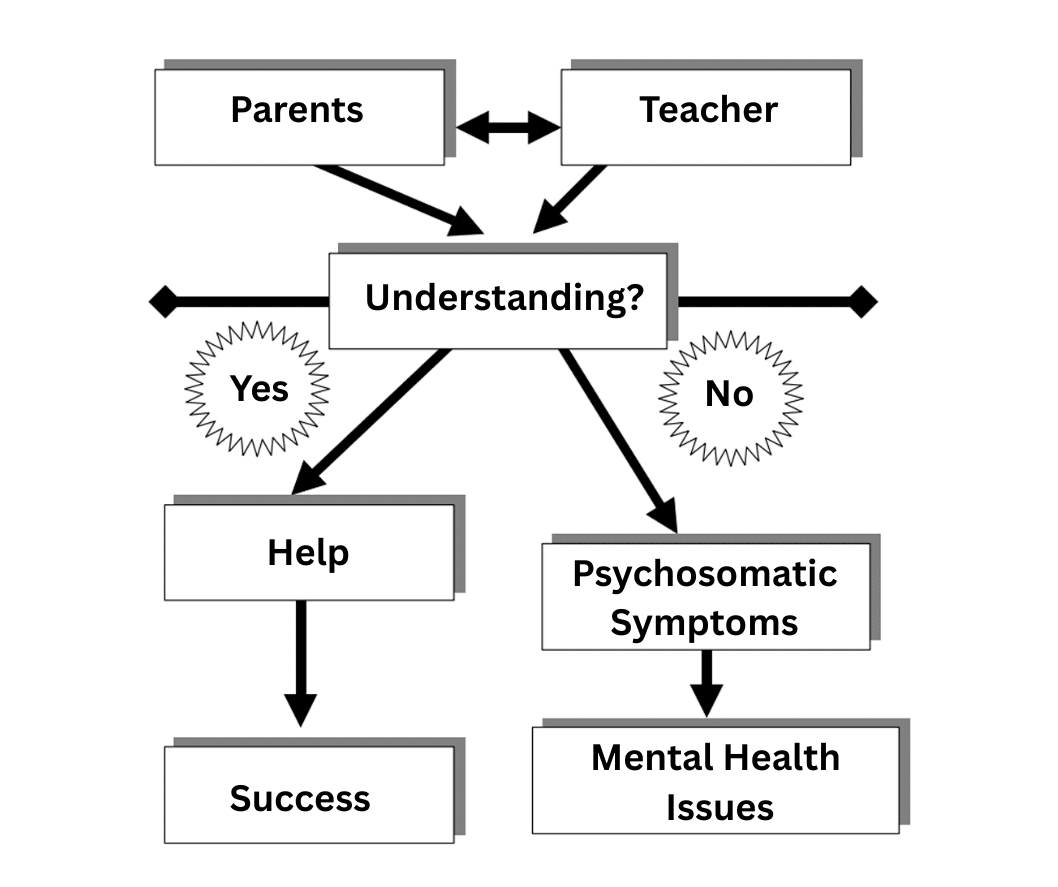
    Supporting a child with dyslexia or dyscalculia requires more than isolated interventions, it demands a coordinated effort from everyone involved in the child’s learning journey. The AFS Method emphasizes that genuine progress is achieved when the child, parents, teachers, and specialists work together toward shared goals. In this lesson, we examine the unique contributions each person brings to the process, as well as the importance of building understanding, fostering motivation, and maintaining consistent communication. We also explore how the three components of the AFS Method, attention training, function training, and symptom training, form a comprehensive framework for effective, individualized support. Forging Understanding: Child, Parents, Teacher, Specialist It is crucial that a child with dyslexia or dyscalculia is met with understanding in their environment regarding their unique challenges. This understanding should primarily come from parents but also from teachers. The collaboration between parents, teachers, and specialists is essential. While understanding is a prerequisite, targeted support is an absolute necessity. However, effective support can only be successful if the child, parents, teachers, and specialists work closely together and complement each other.

    From Understanding to Action. Roles and Strategies in the AFS-Method, illustration from Lesson 8

    If this collaboration is successful, the child will eventually experience progress, which can be observed as improvements in learning. However, if collaboration is lacking or ineffective, the child may develop psychosomatic symptoms or even significant mental health issues over time, and training success will be significantly delayed.

    From Understanding to Action. Roles and Strategies in the AFS-Method, illustration from Lesson 8

    If secondary issues have already developed, additional professionals such as medical doctors, psychologists, or psychotherapists should be consulted. However, this should always be decided on a case-by-case basis, depending on the severity of the developed secondary dyslexia or dyscalculia. Each of the involved individuals plays a specific role in ensuring successful training: The Child Once a test or assessment has confirmed the diagnosis of dyslexia or dyscalculia, it is helpful to have an age-appropriate discussion with the child about their struggles. Many children feel a sense of relief upon receiving an explanation, as well as an interest in learning more about it. Often, for the first time, they realize that they are not simply lazy, difficult, or unintelligent.

    What you will learn in Lesson 8

    • The roles of child, parents, teachers, and specialists
    • How attention, function, and symptom training work together
    • Building motivation and consistent communication
    • What happens when collaboration fails, and how to prevent it

    About the Dyslexia Trainer Certification Program

    Since 1997, more than 17,000 dyslexia trainers in 64 countries have been certified. The certification gives you more than knowledge: all the tools you need to actually work with dyslexic children are included as well. Worksheets, training programs, assessment materials, everything ready to use in your practice. You get the whole package.

    The program is accredited by the American Dyslexia Association (ADA) and follows the training standards of the International Federation of Dyslexia and Dyscalculia Associations (IFDDA).

    Catch up and start free

    Lesson 1 is free for everyone. Register in a minute and see the program from the inside: dyslexiacertificate.com

    You can find all published lessons of this series under the tag Lesson Series.
  • Lesson 7 of 48: The AFS-Test: A Comprehensive Educational Assessment Tool

    Lesson 7 of 48: The AFS-Test: A Comprehensive Educational Assessment Tool

    Every Tuesday, we open up one lesson of the Dyslexia Trainer Certification Program here on the blog, all 48 of them, one week at a time. Whether you are a teacher, a parent, or an education professional, this series shows you exactly what certified dyslexia trainers learn, and how the program works from the inside.

    This week: The AFS-Test. A Comprehensive Educational Assessment Tool

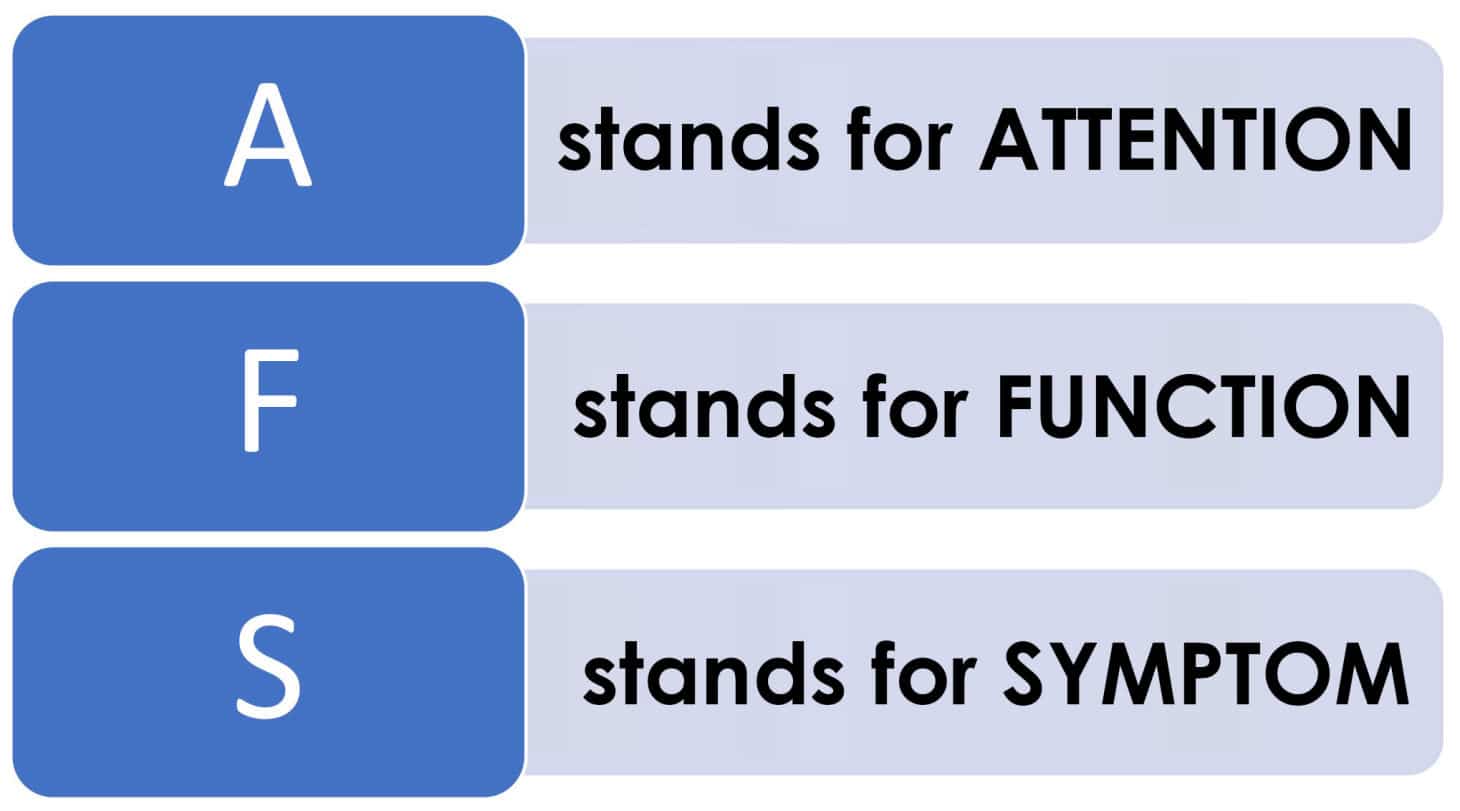
    The AFS-Test (Attention-Function-Symptom Test) is a standardized assessment used worldwide to identify dyslexia and dyscalculia and to plan effective intervention. It evaluates three areas: attention span, the sensory perception abilities underlying reading, spelling, writing, and arithmetic, and the concrete error symptoms a learner shows. This lesson explains its structure and application, and how to turn results into an educational report for parents, teachers, and professionals.

    What this lesson is about

    Dyslexia and dyscalculia can present significant challenges for children and adults, often impacting their academic and personal lives. Early identification and targeted support are crucial to helping individuals overcome these difficulties and reach their full potential. The AFS-Test (Attention-Function-Symptom Test) is a comprehensive, standardized assessment tool used worldwide to diagnose and plan effective intervention for those experiencing reading, spelling, writing, or arithmetic difficulties.

    The AFS-Test. A Comprehensive Educational Assessment Tool, illustration from Lesson 7

    This lesson explores the structure and application of the AFS-Test, explaining how it evaluates the key areas associated with dyslexia and dyscalculia. By understanding the test’s methodology and its critical role in developing individualized training plans, educators and specialists can better support learners who require specialized instruction. The lessons concludes with how to write an educational report to summarize your findings for parents, teachers, and other professionals.

    The AFS-Test. A Comprehensive Educational Assessment Tool, illustration from Lesson 7

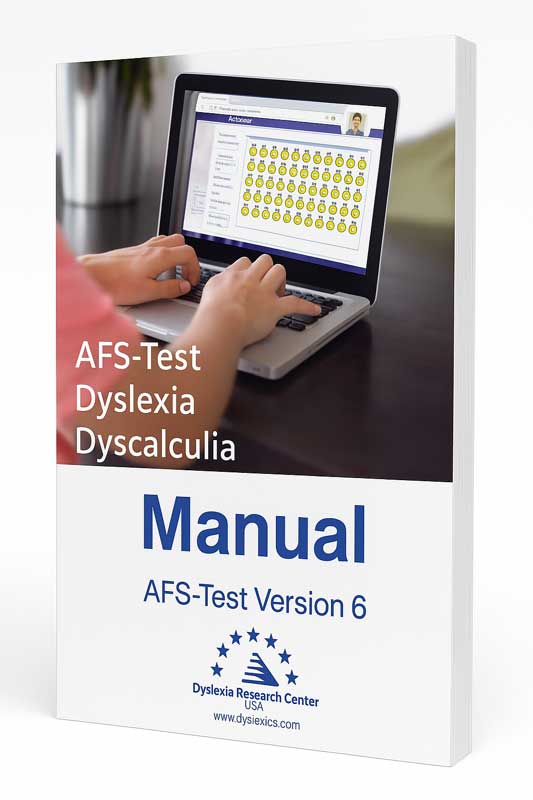
    The standardized Attention-Function-Symptom-Test (AFS-Test) is used worldwide by countless educators in their work with people affected by reading, spelling, writing, or arithmetic problems. The test enables parents, teachers, and interested parties to gain better insight into the entire issue, diagnose a dyslexia/dyscalculia definitely, and is also an invaluable tool for training planning. Based on the test results, detailed individual training plans can be created that are tailored to the affected person’s problems.

    The AFS-Test. A Comprehensive Educational Assessment Tool, illustration from Lesson 7

    What you will learn in Lesson 7

    • The three areas of the AFS-Test: attention, function, symptoms
    • How the standardized test is conducted and evaluated
    • From test results to an individualized training plan
    • Writing an educational report for parents, teachers, and professionals

    About the Dyslexia Trainer Certification Program

    Since 1997, more than 17,000 dyslexia trainers in 64 countries have been certified. The certification gives you more than knowledge: all the tools you need to actually work with dyslexic children are included as well. Worksheets, training programs, assessment materials, everything ready to use in your practice. You get the whole package.

    The program is accredited by the American Dyslexia Association (ADA) and follows the training standards of the International Federation of Dyslexia and Dyscalculia Associations (IFDDA).

    Catch up and start free

    Lesson 1 is free for everyone. Register in a minute and see the program from the inside: dyslexiacertificate.com

    You can find all published lessons of this series under the tag Lesson Series.
  • Lesson 6 of 48: From Errors to Insights: Understanding Symptom Patterns through Error Analysis

    Lesson 6 of 48: From Errors to Insights: Understanding Symptom Patterns through Error Analysis

    Every Tuesday, we open up one lesson of the Dyslexia Trainer Certification Program here on the blog, all 48 of them, one week at a time. Whether you are a teacher, a parent, or an education professional, this series shows you exactly what certified dyslexia trainers learn, and how the program works from the inside.

    This week: From Errors to Insights. Understanding Symptom Patterns through Error Analysis

    Every error a child makes in reading or writing is a window into how their brain processes language. This lesson walks through the full process of error analysis: cataloging errors, recognizing patterns, and distinguishing structural, phonological, and orthographic error types. Trainers learn to link these patterns to visual, auditory, or memory-related challenges, and to turn everyday mistakes into a precise map for targeted support.

    What this lesson is about

    Every error a child makes in reading or writing is more than a “mistake”, it is a window into how the brain is processing language. By examining these errors closely, trainers can identify which areas of perception and processing require targeted support.

    From Errors to Insights. Understanding Symptom Patterns through Error Analysis, illustration from Lesson 6

    This lesson walks through the full process: from cataloging errors in the symptom area to analyzing patterns. Trainers will learn to distinguish between structural, phonological, and orthographic errors, and to recognize when these are linked to visual, auditory, or memory-related challenges.

    From Errors to Insights. Understanding Symptom Patterns through Error Analysis, illustration from Lesson 6

    Most importantly, error analysis is not about labeling a child as “weak” or “failing,” but about uncovering the reasons behind their struggles. This understanding can then be transformed into a training plan that restores confidence and builds essential literacy skills.

    What you will learn in Lesson 6

    • How to catalog reading and writing errors systematically
    • Structural, phonological, and orthographic error types
    • Linking error patterns to visual, auditory, and memory challenges
    • Turning everyday mistakes into a targeted support plan

    About the Dyslexia Trainer Certification Program

    Since 1997, more than 17,000 dyslexia trainers in 64 countries have been certified. The certification gives you more than knowledge: all the tools you need to actually work with dyslexic children are included as well. Worksheets, training programs, assessment materials, everything ready to use in your practice. You get the whole package.

    The program is accredited by the American Dyslexia Association (ADA) and follows the training standards of the International Federation of Dyslexia and Dyscalculia Associations (IFDDA).

    Catch up and start free

    Lesson 1 is free for everyone. Register in a minute and see the program from the inside: dyslexiacertificate.com

    You can find all published lessons of this series under the tag Lesson Series.
  • Lesson 5 of 48: Beyond Screenings and Assessments: Why Only Comprehensive Testing Reveals Dyslexia

    Lesson 5 of 48: Beyond Screenings and Assessments: Why Only Comprehensive Testing Reveals Dyslexia

    Every Tuesday, we open up one lesson of the Dyslexia Trainer Certification Program here on the blog, all 48 of them, one week at a time. Whether you are a teacher, a parent, or an education professional, this series shows you exactly what certified dyslexia trainers learn, and how the program works from the inside.

    This week: Beyond Screenings and Assessments: Why Only Comprehensive Testing Reveals Dyslexia

    A child can score average on an achievement test and still struggle every single day. This lesson explains why screenings, reading tests, IQ tests, and phonological assessments alone cannot diagnose dyslexia, and what comprehensive testing has to cover instead. Trainers learn to see what standard instruments miss, and why an incomplete assessment so often leads to the wrong kind of help.

    What this lesson is about

    Accurate identification is the foundation of effective dyslexia support, but not all assessments serve the same purpose. Screenings are valuable for highlighting children who may be at risk, but they do not provide a diagnosis and cannot guide an intervention plan.

    Beyond Screenings and Assessments: Why Only Comprehensive Testing Reveals Dyslexia, illustration from Lesson 5

    Similarly, standardized reading and spelling tests, intelligence tests, and phonological assessments are often misused in dyslexia evaluation. These tools were never designed to diagnose dyslexia, and when applied in this way they frequently produce misleading or incomplete results. A child may test “average” on an achievement test while still struggling daily, or may score poorly on an IQ test and be misclassified as having low intelligence rather than dyslexia.

    As trainers, it is crucial to understand both the possibilities and the limits of these tools. Recognizing their shortcomings not only prevents misdiagnosis but also ensures that no child is denied the support they need. This lesson introduces the most common screenings and assessments you will encounter in practice, while emphasizing the need for comprehensive evaluation methods that truly reflect the unique profile of dyslexic learners.

    What you will learn in Lesson 5

    • What screenings can do, and where they stop
    • Why achievement and IQ tests are misused in dyslexia evaluation
    • What comprehensive testing has to cover
    • How incomplete assessment leads to the wrong help

    About the Dyslexia Trainer Certification Program

    Since 1997, more than 17,000 dyslexia trainers in 64 countries have been certified. The certification gives you more than knowledge: all the tools you need to actually work with dyslexic children are included as well. Worksheets, training programs, assessment materials, everything ready to use in your practice. You get the whole package.

    The program is accredited by the American Dyslexia Association (ADA) and follows the training standards of the International Federation of Dyslexia and Dyscalculia Associations (IFDDA).

    Catch up and start free

    Lesson 1 is free for everyone. Register in a minute and see the program from the inside: dyslexiacertificate.com

    You can find all published lessons of this series under the tag Lesson Series.
  • Lesson 4 of 48: Understanding Dyslexia Diagnostics: Levels, Procedures, and Case Histories

    Lesson 4 of 48: Understanding Dyslexia Diagnostics: Levels, Procedures, and Case Histories

    Every Tuesday, we open up one lesson of the Dyslexia Trainer Certification Program here on the blog, all 48 of them, one week at a time. Whether you are a teacher, a parent, or an education professional, this series shows you exactly what certified dyslexia trainers learn, and how the program works from the inside.

    This week: Understanding Dyslexia Diagnostics: Levels, Procedures, and Case Histories

    When a child struggles in school, parents often face a confusing journey between teachers, psychologists, and doctors, each looking at the problem from a different angle. This lesson brings order to that confusion: it explains the three diagnostic levels, what each one can and cannot tell you, and why the pedagogical-didactic level is so often the missing piece. Trainers learn to read case histories and to recognize when behavior is a consequence of years of being overwhelmed, not the cause of the problem.

    What this lesson is about

    When a child struggles with reading, writing, or arithmetic, parents often feel overwhelmed and unsure where to turn. As a result, their first point of contact may be a teacher, a psychologist, or a medical doctor, each of whom approaches the problem from a different angle. This can lead to confusion, conflicting explanations, and long diagnostic journeys that may overlook the most important level of support: the pedagogical-didactic level. To understand the child’s real needs, certified dyslexia trainers must be familiar with all three diagnostic levels and the role each one plays in assessing learning difficulties.

    Understanding Dyslexia Diagnostics: Levels, Procedures, and Case Histories, illustration from Lesson 4

    In many cases, behavioral symptoms such as restlessness, avoidance, frustration, or inattentiveness are interpreted as the cause of school difficulties, when in reality these behaviors often emerge only after years of being overwhelmed. Misinterpretation can lead to unnecessary psychiatric labels or medical treatments while the child’s underlying difficulties with sensory perception, attention, and symbol processing remain unaddressed. This lesson helps trainers distinguish between symptoms rooted in genetic predisposition (primary dyslexia/dyscalculia), symptoms caused by lack of recognition and repeated failure (secondary dyslexia/dyscalculia), and acquired reading/spelling or arithmetic differences caused by external life events.

    Understanding Dyslexia Diagnostics: Levels, Procedures, and Case Histories, illustration from Lesson 4

    To support families effectively, trainers must know how to conduct a proper case history interview, interpret testing results, and communicate findings clearly and compassionately. Starting with this lesson 4 and continuing with lessons 5 through 7, the focus is to equip trainers with a complete diagnostic roadmap: from the first conversation with parents, to testing, to analysis, to planning targeted interventions. By understanding the three diagnostic levels, and by staying anchored in the educational-didactic perspective, you can guide families toward the right support while avoiding unnecessary detours.

    What you will learn in Lesson 4

    • The three diagnostic levels and what each one can tell you
    • How to work with case histories
    • Why behavior problems are often the consequence of school struggles, not the cause
    • When to involve teachers, psychologists, or physicians

    About the Dyslexia Trainer Certification Program

    Since 1997, more than 17,000 dyslexia trainers in 64 countries have been certified. The certification gives you more than knowledge: all the tools you need to actually work with dyslexic children are included as well. Worksheets, training programs, assessment materials, everything ready to use in your practice. You get the whole package.

    The program is accredited by the American Dyslexia Association (ADA) and follows the training standards of the International Federation of Dyslexia and Dyscalculia Associations (IFDDA).

    Catch up and start free

    Lesson 1 is free for everyone. Register in a minute and see the program from the inside: dyslexiacertificate.com

    You can find all published lessons of this series under the tag Lesson Series.
  • Lesson 3 of 48: A Guide to Dyslexia, Dyscalculia, and Sensory Processing

    Lesson 3 of 48: A Guide to Dyslexia, Dyscalculia, and Sensory Processing

    Every Tuesday, we open up one lesson of the Dyslexia Trainer Certification Program here on the blog, all 48 of them, one week at a time. Whether you are a teacher, a parent, or an education professional, this series shows you exactly what certified dyslexia trainers learn, and how the program works from the inside.

    This week: A Guide to Dyslexia, Dyscalculia, and Sensory Processing

    Two children can show almost identical difficulties in reading or math, for completely different reasons. This lesson teaches the crucial distinctions: primary, biologically based dyslexia and dyscalculia, secondary manifestations that develop when challenges go unsupported, and acquired reading, spelling, or arithmetic differences. Only trainers who recognize these differences can choose the right kind of support, because each one calls for a different approach.

    What this lesson is about

    Dyslexia and dyscalculia are often misunderstood as uniform conditions, yet in reality they represent complex patterns of perception, attention, cognitive processing, and life circumstances. Trainers frequently encounter children whose learning difficulties look similar on the surface but arise from completely different causes. For this reason, it is essential to understand how primary, biologically based dyslexia differs from secondary dyslexia and how both differ from acquired reading and spelling differences (RSD) or arithmetic differences (AD). Only by recognizing these distinctions can trainers select the correct approach, whether targeted educational training, sensory perception support, or referral to additional specialists.

    A Guide to Dyslexia, Dyscalculia, and Sensory Processing, illustration from Lesson 3

    While primary dyslexia and primary dyscalculia originate from a genetic and sensory-perceptual predisposition, secondary manifestations develop when these challenges go unrecognized and unsupported. Children who repeatedly fail, experience constant frustration, or feel misunderstood often begin to display emotional or behavioral symptoms such as impulsivity, restlessness, aggression, withdrawal, or depression. These reactions are not “bad behavior”, they are natural responses to sustained stress and unmet needs. Trainers must be able to identify early signs of escalation to prevent secondary dyslexia from forming or worsening.

    At the same time, many children demonstrate learning problems that are not rooted in genetic predisposition at all, but emerge from physical, psychological, or environmental events such as illness, trauma, divorce, prolonged school absence, or developmental delays. These acquired differences require a different kind of intervention. This lesson provides you with a comprehensive framework to distinguish among all these forms, recognize the role of various sensory perceptions, and understand how reading, writing, and arithmetic difficulties evolve. This foundational knowledge will allow you to make accurate educational assessments and plan individualized, effective support for each child.

    What you will learn in Lesson 3

    • The difference between primary and secondary dyslexia and dyscalculia
    • How acquired reading, spelling, and arithmetic differences fit into the picture
    • Behavioral warning signs that point to escalation
    • Why the right classification changes the right kind of support

    About the Dyslexia Trainer Certification Program

    Since 1997, more than 17,000 dyslexia trainers in 64 countries have been certified. The certification gives you more than knowledge: all the tools you need to actually work with dyslexic children are included as well. Worksheets, training programs, assessment materials, everything ready to use in your practice. You get the whole package.

    The program is accredited by the American Dyslexia Association (ADA) and follows the training standards of the International Federation of Dyslexia and Dyscalculia Associations (IFDDA).

    Catch up and start free

    Lesson 1 is free for everyone. Register in a minute and see the program from the inside: dyslexiacertificate.com

    You can find all published lessons of this series under the tag Lesson Series.
  • Lesson 2 of 48: Exploring Dyslexia: Definition, Genetics, and the Gift Within

    Lesson 2 of 48: Exploring Dyslexia: Definition, Genetics, and the Gift Within

    Every Tuesday, we open up one lesson of the Dyslexia Trainer Certification Program here on the blog, all 48 of them, one week at a time. Whether you are a teacher, a parent, or an education professional, this series shows you exactly what certified dyslexia trainers learn, and how the program works from the inside.

    This week: Exploring Dyslexia: Definition, Genetics, and the Gift Within

    Dyslexia has been studied for more than a century, and for decades it was misunderstood. Today, research confirms that it is a hereditary difference in how the brain processes symbols, sounds, and sensory information, passed on through the genes. This lesson traces that story and introduces the mindset behind modern dyslexia training: instead of asking what is wrong with a child, we ask how this child perceives the world and how we can support exactly that.

    What this lesson is about

    Understanding dyslexia begins with understanding its story, a story shaped by more than a century of research, debate, misconceptions, breakthroughs, and evolving perspectives. From the first neurological case descriptions in the late 1800s to the complex genetic studies of today, dyslexia has traveled a long path through medicine, psychology, education, and neuroscience. Each field contributed pieces of knowledge, yet no single discipline could fully explain why intelligent children struggled so profoundly with reading, writing, or spelling. As a result, dyslexia was misinterpreted for decades, labeled as a disease, an attention problem, a social issue, or even a lack of intelligence. Only slowly did a clearer picture emerge.

    Exploring Dyslexia: Definition, Genetics, and the Gift Within, illustration from Lesson 2

    In recent decades, scientific progress has finally confirmed what early researchers sensed intuitively: that dyslexia is a hereditary difference in how the brain processes symbols, sounds, and sensory information. This understanding marks a powerful shift away from the deficit-based view of the past and toward an educational, perceptual, and student-centered approach. Instead of asking “What is wrong with the child?” we ask, “How does this child perceive the world, and how can we support that?” This mindset is at the heart of modern dyslexia training.

    Exploring Dyslexia: Definition, Genetics, and the Gift Within, illustration from Lesson 2

    For certified dyslexia trainers, this historical and scientific foundation matters deeply. You will meet parents who are confused by conflicting information, educators who still view dyslexia through outdated lenses, and children who blame themselves for challenges they never caused. By understanding where our knowledge comes from, what science now confirms, and why misconceptions still persist, you can guide families with clarity, confidence, and compassion. This lesson equips you with the grounding you need to speak about dyslexia not merely as a condition, but as a perceptual learning difference, one that requires understanding, respect, and targeted support.

    Exploring Dyslexia: Definition, Genetics, and the Gift Within, illustration from Lesson 2

    What you will learn in Lesson 2

    • How more than a century of research shaped what we know about dyslexia
    • What genetics tells us: heredity, chromosomes, and information processing
    • Why the deficit-based view is outdated, and what replaces it
    • The strengths-based mindset behind modern dyslexia training

    About the Dyslexia Trainer Certification Program

    Since 1997, more than 17,000 dyslexia trainers in 64 countries have been certified. The certification gives you more than knowledge: all the tools you need to actually work with dyslexic children are included as well. Worksheets, training programs, assessment materials, everything ready to use in your practice. You get the whole package.

    The program is accredited by the American Dyslexia Association (ADA) and follows the training standards of the International Federation of Dyslexia and Dyscalculia Associations (IFDDA).

    Catch up and start free

    Lesson 1 is free for everyone. Register in a minute and see the program from the inside: dyslexiacertificate.com

    You can find all published lessons of this series under the tag Lesson Series.

  • Lesson 1 of 48: Your Journey as a Certified Dyslexia Trainer

    Lesson 1 of 48: Your Journey as a Certified Dyslexia Trainer

    Every Tuesday, we open up one lesson of the Dyslexia Trainer Certification Program here on the blog, all 48 of them, one week at a time. Whether you are a teacher, a parent, or an education professional, this series shows you exactly what certified dyslexia trainers learn, and how the program works from the inside.

    This week, it all begins: Building Brighter Futures

    Lesson 1 is the free introductory lesson of the program, and it sets the tone for everything that follows. It shows you what dyslexia is, why individualized support matters, and how certified dyslexia trainers work in real-world practice. You will not just learn about dyslexia. You will learn how to assess it with the standardized AFS-Test, interpret the results, and build individualized training plans that work.

    What this lesson is about

    Unlike many programs that focus only on theory, this certification combines scientific foundations with a strong emphasis on practical application. From the very first lesson, the focus is on what you will actually do as a trainer: diagnose dyslexia, interpret data, create individualized training plans, and facilitate dyslexia training with real children and adults.

    The Certified Dyslexia Trainer: Expertise and Impact, infographic from Lesson 1

    The lesson also introduces the mindset that carries the entire program. Dyslexia is not a defect. It is a different way of perceiving and processing information, and people with dyslexia can learn to read, spell, write, and calculate when their individual profile is recognized and supported. That is precisely the job of a certified dyslexia trainer.

    Overview of the Dyslexia Trainer Certification Program, infographic from the free introductory lesson

    What you will learn in Lesson 1

    • What dyslexia is, and what it is not
    • Why individualized support beats one-size-fits-all approaches
    • How certified dyslexia trainers work in real-world practice
    • How assessment with the AFS-Test, training plans, and ready-to-use materials fit together

    About the Dyslexia Trainer Certification Program

    Since 1997, more than 17,000 dyslexia trainers in 64 countries have been certified. The certification gives you more than knowledge: all the tools you need to actually work with dyslexic children are included as well. Worksheets, training programs, assessment materials, everything ready to use in your practice. You get the whole package.

    The program is accredited by the American Dyslexia Association (ADA) and follows the training standards of the International Federation of Dyslexia and Dyscalculia Associations (IFDDA).

    Start with Lesson 1, free

    Lesson 1 is free for everyone. Register in a minute and see the program from the inside: dyslexiacertificate.com

    New here? You can find all published lessons of this series under the tag Lesson Series.