MY NAME IS ROSSIE STONE. WHAT HAPPENED TO ME IN HIGH SCHOOL CHANGED ME FOREVER.
All my way through school, I struggled with processing information through words, both spoken and written. Listening to the teacher was really hard, as was following and remembering information from books.
After being at the bottom of the class throughout primary school, I was eventually identified as dyslexic. Though it was a relief to be assured the problem wasn’t stupidity, the diagnosis didn’t make high school any easier. Or exams.
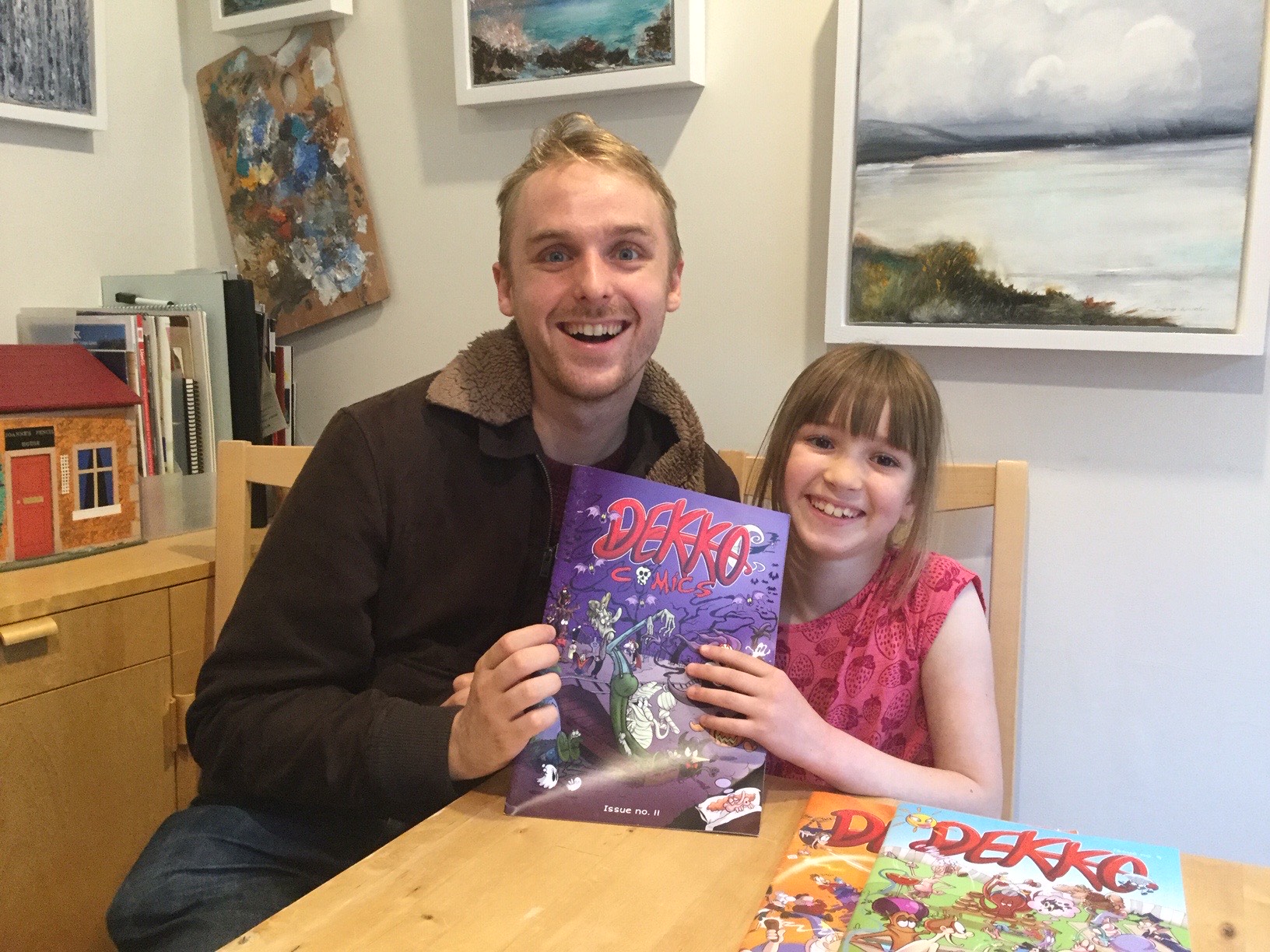
Eventually, I had a eureka moment. It struck me that if understanding information through text was so hard, I could try turning my revision notes into something I had never found difficult to read: COMICS.
To my surprise, it was not only highly enjoyable (in a way, I expected that) but highly effective too. Suddenly, the information was getting into my head and staying there, the way I assumed it was for people who take in knowledge more conventionally.
When it came to my exam, I did my best to remember the notes from my Revision Comic. I was delighted to find how easy that was. I remembered all the pictures and parts of the story in the comic that contained the facts I needed. Even so, I wasn’t expecting to come back with my very first GRADE A in an academic exam!
It wasn’t the Grade A that filled me with confidence, though, but the realization that I COULD access information – and could have been doing it all along – when it was presented in a way that worked for me.
Since then, I have made my revision technique into a series of comics more accessible to a younger age, the years when I felt I really missed out.
These comics turn school subjects like maths, literacy, science, and history into pure entertainment in the form of visual stories.
A dyslexic teacher can be more attentive in the classroom, sensitive to struggling students, and model how to compensate for this spectrum disorder.
By Matthew James Friday
Dyslexia creates suffering for many students, but you rarely hear of teachers admitting to having it. Are teachers really still required, in the 21st century, to be models of perfect, marble-made fonts of knowledge and effectiveness? I have tutored a small number of dyslexic trainee teachers, but that was an exception to the norm. By sheer statistics alone, I must have worked with (and perhaps am presently working with) colleagues who are struggling in secret. It’s time to talk about dyslexia.
6 Facts About Dyslexia
So what’s dyslexia? Here is a quick definition:
Dyslexia is a “spectrum disorder,” meaning that there is a range or spectrum of symptoms.
People with dyslexia commonly have difficulty with all or some of:
Phonological awareness
Verbal memory
Rapid serial naming
Verbal processing speed.
Dyslexia has no link to intelligence, though many people feel “stupid” and ashamed at school because they struggle with literacy skills — the cornerstone of how we measure ability.
Dyslexia is one of the most common learning difficulties. It is estimated that one out of ten people in the UK has dyslexia.
While language has a role in prevalence, dyslexia affects people of all ethnicities.
Commonality in families has led scientists to identify six genes that may cause dyslexia. (My brother has severe dyslexia, and my father has all the symptoms, though when he was at school, those symptoms were put down to laziness or stupidity.)
One of the happiest days of my life was being diagnosed with mild auditory dyslexia. I was 20 years old and had started college studies after a few gap years. The first essay I had written was returned splattered with red ink and harsh comments about mistakes — the familiar feeling of shame and frustration. Luckily, a leaflet about dyslexia in the university library directed me to an educational psychologist and an assessment process that resulted in the diagnosis I had suspected for years. It was a huge relief to know what was wrong with me.
With my auditory dyslexia, I can hear what is said, but I instantly feel the information flittering away in my mind. It is like having leaking holes in my brain. At primary school, I could pass a spelling test but made frequent mistakes in my extended writing. My school reports featured the same comment: “Matthew enjoys writing, but he rushes and makes many mistakes.”
I have always struggled with my listening skills. I am easily distracted and often drift into an imaginary world. Though an advanced private reader, I hated reading texts aloud in high school. The words blurred on the page, and I felt intense anxiety at the thought of being laughed at. My comprehension of the text was low, so I had to work doubly hard at home to catch up. The worst moment was when my beloved English teacher declared me “stupid” in front of the whole class for repeatedly misspelling “Anthony” in an essay about a Shakespeare play.
When Albert Einstein was a child, few people—if any—anticipated the remarkable contributions he would make to science. His language development was delayed, worrying his parents to the point of consulting a doctor. His sister once confessed that Einstein “had such difficulty with language that those around him feared he would never learn.” How did this child go from potential developmental delays to becoming, well, Einstein?
Part of the answer to that question is symbolized in two gifts that Einstein received from each of his parents when he was 5 years old. When Einstein was in bed all day from an illness, his father gave him a compass. For Einstein, it was a mysterious device that sparked his curiosity in science. Soon after, Einstein’s mother, who was a talented pianist, gave Einstein a violin. These two gifts challenged Einstein’s brain in distinctive ways at just the right time.
Children’s brains develop in spurts called critical periods. The first occurs around age 2, with a second one occurring during adolescence. At the start of these periods, the number of connections (synapses) between brain cells (neurons) doubles. Two-year-olds have twice as many synapses as adults. Because these connections between brain cells are where learning occurs, twice as many synapses enable the brain to learn faster than at any other time of life. Therefore, children’s experiences in this phase have lasting effects on their development.
This first critical period of brain development begins around age 2 and concludes around age 7. It provides a prime opportunity to lay the foundation for a holistic education for children. Four ways to maximize this critical period include encouraging a love of learning, focusing on breadth instead of depth, paying attention to emotional intelligence, and not treating young children’s education as merely a precursor to “real” learning.
ENCOURAGE A LOVE OF LEARNING
Young children need to enjoy the process of learning instead of focusing on performance. Educators and parents can emphasize the joys of trying new activities and learning something novel. We need to help children understand that mistakes are a welcome, normal part of learning.
This period is also the time to establish a growth mindset—the belief that talents and abilities are developed through effort instead of being innately fixed. Educators should avoid labeling children or making universal statements about their ability. Even compliments such as “You’re so smart” are counterproductive. Instead, emphasize persistence and create safe spaces for learning. Children will learn to love learning if we show enthusiasm over the process rather than fixating on results.
FOCUS ON BREADTH, NOT DEPTH
One way to avoid focusing on results during this phase of development is to emphasize the breadth of skill development over depth. Exposing children to a wide variety of activities lays a foundation for developing skills in a range of fields. This is the time to engage children in music, reading, sports, math, art, science, and languages.
In his book Range, David Epstein argues that breadth of experience is often overlooked and underappreciated. Focusing on excellence in a single activity may be appropriate at some point in life. But the people who thrive in our rapidly changing world are those who first learn how to draw from multiple fields and think creatively and abstractly. In other words, our society needs well-rounded individuals.
The authors, Dr. Astrid Kopp-Duller and Dr. Livia R. Pailer-Duller, describe in this publication the necessity of intervention at the educational-didactic level, which is of preeminent importance for success in the training of people who have problems with reading, writing, or calculating.
It is a fact that many people who simply have problems with learning how to read, write, or do arithmetic continue to undergo only psychological or medical therapy, and don’t receive the educational-didactic assistance that they actually need. In cases of problems with reading, writing, or calculating, only the specially trained educator will be able to help these people using educational methods that have been developed through educational-didactic research.
http://DyslexicAdvantage.org “Don’t listen to what anyone tells you what you can or cannot do…there is no dyslexia ceiling. Doesn’t exist unless you create it in your own mind.” – MIT Professor of Chemistry and Biology Catherine Drennan, PhD. Dr Drennan also shares how she is able to read molecular spatial configurations like how she learned to read. The Conference was made possible by a generous grant from the Emily Hall Tremaine Foundation
For over 100 years, dyslexia has had a good run. It’s caused heartache, misery, and frustration for millions. That’s over now. A fifth independent study has once again proven that dyslexics can become better readers than non-dyslexics. It takes between 20 and 40 hours of practice with a method called “Eye-Hop.”
The Eye-Hop exercises are fun and easy to do. Through progressive levels, people move from processing one word at a time to reading 5 to 8 words at a time. This is all done with high comprehension. Amazingly, those with the worst phonological processing achieve the greatest percentage increase in their reading abilities. This appears to be due to the ability to process so much information in one glance. Like predictive text on a smartphone, the more information provided, the more certain it is of the word you’re typing.
Eye-Hop is an element of the SuperReading Program. This course, developed in 1995, has always produced these results. The difference today is that SuperReading is now available 100% online. Nearly a year was spent creating compatible online testing, which is rigorous and accurate. Resources were also spent to perfect an online App which converts ordinary text into the Eye-Hop format almost instantly. This means that age-appropriate material of interest can be used to fulfill the hours required to overcome dyslexia.
The online SuperReading course is easy to understand and apply. Any parent or guardian can read about a tool or watch a 3-minute video and explain it to a child in a minute or two. Coaching is available, though not required. Every child graduating the SuperReading Program has become the best reader and learner in their school in 60 days or less. In the case of some dyslexics, it has taken closer to 90 days.
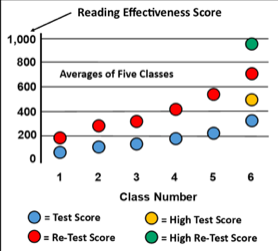
Skill levels are measured by “Reading Effectiveness” (RE) with standardized tests. RE is reading speed multiplied by comprehension/recall (expressed as a percentage). For example, a person reading at 200 words per minute (wpm), able to recall 50% of what they read, would have an RE of 100, or 200 x .5 = 100. A person reading at 150wpm with 50% accurate recall would have an RE of 75, or 150 x .5 = 75. In plain English, RE tells us how fast we read and what we have to show for the time spent. The SuperReading Program guarantees to at least double the baseline RE scores of any person. With the online testing, this is now a much “cleaner” process than from paper. All scores are computed, graphed out, and tracked in a secure database.
SuperReading was developed in Silicon Valley in the mid-1990s. One of the first companies to bring in the Program was Apple Computer. After 5 weeks, their Global Response Team was able to reduce 28 hours of reading each week down to 5 hours. They also reported that their engineers did a better job reading incoming emails, as their “Negative Response Rate” (NRR) dropped by 85%. The NRR was end-users complaining that the engineers did not understand their email. The first identified dyslexic to enter the Program was from the legal department at Hewlett-Packard in 1996. In a group of 25 engineers and managers, Nancy started off with the lowest RE scores in that group. 35 days later she had the highest RE scores. This would become a trend in the years to follow.
From 1996 to 2005, hundreds of dyslexic readers came through the SuperReading Program, did their Eye-Hop exercises, and became brilliant readers. In 1996, these engineers asked to have the Program for their children. Some companies held family classes after hours. Those children quickly became the best readers in their school. Many of them were dyslexic, others had ADHD, ADD, and other learning challenges. No condition or label seemed to make any difference. They all became great readers and progressed from dreading having to read to loving it. When asked why they felt that way, most replied that it was no longer a chore, or torture. It was easy and felt like fun. Apparently, children do not run away from fun- they move toward it. Combined with memory tools and stress-free study techniques, these students thrived. After a major exam, one student commented that the memory tools made it easier than cheating! Other students agreed.
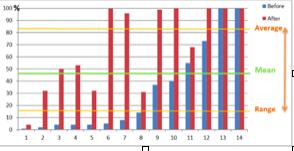
In 2006, I moved to the UK. There I met Dr. R. Cooper, one of the UK’s leading authorities on dyslexia. At first, he dismissed the results, believing those people were not truly dyslexic; that they only thought they were. As a person who sat on the board when the UK defined dyslexia, he had been teaching teachers how to help dyslexics for 16 years. Dr. Cooper politely dismissed me. Nearly a year later, while teaching law students at the London City Law School, I had two dyslexic students take the course. They had papers from bona fide Assessors of Need proclaiming them as dyslexic. They more than tripled their initial RE scores and wrote glowing testimonials. I sent the documents and comments to Dr. Cooper, who invited me to London South Bank University to run a course for a group of dyslexic students and adults. Dr. Cooper was, in his words, “astounded at the results.” The last class was very emotional- lots of tears from people who had just finished a book for the first time in their lives. Some were in their 40s and 50s. We ran a second course, this time with a control group. We got the same results. 84% of the dyslexics ended up with higher RE scores than a group of non-dyslexic university professors! In future studies, they would be compared to their non-dyslexic peers, and 100% would end up with higher RE scores. Since 2009, the UK government has funded SuperReading for all dyslexic university students in the UK.
The Italians have translated SuperReading into Italian and are taking it through their university system. They have seen equal success in a high school and in their dyslexia centers. You can view their latest published study. The other studies can be accessed from our website.
The SuperReading Program is available now, at https://superreading.com, along with the unique Eye-Hop exercises. Dyslexia has had its day. Now you can have yours.
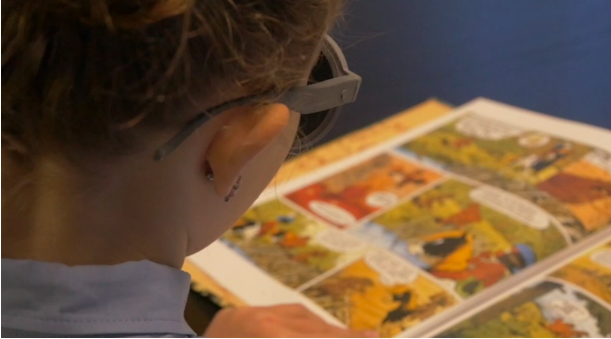
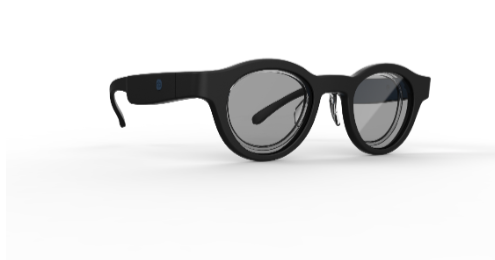
Abeye, a French healthtech startup has developed Lexilens, a revolutionary reading aid for dyslexics.
This new product is based on science and provides instantaneous effect to dyslexic readers. It was awarded several prizes among which the CES innovation award at Las Vegas in 2020 and Silmo Gold award (health & vision category). It will be launched in France soon after this summer and in Europe afterwards.
Dyslexia is a reading disorder affecting 8 to 10% of population
Dyslexia makes reading very difficult and is declared as a handicap by the World Health Organization. Children suffer the most from it as they must read a lot at school while they have not yet learned how to cope with this disorder by setting up alternative strategies to read.
Dyslexia makes reading difficult and can lead to school failure, loss of self-confidence & potentially social isolation. It is a daily pain for the children and their family.
Abeye develops smart eyewear for health and wellness
Launched in 2018, the startup Abeye (abeye.tech) creates smart eyewear, eg standard looking eyewear that embeds electronics to provide health related services to the user. Abeye just released earlier this year a product called Spectalert which is a fall detection eyewear for seniors. Lexilens is their second product, developed with the same rules : simple, useful, elegant and affordable.
Abeye is incubated by “Atol les opticiens”, a French optician retail network (800 shops in France). Abeye can therefore rely on Atol expertise to design eyewear that looks like….eyewear and that people will actually want to wear
Lexilens is a revolutionary reading aid for dyslexics
Lexilens is the result of a 2-year R&D effort by Abeye in collaboration with the scientific academic laboratory that discovered in 2017 a potential cause of dyslexia.
These French scientists showed a link between the eyes, the brain, and dyslexia: In the image processing center of the brain, every single human at some point creates a mirror image of what they are seeing. Think of looking in the mirror when letters seem backward. In a person with dyslexia, the incomplete decoding in the brain of the mirror image can result in overlays or omissions. For non-dyslexics, the two eyes are asymmetric, which means not exactly alike. And this asymmetry gives clues to the brain in selecting which image to pick. For dyslexic people, they have two eyes that are too perfect. So the brain cannot tell the difference and can mix the two mirror images.
Lexilens can filter mirror images with its electronic lenses and reading is easier for the dyslexic wearer.
After several versions, a real-life test was conducted with several testers. The results are unprecedented. The children’s parents’ testimony is extremely promising, as some children can read up to twice as fast with Lexilens. For many testers, reading is faster and easier, memorization is increased, and academic results are improved, increasing social confidence.
Lexilens effect is instantaneous (no training required), universal (does not depend on the age, gender or native language). The spectacular effects of Lexilens have been since confirmed for adults and children from a broad range of countries. A formal clinical trial is under way to generate scientific data to measure the improvement rate.
A non stigmatizing device
Abeye has been working on improving the design of Lexilens so it can be worn at school without stigmatization. Lexilens will be available in two sizes : children & adults. Lexilens is compatible with all prescription lenses for increased reading comfort.
Lexilens will be available for preorder in the coming months (in Atol shops in France and online (abeye.tech) for the rest of Europe). Abeye is currently in discussion with distribution partners to support its global expansion.
When you’re dictating a word and tell your son or daughter that he should write what he hears, your child will attempt to map the sounds in the words to the sounds of the letters.
However, English is not a phonetic language. There are a very large number of English words where there is a gap between how the word sounds and how the word is actually spelled. Not to mention, there are many times multiple correct phonetic options to a given sound (for example: k , c, ck, and qu – all sound about the same)…
What is creative spelling?
Given that English spelling is not phonetic, and each sound may have several spelling options, a lot of correct English spelling is dependent on the visual memory of a written word. If you have good visual memory of words, you will be able to spell a word correctly simply by writing it down, and from memory deciding if this is the correct spelling.
But kids with dyslexia and dysgraphia have very poor and inconsistent visual memory of spelled words, and therefore, can hardly rely on their visual memory of words…. Not to mention that children with dyslexia or dysgraphia sometimes confuse the direction of letters, and though they meant to write the letter “b” actually end up writing the letter “d”…
A child’s Creative Spelling refers to the spelling of a child who has no idea of how to spell correctly certain syllables of a word, and therefore, creatively makes them up as he writes. And each time he/she “creates” a word’s spelling, it usually ends up as a different spelling creation.
Can a regular spell checker correct dyslexia spelling?
English is not a phonetic language, and therefore, the “creative spelling” of a child with dyslexia or dysgraphia must be taken into account in order for a spell checker to provide value for a dyslexic child. However, the “creative” spelling of such a child is basically “noise” and therefore any computerized program, such as a regular spell checker, that tries to correct a single word at a time (and not based on the context of the sentence) is doomed to fail… That is why Microsoft spell checker many times simply fails to correct a heavily misspelled word written by a dyslexic… and the reason why dyslexic children require…
French, Danish and even English can be hard for dyslexics students while Spanish, German and Italian may be easier.
It becomes more and more evident that dyslexia, being the same to its core all over the world, also depends on how difficult the language is to learn and to read. Between languages, there are differences in the orthographic, phonological, morphemic, and inflectional structure, but what makes them harder or easier to learn is also the “opaqueness”: how possible it is to break the words up into sounds and how well those sounds match the letters and letter combinations. For example, French, Danish, and even English can be hard for dyslexic students while Spanish, German, and Italian may be easier.
Different languages, dyslexia and spelling transparency
Danish speakers are sometimes said to swallow their consonants, making it a bit of a challenge for learners to hear which words they are using. Looking at a Danish word on paper, you won’t necessarily know how to say it out loud. The same goes for French with its je peux (I can), il peut (he can), and un peu (a little), pronounced in the same way (x and t silent) but with different meanings. Dyslexic students, as well as English students, often struggle with the irregular spelling of the language. They often feel the need for an extensive repertoire of strategies to overcome the challenge.
Studies are being done on dyslexia in different languages but there is still much left to discover. Such as how dyslexia looks in languages that are written in another direction, like Arabic, or in a language that doesn’t have an alphabet, such as Mandarin. Learning Chinese, you must match the meaning and sound to a specific character, which in fact results in a perhaps more complicated and severe disorder than that of English dyslexics.










 When you’re dictating a word and tell your son or daughter that he should write what he hears, your child will attempt to map the sounds in the words to the sounds of the letters.
