Author: American Dyslexia Association

  • When the “Different” Learner Meets Cursive

    When the “Different” Learner Meets Cursive

    by Kate Gladstone, author of READ CURSIVE FAST

    Most folks today don’t write in cursive. Some people never even pick up a pen or pencil. Writing in cursive has become rare — yet reading cursive remains an important life skill, whenever:

    • family members still use cursive, or even send greeting cards that use cursive fonts:

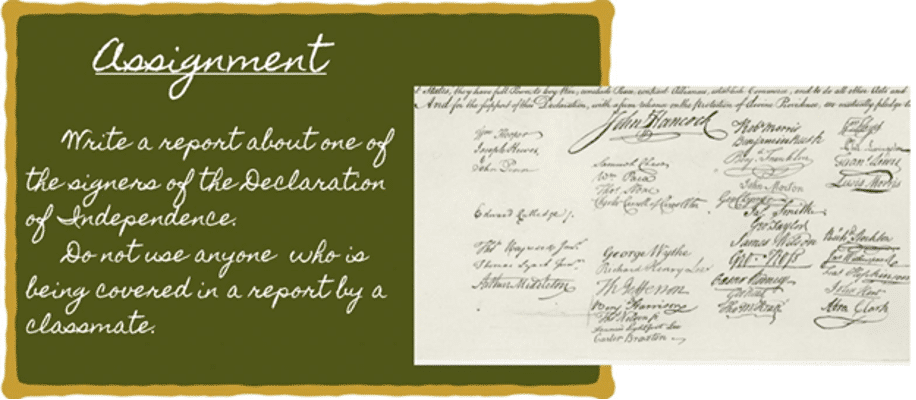
    • teachers use cursive, or assign work that involves reading historical documents in their original form:
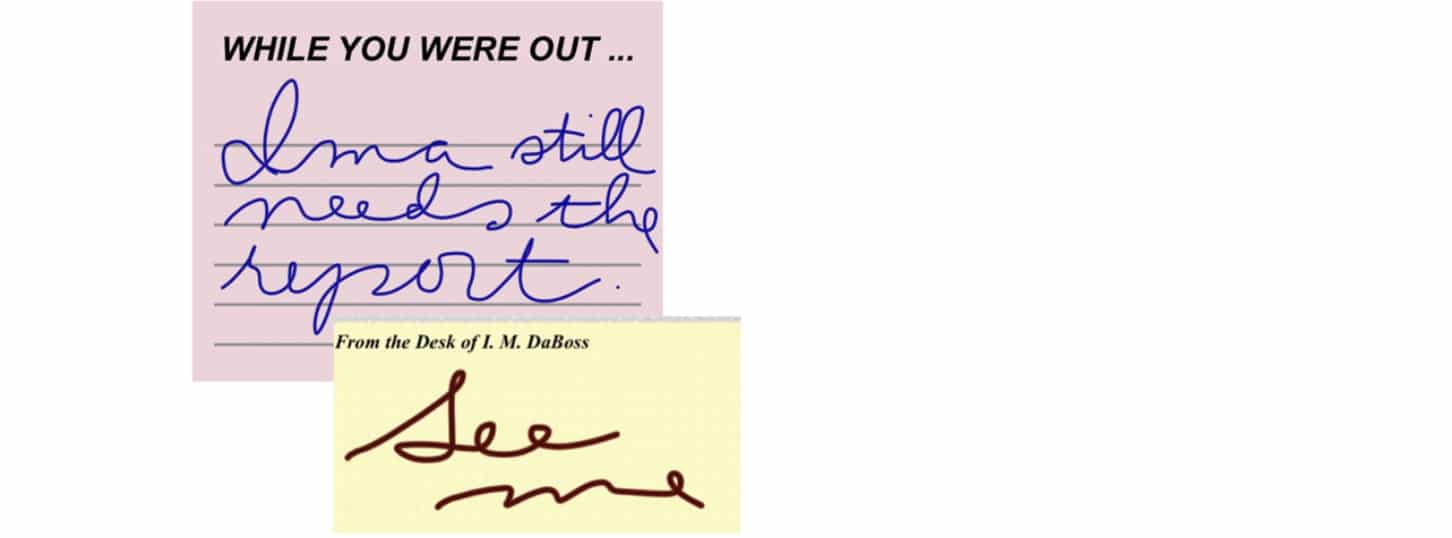
    • employers, supervisors, or co-workers use cursive:
    • store signs or logos use cursive:

    Today, more and more children and adults — with and without disabilities — cannot read cursive handwriting, or can only partially and laboriously figure out a word or sentence in cursive, even if the cursive writing is clear and error-free (which is often not the case). These difficulties occur at all educational and socioeconomic levels.

                In the USA, Canada, India, and many other countries, non-readers of cursive include most people 35 and under, as well as a surprising number of older adults who have often managed to hide this problem throughout life.

    Worse yet, today’s millions of “cursive non-readers” (with or without disabilities) aren’t limited to those who were simply never taught cursive.

            Even when conventional cursive training actually does lead to reading (and writing) cursive, those “successful” learners often lose the ability sometime between the year that they are taught cursive (typically Grade 2 or 3) and the year that they leave high school.

    This situation was profiled in 2013 by one of Canada’s largest newspapers. The cursive non-readers whom that article were college freshmen. By now, almost eight years later, they must be in their mid-twenties: they have jobs, or are trying to get jobs, and probably some of them have families. (How will cursive non-readers help their children, if the school or the district or other administration mandates cursive instruction?)

    Forgetting how to decipher cursive (or never learning how to decipher it in the first place)  can happen anyone — but it more severely impacts people with dyslexia, autism, and other neurological differences that affect how we perceive and process the data that our senses provide.

    People with various neurological differences (autism, dyslexia, dysgraphia, and more)  are often very good at looking for patterns — and are extremely good at seeing patterns in the surrounding environment, without ever even having to look for the patterns! The patterns, especially visual patterns, simply jump out as them — or, I should say, simply jump out at us (because I have several of these “dys-”abilities). Therefore, we use visual patterns to try to make sense of what we are trying to learn — and we learn best when we are encouraged to use visual patterns.

          However, students who encounter cursive are often discouraged from even trying to wonder if there are visual relations between the cursive letters and their printed counterparts. The two systems of writing, appear unrelated to each other:

    Since it looks as if there is no relationship between most cursive letters and their printed counterparts, many learners frustratedly give up on even trying to use their visual/pattern-recognition strengths to “crack the code” of cursive. When the visual/pattern-recognition strengths of a learner’s brain are suddenly made useless,  he or she may feel that his/her brain has stopped working and can no longer be trusted. (Such a learner may be said to have “form constancy issues.”)

           Unfortunately, well-meaning parents and schoolteachers may accidentally push learners even further in that direction, by trying to reassure frustrated learners of cursive that “there is really no relationship between cursive and printing anyway, so don’t even bother trying to see a relationship or a reason or an explanation. Don’t even think that there could be a relationship between one style of letter and another. There is no relationship, nothing to find, is nothing to understand, so just memorize, don’t worry, and you’ll pick it up just fine, I’m sure.”

    However, “just memorizing” (without understanding) is an extremely fragile and worrisome way of trying to learn and remember. What is memorized without comprehension is quickly forgotten, as soon as lessons are over — Especially in modern times, when fewer and fewer people write cursive (or even write by hand at all) in life after school the liabilities of “just memorizing” hold true for most people, to some degree — but they almost always hold true, to a huge degree, for people whose neurology differs significantly from the average.

           When learners are told that “there is no reason, only memorization,” and when they experience no way of fully understanding the material that they must memorize , they lose trust in their own ability to even try to learn and understand: at a basic rote-memory level, and/or at any other level.

            This is especially true when the subject is cursive handwriting, because — for many students learning cursive — the cursive textbook is typically the only textbook that is full of assigned material which they cannot read (although it is in their own language), but must still copy.

    One part of the visual skills/form constancy problem is that the shapes of cursive letters are often inconsistent from word to word, in ways that can make words very hard to recognize.

              Look at these cursive words:

    In both words, the third letter is a cursive s — but the “same” cursive s is very different each time:

    A learner who has memorized the cursive s in past (where it needs to start at the bottom) is likely not to recognize the “same” cursive s in post (where it needs to start at the top):

    For any learner — but especially for one whose neurology is not the “average” that textbook publishers assume — all this can deeply shatter confidence and motivation.

    Does it have to be this way?

    Can we make cursive make sense to all learners — even if they don’t write cursive, or if they don’t write by hand at all?

    What if we showed our learners how cursive happened?

    A new book, READ CURSIVE FAST (National Autism Resources, 2021), takes this approach: offering three easy stages to lasting cognitive comprehension (not just fragile rote memorization) of what makes a cursive letter a G or a Z or an r or an s — and why. Now, learners’ visual strengths, pattern-recognition strengths, and cognitive strengths can work in synchrony instead of being neglected or frustrated,

    Step One: Show how cursive letters happened!

    When readers are allowed and encouraged to learn how cursive letters came about, remembering the cursive shapes makes cognitive/pattern-recognition sense, and does not have to rely solely on rote memory. Here’s an example for the letter G:
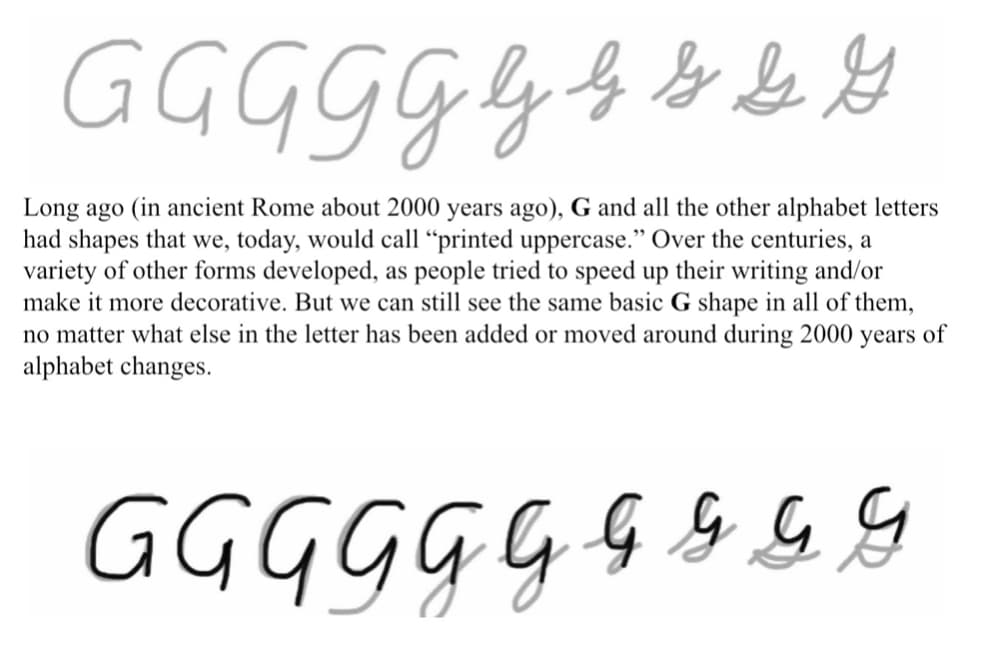
    READ CURSIVE FAST uses a pattern-recognition/cognitive approach to “unlock” the visuals of every cursive letter. Some letters need to be cracked in step-by-step detail, while others can be “cracked” more simply:

    When you see the print-style s hiding inside cursive s, you can see why the cursive s looks different after lowercase o versus the way it looks after lowercase a.

    Building pattern recognition and understanding into the learning task makes for faster progress and greater retention, by providing another route to comprehension. Cursive writing is not the only path to cursive reading — for many students, it is not even a reliable path.

    Step Two: Sustained Reading

    Once students recognize cursive letters alone and in words and phrases, it’s time to build automaticity and fluency with longer texts. To accomplish this, READ CURSIVE FAST uses “cursive stories”: passages written in fonts that resemble increasingly difficult styles of handwriting. Here is the opening of one story:

    ___________________________________________

    (The first four sentences of a cursive story from READ CURSIVE FAST.)

    ___________________________________________

    The beginning of each story resembles familiar printed letters, but each sentence adds more and more cursive features, carefully easing readers into understanding increasingly complex forms of cursive.

    Step Three: Reading Historical Documents

    Once students can read present-day cursive with some fluency, they will eventually want or need to read our nation’s historical documents, many of which are written in very elaborate forms of cursive.

           Today, reading historical documents is one of the most frequent reasons for needing to read cursive, but handwriting style variations in past centuries were even more frequent than they are today. This means that most students (particularly those with neurological issues) will benefit from practice with historical cursive samples once they are experienced in reading present-day cursive samples.

    Therefore, READ CURSIVE FAST includes a section specifically on historical documents. Learners reach this point are usually pleased and amazed that they can now read historical material.

    When we know how each cursive letter happened, we know (and we never forget) what makes the letter understandable. Whatever our own handwriting looks like, whatever style we use, or even if we never write by hand at all, we can make sense of every cursive letter we are shown what parts of a cursive letter make that letter make sense.

    When cursive letters make sense, we do not need to write cursive in order to read it.

    When we make sense of the interrelations of different alphabet styles — print and cursive and more — handwriting becomes …

    As the author of READ CURSIVE FAST, I look forward to seeing and hearing your own experiences and thoughts on cursive reading issues.
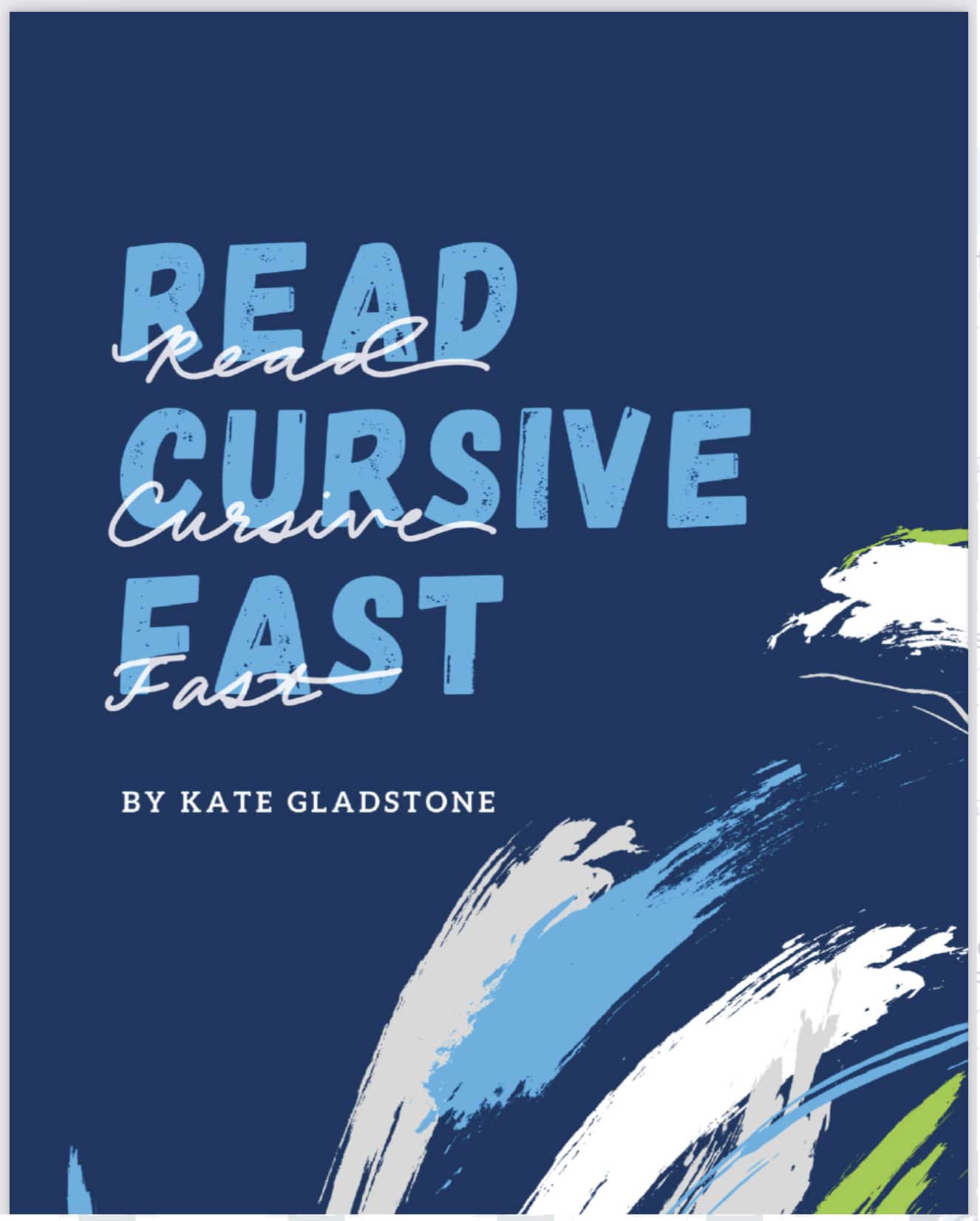
    The book’s website- https://readcursivefast.com
    Sample pages for free download — http://readcursivefast.com/wp-content/uploads/2021/02/RCF_Preview-1.pdf 
    Link to buy READ CURSIVE FAST directly from me: ReadCursiveFast.com/order


    Available on Amazon: Read Cursive Fast

  • Finding Solutions to a Serious National Problem

    Finding Solutions to a Serious National Problem

     “Half of the incoming freshmen at our business schools are now being required to take a basic course in writing because they cannot write a presentable letter, report, or proposal.” When David McCullough, twice Pulitzer Prize winner and recipient of the Presidential Medal of Freedom, learned of this situation, he called it “a serious national problem.” Knowing that dedicated teachers, devoted homeschooler parents, concerned grandparents, and trusted private tutors and mentors around the world advise, coach, demonstrate, and practice their young learners in the art of writing, you shake your head and say, “No. It just can’t be.” 

    Feeling Perplexed by Such an Observation

    McCullough, of course, is not fabricating a wild story. Consequently, after a bit, you acquiesce. After all your hard work to teach your students, though, you not only feel puzzled but also feel betrayed. You lament right out loud, “The very thought of such grim results seems impossible.” Your associates, who, like you, also worked diligently to teach their young learners to write well, they had believed – agree. Another member of your teaching team asks, “How in the world is this astonishingly dismal result possible?” After your thoughts settle, your team begins to ask, “Well, then, what measures can we implement to assuage this predicament in the future?”

    Searching for Solutions

    Once you accept McCullough’s words as true, your teaching team concludes that perhaps your young learners are in the half who mastered what each of you had presented. After all, you constantly had taught your young learners to think positively, to visualize their success, and to expect the best. Now, momentarily, you and your colleagues were thinking negatively.

    Teaching the Parts of Speech in a Fun Way

    By beginning to enumerate what you had done to prepare your students to write well, you began to get on track. You had taught lesson after lesson to impart to your students grammar – the parts of speech and their definitions -using not only color-coded words but also colorful, memorable characters. You also enumerated and explained the cooperative roles and relationships of the parts of speech. Each member of your teaching team also had relentlessly reviewed the mechanics of the English language—capitalizations, punctuation, contractions, and spelling. Your students were so versed in grammar and mechanics that some of them told you they reviewed your lessons in their dreams at night. Your basic teaching lessons and exercise practices have served your students well. Yes. You now begin to realize that your methods have blessed the memories of your learners.

    Using the Power of Colorful Mind Maps to Bolster Memory

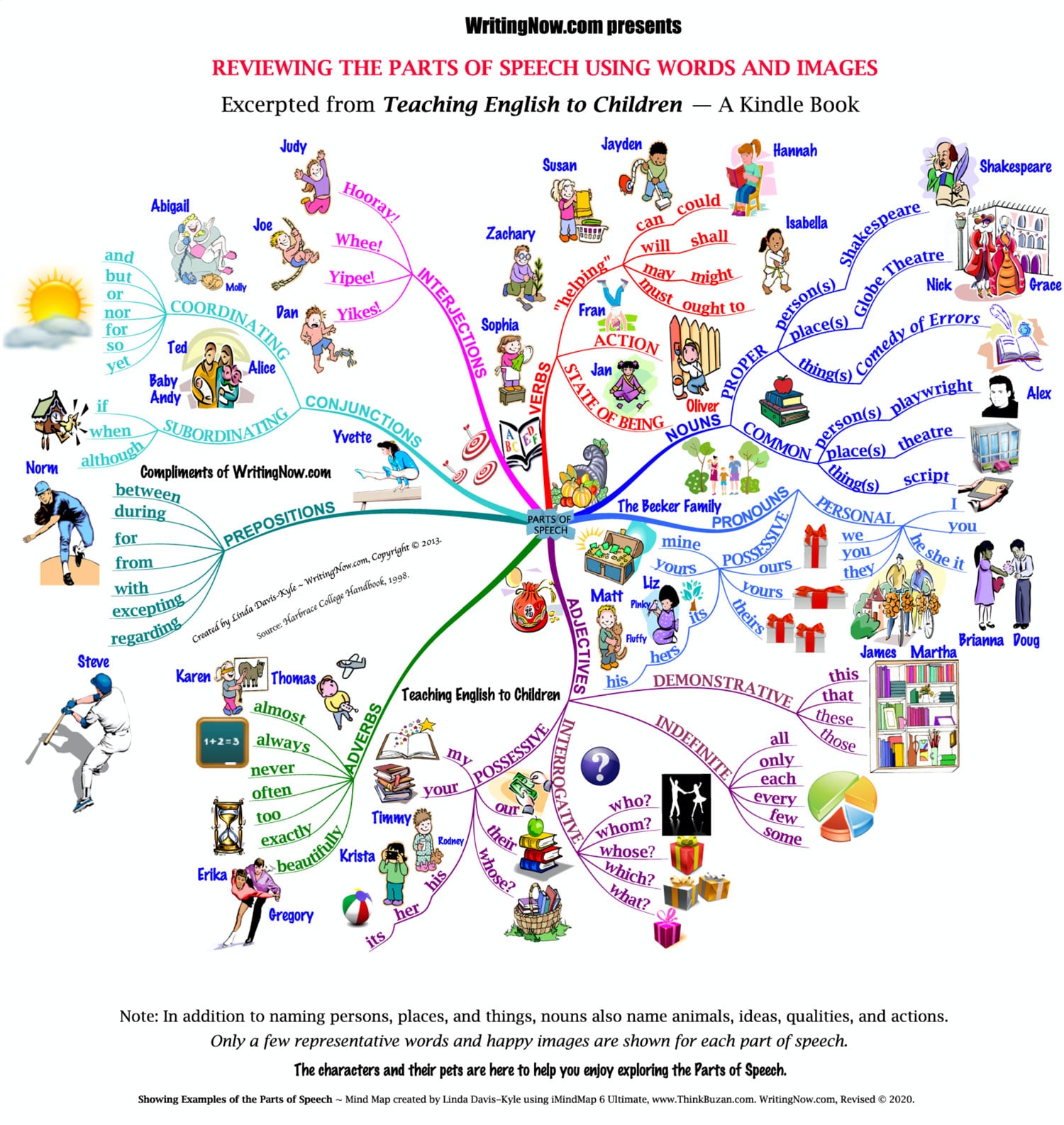
    Because Mind Maps can so beautifully organize information succinctly, they enhance memory with impressive staying power. Their branches relate to each other in such a way that each and every branch helps to build the topic of the particular map. For example, the young learners can name a mind map as “The Parts of Speech.” Then, they can handwrite the parts of speech—verbs, nouns, pronouns, adjectives, adverbs, prepositions, conjunctions, and interjections—onto their separate branches. Using attractive colors, drawing, and handwriting in cursive or hand printing join forces to make learning the Parts of Speech not only fun but also memorable.

    Writing Now
    Note: The Mind Map, as a larger printable .pdf, is available at WritingNow.com gratis.

    Connecting New Information with What They Know Already

    When students latch onto information that enlightens them, new related information fastens, in a sense, with the data already present. The concepts, then, in a way, begin forming a net to grab, hold, and store more input. Each new learning experience that can hook with the items already present continues the wonderful arrangement. The more relevant and related information students learn, the more they can learn, digest, and absorb. David Gamon, PhD, and Allen D. Bragdon, authors of Learn Faster & Remember More, put the thought more eloquently, “How well you remember depends on how much you already know.” Therefore, the incremental lessons you had taught fostered strong memories. Plus, connecting the three powerful forces—memorable mind maps, drawing, and cursive handwriting—creates a mighty memory treasure.

    Enhancing Memory with Cursive Handwriting

    Indeed, you had empowered the memories of your young learners in a fine way that some in society today seem to have forgotten. They had loved drawing colorful mind maps and then labeling the parts of speech in cursive. Your students had loved handwriting their assignments. The main trouble your students had was deciding which Parts of Speech Mind Map they liked more. Some liked a Words and Images Mind Map that defined the parts of speech. Others liked a Roles and Relationships Mind Map that showed how all the parts worked together. Others favored a Composing Sentences Mind Map or a Composing Paragraphs Mind Map to steer them to success with their forthcoming writing assignments. More advanced students resonated with the Writing Tips Mind Map. In all cases, they had loved that the vivid colorful characters and color-coded words that made learning not only endearing but also enduring. WritingNow.com provides printable versions of the noted Mind Maps and additional ones from its ebooks to download and enjoy as a gratis bonus.

    You did not throw aside handwriting as outdated or outmoded. You did not see handwriting as some relic from the past. Instead, you honored its use for sustaining memory. Moreover, helping your young learners to enjoy practicing their cursive handwriting yielded lasting profits for them.

    Speaking for the Practice of Cursive Handwriting

    Neuroscientist Claudia Aguirre, PhD, equates the action of handwriting with “meditation” because she says it perpetuates “mindfulness.” Angelika Troller-Janesch, Vice President of the Carinthian Dyslexia Association in Austria explains that taking notes by hand supports memory and helps students preserve what they learn. Livia Pailer-Duller, PhD, CEO of the Austrian Dyslexia Association, a colleague of Troller-Janesch, concurs and shares that handwriting fosters fine motor skills. Plus, she says handwriting boosts the entire learning process. Both teachers emphasize the importance of not allowing digital experiences with computers, tablets, and cellphones to bring about the extinction of the art of cursive handwriting.

    Teaming Handwriting with Computer Generating Your Compositions

    While computer-generated assignments certainly speed the reading for hardworking teachers, it can be a useful practice if young learners will compose their first drafts by hand. Then they can type their work using a device of their choice. Doing both processes likely team up to expand their memory of the material. Multiple viewing gives time to ponder what they first composed. Plus, as the students continue in this way, errors very well may pop up and beg for correction.

    Consequently, students learn in an instinctive way that they cannot simply sit down and write or type their essays in half an hour and think they have finished. They must learn to revise. This polishing practice attunes them quickly to the idea that it takes work to make their essays smoother and smoother.  Revising also enhances preserving information and critical thinking.

    Learning to Plan for Their Next Day

    In your listing of the many aspects, concepts, and projects you had used to help secure their successful writing, you and your teaching team had encouraged your young learners to let each sunset, remind them to pause and reflect on their day. After their appraisal of the passing day, you suggested that they plan for their forthcoming day to help bring big dividends. If upon review some days their efforts went awry, you, doubtless, helped them learn to release the negativity. You pointed out that counting the aspects of their day that did go well would be of great use. It was your hope that helping them to make it a habit to write out their plans for their coming day would become a lifetime ally. You also hoped that if they would allow the sunset to be their daily reliable reminder “to be grateful for the passing day and to prepare gratefully for an even better day tomorrow” doing so could foster their good health emotionally, physically, and spiritually. Finally, you hoped that creating mind maps, engaging in fun drawing, and using cursive handwriting, along with so many other worthy strategies that you taught with care would weave together to help your young learners love their writing and make it their best friend for life.

    About the Author

    Linda Davis-Kyle is a fitness, health, education, and general interest writer whose articles have appeared in professional journals such as Modern Drama in Canada, Notes & Queries in the UK, Caritas in Ireland, and Studies in English Literature in Japan and in periodicals such as WellBeing in Australia, The Star in Bangladesh, and Healthy Options in New Zealand. She is the author of the e-book Getting Ready to Write: Reviewing English Grammar.

    Sources

    Aguirre, Claudia. “Does writing by hand sharpen your creativity?”

    https://www.headspace.com/blog/2015/09/23/can-handwriting-sharpen-your-mind

    Davis-Kyle, Linda. GettingReadytoWrite:Reviewing EnglishGrammar. Amazon Kindle E-Book.

    View this book on Amazon

    McCullough, David. “Dialogue with David McCullough (on John Adams).” With Librarian of Congress James H. Billington. Library of Congress. Special Event, February 12, 2014. youtube.com, April 3, 2014. 59:50-1:00:13 and !:00:18-1:00:32.

    Accessed 18 April 2020

    Pailer-Duller, Livia. Personal communication. 30 January 2021. Troller-Janesch, Angelika. Personal communication. 30 January 2021.

  • The Easy Reading Card – Easier Reading System!

    The Easy Reading Card – Easier Reading System!

    Reading is the key to success. Anyone who reads well and who understands what has been read automatically learns the rules of correct spelling.

    Precise, accurate reading is a prerequisite for writing and learning. The specific design for children of the Easy Reading Card makes reading easy and fun.

    Scientific studies have shown that a majority of individuals that exhibit reading problems are affected by subjective visual perception. When reading, the visual channels have to work precisely timed together so that there is no overlap of visual information.

    Science has proven the positive effects of the influences of colors while reading. Especially the color blue leads to a phasic activity of the channels, which leads to an increase in reading achievement, reading comprehension and reading speed. The color thus supports the sub-processes of the visual sensors.

    Teachers from around the world are already using the Easy Reading Card when working with children.

    Watch the Easy Reading Card in action:


    More info: www.easy-reading-card.com

    Order here: www.dyslexics.com 

  • Feeling Smarter and Smarter: Discovering the Inner-Ear Origins and Treatment for Dyslexia/LD, ADD/ADHD, and Phobias/Anxiety by Harold N. Levinson, MD

    Feeling Smarter and Smarter: Discovering the Inner-Ear Origins and Treatment for Dyslexia/LD, ADD/ADHD, and Phobias/Anxiety by Harold N. Levinson, MD

    In this groundbreaking book written for both lay and professional readers, Dr. Harold Levinson, a renowned psychiatrist and clinical researcher, provides his long-awaited follow-up work about truly understanding and successfully treating children and adults with many and diverse dyslexia-related disorders such as those found on the cover.

    This fascinating, life-changing title is primarily about helping children who suffer from varied combinations and severities of previously unexplained (“inner-ear/cerebellar-determined”) symptoms resulting in difficulties with:

    • reading, writing, spelling, math, memory, speech, sense of direction and time
    • grammar, concentration/activity-level, balance and coordination
    • headaches, nausea, dizziness, ringing ears, and motion-sickness
    • frustration levels and feeling dumb, ugly, klutzy, phobic, and depressed
    • impulsivity, cutting class, dropping out of school, and substance abuse
    • bullying and being bullied as well as anger and social interactions
    • later becoming emotionally traumatized and scarred dysfunctional adults

    Feeling Smarter and Smarter is thus also about and for the millions of frustrated and failing adults who are often overwhelmed by similar and even more complicated symptoms—as well as for their dedicated healers. Having laid the initial foundations for his many current insights in an earlier bestseller, Smart But Feeling Dumb, Dr. Levinson now presents a compelling range of enlightening new cases and data as well as a large number of highly original discoveries—such as his challenging illumination that: “All the above dyslexia-related manifestations are primarily ‘inner-ear’ or cerebellar-vestibular—not cerebrally or thinking-brain— determined and so do not impair IQ and have a favorable outcome.”

    And an “ingeniously clear” and explanatory theory of symptom formation, including the triggering of phobias and anxiety, has been formulated by Dr. Levinson using a simple analogy: “I can rapidly but transiently induce the entire dyslexia syndrome in perfectly normal individuals by spinning them around until their brain signals become dizzy or scrambled. And then mandating they perform varied reading, writing, conentration-demanding…tasks.”  In other words, dyslexia is recognized to be a complex multi-symptomatic syndrome encompassing all of the above mentioned symptoms—and many more. Clearly, it’s not just a pure reading disorder as now also recognized by the American Psychiatric Association’s (APA’s) diagnostic manual, DSM-V.

    This syndrome results when diverse normal thinking brain and related processors fail to descramble the “dizzy” or distorted signals received from a fine-tuning signal impairment within the inner-ear and its supercomputer—the cerebellum, man’s lower “little brain.”[1]

    Most important, all the dyslexia/inner-ear based impairments and their symptoms were discovered by Dr. Levinson to respond rapidly and often dramatically when treated with simple and safe inner-ear enhancing medications and nutrients—thus enabling bright but dumb-feeling children and adults to feel smarter and smarter. In addition, by clarifying and more effectively utilizing a diverse range of educational and non-medical therapies which enhance inner-ear and/or cerebral compensation, all dyslexics can be best helped.

    Using the above mentioned spinning analogy in order to better explain improvements, Levinson states: “The dyslexia-like or inner-ear/cerebellar syndrome triggered by spinning normal individuals till dizzy signals arise can be minimized or prevented by pretreatment and/or treatment immediately following symptom formation, using anti-vertigo or inner-ear-enhancing meds and non-med therapies.”

             Additionally, Dr. Levinson discovered and similarly treated the relatively “minor” inner-ear/cerebellar dysfunction found associated with ASD or autism as well as traumatic brain injury and other major disorders. This enabled overall improvements, albeit the primary impairments persisted.

    In summary, this book’s content is highly unique. Its many patient-derived insights are fully capable of explaining and successfully treating all the known dyslexic symptoms and their determining mechanisms as well as clarifying all data and theories characterizing the dyslexia syndrome—including the frequently overlapping attention deficits and phobias. Significantly, most all of Dr Levinson’s highly original inner-ear/cerebellar concepts—considered “decades ahead of their time”— have been independently validated via hundreds of referenced neuroimaging and other studies.


    To order this “life-improving” book from Amazon or its publisher, Springer, log onto Dr. Levinson’s website: dyslexiaonline.com

    Feeling Smarter and Smarter: Discovering the Inner-Ear Origins and Treatment for Dyslexia/LD, ADD/ADHD, and Phobias/Anxiety by Harold N. Levinson, MD
    Feeling Smarter and Smarter: Discovering the Inner-Ear Origins and Treatment for Dyslexia/LD, ADD/ADHD, and Phobias/Anxiety by Harold N. Levinson, MD


    1 This theory was considered “ingenious” because it replaced and resolved several long held mistaken concepts—previously leading to scientific dead ends and paradoxes. For example, it was mistakenly believed:1-that dyslexia was a pure reading disorder of primary cerebral origin, despite its typical “symptomatic impurity” and the absence of cerebral neurological signs as well as the presence of only inner-ear/cerebellar signs, and 2-that all the many non-reading symptoms found among dyslexics were considered “co-morbid”—meaning they were/are believed due to separate non-dyslexic cerebral-related processing impairments—rather than due to a common inner-ear/cerebellar origin akin to the way the diabetic syndrome is caused by a common underlying insulin deficiency. So the illuminated paradoxes to be resolved were: 1-How could dyslexics have normal and even genius IQ’s and improve if they had so many separate and irreparable cerebral processing impairments? They couldn’t! Indeed, their IQ’s would approach zero,  2-How could dyslexia be due to a primary and irreversible cerebral impairment akin to Alexia in the presence of only inner-ear/cerebellar neurological signs and mechanism? It can’t! , 3-How could spinning, which destabilizes only the inner-ear/cerebellar signals, create all the dyslexia-related symptoms and how might inner-ear-enhancing meds “cure” them? This would be impossible if the dyslexia syndrome was of a primary cerebral origin affecting multiple sites of primary brain functioning.

    Available on Amazon: Feeling Smarter and Smarter

  • Puka Dyslexic Chat with Jamie Oliver, by Sam Milton

    Puka Dyslexic Chat with Jamie Oliver, by Sam Milton

    It was about three years ago when I started doing my dyslexic blogs and pod casts with comedian Mark Simmons. For me at the time it did not matter whether people read or listened to it (other than my mum of course) because I was just doing it for me. I guess it was a way of putting pen to paper or pressing record and just getting stuff off my chest and putting them out there in a notional black hole that maybe one day someone may dip into.

    However, it surprised me when people started to comment on them and started to engage feeding back their stories. It soon turned out that I was not the only one that was forced to wear coloured glasses and eye patches and being placed in classes branded as special needs. It made me feel better in myself that I was not the only one who was going through this.

    So from that I decided to write to my dyslexic man crush, Jamie Oliver! Why wouldn’t he be anyone’s man crush, he is driven, successful, focused, you could take him home to your mum and you would not go hungry!!!

    I sat down at my table, wrote a load of my experiences growing up and asked how he coped with dyslexia during his early years… Click here to read the rest of the article on Sam’s blog…

  • Making the Impossible Possible with Homeschooling

    Making the Impossible Possible with Homeschooling

    Wolsey Hall Oxford: The Homeschooling College

    For many dyslexic children the one-size-fits-all approach of traditional classrooms doesn’t work and can leave them feeling frustrated, singled out and upset. This experience can affect the whole family and you may be left feeling helpless with little choice.

    Homeschooling is an increasingly viable option for many families. While the idea may initially seem daunting, you can tap into your child’s strengths to aid their learning and best of all, the whole process is led by them. At home they can learn at a pace to suit them and in an environment they are comfortable with. If a new concept requires several different approaches before it’s really embedded in their mind, then you have the time and space to enable that creativity. You can also explore a wide range of technology to support their learning that isn’t permitted in mainstream schools. Homeschooling is flexible and that’s key.

    Kailash’s son Innes has dyslexia and homeschools with Wolsey Hall Oxford: “Homeschooling with Wolsey Hall has been fantastic for Innes. With Wolsey designing the yearly study plan, Innes has been able to tailor his schedule of work to accommodate his dyslexia. He immerses himself in a subject for days at a time, finishes an assignment and then moves on to the next topic. This pattern of working is very effective for Innes, as his short term memory is not very good – the knowledge is placed in his long term memory, giving him a very high retention rate.”

    For many dyslexic students their low self-esteem is also a major issue. The nurturing approach of homeschooling builds this up, giving them the confidence to try new things without the ridicule of their peers should they fail.

    Becoming your child’s home educator can feel overwhelming at the start, but many parents use a combination of approaches. From finding free resources on the internet and borrowing library books to meeting up with local homeschooling groups who often organize activities and trips. Online forums are a great resource for answering tricky questions, and the many Facebook groups offer a network of support from families in a similar boat.

    While homeschooling often means one parent losing their potential income, many families run home-based businesses alongside home educating. You could also sign up for some homeschooling courses online, where your child will have their own tutor and learning support. At Wolsey Hall Oxford, we help parents to identify the best ways they can support their child in order to unlock their potential. We pride ourselves on the learning support we offer students and their families including a mentoring service and development of personal learning plans. Your Student Progress Manager is with you every step of the way to answer your queries, and your tutor will follow the pace set by your child.

    Alfie, who has dyslexia, has been homeschooling for the past three years. Last year, he achieved four IGCSEs and is now studying another four IGCSEs this year. His mum, Helen explains why it works for them: “I can honestly say that Wolsey Hall was a fantastic choice for us. We really like the structure that Wolsey provides, the assignment schedule, and the online facility. Michaela, our Student Progress Manager, has been brilliant, always there to offer support and advice. I think what has been excellent for Alfie is the structure of the learning.”

    Wolsey Hall Oxford offers a wide range of courses from Age 7 Primary right through to Secondary, IGCSE, and A Level. For more information about our Cambridge-accredited school and how we support children with additional needs such as dyslexia, visit: www.wolseyhalloxford.org.uk


    Homeschooling a child with dyslexia works best when you understand how the learning difference actually works. Parents who want that grounding can take an online dyslexia certification for homeschooling parents and learn the AFS method at their own pace.

  • SuperReading Course for Dyslexic Readers by Ron Cole

    SuperReading Course for Dyslexic Readers by Ron Cole

    The SuperReading course is the most powerful, life-changing experience for dyslexic readers. This program takes a revolutionary approach to solving the issues around dyslexia, which have stubbornly eluded effective resolution since the 1870s. Ironically, the course was not developed with dyslexics in mind at all. It was created to help engineers, developers, and high-tech managers cope with the overwhelming amount of technical information and reports they had to read. The problem to be solved was processing a lot of information quickly and accurately, with excellent recall.

    Traditional “speed reading” proved inadequate to the task. After about 350 words per minute (wpm), comprehension becomes ineffective. Why? Reading involves our internal voice, known as “sub-vocalization.” After 300 to 350 wpm, most people can no longer process the words and hit the “Sub-vocalization Barrier” like a brick wall. What was needed was a way around the processing of one word at a time. In 1994, I heard that it would be beneficial if we could read “more than one word at a time.” I tried to do this but found it quite frustrating, and volunteers agreed. Deciding which words to include each time was distracting from the meaning of the words. Multitasking was not the answer!

    Eventually, after trying to separate the words with spaces, tabs, and a variety of other ideas, there was only one thing left, though it went against my nature. The answer was to take the decision-making out of the formula. The words must already be in groups and the groups separated from one another. The penultimate step was to arrange them in columns where the reader would “hop” from one group to the next, first across to the right and then down to the left, then across- like how you’re reading now. The hopping was necessary to “define” each word group as a single thought or experience. We start with 2 words per hop, then 3, then 4, and finally 5 to 8 words in a single fixation or glance. Always putting comprehension first, the reader now understands the text, but without sub-vocalizing the words! There are simply too many words to pronounce them all in that little time. The Sub-vocalization Barrier was broken. Voila!

    The ultimate step was to have people adapt this motion into “Pattern Reading,” moving down the page in an S-like pattern. The back-and-forth motion of Eye-Hopping subtly trains people to be able to read backwards, at least up to about 6 or 7 words across. It’s been compared to the “wax on, wax off” reference in The Karate Kid movie. This begins to occur in the 4-word and 5-word Eye-Hop, as sub-vocalization is diminished. The reader is now able to pivot their eyes down the page, effectively “scooping up” the words as they go. At these high speeds, the brain is fully “engaged with the page,” and we see increased focus, understanding, and retention. There is no time for mental drifting, and “unconscious regression” is all but eliminated (the eyes skipping around the page). The result is highly focused attention to the meaning with high comprehension and accurate recall. The problems associated with dyslexia disappear, and the reading experience is superior to that of non-dyslexics. VOILA!!

    The reading strategies in SuperReading cater to “big picture” learners, which describes most dyslexics, who need to “understand the whole” before attempting the sequences and details of information.  SuperReading facilitates this through effective self-understanding strategies.

    Most dyslexic people are visual thinkers. SuperReading builds on this by enabling the visual understanding of text at all levels: words, sentences, paragraphs, chapters, ideas, and the underlying visual structures of books. Visual strategies enhance memory retention through the use of a “memory room” tool and mapping tools. SuperReaders learn a non-linear approach to understanding what they read.

    Most dyslexic people are better at learning by doing, rather than through verbal instruction.  SuperReading enables this by requiring specific kinds of physical practice and the evaluation of progress through measuring reading speed, comprehension, and recall.

    Dyslexic readers learn more effectively when learning is directly linked to passionate interests.  SuperReading caters to this by giving free access to the Eye-Hop website, which produces practice materials for reading that are of high interest. Also, the Eye-Hop practice radically reduces or eliminates the effect of visual stress.

    The SuperReading course provides a wide range of skills and reading tools. The reader becomes more skilled with the tools each time they work with them and understands them more deeply, which suits holistic learners. The program relies on doing and evaluating progress, rather than on memorizing.

    As a coach, I understood the importance of a positive mental attitude (PMA). We use the power of positive emotion to generate interest and focus, especially when reading assignments are not of great interest or poorly written (boring). We also cover the crucial area of positive self-talk. How we talk to ourselves internally is one of the greatest determinants of whether we are successful or not in whatever we do. Most people came to the SuperReading course because reading was a problem for them. Their belief was that they were slow, poor readers who were not as good as others. They came with low self-esteem. I realized early on that this belief system was holding many of them back from allowing the tools to be totally effective. Some were self-sabotaging, and their progress was being artificially hampered. Using the power of positive affirmation, they could now be on a more stable track to reading success. It helped them not only with their reading abilities, it also helped them gain ground in all areas of their life.

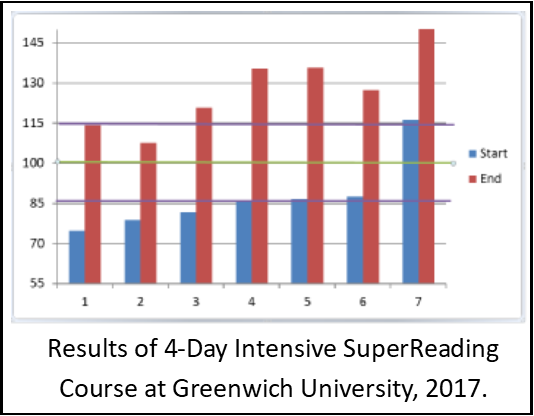
    In short, SuperReading builds on typical dyslexic strengths: holistic and visual thinking. It avoids the humiliation of correcting perceived ‘deficits.’ It’s worth mentioning that the eye-hopping practice also happens to provide better synchronized control over saccades- the rapid movement of the eye between fixation points. Dyslexic readers become effective through activity rather than instruction. Everything about the program fosters the best of what works for dyslexics while not requiring anything that does not work for dyslexics (or for ADD and ADHD). Every test and measurement associated with reading skills verifies the validity of the SuperReading Program, and no assessment has ever measured a negative or neutral outcome. The outcome is that the dyslexic reader gains skill levels beyond those of non-dyslexic readers in a matter of weeks.

    Testimonials, university studies and purchase options can be viewed at www.superreading.com

    by Ron Cole

    SuperReading Course: Dyslexia is Done!

  • KAZ Type’s SEN/Dyslexia Typing Software receives recognition by judges at the BETT Educational Show, London

    KAZ Type’s SEN/Dyslexia Typing Software receives recognition by judges at the BETT Educational Show, London

    KAZ Type’s SEN/Dyslexia Typing Software

    KAZ Type Limited’s SEN/Dyslexia Typing Software (also known as their Neurodiverse Edition) was shortlisted as a BETT Awards 2019 Finalist for the Special Educational Needs Solutions Sector. The award aimed to reward products that make a distinct contribution to supporting learners with special educational needs.

    With regard to dyslexia, the judges were highly impressed with how the program and the skill of touch typing helped with the following challenges:

    Visual Disturbances

    KAZ’s unique preference screen helps address visual disturbances by offering the user a selection of preferences to choose from. Once chosen, their preferences are ‘saved’ and applied throughout the course – tailoring it to each individual for optimum visibility comfort.

    Cognitive Limitations

    KAZ’s multi-sensory ‘accelerated learning’ teaching method enables students to learn using more than one sense (sight, sound, and touch). With this method, information is more likely to be remembered and retained. Students can hone in on their most comfortable and preferred style of learning (visual, auditory, or tactile pathways). If the teaching method closely matches the student’s preferred way of learning, learning becomes more natural, making learning easier and in turn faster – ‘accelerated learning’.

    Difficulties with spelling

    With KAZ’s unique accelerated learning teaching method incorporating ‘muscle memory’, spelling and vocabulary are ingrained in memory, as spellings become a series of finger movements and patterns on a keyboard, dramatically reducing the likelihood of transposing and misspelling words. Additionally, the program uses only ‘real words’ and repetition of typing these words helps train students to recognize them by sight, saving the decoding process that often causes trouble when reading. Spell checkers also highlight mistakes and offer alternatives.

    Poor and messy handwriting – (this can lead to embarrassment, frustration, and anxiety).

    Teaching typing skills eliminates the need for neat handwriting, as touch typing automatizes the translation of thoughts and ideas into written language. Additionally, errors can be easily edited without messy crossings out, resulting in neat and presentable work – automatically boosting confidence and self-esteem.

    Slow work rate – (due to poor penmanship).

    Quick and accurate typing can reduce the amount of time spent on a piece of work, and often increases the amount of work produced. Additionally, when typing efficiently, without even thinking about it (subconsciously) –the individual’s ‘conscious’ mind can concentrate on the question at hand, concentrate on creative writing, but most importantly, type quickly enough to finish their paper.

    Poor Working Memory

    The KAZ course is presented in a structured and light-hearted manner and has been designed NOT to overload the working memory. The program is broken down into short modules in order to hold focus and concentration and allows the student to work at their own pace. Additionally, they are allowed to return to previous modules at any time, should they wish to refresh. Working at a computer allows students to work in a non-linear fashion, where they can process their thoughts first and structure them later.

    KAZ was thrilled to be shortlisted as a finalist, as the recognition of the product from such a recognized organization within the education sector and the publicity has greatly helped with the awareness of the product, which is now helping the masses, who continually send them testimonials on how their software has helped them.

    ‘Thank You UK, for caring and investing in tools for Dyslexia. You have helped me make a breakthrough!’ K.Hamerski – US

    ‘Thanks for letting me trial KAZ, which I found surprisingly easy, and I am touch typing this email!  I need to speed up a lot, but only practice will do that!’ Kate Ireland – Learning Support – City of London School

    ‘Honestly, your method is like magic. I sent your website to other friends with dyslexic kids and another adult friend who never learned to touch type. Thank you so much for your method. I feel so lucky to have discovered KAZ. I love typing now.’ Rachel Rosenthal – US

    ‘We loved the ability to customize your screen display to ensure you can read comfortably, and the typing and demo areas on the screen are clear and easy to use.’ The School Run magazine Review

    https://kaz-type.com/dyslexia-edition.aspx

  • Dyslexia, Bilingualism, and Learning a Second Language by Francois Grosjean, Ph.D.

    Dyslexia, Bilingualism, and Learning a Second Language by Francois Grosjean, Ph.D.

    Dyslexia in bilinguals and second language learners.

    Interview conducted by François Grosjean for his Psychology Today blog “Life as a Bilingual”: https://www.psychologytoday.com/us/blog/life-bilingual

    The National Institute of Neurological Disorders and Stroke (NINDS) defines dyslexia as a brain-based type of learning disability that specifically impairs a person’s ability to read (see here). The British National Health Service (NHS) gives a fuller definition: it is a common learning difficulty that can cause problems with reading, writing, and spelling. The NHS also lists a number of problems that people with dyslexia have: they read and write very slowly, confuse the letters of words, put letters the wrong way round, have poor or inconsistent spelling, have difficulty with information that is written down, etc. (see here).

    Dyslexia is the most common learning disability and has been the object of much research published in books, chapters, and articles. Psychology Today has also reported on this work through its bloggers, such as Dr. J. Richard Gentry (see here for an example). Unfortunately, we know much less about dyslexia in bilinguals, in second language learners, or in students schooled in a second language. The latter can be in immersion or bilingual school programs, or can come from minority language groups being educated in the majority language. Dr. Fred Genesee, Professor Emeritus at McGill University, is one of the leading experts on this topic, and he has very kindly agreed to answer a few of our questions. We thank him wholeheartedly.

    Are there more dyslexics among bilinguals than among monolinguals?

    There is no evidence that dyslexia is more common among bilinguals than among monolinguals.

    Does being bilingual cause dyslexia or increase the probability of becoming dyslexic?

    Again, there is no evidence that bilingualism causes dyslexia. Dyslexia is linked to neurocognitive factors that are inherited. It is thought that children with dyslexia have an inherited impairment in processing the sounds of language. This means that children born with the genetic profile that is linked to dyslexia will have difficulty learning to read, whether they are bilingual or monolingual.

    When talking about dyslexia in children, shouldn’t one insist on something that you have put forward in your writings—the distinction between reading impairment and difficulty learning to read?

    Yes, this is crucial. Reading impairment is due to underlying neurocognitive factors mentioned in my previous answer, whereas difficulty learning to read is linked to other factors, such as the child’s learning environment, motivation, quality of instruction, or general health. For example, some children have difficulty learning to read in school because the quality of instruction they receive is not always optimal; because they have an undetected visual impairment, which makes it difficult to see and process written language; or because they are uninterested in learning to read because they find the reading materials in school boring. These children’s difficulties are not genetic in nature and are not true dyslexia.

    Concerning children who are in the process of learning a second language, can they be at greater risk for difficulty learning to read than children learning through their first language?

    Yes, this may be the case because they are still learning the language that is being used to teach reading in school, and some teachers may not have modified instruction to take this into account. Second language learners might also have greater difficulty than monolingual students learning to read because the cultural content of the reading material is unfamiliar, or because the teacher’s cultural expectations of how they should behave in class are foreign or even difficult for them.

    Unfortunately, tests that assess progress in learning to read can make it appear that bilingual children have an impairment because they do not consider the linguistic level of the children. But none of these factors are symptomatic of reading impairment or dyslexia per se.

    Going back to actual dyslexia, what are the difficulties faced by second language learners who are dyslexic?

    The core difficulties faced by second language learners who are dyslexic are the same as those of monolingual children with dyslexia. The core problem for these children is difficulty learning to decode written words accurately and fluently so that they can make sense of them and understand written text. If children’s word-reading skills are impaired, then their comprehension of written text will also be impaired because they cannot read the individual words accurately and fluently enough to create meaningful text.

    In addition, second language learners with dyslexia face the challenges encountered by all second language learners—limited vocabulary and grammatical competence and lack of familiarity with the cultural or social context of the text. In this respect, their challenges are different from monolingual children.

    Can the effects of dyslexia in bilinguals be stronger in one language than in the other?

    Dyslexia in bilinguals is evident in both languages. This is the case because the impairment that underlies dyslexia is part of the learner’s genetic profile and, thus, its effects will influence the child’s ability to learn to read in any language. Of course, since many bilinguals are more proficient in one language than the other, the magnitude of their impairment will be more evident in their weaker language.

    A bilingual child who has a reading problem in only one of his/her languages does not have dyslexia. This child has difficulty learning to read in one of his/her languages that is due to other factors, as we discussed earlier.

    It is often recommended that the parents of children who are thought to be dyslexic stop using the home language on the assumption that this will make it easier for their child to overcome their dyslexia. What is your opinion on this?

    There is no evidence to support this assumption. If the child is from a minority language community where the language is important for communication with parents, extended family members, or others in the community, parents should continue to use the home language. There are many reasons for this. First, proficiency in the home language is important if the child is to become an engaged and well-adjusted member of his family and community. In addition, parents of minority language children are often more proficient in the home language and, thus, they are better able to assume their full parental responsibilities if they interact with their child in that language.

    What are the other reasons?

    To continue reading, please access the original post here.

    Article originally posted on Mar 01, 2019 in https://www.psychologytoday.com/us/blog/life-bilingual/201903/dyslexia-bilingualism-and-learning-second-language

    by Francois Grosjean
    Université de Neuchâtel
    Suisse/Switzerland
    [email protected]
    Website: www.francoisgrosjean.ch
    Blog: http://www.psychologytoday.com/blog/life-bilingual

    François Grosjean, Ph.D., is Emeritus Professor of psycholinguistics, Neuchâtel University, Switzerland. His domains of interest are the perception, comprehension and production of language, be it speech or sign language, in monolinguals and bilinguals. He also has interests in biculturalism, applied linguistics, aphasia, sign language, and natural language processing. He is better known for his work on bilingualism in which he has investigated the holistic view of bilingualism, language mode, the complementarity principle, the processing of code-switching and borrowing, as well as the bilingualism of the Deaf.

    He is the author of numerous articles and of seven books on bilingualism: Life with Two Languages (Harvard University Press, 1982), Studying Bilinguals (Oxford University Press, 2008), Bilingual: Life and Reality (Harvard University Press, 2010), The Psycholinguistics of Bilingualism (with Ping Li; Wiley-Blackwell, 2013), Parler plusieurs langues: le monde des bilingues (Albin Michel, 2015), The Listening Bilingual: Speech Perception, Comprehension, and Bilingualism (with Krista Byers-Heinlein; Wiley-Blackwell, 2018) and A Journey in Languages and Cultures: The Life of a Bicultural Bilingual (Oxford University Press, 2019).