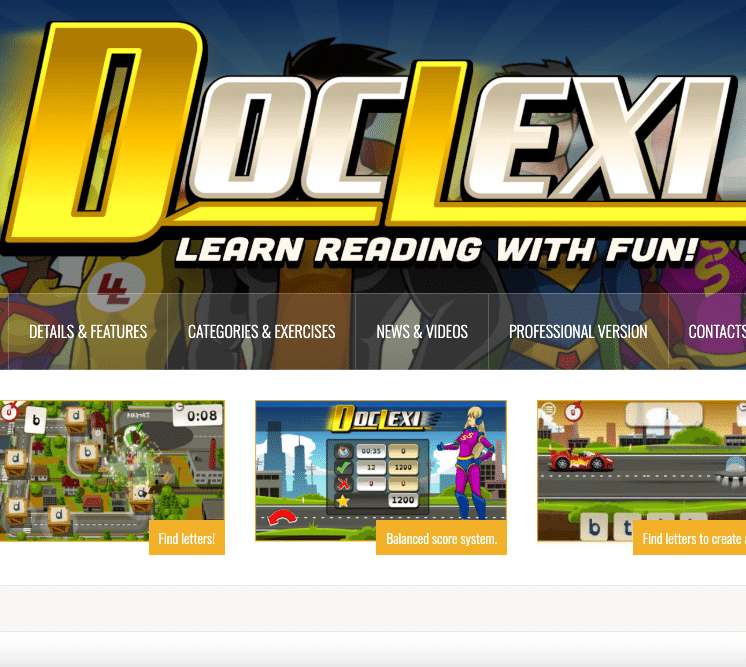

All new comprehensive app to improve children’s reading and spelling skills, based on proven therapeutic concepts
DocLexi™ has been developed with the objective of helping children learn how to read, spell, and write with fun. It focuses on helping struggling readers and those with early signs of dyslexia. DocLexi™ has been built based on proven therapeutic concepts and delivers a comprehensive software to improve children’s spelling, reading, and writing skills. It was developed by dyslexia specialists based on their extensive experience and continuously tested with children during development. The games and activities are currently aimed at 5 to 7 year olds (up to grade 2 reading/writing skills). There is a consumer version available for children and their parents, as well as a professional version for specialists, therapists, and teachers. The professional version provides for a seamless integration with a therapist by allowing them to customize the app to meets the child’s needs and track progress by logging into the administration tool in their browser.Lori Johnston (M.A., CCC-SLP, Licensed Speech Language Pathologist), who developed the concept for DocLexi™, says: ”My 25+ years of experience in working with children who have reading and writing difficulties has enabled me to help create an app called DocLexi™. It has always been my dream to provide children with a tool that makes it easier and more fun for them to overcome their learning difficulties. DocLexi™ is the result of that dream and I am excited to see it come to life.”The program utilizes a multi-sensory approach by incorporating the following skills: visual scanning and tracking, visual spatial, recall, sequencing, phonological processing, and phonics (encoding and decoding).The exercises are embedded into the exciting DocLexi™ story. The children help the heroes achieve a happy ending by solving the individual learning tasks.The DocLexi™ team developed a machine that helped children learn to read, spell, & write. The Outer Space Mixer Monsters stole the machine, broke it apart and hid the pieces all over the world. The DocLexi™ Team is traveling and completing tasks to find the parts to the machine. On all their missions, the children are accompanied by DocLexi™ and his friends. In each game, the children can earn coins to customize their own avatar friend, give him a name, and change his looks and outfits. It’s seriously fun!DocLexi™ is available in English and German at launch.DocLexi™ covers a broad array of skills to help children learn reading and writing:
- • Sequencing tasks (letters and numbers)
- • Identifying letters and numbers
- • Syllables (number of syllables in a word)
- • Blending – find words (by sounds or picture)
- • Building words (unscrambling words using phonics patterns)
- • Reading order (tracking left to right, top to bottom)
For a sneak preview check out this video and visit https://doclexi.com/ for more information.
Author: American Dyslexia Association
-

DocLexi™ – Learn Reading with Fun!
-

Can Rhyming Help Children Learn to Read Better? by Robert Z Hicks
Robert Z Hicks, known as “Mr. Bob” is an award-winning author and publisher of children’s rhyming picture books.
Coming from a career of teaching college, how did you get started writing children’s books? Had you always dreamed of someday writing children’s books?
No, it never occurred to me to write children’s books. I thought I was retired after teaching speech communication for 24 years at the University of Hawaii. But, after watching my wife Betty chase a green tree toad around the living room trying to capture it under a paper cup, I started reminiscing about critters I enjoyed as a child growing up on my grandfather’s farm in Michigan in the 40’s. I felt inspired to write a rhyming poem based on my memories.
A friend encouraged me to write more stories, and there followed a flood of inspiration of rhyming stories triggered by memories of my childhood experiences.
How many stories did you write?
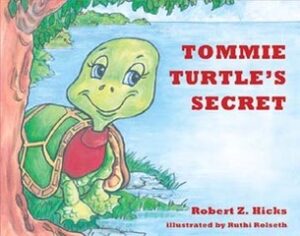
About 40. We took manuscripts of Tommie Turtle’s Secret, Mouse in the Manger, and several other stories to the Florida Christian Writers’ Conference in 2005 to find out what writing and publishing books entailed. Surprised and encouraged that the stories won Best Submission for Children’s Writing, we decided to publish my first book, “Tommie Turtle’s Secret”.
What makes your books different from other children’s books out there?
The stories are written in rhyme, and each stanza is accompanied by an illustration that helps the child visualize the story and what the words are saying.
As a teacher, I add value to my books by including a study guide with questions to test comprehension, and comments to highlight things to be learned.
I discovered research that early learning of rhymes increases phonemic awareness and improves the ability to read. Reading nursery rhymes and rhyming stories to babies and young children helps establish the ear-brain connection for discriminating sound units.
I asked Crystal Bowman, my mentor, friend, mother, and successful children’s author, what she thought of rhyme, which she uses in her books.
Crystal Bowman’s perspective on rhythm, rhyme, and reading:
“I know that babies are born with a strong sense of rhythm. They respond to rocking, repetition, and music. They naturally clap their hands and move to music and rhythm.
Text written with repetition and rhyme is a help to a struggling reader because the repetition helps them learn new words, and the rhyme helps them with pronunciation. (they know what the word needs to sound like).”
I was excited to learn that rhyming helps children read more effectively. It gave purpose and direction for the inspiration of the stories God gave me, and for my gift for rhyme. I wasn’t looking for another career, but I am delighted to have a new purpose and cause to pursue in my life.
What is Tommie Turtle’s secret?
Tommie’s secret is the story of the day he raced Speedy Hoppy Bunny to teach the bunny valuable lessons about friendship. A surprise twist at the end highlights moral values of forgiveness, and that being nice, not bragging and teasing, is the way to make friends.
Questions and commentary at the end of the book test comprehension, stimulate critical thinking, and provide a basis for discussion of the effect of bragging and teasing on relationships. Parents can also point out that by focusing on the abilities Tommie had, not on what he couldn’t do, Tommie could still enter the race.
“Tommie Turtle’s Secret,” won Best Children’s, and Book of the Year in the 2008 Florida Writer’s Royal Palm Awards competition.
How many books have you published?
I’ve published three picture books, “Tommie Turtle’s Secret,” “Mouse In the Manger,” and “Danny the Dragon,” and an ebook, “Once I Was A Kid, With the Wild Things On The Farm”.
Are you going to publish more children’s books?
Absolutely! My heart’s desire is to use my gift of rhyme to help children learn to read and to develop a love for reading!
“Tommie Turtle’s Secret” is available on Amazon.
To preview Robert’s books, visit his website at www.robertzhicks.com
-

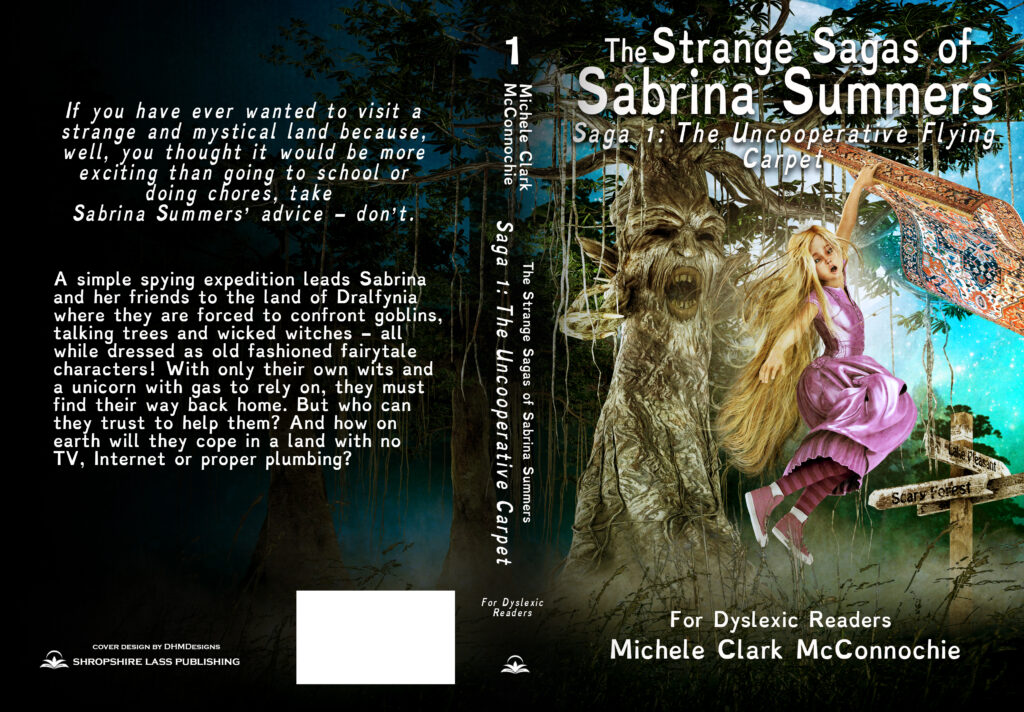
Children’s Book “The Uncooperative Flying Carpet” by Michele Clark McConnochie to Raise Funds for American Dyslexia Association

Michele Clark McConnochie is not dyslexic, nor does she have a loved one who is dyslexic. What she is is a teacher and children’s author who passionately believes that all young people are entitled to books with stories that they love and characters that they can identify with.
Growing up in Europe, she was a bookworm who dreamed of becoming a writer. After a career in education, she finally achieved that dream, and her first middle-grade children’s novel—The Uncooperative Flying Carpet—is scheduled for publication in August 2018 by Morgan James Publishing. However, Michele wanted to make her book available to all readers, including those who are dyslexic. She realized that there would need to be a version especially for dyslexic children. With the permission of Morgan James, Michele has arranged for The Uncooperative Flying Carpet to be available on Amazon.com in a special dyslexia-friendly version.
These versions are printed in dyslexie font, a special font created in the Netherlands, which is designed to make reading easier for the dyslexic brain. They also have cream, rather than glaring white paper, and a ragged right-hand margin. The feedback from readers has been really positive, with dyslexic children saying they found these versions much easier to read.

From the get-go, The Uncooperative Flying Carpet was written for avid and reluctant readers alike. Each chapter is short, suitable for those who find reading taxing, but most end with a cliff-hanger to encourage the child to read ‘one more chapter.’ There is plenty of humor and a fast pace to keep readers engaged; the feisty central character is Sabrina Summers, a leader who is a great role model for girls, and her brother Rory is a dyslexic boy who goes on to prove that the creative way of thinking that he credits to his dyslexic brain can save the day.
One dollar of every copy of The Uncooperative Flying Carpet for Dyslexic Readers sold will be donated by Michele to the American Dyslexia Association, Inc.
To buy a copy, visit: https://www.amazon.com/dp/0473317001?tag=legasthenie0c-20
-

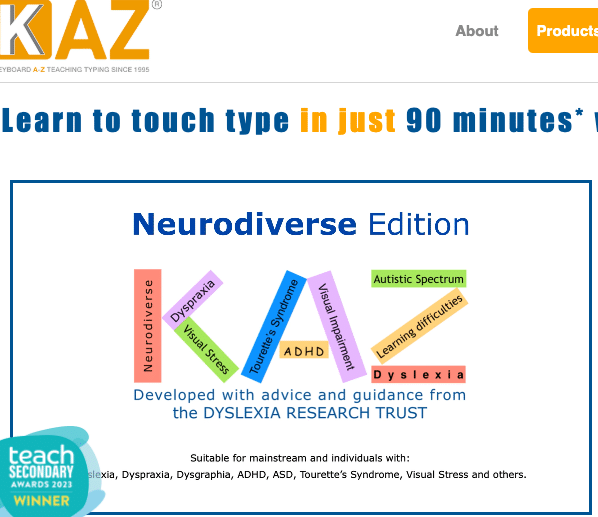
KAZ – SEN/Dyslexia Typing Software
If individuals with dyslexia are equipped with the correct tools, they stand a far greater chance of reaching their full potential.
Trials and feedback from special needs teachers across the world have proven that touch typing and using a computer are formidable and even life-changing tools that open doors for individuals with dyslexia, as they present a new and powerful medium for learning and communicating – introducing them to a new, accessible academic world they can cope with and even excel in!
The disturbances experienced by dyslexics make writing and producing a piece of work extremely challenging. The level of concentration and effort involved can be exhausting and can affect the overall structure and quality of a piece of work.
The skill of typing can help eliminate many of these challenges and frustrations, and early acquisition familiarizes users with the keyboard, allowing them to fully appreciate the tools available to them through typing and using a computer.
When typing:
- The need for neat handwriting is no longer a priority.
- Errors can be easily edited/corrected without messy crossings out, resulting in neat and presentable work.
- Spell checkers highlight mistakes and offer alternatives.
- Reassurance with the above automatically boosts confidence – promoting experimentation with vocabulary and spelling, and allows concentration to be focused on content.
- Quick and accurate typing can reduce the amount of time spent on a piece of work and often increases the amount of work produced.
- Physical dexterity is enhanced, helping with handwriting skills.
- Reading, spelling, and vocabulary are ingrained in memory – with ‘muscle memory’, spellings become a series of finger movements and patterns on a keyboard, reducing the likelihood of transposing or misspelling words.
- The working memory is not overloaded. Students can work at their own pace in a non-linear fashion, where they can process their thoughts first and structure them later.

KAZ’s NEW SEN/Dyslexia typing software was developed with advice and guidance from the British Dyslexia Research Trust.
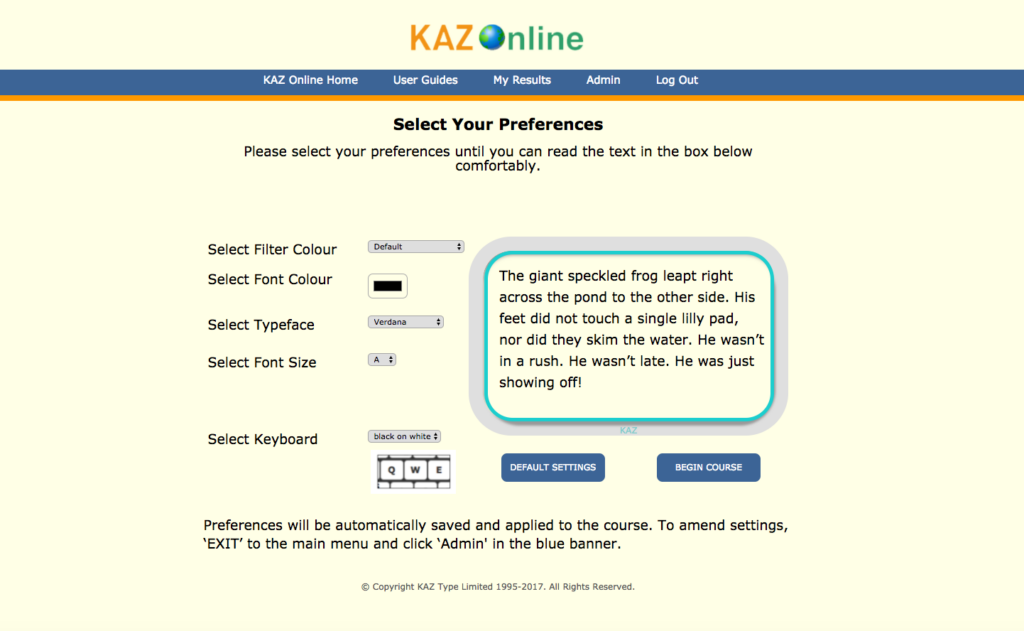
Incorporating a multi-sensory approach throughout and available with US and UK accents and keyboards, it teaches typing skills whilst minimizing disturbances related to visual stress, by means of a unique ‘Preference Screen’ – tailoring the course to individual’s needs.
Preferences include:-
- A choice of colored background/filter screens – for reducing white screen glare.
- A choice of 2 specific research-based background/filter colors – for steadying letter movement and blurring.
- A choice of dyslexic friendly typefaces – for ease of reading.
- A choice of font colour – for contrast from background screen colour.
- A choice of font size – for optimum visibility, comfort and to minimize fusing and crowding of letters.
- A choice of Keyboard for optimum visibility comfort.
Once the user has selected their preferences and can read the sample text comfortably, these options are applied throughout the course, ensuring the learning experience is a comfortable and enjoyable one. No other typing tutor works in this way.
The program uses a unique and proven ‘accelerated learning’ teaching method. Incorporating both ‘muscle memory’ and ‘brain balance’, it engages the major senses of sight, sound, and touch simultaneously, radically enhancing memory retention and recall, which is why it is so effective.
Using specific combinations and progressions of just 11 words in 5 scientifically structured phrases, the method trains the fingers on both hands to work symmetrically and simultaneously – a direct result of both hemispheres of the brain working at the same time – ‘brain balance’.
With repetition, reading, spelling, and vocabulary are ingrained to memory and with ‘muscle memory’ spellings become a series of finger movements and patterns on a keyboard, reducing the likelihood of transposing and misspelling words.
The Course is presented in a structured but light-hearted manner to make learning fun and enjoyable. It solely focuses on teaching typing and does not include gaming or try to teach typing with other subjects, as research has proven that this splits concentration and may overload the ‘working memory’.
The program offers both spoken and written instruction and includes ‘speaking keys’ covering the a-z keys. It is delivered in 5 short modules, in order to hold interest and concentration, and once again, avoid overloading the working memory. The student is allowed to progress at their own pace, acquiring the skill and gaining speed and accuracy without even realizing it. Additionally, a visual of the keyboard is always on the screen, encouraging the user to look up at the screen and not down at their fingers (so there is no need to cover hands or keyboard).
The combination of KAZ’s unique ‘Preference Screen’ and its proven accelerated learning teaching method delivers a simple, yet dynamic course.
The software is suitable for ages 6+ and is available in ‘Junior’, ‘Adult’ and ‘Corporate’, editions – Online, as a Download, or via SCORM for LMS.
Since launch, it has received wonderful reviews and is now promoted by the British Dyslexia Association and many SEN resellers across the world.
-

Are Authors Giving Up On 20% Of Their Readers? by Theodore Jerome Cohen, PhD
I DON’T KNOW of any industry that purposely would give up 20% of its potential markets without a fight. Yet, mistakes we make in the selection of typefaces, formats, and backgrounds can indeed have that effect.
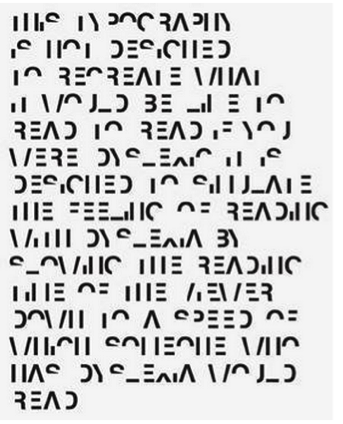
What I am speaking of is the fact that one in five students, or 15-20% of the population, has a language-based learning disability, with dyslexia being the most common of the language-based learning disabilities. Importantly, approximately the same percentage of males and females have dyslexia. For clarity, kids with dyslexia have trouble reading accurately and fluently. They may also have trouble with reading comprehension, spelling, and writing (see goo.gl/dAFaeP). Not being dyslexic myself, I sought insight into the problem from someone who was: UK graphic designer Daniel Britton. What he revealed was startling. What Britton did was to design a typeface intended to recreate for non-dyslexic readers the frustration and embarrassment people with dyslexia experience when they attempt to read newspapers, books, and other literature most people are able to read every day of their lives (http://danielbritton.info/dyslexia). An example of simple text rendered in this typeface is shown below:

Typeface Britton Not a pretty picture, is it?! Were you able to decipher it?
Take heart. The situation is not hopeless. It was Britton’s work that inspired me to move forward with the creation of a special edition of my YA novel, The Hypnotist, for readers with dyslexia. Here, I completely reformatted the text using the free, OpenDyslexicAlta typeface (http://opendyslexic.org/). Bottom heavy, with unique character shapes, the OpenDyslexicAlta typeface helped make it more difficult for the reader to confuse letters. I also eliminated the text’s right justification, which confuses dyslexics. The final text was sufficiently “dyslexic friendly” as to win the endorsement of the American Dyslexic Association and the Wisconsin Institute of Learning Disabilities/Dyslexia (WILDD).
Admittedly, changing the typeface for your paperback book to meet a subset of your potential readership is a time-consuming effort, and there is no guarantee the return on investment will prove worthwhile. (NB An Open Dyslexic typeface is available on all Kindle readers; check availability on other eReaders you are considering.) But there are other things you can be doing as you prepare your books, including your eBooks, for publication that will help those suffering from language-based learning disabilities.
- I’ve already mentioned dropping right-justification in your text. This will help the reader maintain line-to-line continuity.
- Use a sans serif typeface (e.g., Arial, Comic Sans, Verdana, and others). For my series of illustrated children’s storybooks in verse, I use Segoe Print.
- Increase the spacing of the letters and/or the lines over that normally used.
- If you are embedding text within your images/graphics, as many do in children’s storybooks today, especially for eReader presentation, be careful to ensure the text is not masked or “entangled” in the artwork.
- Be careful about changing letter colors or font sizes within the same sentence . . . it can be confusing.
Finally, as for students with dyslexia who use eReaders, have them experiment with typefaces as well as with letter and background colors (e.g., try using blue-colored text on a white background or even black text on a light blue/pink/yellow background). You and they may be pleasantly surprised with the results.
The items cited above are things we, as authors, can do to help students suffering from language-based learning disabilities. Best of all, many are easy to implement.
Theodore Jerome Cohen, PhD, authored and illustrated the children’s series Stories for the Early Years. He also writes YA novels under the pen name Alyssa Devine. You can visit him at www.theodore-cohen-novels.com or www.alyssadevinenovels.com. Member, SCBWI.
This article originally appeared in the Winter, 2018, edition of BULLETIN, the journal of the Society of Children’s Book Writers & Illustrators (SCBWI). Reprinted by permission of the author.
Available on Amazon: The Hypnotist: Special Edition for Readers With Dyslexia
More by Theodore Jerome Cohen on Amazon
The Antarctic Murders Trilogy, drawn from the diary he kept on the 16th Chilean Expedition to the Antarctic, 1961-62:
- Frozen in Time: Murder at the Bottom of the World (Book I)
- Unfinished Business: Pursuit of an Antarctic Killer (Book II)
- End Game: Irrational Acts, Tragic Consequences (Book III)
- Cold Blood: The Antarctic Murders Trilogy (all three in one volume)
Antarctic and South American short stories:
Other series:
-

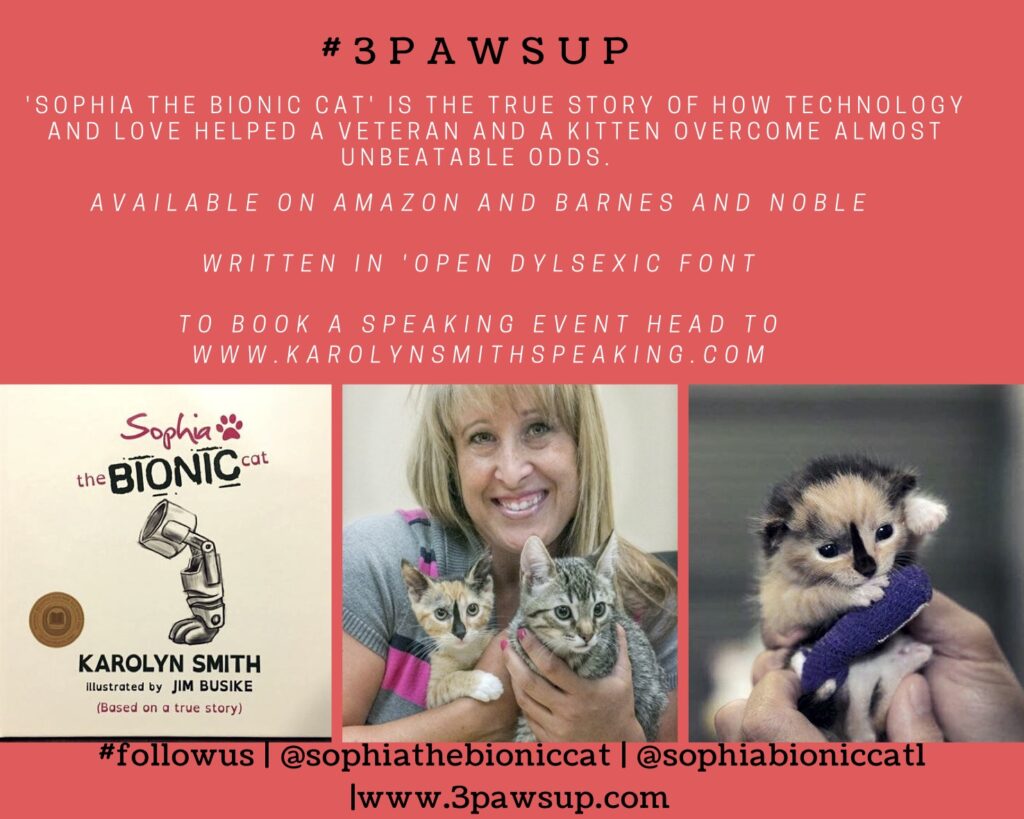
Sophia the Bionic Cat by Karolyn Smith
On behalf of 3 Paws Up, It is my honor to share our story with the readers of the American Dyslexia Association:
My name is Karolyn Smith, I am the 2014 Veterans of the Year for the 71st District of California, Author of ‘Sophia the Bionic Cat’, Public Speaker and 3D inventor.
I was born and raised in San Diego and am the daughter of a Vietnam Veteran and the granddaughter of two WWII Veterans. For the longest time as a youth, I found my calling as a velodrome cyclist and went to my first Olympic Trials at 19, but failed to make the team. A year later, I would be invited to move down to Australia, where I would be the only woman racing on behalf of the USA. That year abroad at such a young age gave me a lifetime of experience that would help me out later in life.
Shortly after the horrific events unfolded on September 11, 2001, I would hang up my bicycle and, at the tender age of 29, enlist in the United States Army as a Military Police Officer. As I found myself the oldest enlistee in basic training, I also found myself the most advanced, which allowed me to experience leadership responsibilities and advanced training that my peers didn’t experience. I would graduate top of my class and 18 weeks later be stationed in Hauau, Germany with the most historic Military Police unit in the Army, the 18th MP Brigade. Six months later, I would deploy.
In April of 2004, with the 127th Military Police Company (709th MP Bat, 18th MP Brigade), I deployed in Support of Operation Iraqi Freedom, and would break the first of many glass ceilings in my life; I was a crew serve machine gunner. After 13 roadside bombs, mortar attacks, and sniper attacks that took the life of my Team Leader….we suffered, I suffered. When we came home a year later…We had lost two.
I came home with injuries, PTS(d), spinal injuries, and a mild traumatic brain injury that were left untreated by the VA system because they were not used to a woman who had been in combat. After 11 years of suffering, my life was saved by a private non-profit called Operation MEND UCLA, which provided advanced medical care, including a bio-tech spinal fusion, which is creating my own genetic bone back into my spine. Once that searing pain was gone, a little kitten by the name of Sophia waddled, skipped, and hopped into my life…with her best friend in tow.
Sophia was an 8-day-old premature kitten found abandoned in a field here in San Diego. She was found with her umbilical cord wrapped around her paw and with no mother, food, or shelter found around her. Sophia was taken to the San Diego Humane Society, where an amputation was performed of her right rear paw, but because she was born premature and it was evident she never received the vital mother’s milk, the amputation was proving too much, and she was not recovering from the surgery. On that same day, a young male kitten was brought into the shelter as part of a litter. This young male was pulled out of his litter and placed with Sophia because the Nursery Advisory saw something in him that was unique and thought he might be able to help encourage little Sophia; he was then placed in her enclosure, and something magical happened.
Leonidas snuggled up to Sophia and never left her side for nearly a week. He could often be found cleaning her ear of her amputated side, but not her ear of her un-amputated side. Within a week, Sophia began to lift her head…and then she began to eat…then she began to crawl….Soon, they would both be put up for adoption as a bonded pair.
As I was recovering from my surgery, I saw a Facebook post from the San Diego Humane Society, and there were these two faces- two little fluffy, furry faces cuddling each other, and then I read the story and cried. I cried because Sophia’s story was my story; just replace the name, and I was drawn to her. I called the Humane Society and asked about adopting her, and they said I would need to adopt both, and I was hooked- who would break up a sweetheart couple anyway! When I walked into the Humane Society, they knew who I was by that time, as I had already been selected as the 2014 Veteran of the Year for the 71st District of California. They created the byline “Disabled Veteran adopts disabled Kitten,” and in partnership with the Humane Society and Fresh Step cat litter, we would create our first PSA commercial: https://www.youtube.com/watch?v=eY2F1vUju3c
As my twelve-year career in high-threat risk mitigation (in and out of the military) would teach me, I knew that Sophia’s good leg would, at some point, have to fail. While my degrees were not in engineering, they were in Homeland Security and Risk Mitigation. What I did know is that if you use what you do know, and not focus on what you don’t know, you can apply skills and help solve any issues that come your way. I started researching companies that created prosthetics for animals and was amazed that no one had created a prosthetic for cats. So in partnership with Fablab San Diego, I created the first ever 3D printed Prototype prosthetic for cats, and started with little Sophia! The first one in history!
Every time I went to the lab, there would be kids asking about the story, which gave me the idea of writing a children’s book, as I don’t have kids of my own; my injuries prevented that gift for me. So I created “Sophia the Bionic Cat” https://www.amazon.com/dp/1684193451?tag=legasthenie0c-20 which is now also available on Barnes and Noble (online and in stores!). This book is based on the true story of how this journey of mine, Sophia, and Leonidas unfolded in a way that we hope inspires children, but we took one more step. We found a person who created the “open-dyslexic” font, and our book, to this point, is the only true story children’s book that is written in this font. I chose this method of font because when I get tired, I noticed that when I am reading, my brain injury can often act like it’s dyslexic, which can be a result of a traumatic brain injury, and that is what I deal with. I wanted my book to show a range of topics, but in a way that lends power to the topic instead of powerless feelings about the topic. So, while reading the book, if the reader has dyslexia, they will read the book the way I wrote it; if they don’t, they won’t notice anything other than a true story about how technology and love help overcome.

From our book, we created 3 Paws Up, an approved 501(c)3 here in San Diego that will have ‘Ambassadors’ hand deliver our book (and other inspirational true stories that we help other Veterans create) to children in critical care hospitals, nationwide.
I’m writing the second book in Sophia’s series as we have just partnered with the Colorado School of Mines, the number 2 school of engineering in the US as we continue to enhance Sophia’s prototype so other animals around the nation can also have a better life through what we discover. I spend my time now as a public speaker telling my story, and I am honored to be able to stand on stages around the nation and share my life, it’s a way for me to heal and a way to open the minds of those who would never consider using the ‘open-dyslexic’ font in their projects, but now we get to talk not just about me, but about all of you, and I’m honored to be able to help do that. I can’t begin to express my truest thanks to the American Dyslexia Association for accepting our project, ‘Sophia the Bionic Cat’ as worthy of the ADA’s seal of approval. It’s through innovative projects and collaborative partnerships that we can create dialogue that can bring the best solutions.
-

Dyslexia, My Gift by Nathan Tabor
I wrote this column to encourage others with dyslexia. The layout is simple. The paragraphs without parentheses are my original words. The paragraphs with parentheses are my editor’s corrections.
If you aren’t a good writer hire an editor. You can get a column like this edited for $5-25 dollars. How? Google “hire an editor” and find a solution that fits your needs.
Go try! Go do! Do NOT let anything hold you back.
Dyslexia, My Gift
Growing up I didn’t know I had dyslexia. I couldn’t read until I was in the third grade. I’ve struggled my entire life to comprehend what I’m reading, to spell words properly, to understand the meanings of words and enunciate them. Having to go back and read something three, four, five or more times is frustrating. Especially when I still don’t understand it. Now, if I hear something I don’t have the same struggles.
(For some kids, school always came easy. Reading, and even writing, seemed to be second nature to them. But in my case, school was a constant struggle. I couldn’t read until I was in third grade. I struggled to comprehend what I read, to properly spell words, to understand the meanings of words, and to enunciate them. Reading something three, four, five or more times was frustrating—especially when I still didn’t understand it. I dreaded tests. In fact, I hated them. My palms would sweat and my stomach hurt. To this day, I still hate the thought of taking a test.)
Oh, how I hated tests. My palms would get sweating and my stomach would hurt. To this day I still hate the thought of taking a test. Most of my teachers in school and professors in college and grad school assumed I wasn’t serious. I’ve always used humor to cover up my inabilities.
(What I didn’t know all those years was that I had dyslexia. Most of my school teachers and college and grad school professors assumed I wasn’t a serious student because I always used humor to cover up my inabilities.)
Focusing on a task has always been difficult. From school projects to work projects. I will be deep in thought working on a proje …. “Squirrel, did you see that squirrel run by! That was amazing! It had a bushy tail and was holding an acorn in its mouth” … what was I doing? It’s annoying, frustrating but I’m learning to manage it.
(Focusing on any task has always been difficult for me… from school projects to work projects. I will be deep in thought working on a proje…. “Squirrel! did you see that squirrel run by? That was amazing! It had a bushy tail and was holding an acorn in its mouth!” …What was I doing?)
In my mind, I know the difference between edition and addition. It’s simple. But at times when I write something out I will be thinking edition and write addition but my mind doesn’t throw a red flag. Sometimes I can read over it numerous times and never catch it.
(My dyslexia has been both annoying and frustrating, but I’m learning to manage it. In my mind, I know the difference between edition and addition. It’s simple. But sometimes when I write, I will be thinking edition and write addition instead. And my mind doesn’t throw a red flag. Sometimes I can read over it numerous times and never catch it.)
The embarrassment of being in a meeting and having to write something down. The immediate thought is “oh, I hope they don’t use a word I can’t spell!” Until a few years ago I would cover it up or use another word. Now I announce up front that I can’t spell very well and then make a joke about growing up in the rural south.
(It’s embarrassing to be in a meeting and have to write something simple on a piece of paper. Sometimes my immediate thought is, “I hope they don’t use a word I can’t spell!” Until a few years ago, I would cover up my inability to spell or simply use another word to substitute for the one I couldn’t spell. Now, I have learned to let go. I announce upfront that I can’t spell very well, then make a joke about growing up in the rural south.)
My handwriting looks like a chicken did a rain dance. Until recently I just thought I had poor handwriting until I realized I do it on purpose so you can’t tell if I’ve misspelled a word. There, their, there is just plain ignorant! Whoever came up with words like this should be taken out and beaten. I often misspeak, misuse or mispronounce words and don’t even realize it. It is or can be quite embarrassing when it’s brought to my attention.
(My handwriting looks like a chicken did a rain dance. And until recently, I just thought I had poor handwriting. When in fact, I discovered that I have always written illegibly on purpose so no one can tell if I’ve misspelled a word. I often misspeak or misuse or mispronounce words without realizing it. It’s often quite embarrassing when it’s brought to my attention. And for the record, from a dyslexia sufferer’s point of view, the words there, their, and they’re are just plain ignorant! Whoever invented words like these should be beaten.)
Now, problem solving is another thing. Give me a mind game, puzzle or challenge and my mind works in odd ways. I can walk into a room and immediately notice if a corner is lower than the other corner. It can be a 40-foot wall and I can tell if it’s a half inch off. At times, this is an amazing trait to have but most of the times it’s annoying. Pictures that hang an eighth of an inch off or anything that should be symmetrical and isn’t.
(Now, problem solving is another thing. Give me a mind game, a puzzle or a challenge, and my mind works in odd ways. I can walk into a room and immediately notice if one corner is lower than the other corner. It can be a 40-foot wall and I can still tell if the floor is a half inch off. I notice pictures that hang an eighth of an inch off level. And I notice anything that isn’t symmetrical when it should be. At times, this can be an amazing trait to have. But most of the time, it’s annoying.)
Numbers and math come easy to me. I remember telephone numbers that I haven’t dialed in 20 years. Invoice amounts from years ago I can recall with exact precision. If you are ever around me watch for my fingers to tap together or on my leg. Repeating the pattern. Everything must be in even numbers and I don’t even realize I’m doing it.
(Numbers and math come easy to me. I remember telephone numbers that I haven’t dialed in 20 years. I can recall invoice amounts from years ago with precision. If you are ever around me, watch for my fingers tapping together or on my leg, repeating a pattern. Everything must occur in even numbers—and I don’t even realize I’m doing it.)
I remember faces but have a hard time recalling names. I have a horrible memory of things in the past but am good at thinking outside the box. I enjoy public speaking and communicating with people verbally. I’ve completed two books, written hundreds of columns and am working on my third book. Thankfully there are amazing editors in the world! I can’t tell you the names of roads I’ve driven on for the past 30 years but have an amazing sense of direction of recognizing land marks.
(I can remember faces, but have a hard time recalling names. I have a horrible memory, but I am good at thinking outside the box. I can’t tell you the names of roads I’ve driven on for the past 30 years, but I have an amazing sense of direction and recognition of landmarks. I enjoy public speaking and communicating with people verbally. I’ve completed two books and written hundreds of columns. And I am currently working on my third book. Thankfully there are amazing editors in the world!)
Dyslexia has been like a double-edged sword. What I’ve come to realize is I am who I am. I’ve started looking at my dyslexia more as a gift than a burden. I’ve started focusing on the things I’m good at and finding help with areas I struggle with.
(For me, dyslexia has been a double-edged sword—both a gift and an affliction. What I’ve come to realize is, I am who I am. I’ve now started looking at my dyslexia as more of a gift than a burden. I’ve began focusing on the things that I’m good at and finding help in the areas where I struggle.)
About Nathan TaborNathan has successfully founded and operated more than two dozen businesses since 1999, grossing over $150 million in sales. His experience spans the areas of commercial real estate acquisition and redevelopment, automobile sales, direct product sales, web-based marketing, and strategic partnership facilitation.He’s had amazing successes and epic failures, and learned more from his failures than his successes. After years of struggling to keep all of the balls in the air, he learned that there are laws and processes that, when implemented, will deliver the desired results. -

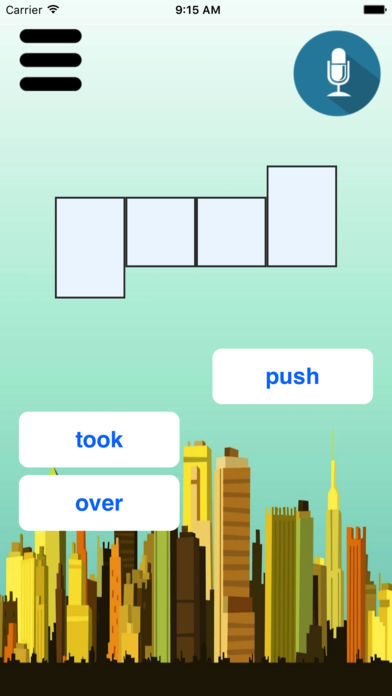
Free app for spelling: FCJ Spelling App
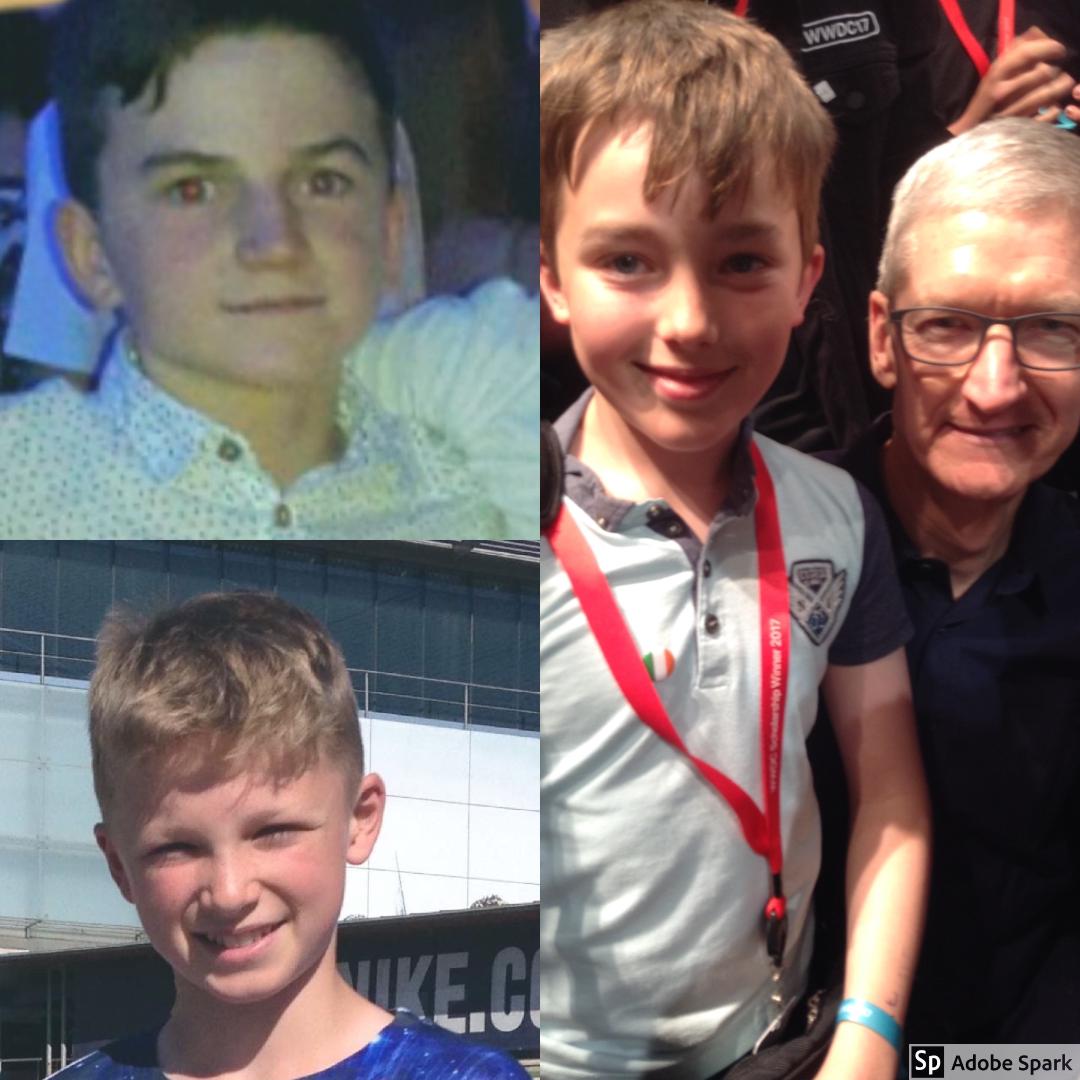
FCJ Spelling is an app designed to help people improve their spelling with a special emphasis on dyslexia. It contains 10 exercises, customizable words, the option of a color overlay, and a fun word card game.The app allows teachers to monitor their students’ results remotely. Once all the students in a class have been added, the teacher can view all their students’ results with the press of a single button. All results are encrypted and private. The app was developed by three 13-year-old Irish students: Billy Lee and Eamon Lalor, and was programmed by Niall Kehoe. The team would welcome any suggestions on how they might improve the app in later editions.
 The app is available on the iOS App Store free of charge at the link below, and the authors hope to release an Android version in the near future.Apple iTunes store:
 -

The daily sex (dyslexia) tips of a writer
Tobias Stone was diagnosed with Dyslexia when he was 18, having failed to get into university. Thanks to his diagnosis, he was able to complete a Bachelor’s Degree and a Master’s Degree at two of the world’s top universities. He is currently completing his PhD, after a total of 13 years at university on and off, and is now a professional writer. His teachers were wrong when they said he couldn’t go to university. His message to other dyslexics: Dyslexia does NOT mean you are stupid, just that you find some things harder than other people. But you can also do different things better than other people. Never give up!
Here is an excerpt of his motivational article on Medium.
The daily sex (dyslexia) tips of a writer
I once saw a t-shirt that said ‘Daily sex, can you help?’
Then ‘daily sex’ was crossed out in pen and corrected as ‘dyslexia.’
I liked that. I was 19 at the time.At 18, after failing to get into university, and having dragged myself, with great pain and anguish, through my exams at school, I found myself in an enforced year off. Ostensibly, I was re-sitting some of the exams I had failed so I could reapply to university, but that was about as pleasant as regurgitating the same meal, and re-eating it, day after day. In the middle of all this, I went to see an educational psychologist. The worry was that I was bright yet underachieving, and there were massive inconsistencies in my abilities. Even in the IQ test they gave me, there were inconsistencies. The IQ test is a series of little tests added together to reach your average score. In one test, I got the highest score the examiner had ever seen, and yet I was unable to answer two of the questions at all. Clearly, something was wrong when I was getting between 0% and 100% on different questions, rather than an average of similar scores.
So they gave me a dyslexia test, and it turned out I was ‘considerably’ dyslexic (around 7 on a scale of 1–10), and unfortunately for me, I was a bit more clever than I was dyslexic, so I had been able to compensate for the dyslexia fast enough that it had not become obvious to my teachers…
Continue reading: