For more than 25 years, the standardized AFS-Test has been the pedagogical assessment behind individualized dyslexia and dyscalculia training worldwide. Developed by Dr. Astrid Kopp-Duller, the test allows Certified Dyslexia Trainers to definitively diagnose and categorize dyslexia and dyscalculia.
AFS stands for Attention, Function, and Symptom, the three areas in which dyslexia and dyscalculia show. The test examines the attention span when working with symbols, eight sensory perception areas (visual recognition, visual memory, visual sequencing, auditory recognition, auditory memory, auditory sequencing, spatial orientation, and body perception), and the concrete error symptoms a child makes when reading, spelling, or calculating.
Unlike screenings that look through one small window, the AFS-Test takes the comprehensive route. The results are turned into a detailed graphical evaluation, an educational report, and an individualized training plan following the AFS-Method, so training starts exactly where the child needs support.
The AFS-Test is available exclusively to Certified Dyslexia Trainers accredited by the American Dyslexia Association (ADA). This way, every test is conducted and interpreted by a qualified professional, in person or remotely.
A long-term study conducted between 2001 and 2006 with 3,370 participants confirmed the effectiveness of the AFS-Method: 85 percent of the participants continuously improved their reading, spelling, and arithmetic skills over the two-year observation period.
“Parents do not need another label. They need a starting point,” says Dr. Livia R. Pailer-Duller, Director of the Dyslexia Research Center USA. “The AFS-Test shows precisely how a child perceives and processes information, and turns that knowledge into training that measurably works.”
The test is currently available in English, Spanish, French, German, Italian and a dozen other languages, so children can be tested in the language they learn in.
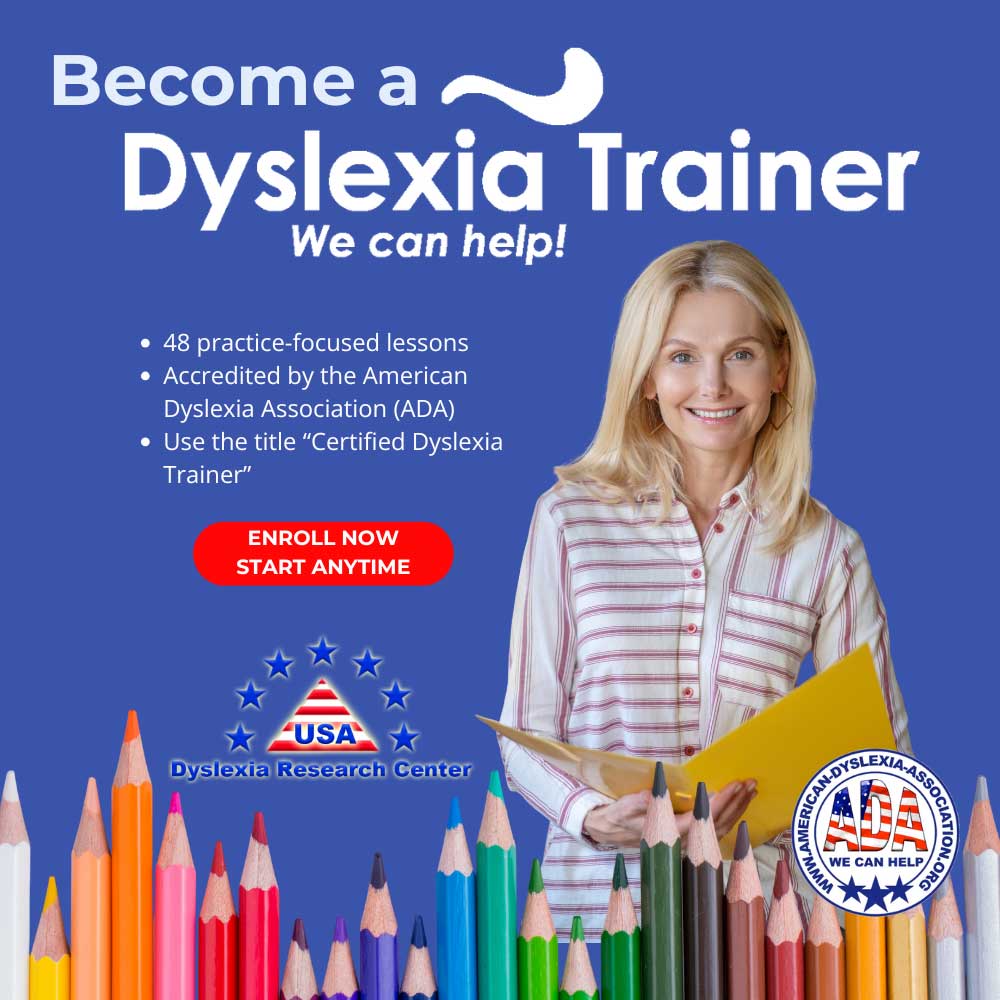
Educators who want to conduct the AFS-Test themselves can become Certified Dyslexia Trainers through the Dyslexia Trainer Certification Program: 48 self-paced lessons, offered since 1997, with more than 17,000 trainers certified in 64 countries. The program is accredited by the ADA and follows the training standards of the International Federation of Dyslexia and Dyscalculia Associations (IFDDA). Lesson 1 is free at dyslexiacertificate.com
Find a Certified Dyslexia Trainer and request an AFS-Test at dyslexiatest.com
Every Tuesday, we open up one lesson of the Dyslexia Trainer Certification Program here on the blog, all 48 of them, one week at a time. Whether you are a teacher, a parent, or an education professional, this series shows you exactly what certified dyslexia trainers learn, and how the program works from the inside.
This week: A Guide to Dyslexia, Dyscalculia, and Sensory Processing
Two children can show almost identical difficulties in reading or math, for completely different reasons. This lesson teaches the crucial distinctions: primary, biologically based dyslexia and dyscalculia, secondary manifestations that develop when challenges go unsupported, and acquired reading, spelling, or arithmetic differences. Only trainers who recognize these differences can choose the right kind of support, because each one calls for a different approach.
What this lesson is about
Dyslexia and dyscalculia are often misunderstood as uniform conditions, yet in reality they represent complex patterns of perception, attention, cognitive processing, and life circumstances. Trainers frequently encounter children whose learning difficulties look similar on the surface but arise from completely different causes. For this reason, it is essential to understand how primary, biologically based dyslexia differs from secondary dyslexia and how both differ from acquired reading and spelling differences (RSD) or arithmetic differences (AD). Only by recognizing these distinctions can trainers select the correct approach, whether targeted educational training, sensory perception support, or referral to additional specialists.
While primary dyslexia and primary dyscalculia originate from a genetic and sensory-perceptual predisposition, secondary manifestations develop when these challenges go unrecognized and unsupported. Children who repeatedly fail, experience constant frustration, or feel misunderstood often begin to display emotional or behavioral symptoms such as impulsivity, restlessness, aggression, withdrawal, or depression. These reactions are not “bad behavior”, they are natural responses to sustained stress and unmet needs. Trainers must be able to identify early signs of escalation to prevent secondary dyslexia from forming or worsening.
At the same time, many children demonstrate learning problems that are not rooted in genetic predisposition at all, but emerge from physical, psychological, or environmental events such as illness, trauma, divorce, prolonged school absence, or developmental delays. These acquired differences require a different kind of intervention. This lesson provides you with a comprehensive framework to distinguish among all these forms, recognize the role of various sensory perceptions, and understand how reading, writing, and arithmetic difficulties evolve. This foundational knowledge will allow you to make accurate educational assessments and plan individualized, effective support for each child.
What you will learn in Lesson 3
The difference between primary and secondary dyslexia and dyscalculia
How acquired reading, spelling, and arithmetic differences fit into the picture
Behavioral warning signs that point to escalation
Why the right classification changes the right kind of support
About the Dyslexia Trainer Certification Program
Since 1997, more than 17,000 dyslexia trainers in 64 countries have been certified. The certification gives you more than knowledge: all the tools you need to actually work with dyslexic children are included as well. Worksheets, training programs, assessment materials, everything ready to use in your practice. You get the whole package.
The program is accredited by the American Dyslexia Association (ADA) and follows the training standards of the International Federation of Dyslexia and Dyscalculia Associations (IFDDA).
Catch up and start free
Lesson 1 is free for everyone. Register in a minute and see the program from the inside: dyslexiacertificate.com
You can find all published lessons of this series under the tag Lesson Series.
Every Tuesday, we open up one lesson of the Dyslexia Trainer Certification Program here on the blog, all 48 of them, one week at a time. Whether you are a teacher, a parent, or an education professional, this series shows you exactly what certified dyslexia trainers learn, and how the program works from the inside.
This week: Exploring Dyslexia: Definition, Genetics, and the Gift Within
Dyslexia has been studied for more than a century, and for decades it was misunderstood. Today, research confirms that it is a hereditary difference in how the brain processes symbols, sounds, and sensory information, passed on through the genes. This lesson traces that story and introduces the mindset behind modern dyslexia training: instead of asking what is wrong with a child, we ask how this child perceives the world and how we can support exactly that.
What this lesson is about
Understanding dyslexia begins with understanding its story, a story shaped by more than a century of research, debate, misconceptions, breakthroughs, and evolving perspectives. From the first neurological case descriptions in the late 1800s to the complex genetic studies of today, dyslexia has traveled a long path through medicine, psychology, education, and neuroscience. Each field contributed pieces of knowledge, yet no single discipline could fully explain why intelligent children struggled so profoundly with reading, writing, or spelling. As a result, dyslexia was misinterpreted for decades, labeled as a disease, an attention problem, a social issue, or even a lack of intelligence. Only slowly did a clearer picture emerge.
In recent decades, scientific progress has finally confirmed what early researchers sensed intuitively: that dyslexia is a hereditary difference in how the brain processes symbols, sounds, and sensory information. This understanding marks a powerful shift away from the deficit-based view of the past and toward an educational, perceptual, and student-centered approach. Instead of asking “What is wrong with the child?” we ask, “How does this child perceive the world, and how can we support that?” This mindset is at the heart of modern dyslexia training.
For certified dyslexia trainers, this historical and scientific foundation matters deeply. You will meet parents who are confused by conflicting information, educators who still view dyslexia through outdated lenses, and children who blame themselves for challenges they never caused. By understanding where our knowledge comes from, what science now confirms, and why misconceptions still persist, you can guide families with clarity, confidence, and compassion. This lesson equips you with the grounding you need to speak about dyslexia not merely as a condition, but as a perceptual learning difference, one that requires understanding, respect, and targeted support.
What you will learn in Lesson 2
How more than a century of research shaped what we know about dyslexia
What genetics tells us: heredity, chromosomes, and information processing
Why the deficit-based view is outdated, and what replaces it
The strengths-based mindset behind modern dyslexia training
About the Dyslexia Trainer Certification Program
Since 1997, more than 17,000 dyslexia trainers in 64 countries have been certified. The certification gives you more than knowledge: all the tools you need to actually work with dyslexic children are included as well. Worksheets, training programs, assessment materials, everything ready to use in your practice. You get the whole package.
The program is accredited by the American Dyslexia Association (ADA) and follows the training standards of the International Federation of Dyslexia and Dyscalculia Associations (IFDDA).
Catch up and start free
Lesson 1 is free for everyone. Register in a minute and see the program from the inside: dyslexiacertificate.com
You can find all published lessons of this series under the tag Lesson Series.
Every Tuesday, we open up one lesson of the Dyslexia Trainer Certification Program here on the blog, all 48 of them, one week at a time. Whether you are a teacher, a parent, or an education professional, this series shows you exactly what certified dyslexia trainers learn, and how the program works from the inside.
This week, it all begins: Building Brighter Futures
Lesson 1 is the free introductory lesson of the program, and it sets the tone for everything that follows. It shows you what dyslexia is, why individualized support matters, and how certified dyslexia trainers work in real-world practice. You will not just learn about dyslexia. You will learn how to assess it with the standardized AFS-Test, interpret the results, and build individualized training plans that work.
What this lesson is about
Unlike many programs that focus only on theory, this certification combines scientific foundations with a strong emphasis on practical application. From the very first lesson, the focus is on what you will actually do as a trainer: diagnose dyslexia, interpret data, create individualized training plans, and facilitate dyslexia training with real children and adults.
The lesson also introduces the mindset that carries the entire program. Dyslexia is not a defect. It is a different way of perceiving and processing information, and people with dyslexia can learn to read, spell, write, and calculate when their individual profile is recognized and supported. That is precisely the job of a certified dyslexia trainer.
What you will learn in Lesson 1
What dyslexia is, and what it is not
Why individualized support beats one-size-fits-all approaches
How certified dyslexia trainers work in real-world practice
How assessment with the AFS-Test, training plans, and ready-to-use materials fit together
About the Dyslexia Trainer Certification Program
Since 1997, more than 17,000 dyslexia trainers in 64 countries have been certified. The certification gives you more than knowledge: all the tools you need to actually work with dyslexic children are included as well. Worksheets, training programs, assessment materials, everything ready to use in your practice. You get the whole package.
The program is accredited by the American Dyslexia Association (ADA) and follows the training standards of the International Federation of Dyslexia and Dyscalculia Associations (IFDDA).
Start with Lesson 1, free
Lesson 1 is free for everyone. Register in a minute and see the program from the inside: dyslexiacertificate.com
New here? You can find all published lessons of this series under the tag Lesson Series.
Have you heard of the Dyslexia Trainer Certification Program yet? If you work with children who are bright, curious, and full of ideas, yet struggle with reading and spelling, it might be exactly what you have been looking for.
Since 1997, more than 17,000 people in 64 countries have become certified Dyslexia Trainers. Teachers, tutors, therapists, and parents, all of them successfully working with dyslexic children and adults in their own communities today. And they all share one discovery that changed the way they teach:
Dyslexia is not a defect. It is a different way of processing information.
Officially, dyslexia is still often described in medical terms. The WHO’s ICD-10/11 even lists it as a “disease.” But spend one afternoon with a dyslexic child and you will see something very different: above-average creativity, surprising problem-solving, and a mind that makes connections others miss. Leonardo da Vinci and Albert Einstein did not succeed in spite of their dyslexia. They succeeded because they saw the world differently.
When you start from strengths instead of deficits, everything changes. Children stop feeling broken. They gain confidence, they stay motivated, and real progress follows. That is the foundation the entire certification is built on, and it is why our trainers get results.
Accredited by the American Dyslexia Association
This is what sets the program apart. The Dyslexia Trainer Certification Program is accredited by the American Dyslexia Association (ADA) and follows the training standards of the International Federation of Dyslexia and Dyscalculia Associations (IFDDA). When you earn this certification, you are not just collecting a certificate. You are joining a recognized, standards-based profession that families and schools can trust.
More than a philosophy: a complete toolkit
As a certified Dyslexia Trainer, you work with the standardized AFS-Test and a complete package that takes you all the way from assessment and diagnosis to individualized training, including ready-to-use materials for your sessions. It is an approach that has proven itself in practice for 30 years.
Your first lesson is free
No credit card needed. Register and get access to your own student portal, where you can check everything out for yourself: the first lesson, the materials, and how the program works. No risk and no obligation.
A recent public controversy in the United States has once again exposed how much misinformation still exists about dyslexia. California Governor Gavin Newsom has spoken openly about living with dyslexia. President Donald Trump then publicly mocked Newsom’s dyslexia and used it to question both his intelligence and his fitness for office. Newsom responded with a message aimed directly at children:
“To every kid with a learning disability: don’t let anyone, not even the President of the United States, bully you.”
— Governor Gavin Newsom
That exchange matters for one reason above all others: dyslexia is still widely misunderstood.
What dyslexia really is
Dyslexia is not a sign of low intelligence. It is a difference in how the brain processes written language. Leading institutions such as the Yale Center for Dyslexia & Creativity explain that dyslexia is an unexpected difficulty in reading that has no connection to overall intelligence. Yale also notes that many people with dyslexia are often highly creative thinkers with strong reasoning abilities.
Dyslexia is also far more common than many people realize. Yale states that it affects about 20 percent of the population, making it one of the most common learning differences related to reading.
This means that in classrooms, workplaces, and communities across the United States, millions of bright and capable children and adults are navigating reading and spelling challenges that have nothing to do with their potential.
The real harm of public misinformation
When a public figure treats dyslexia as proof that someone is “dumb,” that message does not stop with one politician. Children hear it. Teenagers hear it. Adults who struggled silently for years hear it too.
That is why this conversation is bigger than politics. It is about stigma. It is about whether children with dyslexia grow up believing they are broken, or whether they grow up understanding that they learn differently and can absolutely succeed with the right support.
Public ridicule does real damage. Accurate information does the opposite. It opens doors.
Dyslexia and success are not opposites
For decades, researchers and educators have observed that dyslexic individuals often develop strong compensatory skills such as persistence, problem solving, big-picture thinking, and creative approaches to challenges. A comparative study on entrepreneurship found a significantly higher incidence of dyslexia among entrepreneurs than among corporate managers and the general population.
That does not mean dyslexia is easy. It is not. Reading, spelling, and written expression can be frustrating and exhausting without the right instruction. But dyslexia does not define intelligence, and it does not set a ceiling on achievement.
Why early identification and the right instruction matter
The real issue is never whether a child with dyslexia is capable. The real issue is whether that child is identified early and taught with methods that match how they learn.
At the American Dyslexia Association, this is exactly why awareness matters. The sooner families and educators understand what dyslexia is, the sooner children can receive structured, targeted support instead of blame, shame, or the false label of being lazy or unintelligent.
How ADA and DRC USA support educators and families
The American Dyslexia Association and the Dyslexia Research Center USA are committed to helping educators, tutors, specialists, and homeschooling parents better understand dyslexia and support learners effectively.
The Dyslexia Trainer Certificate Program, accredited by the American Dyslexia Association, is a structured 48-lesson online certification designed to give educators practical tools they can apply immediately. According to the official program information, the training includes the AFS Method, access to the standardized AFS Dyslexia Test, and serves participants worldwide across 64 countries. The program builds on 30 years of experience and is delivered according to the training standards of theIFDDA, the International Federation of Dyslexia and Dyscalculia Associations.
This work is grounded in a simple idea: children and adults with dyslexia do not need ridicule. They need understanding, appropriate instruction, and educators who know what to do.
This is not about party politics
Let’s be clear. This is not about taking a partisan political position. It is about correcting a false and harmful belief.
Dyslexia is not stupidity. It is not a character flaw. It is not a reason to dismiss someone’s future, leadership, or potential.
When influential people spread misinformation about dyslexia, organizations like ADA have a responsibility to speak up clearly and confidently.
The message every child needs to hear
Every child with dyslexia deserves to know this:
You are not less intelligent. You are not less capable. You are not disqualified from success.
You may need to learn in a different way. You may need better tools, better teaching, and more informed support. But dyslexia does not define your worth, and it does not determine how far you can go.
Conclusion
The recent debate in the United States is a reminder that even in 2026, public understanding of dyslexia still has a long way to go. That is exactly why education, advocacy, and professional training remain so important.
At ADA, we believe the answer to misinformation is not silence. It is facts, support, and action.
Because every learner deserves the chance to succeed.
Beyond the Myths: 5 Surprising Truths About Dyslexia
When most people hear “dyslexia,” they picture a child confusing ‘b’ and ‘d’ or struggling to spell. While these can be signs, this common understanding barely scratches the surface of a much more complex reality. For years, myths and misconceptions have created frustration for parents, educators, and especially for individuals with dyslexia themselves.
As someone who has been training dyslexia specialists since 1996, I’ve seen firsthand how a deeper understanding can transform a child’s learning journey from struggle to empowerment. Let’s move beyond the myths and explore five truths that challenge common assumptions and offer a more accurate, helpful perspective.
1. It’s Not Always ADHD—It’s Often Cognitive Overload
It’s a common scenario: a child is restless, fidgets constantly, and can’t stay focused during reading or writing tasks. The immediate suspicion is often ADHD. However, for many dyslexic learners, these behaviors are not signs of a pervasive attention disorder—they’re a situational response to cognitive overload.
This is a key diagnostic differentiator known as situational inattentiveness. The behaviors are tied specifically to symbol-based tasks because decoding letters and numbers requires immense mental effort, leading to rapid exhaustion.
Here’s what’s important: many of these same children can focus deeply on tasks that don’t involve written symbols—building, drawing, or problem-solving. While ADHD involves challenges with regulating attention across all situations, situational inattentiveness from dyslexia is about running out of cognitive fuel during specific tasks.
The takeaway: Restlessness or inattentiveness during reading and writing isn’t automatically ADHD—it may reflect the stress and fatigue of struggling with dyslexia. Misdiagnosing this can lead to the wrong support, focusing on behavior management while failing to address the root literacy challenge.
2. Why “Just Try Harder” Is Terrible Advice
One of the most persistent and damaging myths is that dyslexia can be overcome with more effort. Well-meaning parents and teachers often believe that increased practice—more reading drills, more spelling lists—will solve the problem.
For a dyslexic child, this approach rarely works and often creates immense frustration. Dyslexia isn’t just a problem with reading and writing symptoms; it’s rooted in differing sensory perceptions and how the brain processes symbols. Piling on more drills without addressing these underlying functions is like asking someone to run faster without ever teaching them proper form.
Effective support must be comprehensive. The AFS Method is built on three essential pillars that must be addressed together:
A – Attention training: Building the capacity for sustained, flexible focus
F – Function training: Strengthening sensory perceptions (visual, auditory, spatial processing)
S – Symptom training: Practicing reading, writing, and arithmetic skills
Only when all three pillars are addressed can a child build the necessary pathways for efficient learning. This shifts the focus from blaming a child’s effort to providing the right kind of individualized support.
3. The Goal Is Flexible Attention, Not Intense Concentration
This may seem counter-intuitive, but forcing a dyslexic child to concentrate intensely on reading is often counterproductive. There’s a crucial difference between attention and concentration.
Attention is a flexible state of focus. It allows a learner to stay on task while remaining aware of their surroundings and receptive to guidance. An attentive child can focus on words on the page but still hear a teacher’s prompt or notice a helpful cue.
Concentration is a narrow, intense focus that excludes everything else. For a dyslexic learner, it can lead to rapid mental exhaustion, block out helpful feedback, and create unnecessary tension.
The goal of effective training is to strengthen flexible attention—a balanced mental state that supports learning without causing fatigue and stress. This shift in thinking is a game-changer, helping learners engage with difficult tasks in a more sustainable way.
4. It’s Not a Deficit—It’s a Different Operating System
For too long, dyslexia has been framed solely as a disability. While the challenges are real, this perspective overlooks the unique strengths that often accompany this different way of processing information.
Research and experience show that dyslexic individuals often exhibit above-average creativity, problem-solving skills, and big-picture thinking. Many of the world’s most successful innovators and leaders are dyslexic:
Hans Christian Andersen’s dyslexia likely contributed to the simple, accessible language that made his tales universally beloved
Leonardo da Vinci’s highly visual thinking allowed him to excel as both artist and engineer
By shifting the narrative from “disability” to “different ability,” we help dyslexic individuals unlock their full potential. This perspective profoundly boosts a child’s confidence and motivation, allowing them to develop their considerable talents while receiving targeted support for their challenges.
5. IQ Tests Can Be Deceptively Wrong
Traditional intelligence testing can be highly misleading for individuals with dyslexia. Many IQ subtests rely heavily on the very skills that are challenging for dyslexics: rapid visual processing, symbol manipulation, and visual memory.
Consequently, a bright dyslexic individual might score poorly and be misclassified as having “borderline intellectual ability.” The evaluator may conclude that academic struggles are due to low overall intelligence—tragically overlooking the real issue.
A sharp split between different cognitive abilities—such as strong verbal reasoning versus slower processing speed—is often a hallmark pattern of dyslexia, not an indicator of low intelligence. The danger of misdiagnosis is immense: it can lead to recommendations for basic life skills training instead of the targeted academic support they truly need.
Conclusion: Seeing the Whole Picture
Understanding dyslexia means looking beyond mixed-up letters and frustrating homework sessions. It means recognizing that:
The child who can’t sit still may be cognitively exhausted
“Trying harder” is often the wrong advice
Comprehensive support addressing attention, sensory functions, and symptoms is essential
Flexible attention beats forced concentration
Dyslexia comes with unique strengths worth celebrating
IQ scores should never limit a child’s potential
What potential could we unlock if we started seeing dyslexia not as a barrier to overcome, but as a different way of seeing the world?
Frequently Asked Questions
What are surprising symptoms of dyslexia?
Beyond the well-known reading and spelling difficulties, dyslexia can show up in unexpected ways:
Left-right confusion – Difficulty distinguishing left from right, even into adulthood
Time management struggles – Trouble estimating how long tasks will take or being chronically late
Difficulty following sequences – Challenges with steps, directions, or remembering the order of things
Word retrieval problems – Knowing a word but being unable to recall it in the moment (“it’s on the tip of my tongue”)
Trouble with phone numbers and dates – Mixing up or forgetting numerical sequences
Poor short-term memory – Forgetting instructions moments after hearing them
Difficulty with organization – Messy backpacks, lost homework, cluttered spaces
Mispronouncing words – Especially longer or unfamiliar words
Avoiding reading aloud – Even when the person is otherwise confident
These symptoms often go unrecognized because they don’t fit the stereotypical image of dyslexia.
What are the 4 D’s of dyslexia?
The “Four D’s” refer to four related learning differences that often overlap:
Dyslexia – Affects reading, writing, and spelling
Dyscalculia – Affects mathematical understanding and number sense
Dysgraphia – Affects handwriting, spelling, and putting thoughts on paper
Dyspraxia – Affects motor coordination and movement planning
Each presents unique challenges, but they share common roots in how the brain processes information. It’s not uncommon for someone to experience more than one of these conditions.
Is Bill Gates dyslexic?
There is no confirmed public statement from Bill Gates indicating that he has dyslexia. While many successful entrepreneurs and innovators are dyslexic, it’s important not to assume or misattribute this condition. What we do know is that Gates has spoken about the value of different thinking styles in innovation and technology.
Who else is dyslexic?
Many highly successful people have openly shared their dyslexia, proving that it’s no barrier to achievement:
Richard Branson – Founder of Virgin Group
Steven Spielberg – Award-winning filmmaker
Whoopi Goldberg – Actress and TV host
Keira Knightley – Actress
Orlando Bloom – Actor
Jamie Oliver – Celebrity chef
Tom Cruise – Actor
Jennifer Aniston – Actress
Muhammad Ali – Boxing legend
Albert Einstein – Physicist (widely believed, though not formally diagnosed)
Agatha Christie – Best-selling author
John Lennon – Musician
These individuals succeeded not despite their dyslexia, but often because of the unique strengths it gave them.
What should you NOT say to a dyslexic person?
Certain phrases, even when well-intentioned, can be hurtful or dismissive:
“Just try harder” – Dyslexia isn’t about effort; it’s about how the brain processes information
“You’re just lazy” – Dyslexic individuals often work twice as hard to achieve the same results
“You don’t look dyslexic” – Dyslexia has no physical appearance
“Everyone struggles with reading sometimes” – This minimizes a real neurological difference
“You’ll grow out of it” – Dyslexia is lifelong, though strategies can help manage it
“Why can’t you just remember?” – Memory challenges are part of dyslexia for many people
“Maybe you’re just not a reader” – With the right support, dyslexic individuals can enjoy reading
“Are you sure you’re not just making excuses?” – This undermines their genuine struggles
Instead, offer understanding, patience, and ask how you can help.
What are dyslexics best at?
Dyslexic individuals often excel in areas that leverage their unique brain wiring:
Creative thinking – Seeing possibilities others miss
Big-picture thinking – Understanding complex systems and connections
Visual-spatial skills – Excelling in design, architecture, engineering, and art
Storytelling – Communicating ideas in engaging, memorable ways
Entrepreneurship – An estimated 35% of entrepreneurs are dyslexic
Empathy – Having overcome challenges often creates deep understanding of others
Innovation – Thinking outside the box comes naturally
Verbal communication – Many dyslexics are excellent speakers and persuaders
Dyslexia often comes with remarkable gifts—the key is recognizing and nurturing them alongside targeted support for challenges.
Want to Learn More?
Are you a teacher, tutor, parent, or education professional who wants to make a real difference for dyslexic learners? Understanding dyslexia at a deeper level is the first step toward providing truly effective support.
Our comprehensive certification program teaches you the AFS Method and equips you with the knowledge and practical tools to help children with dyslexia thrive.
Whether you’re looking to expand your professional skills or simply want to better support a child in your life, education is the key to unlocking their potential.
The American Dyslexia Association (ADA) is pleased to announce the relaunch of the ADA-accredited Dyslexia Trainer Certification Program (www.dyslexiacertificate.com), an internationally recognized professional training for educators, specialists, and tutors who want to make a meaningful and immediate difference in the lives of learners with dyslexia.
This updated and expanded program reflects decades of research, practical experience, and global collaboration—bringing together the proven strengths of the AFS Method, the standardized AFS Dyslexia Test, and the pedagogical expertise of the Dyslexia Research Center USA (DRC) and its partners.
For educators passionate about supporting diverse learners, this program offers a powerful pathway to deepen skills, strengthen confidence, and create lasting impact in classrooms and communities.
Why ADA Accreditation Matters
Accreditation by the American Dyslexia Association signifies that a program meets rigorous standards in research-based content, practical applicability, and professional ethics.
The Dyslexia Trainer Certification Program by DRC USA is one of the few international dyslexia training programs to achieve ADA accreditation. This ensures that participants receive:
Instruction aligned with current scientific understanding of dyslexia
Practical tools that can be applied immediately in real educational settings
A consistent framework based on the cognitive foundations of reading, writing, and attention
A trusted and internationally recognized credential
A professional pathway that aligns with ADA’s mission to support individuals with dyslexia through evidence-based practice
ADA accreditation is not merely a seal—it is a commitment to quality and outcomes. Educators can be confident that the skills they learn will support learners effectively and ethically.
A Program Designed for Educators Who Want to Make a Difference
The updated Dyslexia Trainer Certification Program focuses on practical, hands-on training grounded in research. This is not theoretical learning—it is actionable, accessible education that empowers participants to begin helping learners immediately.
Key features include:
The Standardized AFS Dyslexia Test
Participants gain access to a widely used, research-supported screening instrument that helps identify dyslexia-related challenges with clarity and consistency.
The AFS Method
A structured, neurological approach to supporting foundational skills such as attention, visual perception, auditory processing, and spatial orientation—areas known to influence reading and writing success.
Immediate Practical Application
Each lesson includes methods and exercises educators can start using right away with learners of all ages.
Flexible Online Learning
Designed for busy educators, the program can be completed from anywhere, at your own pace, with ongoing support and guidance.
International Recognition
Graduates receive a certification that is respected and accepted worldwide through ADA partnerships.
Who Should Enroll?
The program is ideal for:
Classroom teachers
Special education professionals
Learning specialists
Tutors and educational therapists
Psychologists and school counselors
Homeschool educators
Anyone passionate about supporting individuals with dyslexia
If your goal is to understand dyslexia deeply and help learners thrive, this certification is a powerful next step.
Free Preview Lesson Now Available
To support transparency and help educators experience the program firsthand, the first lesson is available for free. This preview provides an authentic look into the teaching style, structure, and practical value of the certification.
Educators consistently report that Lesson 1 alone gives them insights they can begin using immediately.
Enrollment is now officially open, and we invite educators worldwide to secure their place in the newly relaunched Dyslexia Trainer Certification Program and join educators from 65 countries worldwide who have already completed the certification.
Demand for this ADA-accredited training is expected to be high, and early enrollment ensures immediate access to:
The introductory module
Program orientation
Bonus materials
The free preview lesson
Early community access
This is an excellent opportunity to advance your professional skills and join a global network of dyslexia-focused educators.
A Shared Mission: Helping Learners Thrive
At the American Dyslexia Association, our mission is clear:
To support individuals with dyslexia and related learning differences through understanding, research, and practical, effective education.
The relaunch of this certification program aligns strongly with that mission.
We are proud to endorse and accredit a program that equips educators with the tools they need—not only to teach, but to inspire, uplift, and create lasting change for learners who need it most.
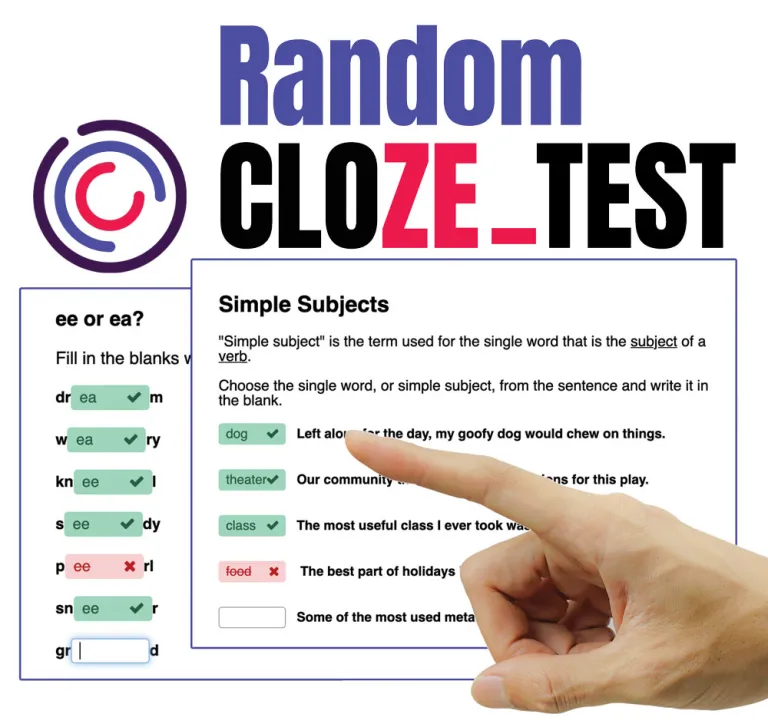
On Cloze-test.com we currently have 750 Cloze tests to solve.
As always – there are no ads and no tracking. Please feel free to use them for school or at home.
What is a cloze test?
A cloze test is a test in which one is asked to supply words that have been removed from a passage in order to measure one’s ability to comprehend text.
definition from Oxford
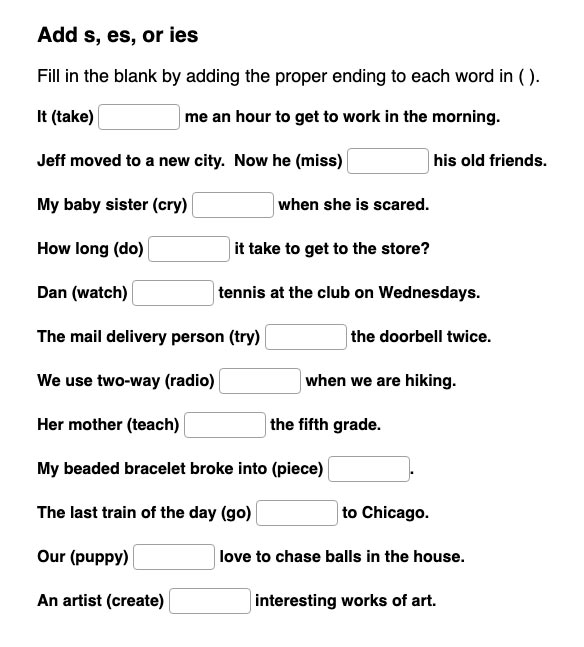
A cloze test is a way of testing comprehension by removing words or letters from a passage or sentence and then asking the reader/learner to supply the missing elements. For this reason, it is also sometimes referred to as a gap-fill exercise.
With cloze tests you can pursue different learning goals:
Cloze tests generally promote and improve reading and text comprehension.
With cloze tests you have to read carefully and recognize which word, which ending or which letter is missing.
Grammar and spelling are practiced in a fun and playful way with Cloze tests.
Cloze-test.com also improves your vocabulary.
The software approach chosen here gives immediate feedback.
The use is free of charge and free of advertising. Registration is not required.