Tag: worksheets

  • 1500 free worksheets

    1500 free worksheets

    The American Dyslexia Association offers more than 1,500 free worksheets on its website. They are built on the AFS method, the approach used worldwide in individualized dyslexia and dyscalculia training. Everything is free to download, and you may use it at school, at home, or in tutoring.
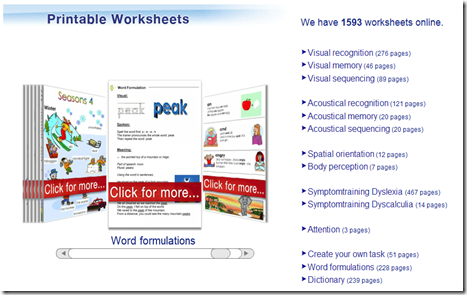
    Go straight to the worksheets

    Free printable dyslexia and dyscalculia worksheets from the American Dyslexia Association

    Why working on the mistakes is not enough

    When a child has dyslexia or dyscalculia, correcting the errors alone changes very little. The errors are the visible end of a longer chain. A child also has to be able to hold attention through a whole page, and the senses that carry reading, writing, and calculating have to be trained alongside the schoolwork itself. That is the reasoning behind the way these worksheets are organized.

    What the worksheets cover

    AFS stands for Attention, Function, and Symptom, and the collection follows those three areas.

    • Attention. Short, focused exercises that ask a child to stay with one task and notice detail. Find the shape, spot the difference, match the pair, complete the pattern.
    • Function. Training for the sensory perceptions that reading and arithmetic rest on: visual and spatial perception, visual and auditory sequencing, differentiation, and memory. This is the part most worksheet collections leave out entirely.
    • Symptom. The schoolwork itself. Letter recognition, reading, spelling patterns, number decomposition, counting, and the four basic operations.

    Who they are for

    Most sheets suit children in kindergarten through the elementary grades, roughly ages 5 to 11, and many work well with older children who need to rebuild a foundation without being handed material that looks babyish. Parents, classroom teachers, homeschooling families, tutors, and Certified Dyslexia Trainers all use them. No account and no sign-up is required.

    How to use them so they actually help

    1. Short and often beats long and rare. Ten focused minutes a day does more than an hour on Sunday.
    2. Take all three areas, not just the last one. A child who only ever practices spelling is practicing the symptom while the cause stays where it was.
    3. Stop while it is still going well. Ending on success is what makes a child willing to sit down again tomorrow.
    4. Watch how the child works, not only what the answer is. Where the eye jumps, where attention slips, and which errors repeat tell you more than a score.
    5. Print rather than fill in on screen where you can. Handling the paper, tracing, cutting, and coloring are part of the exercise.

    More free material on this blog

    The worksheet library is not the only free resource here. Our own printable freebies are published regularly and cover perception training, counting, tracing, and seasonal activities. For handwriting practice you can build your own sheets with the handwriting worksheet generator, and there is a matching tool for printable math worksheets if arithmetic is the harder subject at your kitchen table. The freebies overview page collects the lot.

    If you want to work this way professionally

    Worksheets support training, but they do not replace knowing which area a particular child needs. That is what the AFS-Test establishes and what trainers learn to read. If you work with children and want the full picture, the ADA-accredited certification for dyslexia trainers teaches the testing and the training together, and the first lesson is free to read.

    Access all 1,500 free worksheets

    More free material: our complete list of free dyslexia resources for parents and teachers covers worksheets, generators, daily exercises, a free math app, and a parents portal, plus how much daily practice a child needs.
  • Monster reading

    Monster reading

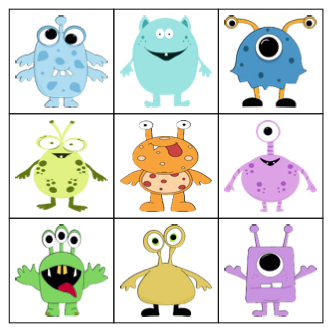
    Today’s freebie is monster reading puzzles. First, the children cut out the pictures. Then, they read the instructions and place the images in the correct place. This trains attention, visual and spatial perception, and accurate reading. Cutting and gluing the pictures is good for fine motor skills. An alternative is to read the instructions to the children. This trains careful listening.
    We like these reading puzzles a lot, because children practice different perceptions and accurate reading or listening. Also, the children have great fun and are happy when all the pictures are in the correct place.

    DOWNLOAD (3,8 MB)

    Check out our other freebies

  • Visual sequencing

    Visual sequencing

    Visual sequencing, perception, dyslexia, worksheets, parents, children

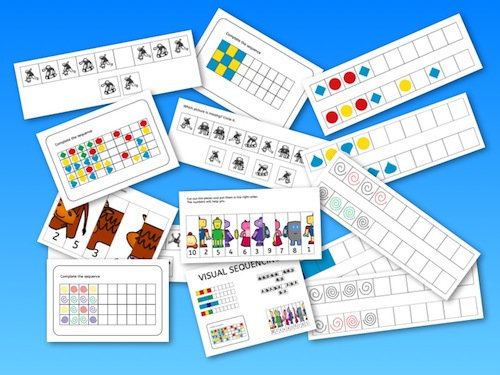
    Visual sequencing is the ability to organize visual impressions in a certain order. This is an important prerequisite for good writing, reading and arithmetic. Children who have difficulties with visual sequencing often exchange letters while writing or have difficulties with writing down numbers. Today we are offering a freebie containing various exercises to train visual sequencing.

    DOWNLOAD

    Check out our other freebies

  • Letters recognition

    Letters recognition

    Today’s freebie offers you lots and lots of worksheets to practice letters. Print out the worksheets, and if you feel like it, cut out the cards and laminate them. Children can practice all upper-case and lower-case letters. They have to recognize which letters are correct. Sometimes the letters are mirrored or standing upside down. These exercises will help your child to better recognize single letters, which helps them become a better reader.

    DOWNLOAD

    CHECK OUT OUR OTHER FREEBIES 


  • Find the alien

    Find the alien

    Today’s freebie contains 3 worksheets.  Children have to find a given shape. They can color or circle the shape. These exercises train attention and visual perception – important skills for good reading, writing, and calculating.

    DOWNLOAD

    CHECK OUT OUR FREEBIES

  • Robots – drawing and mirroring

    Robots – drawing and mirroring

    Robots, dyslexia, dyscalculia, parents, worksheet, perception, visual perception, spatial perception, attention

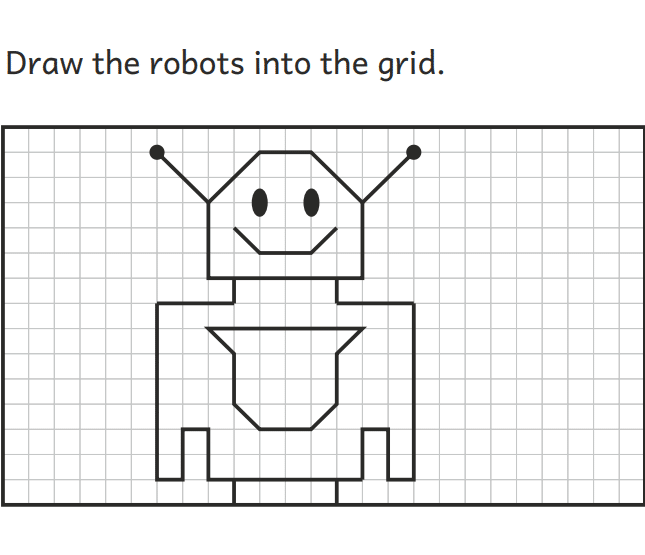
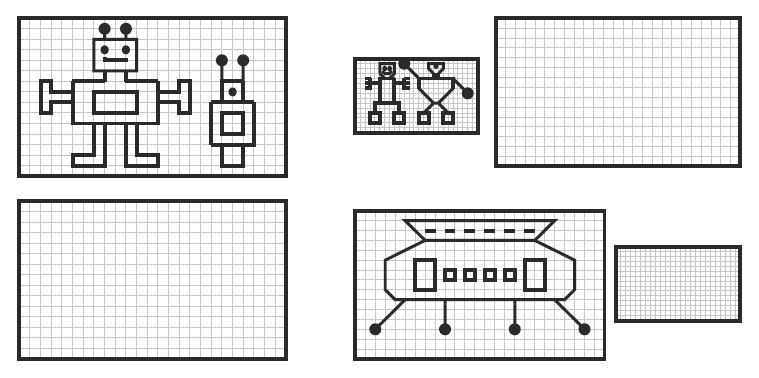
    Today’s freebie offers you various robots and a spacecraft. Children have to draw these into the grid, mirror them or make them smaller or bigger. Children are counting, comparing up and down and left and right. This trains attention, eye-hand-coordination and visual and spatial perception – important skills for reading, writing and calculating.

    DOWNLOAD

    Check out our other freebies

  • Tracing and pattern

    Tracing and pattern

    Today’s freebie contains tracing and pattern exercises. Children can either trace the shapes or they can trace the shapes and complete the pattern. Let them use different pens and colors. You can also laminate the exercises. Children can do the tracing with a dry-erase pen. This is a good alternative for children who have difficulties with tracing. Knowing that they can erase their tracing seems helpful for them. Tracing and pattern exercises train attention and visual and spatial perception – important skills for reading, writing, and calculating.

    DOWNLOAD

    CHECK OUT OUR OTHER FREEBIES

  • More picture chaos

    More picture chaos

    Monday’s freebie was quite a success on Pinterest, so we decided to offer some more picture chaos. This time, we used black-and-white graphics from Cre8tiveHands. Again, children have to order the mixed-up pictures. This trains attention and visual and spatial perception – important skills for reading, writing, and calculating.

    DOWNLOAD

    Check out our other freebies

  • Picture chaos

    Picture chaos

    Over at openclipart.org, we have seen a nice penguin that has been waiting for an appearance in our worksheets for a while. The penguin, with all its disguises, is perfect for today’s freebie Picture chaos. The pictures are mixed up, and children have to put the numbers in the correct order. The penguins are also added as a template for those who have great difficulty with this kind of exercise. You can use the templates as memory cards. These exercises train attention and visual and spatial perception – important skills for reading, writing, and calculating.

    Download

    Check out our other freebies