
Tag: individualized learning plans

  • Where and How Children Learn: My Experience with Discovering an Optimal Learning Experience

    Where and How Children Learn: My Experience with Discovering an Optimal Learning Experience

    Written by Annie Lacey

    Where: The Inner Universe of a Student With Divergent Learning 

    It was not too long ago, when my bright, creative third grader began to dread going to school, meeting each weekday morning with resistance, which at times was fierce.

    The human need to belong to a group is rooted in survival. School age children feel this instinct acutely – at home, on the playground, and of course, in the classroom. For many students with learning differences, the primary objective in a traditional classroom is not learning, but acting, so as not to appear unlike the others. And still, it is not uncommon for these students to be the bullseye for bullies. More frustratingly, efforts to help these students (special classes, tutors, adjusted seating, etc.) often serve only to further define the separateness and validate to the child that they are different

    I would know, I lived this through my daughter. I am the Director of Admissions for Oakland School, and my daughter, Hadley, is also a student here. I will never forget picking her up after her first day at Oakland School Summer Camp, watching her bounce into the car, gleaming, ‘Mom! These kids are just like me!’ 

    What I failed to fully appreciate until that moment was exactly how difficult her previous school experience had been for her.

    I was witnessing a child who had just set down the cumulative weight of years of punishing self-talk because she was the only one in her class who couldn’t keep up, had a tutor, and in her mind was un-like everyone else. At Oakland, Hadley discovered a place where learning did not equate to the emotional pain of embarrassment and struggle. Hadley was relieved.

    Margaret Shepherd, the founder of Oakland School, understood that learning in a traditional classroom is strained, if not near impossible, for a child who learns differently. She believed when a child feels truly safe in their environment, they can flourish. In the summer of 1950, Shepherd converted her historical family farm into Oakland School, a small co-ed day school and overnight summer camp program for elementary through middle school students. Set upon  a backdrop of rolling hills, forests, horses and other farm animals, Oakland began by first bringing children who didn’t learn like everyone else, together. 

    How: Implementing The Oakland Way 

    Oakland School is founded on a commitment to the individual learner, and a community that backs this mission. Small class sizes and one-to-one instruction are hallmarks of an Oakland School Education. 

    At Oakland School children become confident self-advocates, curious learners, and grow moral character. ‘Where every student thrives’ is not just an idea, it’s a promise we have been keeping for the better part of a century. 

    The Oakland Way is grounded in the belief that once phonics foundations are solid, confidence is established, and the learning process can accelerate. The program uses a synthesis of several pioneering approaches including: 

    Oakland School teachers are well versed in these techniques, and most have advanced degrees and specializations – and some, decades of experience working with children who learn differently.  One example is Oakland School’s horseback riding instructor, Sarah Bailey. For close to 30 years Sarah has been guiding Oakland students to respect, care for and ride a horse – helping these children to build confidence, set goals, focus, and work as a team. Believing children can – and will – attain success is at the core of an Oakland School education.

    As Director of Admissions, the best part of my job is giving prospective students and their families a tour of the grounds. Oakland School, once just an 18th century farmhouse with outbuildings set on 450 acres, is a welcoming environment in every sense. Class sizes are small with an emphasis on multisensory and experiential learning. Foundations are built through individualized learning plans that are calibrated regularly. Children work at their own pace and to their own strengths.

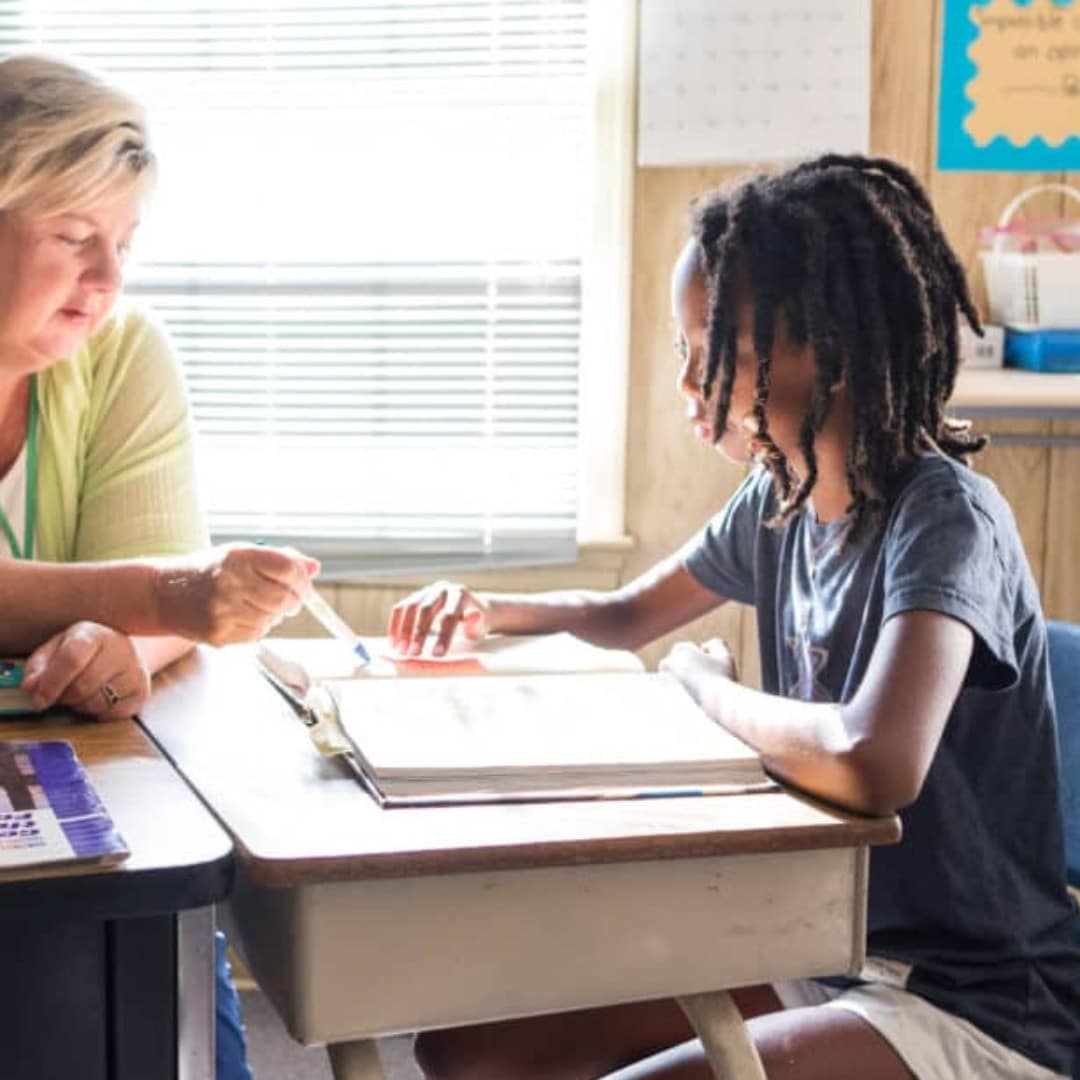
    Almost always on our tours we see a teacher working one-to-one with a student, children working independently or in small groups – with at least one volunteer eager to share what they love most about Oakland School. It is usually at this point of the tour, when, just like my daughter, the prospective student and family realize that learning can – and should – be a wonderful experience.

  • Understanding dyslexia: Learn how to best help your child

    Understanding dyslexia: Learn how to best help your child

    Just what is dyslexia?

    There are many misconceptions out there.

    familymagazineletters

    “Dyslexia is a type of specific learning disorder that impacts reading,” said Dr. Sheldon H. Horowitz, director of learning disability resources at the National Center for Learning Disabilities. “It is not a disease, nor is it contagious. It is not something that goes away — you don’t outgrow it — and it is not the result of watching too much TV, laziness, vision or
    hearing problems, or low intelligence.

    “The medical community refers to it as a disorder, and the educational community refers to it as a specific learning disability. Others are dyscalculia if the area of weakness is math, dysgraphia if the problem is writing and written expression.”

    Because dyslexia is not a disease, there is not “one treatment for dyslexia. It can’t be cured, especially because dyslexia is not a medical or psychological problem,” said Livia R. Pailer-Duller, executive director of the American Dyslexia Association. “It needs to be addressed through training of the attention span, of sensory perceptions, and the practice of reading and spelling on the educational level.”

    Rather, “dyslexia is a genetic disposition, which means that dyslexia is inherited,” she said. “Dyslexic individuals have different sensory perceptions. These different sensory perceptions are the reason why the attention of dyslexic people diminishes when they come in contact with letters, which in turn causes them to make errors in reading and spelling.”

    What it is

    There is no one profile of dyslexia, but typically, people have trouble sounding out words, blending letter sounds into words while reading, mastering the rules of spelling and grammar, and expressing what they know in written formats, Horowitz said.
    “Some people with dyslexia are accurate readers at a slower pace but struggle to understand what they have read because they expend all of their mental resources figuring out what the words are and keeping track of what they are reading,” he said. “Others are slow, labored readers, but do OK with comprehension.

    “People with dyslexia do not have vision problems that are causing them to struggle in reading. The problem stems from the way that printed text and the sounds of the language are processed in their brains. It’s not that their brains can’t do this processing; it’s that it is done in ways that are inefficient.”

    Also, dyslexia is not intelligence-related.

    “Dyslexics are not less intelligent than non-dyslexics — quite the opposite is often true,” Pailer-Duller said. “However, dyslexics often score low on intelligence tests because these tests attempt to measure intelligence by measuring sensory perceptions. But these are different in dyslexic individuals, which does not make them stupid, just that the test is inadequate.”

    How to help

    For people with dyslexia, “parents are absolutely critical and family support is hugely important,” Horowitz said. “Remember: dyslexia is what the child has, not who they are. They have areas of strength and interest just like everyone else, and in some cases, because they work so hard to compensate for their areas of challenge, they can be very high achievers and role models for their peers and for the general community.
    Parents need to understand as much as they can about dyslexia, abandon any feelings of guilt, and help their child to become a strong and effective self-advocate.”

    Schools are not required to give dyslexics extra help, but in some states, an individualized education plan is possible where dyslexic students receive help on standardized testing, Pailer-Duller said.

    As an example, “a dyslexic child with reading problems can receive additional assistance for reading instructions to solve math problems.
    However, dyslexic students have to do the reading portion of the standardized test themselves — without help.
    So this partial help does not go a long way,” she said.

    Teachers who are knowledgeable about dyslexia can do a lot within the school setting to help a dyslexic child.

    “Examples are that grading focuses on content and expression, and not on spelling. Teachers should avoid calling on dyslexic children to read aloud in front of the whole class if the child is not comfortable with it,” Pailer-Duller said. “It is very important to understand that the schoolteacher can only do so much. A dyslexic child will always need additional individualized training, either with a specialist or with parents.”

    Written by Melissa Erickson from Family Magazine, April 2014 issue, Gatehouse Media