Tag: language

  • Middle School Writing Unleashed: Explore “World of Words” by Lisa R. Hassler

    Middle School Writing Unleashed: Explore “World of Words” by Lisa R. Hassler

    Introduction: In a world where writing skills are essential, Dr. Lisa Hassler presents “World of Words: A Middle School Writing Notebook Using the Writing Process.” Designed for 4th-6th grade students, this innovative notebook draws upon Dr. Hassler’s extensive experience in education and writing. It serves as the perfect companion to her primary writing journal. “My Weekly Writing Journal: 15 Weeks of Writing for Primary Grades.” With captivating designs and hidden surprises waiting to be discovered, students are immediately drawn to the pages, eager to explore.

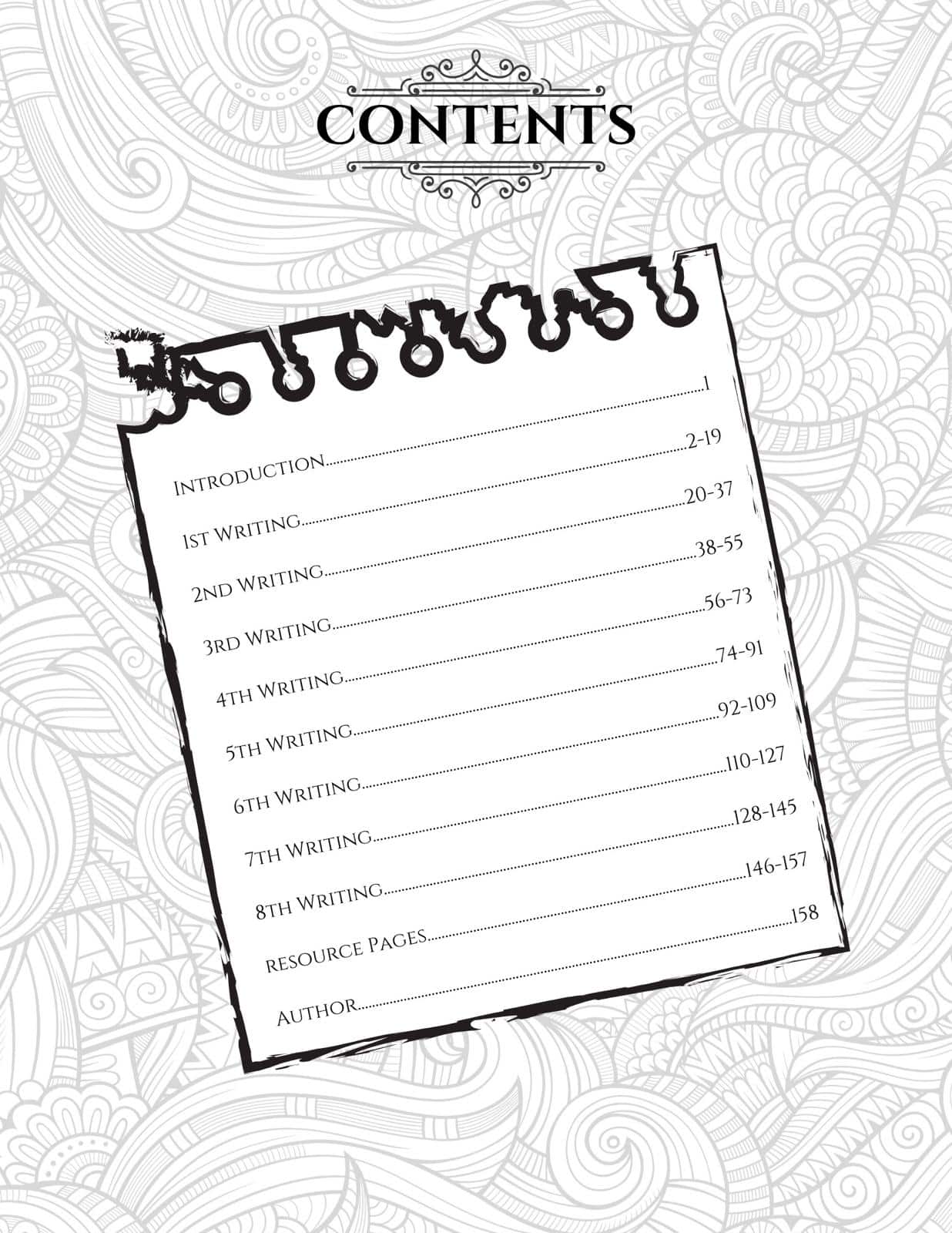
    Using the Writing Process: “World of Words” takes young writers on a structured journey through the writing process. This comprehensive notebook includes several key components, each designed to support and nurture young writers:

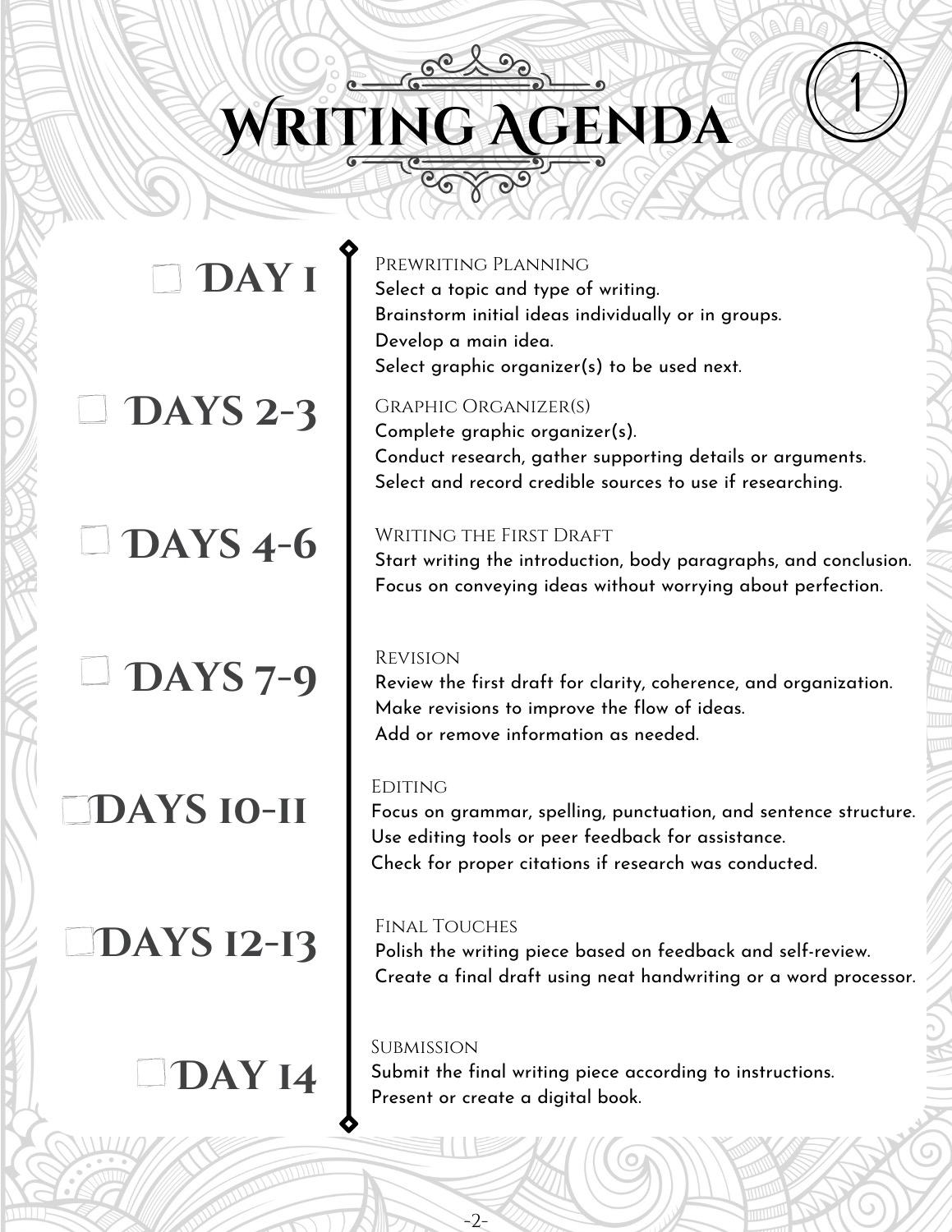
    1. The Writing Agenda: At the heart of “World of Words” is a meticulously structured writing agenda, spanning 14 days. This agenda helps students set goals, track their progress, and stay organized throughout their writing journey.
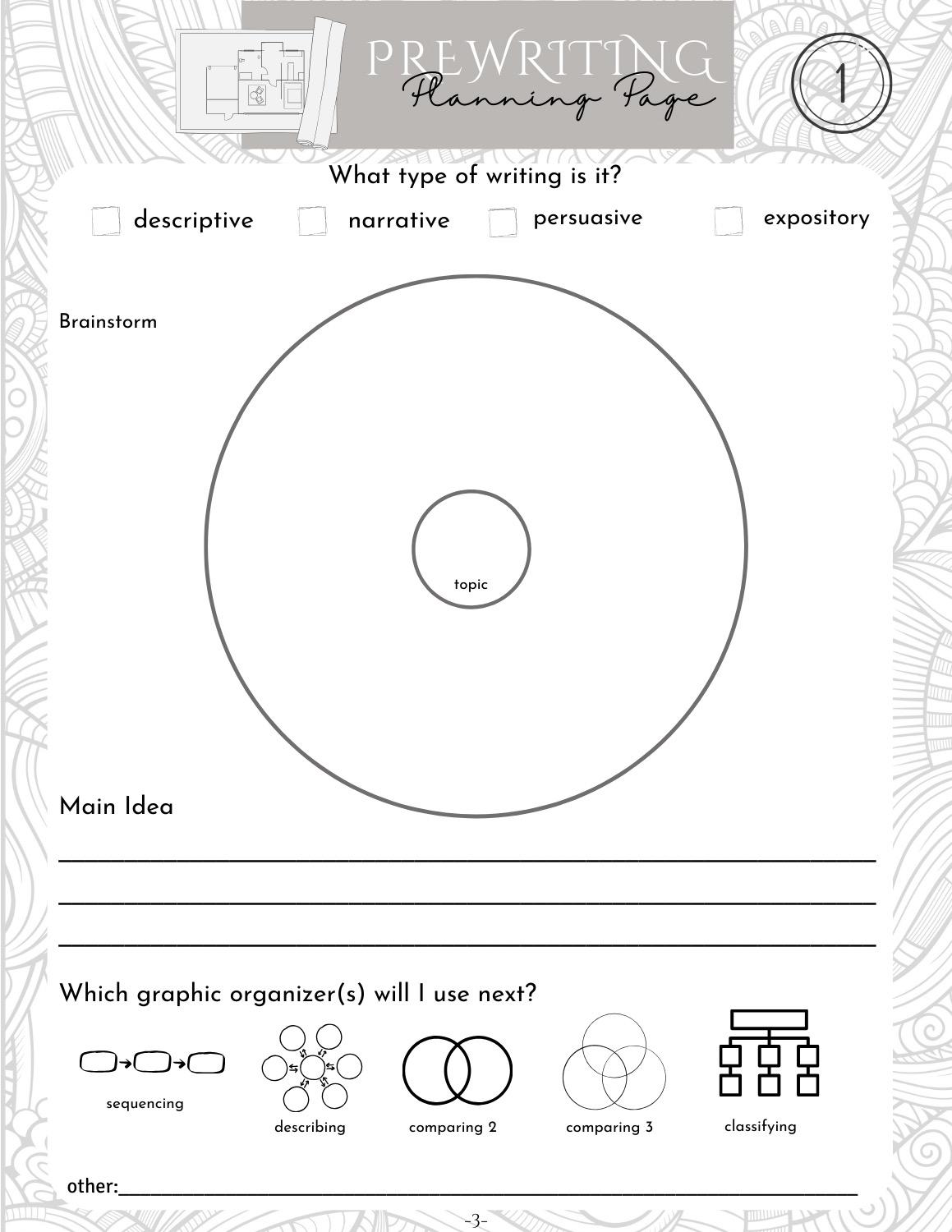
    2. Prewriting Planning Page: Before diving into writing, students engage in prewriting planning. This section provides prompts and exercises to spark creativity, helping students generate ideas and select the type of writing they want to pursue.
    3. Graphic Organizer Pages: “World of Words” includes graphic organizer pages to help students organize their thoughts and structure their writing. From story maps to character sketches, these tools empower students to bring their ideas to life in a clear and coherent manner.
    4. Rough Draft: With their ideas in place, students begin the rough draft phase. “World of Words” provides ample space for students to experiment with language and embrace the creative process without fear of imperfection.
    5. Proofreading Edit Checklist & Feedback Pages: Writing is refined through the editing stage, where students are guided through the process of revising their work. This section provides prompts and tips to help students strengthen their writing and clarify their ideas.
    6. Final Copy: After revising their work, students produce their final copies. “World of Words” offers space for students to neatly transcribe their polished work, ready to be shared and celebrated.

    Take and Go Editing Marks Cut-outs: Editing is simplified with handy editing marks cut-outs, allowing students to identify and correct errors in their writing, ensuring that their final drafts are polished and professional.

    Resource Pages: Additionally, “World of Words” includes resource pages with sample rubrics for narrative, descriptive, persuasive, and expository writing. These rubrics provide clear guidelines for assessing and improving writing skills.
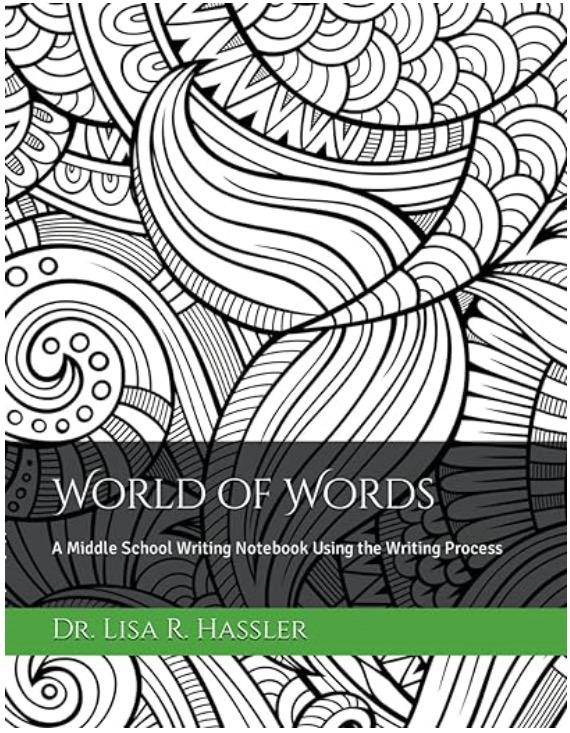
    With its innovative approach to writing instruction and comprehensive support for students at every stage of the writing process, “World of Words” is poised to become an indispensable resource for middle school students and educators alike. Dive into the world of words today and unleash your creativity with “World of Words” by Dr. R. Hassler!

  • Dyslexic Thinkers Aren’t Disabled Thinkers

    Dyslexic Thinkers Aren’t Disabled Thinkers

    In the world of reading, we know oral language is mapped on to symbols we recognize as the alphabet.

    This is a sound-symbol relationship. When an individual struggles to grasp this relationship, the label of ‘dyslexia’ is often applied, implying a learning disability. This approach assumes everyone thinks and processes incoming information alike.

    What if this is not the case? An architect ‘sees’ a building before drafting a blueprint. An engineer imagines a bridge, visualizing the piers. These visual thinkers imagine a world in three dimensions. Those with dyslexia exhibit visual and dimensional thinking as a stronger mental process.

    Now, imagine a Kindergartener being introduced to flat lines on paper that are supposed to carry sounds that have no meaning until blended together into words. In the dyslexic world, if the letter ‘R’ was three dimensional, looking down from the top, it would be a bar; from below, two small squares. Without directionality to hold the letter in place, how it is supposed to look? Lines anchor two-dimensional letters in place but what holds three-dimensions?

    Technology is changing the mental landscape. In the 14th century, few people could read so gossip was the mode of communication. Fast forward to the 20th century, with books, radio, and television engaging the visual and auditory senses, and eventually, computers and smartphones, adding touch. Today’s student thinks in all three modalities. Imagine thinking in live-action holographs, and you’d have a better idea of the mental processing of a dyslexic thinker.

    How do we teach someone who sees the world in holographic images? We begin with dimensions using real objects. By naming them, we add language, using the entire word initially.

    Before dyslexic thinkers can recognize letters in their proper position on a line, they need to examine them in dimensional space. By using pliable materials to shape symbols for 360-degree viewing, young learners begin to recognize how to place a letter properly on a line. By beginning with named objects, the entire word is connected to dimensions. Dyslexic thinkers need to take words apart to discover patterns rather than assembling these from isolated letters and sounds.

    This object – picture – sound – symbol approach creates a bridge for dimensional thinkers to move into the two-dimensional word of print and text.  Building a mental library of objects with their whole word label creates a resource for using careful observation to detect common patterns and relationship with words which do not contain a visual image such as ‘not’ or ‘is’ or words we know as function words.

    Continue reading article:

    https://www.teachthought.com/literacy/dyslexic-thinkers-arent-disabled-thinkers/

  • Humans are born with brains ‘prewired’ to see words: Study finds connections to language areas of the brain

    Source:  Ohio State University

    Mother reading to child | Credit: © fizkes / stock.adobe.com

    Humans are born with a part of the brain that is prewired to be receptive to seeing words and letters, setting the stage at birth for people to learn how to read, a new study suggests.

    Analyzing brain scans of newborns, researchers found that this part of the brain — called the “visual word form area” (VWFA) — is connected to the language network of the brain.

    “That makes it fertile ground to develop a sensitivity to visual words — even before any exposure to language,” said Zeynep Saygin, senior author of the study and assistant professor of psychology at The Ohio State University.

    The VWFA is specialized for reading only in literate individuals. Some researchers had hypothesized that the pre-reading VWFA starts out being no different than other parts of the visual cortex that are sensitive to seeing faces, scenes or other objects, and only becomes selective to words and letters as children learn to read or at least as they learn language.

    “We found that isn’t true. Even at birth, the VWFA is more connected functionally to the language network of the brain than it is to other areas,” Saygin said. “It is an incredibly exciting finding.”

    Saygin, who is a core faculty member of Ohio State’s Chronic Brain Injury Program, conducted the study with graduate students Jin Li and Heather Hansen and assistant professor David Osher, all in psychology at Ohio State. Their results were published today in the journal Scientific Reports.

    The researchers analyzed fMRI scans of the brains of 40 newborns, all less than a week old, who were part of the Developing Human Connectome Project. They compared these to similar scans from 40 adults who participated in the separate Human Connectome Project.

    The VWFA is next to another part of visual cortex that processes faces, and it was reasonable to believe that there wasn’t any difference in these parts of the brain in newborns, Saygin said.

    As visual objects, faces have some of the same properties as words do, such as needing high spatial resolution for humans to see them correctly.

    But the researchers found that, even in newborns, the VWFA was different from the part of the visual cortex that recognizes faces, primarily because of its functional connection to the language processing part of the brain.

    “The VWFA is specialized to see words even before we’re exposed to them,” Saygin said.

    “It’s interesting to think about how and why our brains develop functional modules that are sensitive to specific things like faces, objects, and words,” said Li, who is lead author of the study.

    “Our study really emphasized the role of already having brain connections at birth to help develop functional specialization, even for an experience-dependent category like reading.”

    The study did find some differences in the VWFA in newborns and adults.

    “Our findings suggest that there likely needs to be further refinement in the VWFA as babies mature,” Saygin said.

    “Experience with spoken and written language will likely strengthen connections with specific aspects of the language circuit and further differentiate this region’s function from its neighbors as a person gains literacy.”

    Continue reading article here:

    https://www.sciencedaily.com/releases/2020/10/201022125525.htm

  • Why Are Some Bilingual People Dyslexic in English but Not Their Other Language?

    Why Are Some Bilingual People Dyslexic in English but Not Their Other Language?