Tag: teacher

  • America’s Embarrassing Reading Crisis: Working Towards a Solution

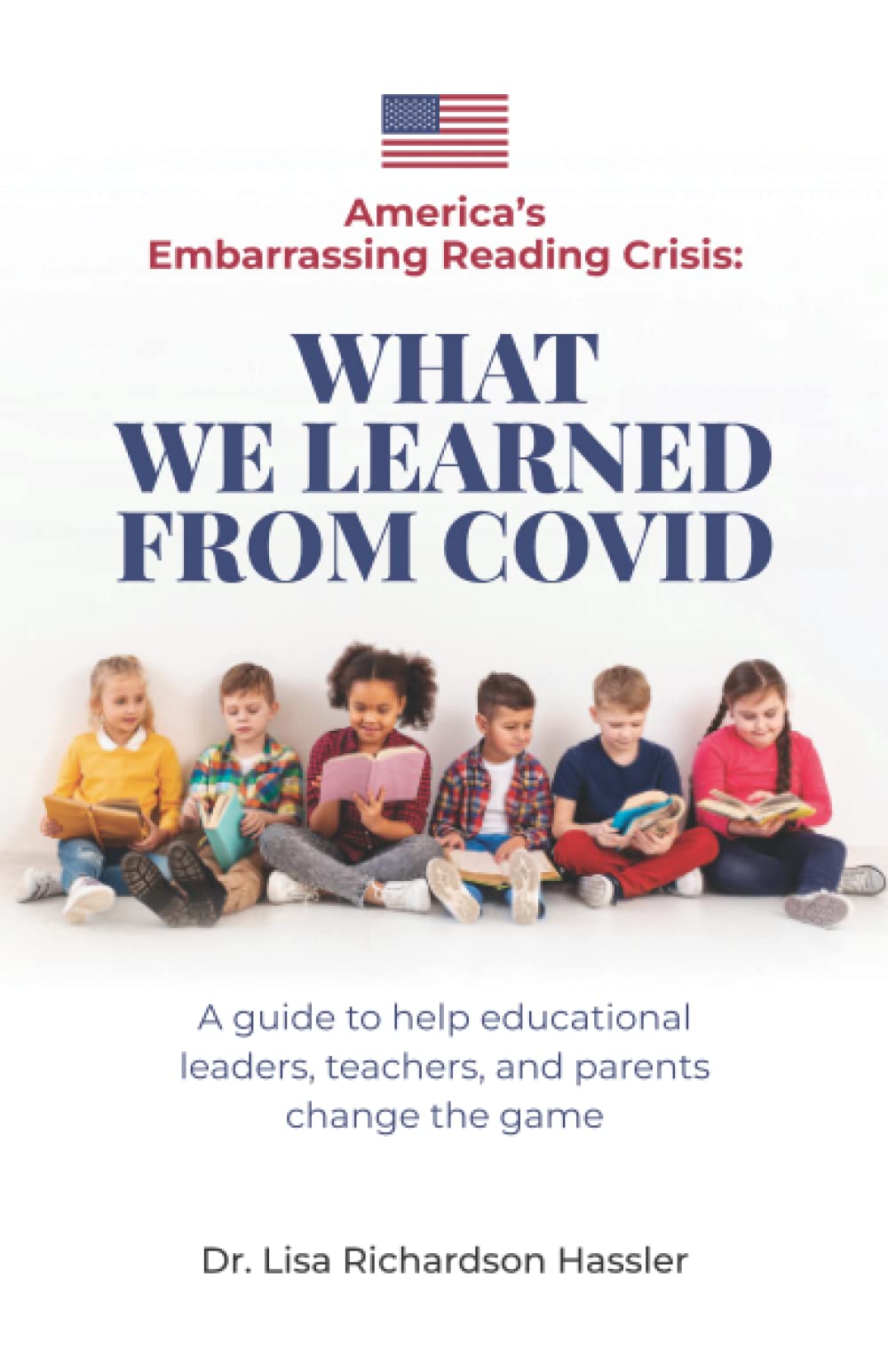
    America’s Embarrassing Reading Crisis: Working Towards a Solution

    By Dr. Lisa Richardson Hassler

    More than 80 percent of students who fail to earn a high school diploma were struggling readers in third grade. How many of these children had dyslexia and went through the educational system without proper diagnosis or interventions to help?
         We all want our children to learn and thrive. We want them to achieve measurable success–and live up to the vast potential inside each of them. But in order to do that, we must tackle the biggest problem facing America today: reading. Without proper reading skills, our workforce is less robust, job opportunities are more limited, and people’s lives are held hostage as their own self-worth becomes diminished.
         Yet, the pandemic brought forth valuable lessons. The global crisis shed light on another, lesser known, pandemic already in play for children across America. At first, parents, teachers, and other educators grappled with online teaching. Then, however, came profound lessons about teaching reading to young students–and the success that followed–because of virtual education.

    America’s Embarrassing Reading Crisis: WHAT WE LEARNED FROM COVID is a reality check on an issue we have long been avoiding. Now, there are no more excuses; it’s time to take action. Author and accomplished educator Lisa Hassler dives into her own struggles and triumphs as a mother of a child with dyslexia and as a teacher to provide solutions to parents, teachers, and educational leaders in order to set our students up for successful futures.
         The key to raising successful children is setting the stage for being a successful adult. Hassler is not only sounding the alarm with this book some educators are calling “a must-read for modern classrooms,” she’s offering a framework by which to ensure young readers are reading on grade level starting today. All children can learn to read, and deserve a bright future.

    Dr. Lisa Richardson Hassler
    www.drlisarhassler.com
  • The Gift of Being a Dyslexic Teacher

    The Gift of Being a Dyslexic Teacher

    A dyslexic teacher can be more attentive in the classroom, sensitive to struggling students, and model how to compensate for this spectrum disorder.
    By Matthew James Friday

    Dyslexia creates suffering for many students, but you rarely hear of teachers admitting to having it. Are teachers really still required, in the 21st century, to be models of perfect, marble-made fonts of knowledge and effectiveness? I have tutored a small number of dyslexic trainee teachers, but that was an exception to the norm. By sheer statistics alone, I must have worked with (and perhaps am presently working with) colleagues who are struggling in secret. It’s time to talk about dyslexia.

    6 Facts About Dyslexia

    So what’s dyslexia? Here is a quick definition:

    1. Dyslexia is a “spectrum disorder,” meaning that there is a range or spectrum of symptoms.
    2. People with dyslexia commonly have difficulty with all or some of:
      • Phonological awareness
      • Verbal memory
      • Rapid serial naming
      • Verbal processing speed.
    3. Dyslexia has no link to intelligence, though many people feel “stupid” and ashamed at school because they struggle with literacy skills — the cornerstone of how we measure ability.
    4. Dyslexia is one of the most common learning difficulties. It is estimated that one out of ten people in the UK has dyslexia.
    5. While language has a role in prevalence, dyslexia affects people of all ethnicities.
    6. Commonality in families has led scientists to identify six genes that may cause dyslexia. (My brother has severe dyslexia, and my father has all the symptoms, though when he was at school, those symptoms were put down to laziness or stupidity.)

    One of the happiest days of my life was being diagnosed with mild auditory dyslexia. I was 20 years old and had started college studies after a few gap years. The first essay I had written was returned splattered with red ink and harsh comments about mistakes — the familiar feeling of shame and frustration. Luckily, a leaflet about dyslexia in the university library directed me to an educational psychologist and an assessment process that resulted in the diagnosis I had suspected for years. It was a huge relief to know what was wrong with me.

    With my auditory dyslexia, I can hear what is said, but I instantly feel the information flittering away in my mind. It is like having leaking holes in my brain. At primary school, I could pass a spelling test but made frequent mistakes in my extended writing. My school reports featured the same comment: “Matthew enjoys writing, but he rushes and makes many mistakes.”

    I have always struggled with my listening skills. I am easily distracted and often drift into an imaginary world. Though an advanced private reader, I hated reading texts aloud in high school. The words blurred on the page, and I felt intense anxiety at the thought of being laughed at. My comprehension of the text was low, so I had to work doubly hard at home to catch up. The worst moment was when my beloved English teacher declared me “stupid” in front of the whole class for repeatedly misspelling “Anthony” in an essay about a Shakespeare play.

    Continue reading article here: https://www.edutopia.org/blog/gift-of-being-dyslexic-teacher-matthew-friday

  • Dinosaur perception training

    Dinosaur perception training

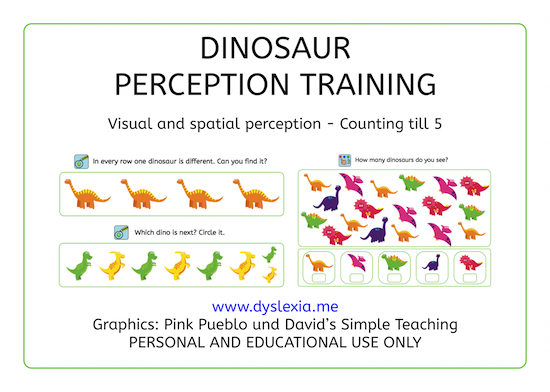
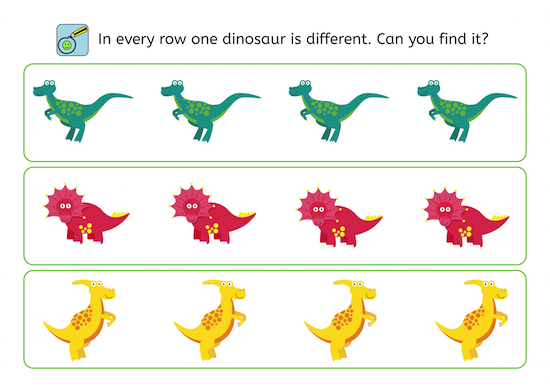
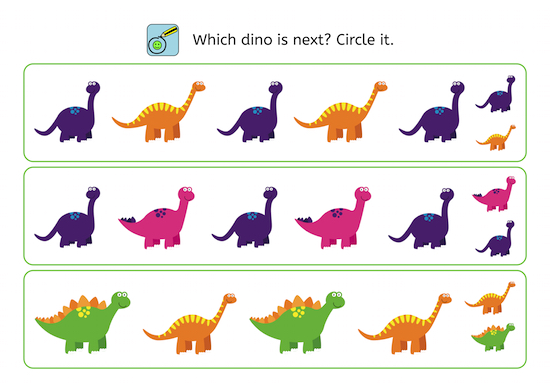
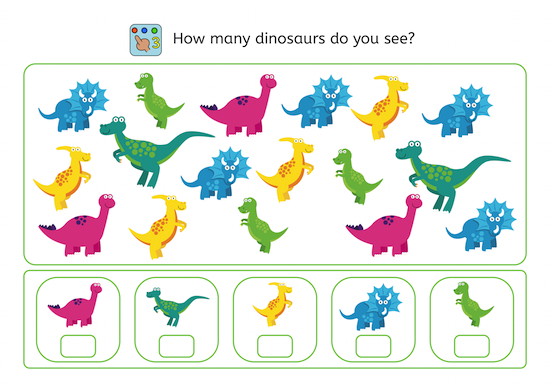
    Kids + dinosaurs = fun! Enjoy our new free no-prep printables with dinosaurs. Kids will have fun and train their visual and spatial perception, patterning, and counting up to 5.

    Dinosaur, perception training, children, freebie, no prep printable, parents, school, teacher, dyslexia, dyscalculia, AFS-method

    Visual and spatial perception:

    Dinosaur, perception training, children, freebie, no prep printable, parents, school, teacher, dyslexia, dyscalculia, AFS-method

    Patterning:

    Dinosaur, perception training, children, freebie, no prep printable, parents, school, teacher, dyslexia, dyscalculia, AFS-method

    Counting till 5:

    Dinosaur, perception training, children, freebie, no prep printable, parents, school, teacher, dyslexia, dyscalculia, AFS-method

    Download: Dinosaur perception training

    You want even more dinosaurs? Check out this free online game: Dinosaur – Find the pairs! You can choose different levels. The game can be played in any browser on any computer, smartphone or tablet.

  • Debunking the Myths about Dyslexia

    Debunking the Myths about Dyslexia

    There are many signs or clues to dyslexia, which are discussed in depth on this website; however, it is also important to be aware of the misconceptions and myths surrounding the disorder. There are several myths regarding dyslexia. We have highlighted some of the more common ones.

    Myth: Smart people cannot be dyslexic or have a learning disability.
    Fact: Dyslexia and intelligence are NOT connected. Many dyslexic individuals are very bright and creative, and they will accomplish amazing things as adults.
    Myth: Dyslexia does not exist.
    Fact: There has been 30 years of documented, scientific evidence and research proving the existence of dyslexia. It is one of the most common learning disabilities to affect children.
    Myth: Dyslexia is rare.
    Fact: In the United States, NIH research has shown that dyslexia affects 20%, or 1 in every 5 people. Some people may have milder forms, while others may experience it more severely. Dyslexia is one of the most common causes of reading difficulties in elementary school children because only 1 in 10 dyslexics will qualify for an IEP and special education that will allow them to get the help in reading that they need.

    CONTINUE READING

  • Early signs of dyslexia

    Early signs of dyslexia

    While browsing the web we came across this story:

    A DYSLEXIA STORY – Early signs of dyslexia

    I looked forward to reading with my daughter. We would cuddle together with a stack of books, and she would say, “Again, again, again,” and we would lose ourselves in our favorite stories.

    I was shocked when that never happened. What is it about reading to children, I thought, that’s so complicated? Reading together is overrated.

    Because, with her, she had only a passing interest in books. When we did sit together, she pulled the book out of my hands to flip through pages at random. Beginning, end, middle. Whatever. Done.

    We were most successful with books filled with random words and images, such as cat, dog, horse, and cow. Why did so many books have stories?

    CONTINUE READING

  • Embracing dyslexia

    Embracing dyslexia

    Embracing Dyslexia is a thoughtful and moving exploration of dyslexia from an insider’s perspective, weaving together interviews with parents, adult dyslexics, researchers, educators, and experts to provide an accurate portrayal of a learning difference that affects between 15 and 20% of the population.

    Parents share emotional stories of their frustration over failing to understand why their children were struggling with reading, writing, and spelling, and the life-altering impact the word dyslexia had on their lives.

    Adult dyslexics courageously open up and speak candidly about their dyslexia, sharing their struggles and successes they had in school and in their adult lives.

    Experts and educators define what dyslexia is and illustrate why early dyslexia screening for all children is vital. They also share how effective tutoring, classroom accommodations, and recognizing and fostering the natural gifts and abilities of a child with dyslexia can take them from feeling stupid and experiencing failure on a daily basis to believing in themselves and knowing that they can be successful.

    Watch the complete movie at www.embracingdyslexia.com

    Embracing Dyslexia – The trailer:


  • Strategies for Working with Children with Autism Spectrum Disorder

    Strategies for Working with Children with Autism Spectrum Disorder

    Will you be welcoming a student with Autism Spectrum Disorder (ASD) into your classroom this fall?  If this is your first experience having a child with ASD in your classroom, you may be a tad nervous (well, likely more than just a tad).  You may be wondering how in the world you are going to meet this one child’s needs while balancing the needs of the other children in your classroom.  How will you handle the behaviors?  What do the parents expect?  Children with ASD often come with a barrage of service providers such as Speech/Language Pathologists, Occupational Therapists, Behavioral Consultants, and sometimes a 1:1 para-professional– how are we all going to be working together?  You may be worrying about your lack of training in autism and be unsure if you are equipped to meet the needs of the child.  Well, take a deep breath.  With the proper perspective and some planning and preparation, this may be the most rewarding experience of your teaching career. CONTINUE READING

  • Picture chaos

    Picture chaos

    Over at openclipart.org, we have seen a nice penguin that has been waiting for an appearance in our worksheets for a while. The penguin, with all its disguises, is perfect for today’s freebie Picture chaos. The pictures are mixed up, and children have to put the numbers in the correct order. The penguins are also added as a template for those who have great difficulty with this kind of exercise. You can use the templates as memory cards. These exercises train attention and visual and spatial perception – important skills for reading, writing, and calculating.

    Download

    Check out our other freebies

  • I am dyslexic

    I am dyslexic

    In our schools, there are still far too many children whose dyslexia or dyscalculia is not recognized. The children are seen as stupid, lazy, unwilling to learn, difficult, etc. Watch this wonderful video in which a young woman talks about her dyslexia. She used to think she was just too stupid until she discovered, at the age of 18, that she is dyslexic. This happens to many people! That’s why it’s so important that parents and teachers know the signs of dyslexia and take these signs seriously. A lot of people think dyslexia will just disappear. Well, it does not!