Author Archive: Steph

Merry Christmas and Happy New Year

We wish all our readers a merry christmas and a happy new year! We are having a short break. In January we are back with new articles, apps, games and freebies – all about dyslexia and dyscalculia! MERRY CHRISTMAS AND HAPPY NEW YEAR!
Mazes
Mazes have always fascinated humanity. Think about the Cretan Labyrinth from Greek mythology. But even today mazes are very popular. In “The Goblet of Fire” Harry Potter has to go through a maze in order to win the Triwizard Tournament. Once Harry finds the way through the maze things turn out completey different than was […]
Number decomposition
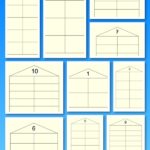
Today we are offering simple templates to practice number decomposition. The number houses are designed entirely neutral. Therefore, they can be used together with any material: tiles, beads, counting rods, etc. Number decomposition until 10 is an important prerequisite for calculating beyond ten. The templates are in A4 format. Use your printer options to print […]
I can count
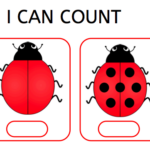
Today we offer a colored freebie: I can count! Many children with dyscalculia have trouble with exact counting. This booklet will help them. The children have to count the dots on the ladybug and write down the amount. The file is presented as a mini notebook, but if you want to, you can also cut […]
Einstein’s riddle
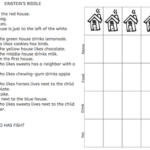
A lot is said about Einstein. Much of it cannot be proved. Such as the theory that Einstein is the inventor of the logical puzzles, also called “Einstein’s Puzzle”. Whether this is true or not, is not important here. There are many variations of the Einstein puzzle. Einstein is said to have claimed that only […]
Monster reading
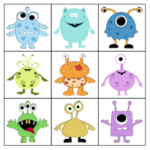
Today’s freebie are monster reading puzzles. First, the children cut out the pictures. Then, they read the instructions and place the images in the correct place. This trains attention, visual and spatial perception and accurate reading. Cutting and glueing the pictures is good for fine motor skills. An alternative is to read the instructions to […]
Debunking the Myths about Dyslexia
There are many signs or clues to dyslexia which are discussed in depth on this website; however it is also important to be aware of the misconceptions and myths surrounding the disorder. There are several myths regarding dyslexia. We have highlighted some of the more common ones. Myth: Smart people cannot be dyslexic or have […]
Literacy: Helping Kids Write
Read how Pauline helps her children to be better writers: Literacy – Helping Kids Write I’m notorious for keeping numerous notebooks. I’m even more notorious for keeping little keepsakes loosely tucked into the pages of those notebooks. Lately, those little keepsakes comprise anything with N&M’s emergent literacy; their writing in particular. That first letter to a friend enclosed […]
Visual sequencing
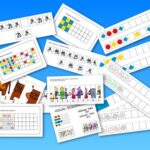
Visual sequencing is the ability to organize visual impressions in a certain order. This is an important prerequisite for good writing, reading and arithmetic. Children who have difficulties with visual sequencing often exchange letters while writing or have difficulties with writing down numbers. Today we are offering a freebie containing various exercises to train visual […]
Early signs of dyslexia

While browsing the web we came across this story: A DYSLEXIA STORY – Early signs of dyslexia I looked forward to reading with my daughter. We would cuddle together with a stack of books and she would say, “again, again” and we would lose ourselves in favorite stories. I was shocked when that never happened. What […]