The International Federation of Dyslexia and Dyscalculia Associations welcomes a new member: the Sharjah Center for Learning Difficulties (SCLD) in the United Arab Emirates.
This is our first member in the Arab world, and it is a government center, which makes it a rare kind of partner. Most dyslexia and dyscalculia organizations start as parent initiatives or volunteer groups. The Sharjah Center was created by decree of the Ruler of Sharjah, with its own legal personality and its own budget, to serve people with learning differences of every age and every nationality living in the UAE. That is the kind of institutional backing our field rarely gets.
Who they are
The Sharjah Center for Learning Difficulties was established by Emiri Decree No. 49 of 2016, issued by His Highness Sheikh Dr. Sultan bin Muhammad Al Qasimi, Member of the Supreme Council and Ruler of Sharjah. It operates under the supervision of Sharjah City for Humanitarian Services, whose Director-General, Sheikha Jamila bint Mohammed Al Qasimi, chairs the center. The center is located in the Wasit suburb of Sharjah and is directed by Dr. Hanadi Al Suwaidi.
In their own words, from their membership application:
The Sharjah center for learning difficulties supports individuals with learning difficulties and their families. We provide assessment and diagnosis, counselling, and educational, psychological, and social support. We also work with schools and other educational institutions to raise awareness, build professional capacity, and promote the inclusion and empowerment of individuals with learning difficulties.
The center’s slogan is “We are your advocates to education.” Its stated vision is to be the leading center for advocacy, inclusion, and empowerment of people with learning differences in the UAE and the Arab world. In practice, the center:
assesses and diagnoses children and adults with learning differences and monitors the progress of enrolled students,
offers family counseling, career advice, social and psychological support, and a self-advocacy program,
provides speech and language services, assistive technology, and further specialist support under one roof,
trains teachers and specialists, advises schools and institutions, and runs school visits and a parents council,
and has hosted three Learning Difficulties Conferences and two virtual forums, alongside lectures, workshops, and its own publications.
Why it matters for IFDDA
Our members exchange knowledge, methods, and experience across borders. With the Sharjah Center, the federation gains its first member in the Gulf region and the Arabic-speaking world, and a partner that combines diagnosis, support, teacher training, and public awareness in a single publicly funded institution.
Most of what is published about dyslexia and dyscalculia describes learners of English. Arabic has its own script and its own challenges, and a center that assesses and supports Arabic-speaking learners every day brings knowledge to the federation that most of our members do not have. We look forward to learning from it.
You can find the Sharjah Center for Learning Difficulties at scld.ae, and all IFDDA members at ifdda.org.
If you run a non-profit dyslexia or dyscalculia organization and would like to join the federation, membership is free. Apply at ifdda.org.
Every Tuesday, we open up one lesson of the Dyslexia Trainer Certification Program here on the blog, all 48 of them, one week at a time. Whether you are a teacher, a parent, or an education professional, this series shows you exactly what certified dyslexia trainers learn, and how the program works from the inside.
This week: From Session Design to Home Practice. Using the Training Plan Effectively
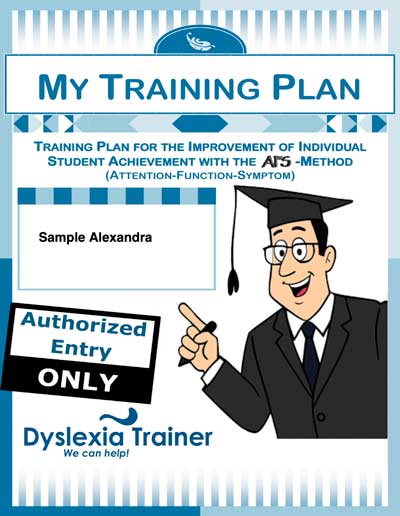
A good training plan is a roadmap: it makes sure every session addresses attention, sensory function, and symptoms, while staying flexible for what the child needs on that particular day. This lesson covers session design, documentation, and progress monitoring, and shows how a plan generated from AFS-Test results guides the work from the most significant needs toward systematic improvement.
What this lesson is about
Effective training for learners with dyslexia or dyscalculia requires a structured yet flexible approach. Each session should address attention, sensory function, and symptoms, but the order and emphasis can vary depending on the child’s needs on that day.
Documentation is an essential part of the process, allowing trainers to monitor progress, adjust plans, and ensure that all areas are addressed over time. The training plan, whether written up manually or generated via the AFS Test, serves as a roadmap to guide the process, ensuring that interventions target the most significant needs first and build systematically toward improvement.
A training session should always include three components, attention training, function training, and symptom training, though the sequence does not need to be followed rigidly. Each session should begin with an activity that helps the child focus, but it may be necessary to return to an attention exercise later if focus is lost during other parts of the session.
What you will learn in Lesson 9
How to structure a training session across attention, function, and symptoms
Flexible emphasis: reading what the child needs on a given day
Documentation that makes progress visible
Using AFS-Test-generated training plans as your roadmap
About the Dyslexia Trainer Certification Program
Since 1997, more than 17,000 dyslexia trainers in 64 countries have been certified. The certification gives you more than knowledge: all the tools you need to actually work with dyslexic children are included as well. Worksheets, training programs, assessment materials, everything ready to use in your practice. You get the whole package.
The program is accredited by the American Dyslexia Association (ADA) and follows the training standards of the International Federation of Dyslexia and Dyscalculia Associations (IFDDA).
Catch up and start free
Lesson 1 is free for everyone. Register in a minute and see the program from the inside: dyslexiacertificate.com
You can find all published lessons of this series under the tag Lesson Series.
Every Wednesday, we take you inside the AFS-Test, the standardized assessment that allows Certified Dyslexia Trainers to definitively diagnose and categorize dyslexia and dyscalculia. This is week 5 of 25.
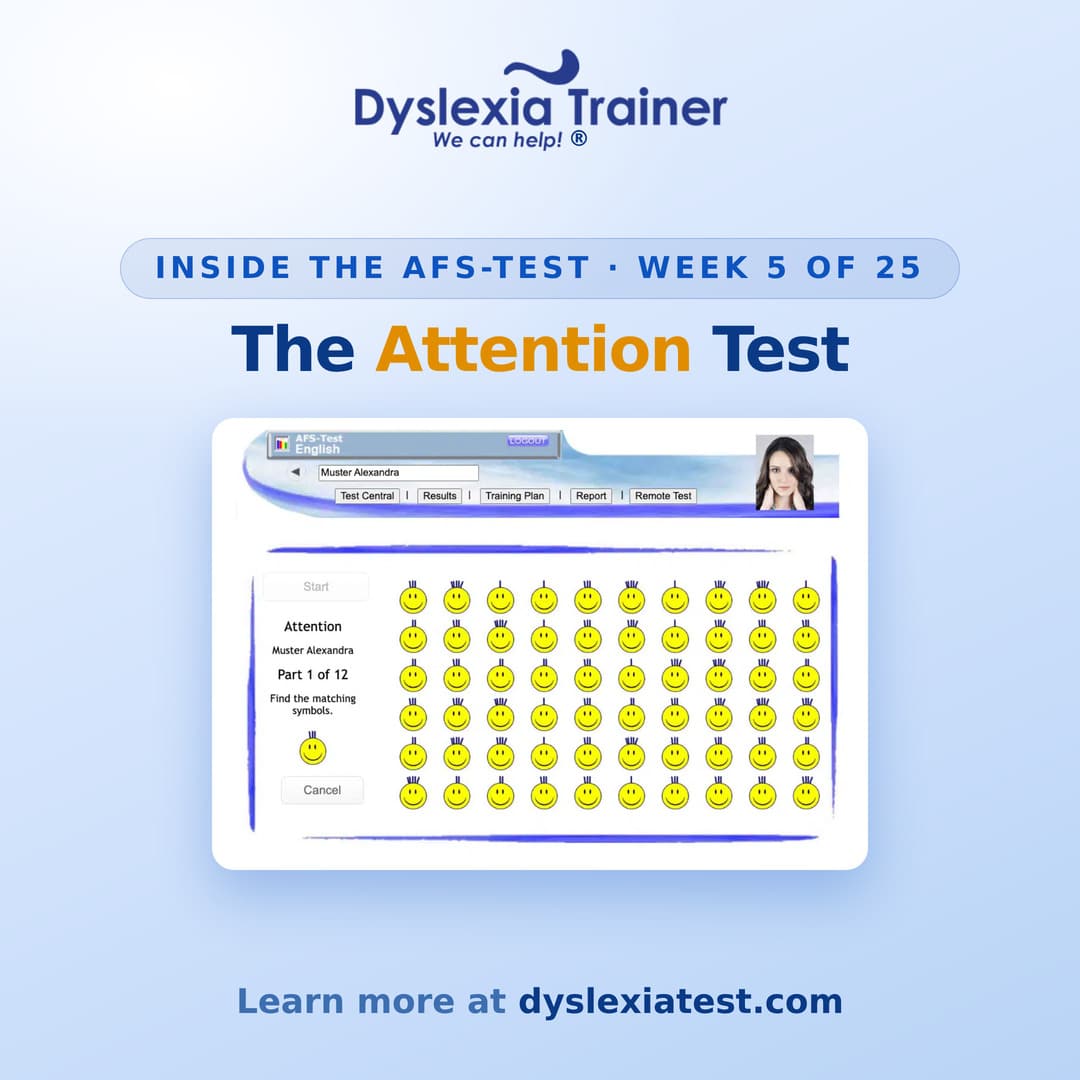
This week: The Attention Test
Attention is where every reading or math task begins. The AFS-Test measures how well a child can focus their thoughts on symbols: letters, numbers, and words. Many dyslexic children are perfectly attentive when playing or building, but drift the moment symbols appear. This situational inattentiveness is not ADHD, and telling the two apart matters, because each calls for completely different support. The attention section of the standardized AFS-Test makes this measurable, in playful parts a child can complete without fear.
About the AFS-Test
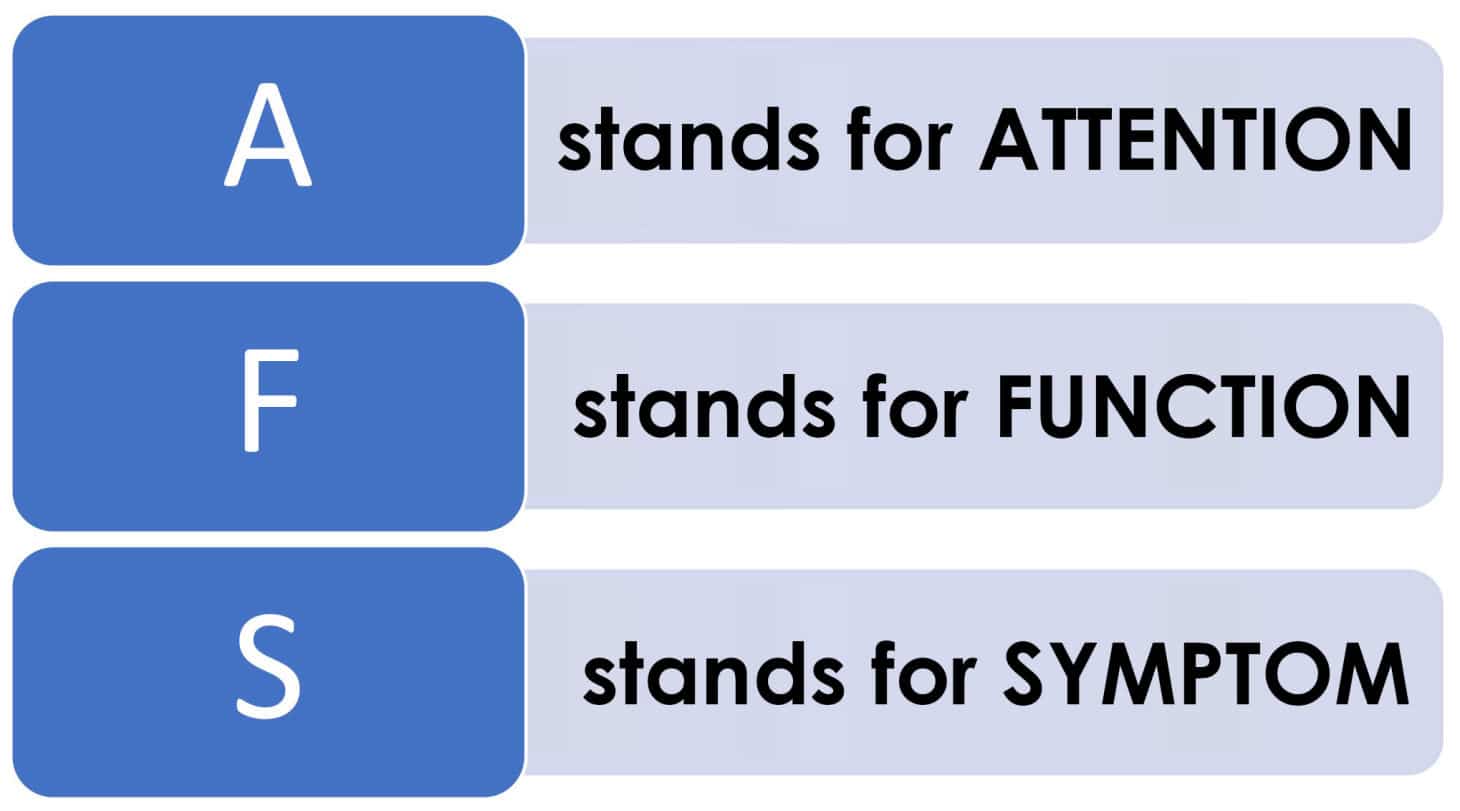
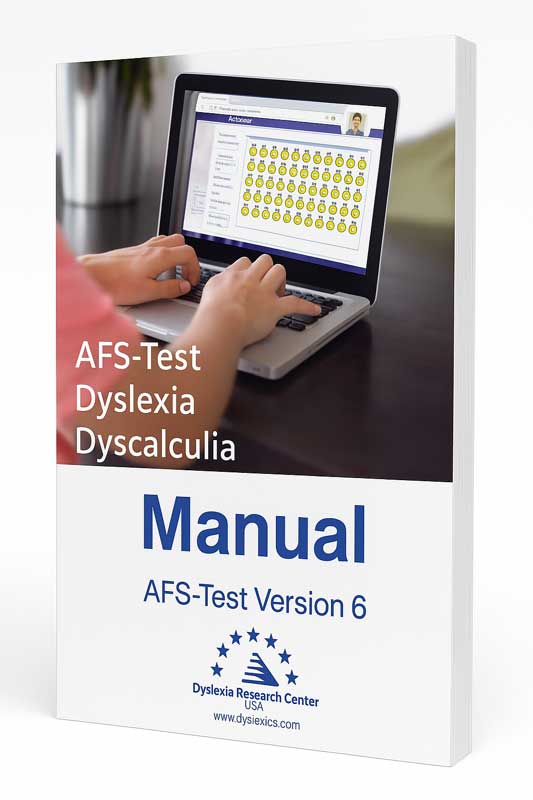
The standardized Attention-Function-Symptom Test has been used worldwide for more than 25 years. It examines the attention span, the sensory perceptions, and the error symptoms of a child, and turns the results into an individualized training plan following the AFS-Method.
Find a Certified Trainer
Certified Dyslexia Trainers conduct the standardized AFS-Test in your area or remotely. Learn more and find a Certified Trainer near you: dyslexiatest.com
You can find all published articles of this series under the tag AFS-Test Series.
Every Tuesday, we open up one lesson of the Dyslexia Trainer Certification Program here on the blog, all 48 of them, one week at a time. Whether you are a teacher, a parent, or an education professional, this series shows you exactly what certified dyslexia trainers learn, and how the program works from the inside.
This week: From Understanding to Action. Roles and Strategies in the AFS-Method
Real progress happens when the child, parents, teachers, and specialists pull in the same direction. This lesson examines the unique contribution each person brings, and how the three components of the AFS-Method, attention training, function training, and symptom training, work together in practice. It also shows what happens when collaboration fails, and how trainers keep everyone motivated and aligned.
What this lesson is about
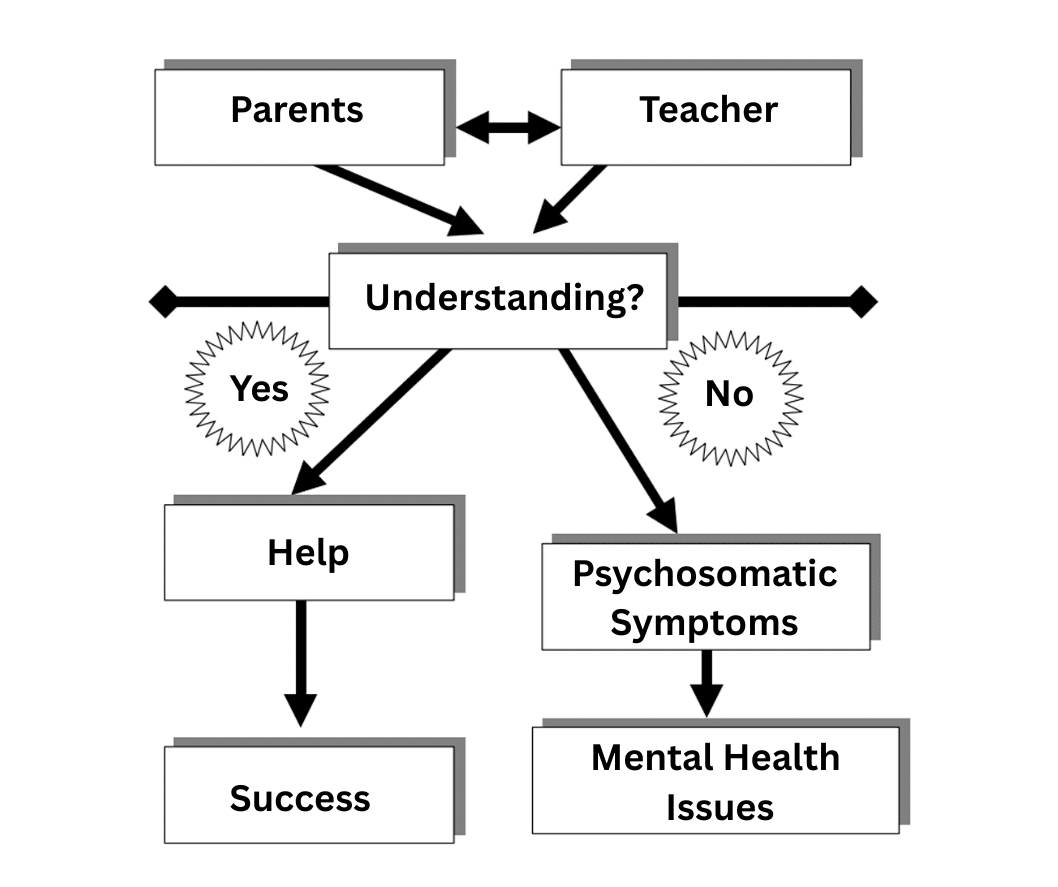
Supporting a child with dyslexia or dyscalculia requires more than isolated interventions, it demands a coordinated effort from everyone involved in the child’s learning journey. The AFS Method emphasizes that genuine progress is achieved when the child, parents, teachers, and specialists work together toward shared goals. In this lesson, we examine the unique contributions each person brings to the process, as well as the importance of building understanding, fostering motivation, and maintaining consistent communication. We also explore how the three components of the AFS Method, attention training, function training, and symptom training, form a comprehensive framework for effective, individualized support. Forging Understanding: Child, Parents, Teacher, Specialist It is crucial that a child with dyslexia or dyscalculia is met with understanding in their environment regarding their unique challenges. This understanding should primarily come from parents but also from teachers. The collaboration between parents, teachers, and specialists is essential. While understanding is a prerequisite, targeted support is an absolute necessity. However, effective support can only be successful if the child, parents, teachers, and specialists work closely together and complement each other.
If this collaboration is successful, the child will eventually experience progress, which can be observed as improvements in learning. However, if collaboration is lacking or ineffective, the child may develop psychosomatic symptoms or even significant mental health issues over time, and training success will be significantly delayed.
If secondary issues have already developed, additional professionals such as medical doctors, psychologists, or psychotherapists should be consulted. However, this should always be decided on a case-by-case basis, depending on the severity of the developed secondary dyslexia or dyscalculia. Each of the involved individuals plays a specific role in ensuring successful training: The Child Once a test or assessment has confirmed the diagnosis of dyslexia or dyscalculia, it is helpful to have an age-appropriate discussion with the child about their struggles. Many children feel a sense of relief upon receiving an explanation, as well as an interest in learning more about it. Often, for the first time, they realize that they are not simply lazy, difficult, or unintelligent.
What you will learn in Lesson 8
The roles of child, parents, teachers, and specialists
How attention, function, and symptom training work together
Building motivation and consistent communication
What happens when collaboration fails, and how to prevent it
About the Dyslexia Trainer Certification Program
Since 1997, more than 17,000 dyslexia trainers in 64 countries have been certified. The certification gives you more than knowledge: all the tools you need to actually work with dyslexic children are included as well. Worksheets, training programs, assessment materials, everything ready to use in your practice. You get the whole package.
The program is accredited by the American Dyslexia Association (ADA) and follows the training standards of the International Federation of Dyslexia and Dyscalculia Associations (IFDDA).
Catch up and start free
Lesson 1 is free for everyone. Register in a minute and see the program from the inside: dyslexiacertificate.com
You can find all published lessons of this series under the tag Lesson Series.
Dolly Parton died on Tuesday, August 25, in Nashville. She was 80. Her publicist said she faced a brief battle with cancer and died peacefully, and her family will hold a small private service. In place of flowers, they asked people to give to her Imagination Library.
That request tells you what she wanted remembered. Not the 3,000 songs, the eleven Grammys, “Jolene” or “9 to 5.” The books.
Since 1995, her Imagination Library has mailed a free book every month to each enrolled child, from birth until the child turns five. There is no income test. A parent registers a name and an address, and the book arrives addressed to the child. By the week of her death the program had given away more than 332 million books, and it sends about three million more every month across the United States, Canada, the United Kingdom, Ireland and Australia. Roughly one American child in seven under the age of five gets a book from Dolly in the mail.
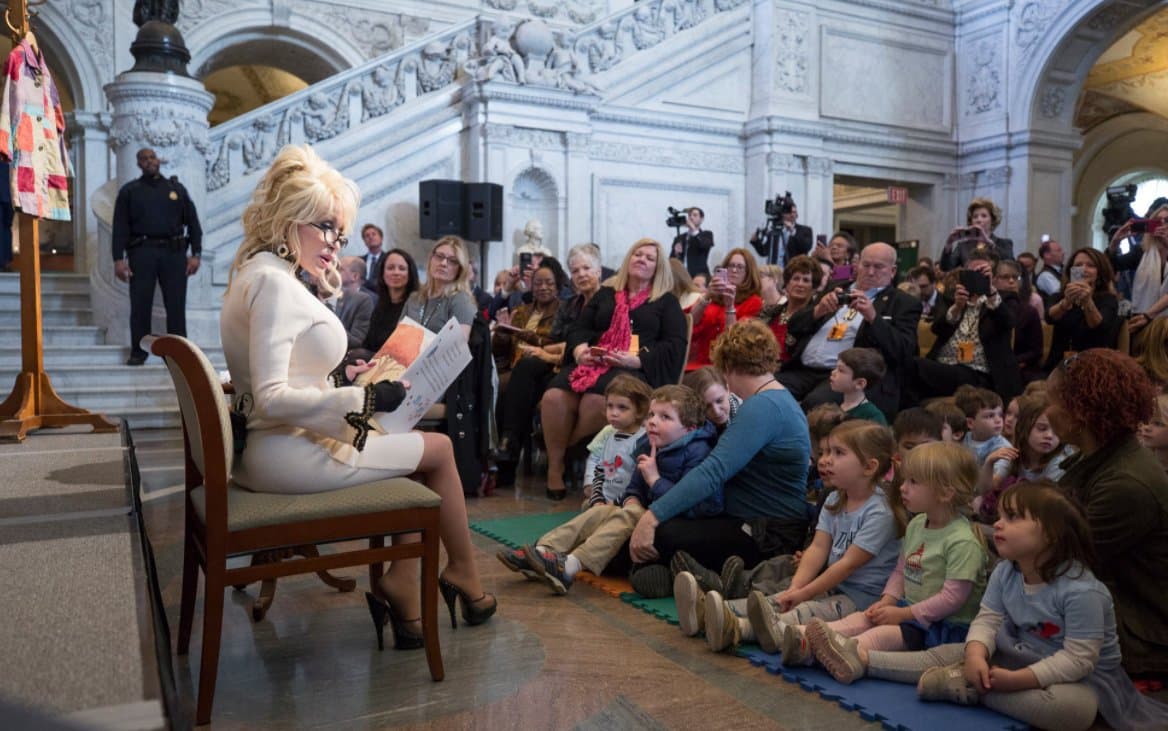
Dolly reads to children at the Library of Congress in February 2018, the day the Imagination Library gave away its 100 millionth book. Photo: Shawn Miller, Library of Congress.
The father who could not read
She built all of it for one man.
Robert Lee Parton farmed tobacco in the mountains of East Tennessee. He came from a large family, was needed at home, and never went to school. He never learned to read or write. Dolly, the fourth of his twelve children, was born in a one-room cabin on the Little Pigeon River, and she said for the rest of her life that her father was one of the smartest people she ever knew. She credited him for her business sense.
“My Daddy couldn’t read and write, and we were just mountain people,” she said. “Daddy was always kind of embarrassed.” He had decided the door was closed: “Daddy thought it was just something he couldn’t learn after he was grown, so he never tried to learn to read and write.”
When she started mailing books to children in her home county in 1995, she told him: “There are millions of people around this world that can’t read and write. You’re not the only one. You don’t need to feel embarrassed about that.” She asked him to help her with the program. The children of Sevier County started calling her the Book Lady, and she said her father thought that was the grandest thing. Before he died in 2000, the year the program went national, he told her the Imagination Library was probably the most important thing she had ever done.
Why this belongs on a dyslexia website
Lee Parton was not dyslexic, as far as anyone knows. He never had the chance to find out. But if you are raising a dyslexic child, you recognize the two things he carried: the embarrassment, and the conviction that reading belongs to other people.
A dyslexic child tends to reach that same conviction by second grade. She watches the class take off while she is still sounding out the same word, and she draws a conclusion about herself. Undoing that conclusion takes more work than teaching the letters ever did.
The numbers make this urgent. In the 2024 National Assessment of Educational Progress, 40 percent of American fourth graders scored below the basic level in reading, the highest share since 2002. More fourth graders now read below basic than read at a proficient level.
Dolly’s answer was to get books into homes before any of that could start, and researchers have measured what that does. Children enrolled in the Imagination Library for three years or more arrive at kindergarten ahead of their peers in letter naming, print concepts and phonemic awareness. In one state study, enrolled children were nine times more likely to be read to four or more days a week. Those are the exact skills a dyslexic child finds hardest.
A book in the mail does not prevent dyslexia and does not cure it. What it does is give the child a running start on the skills that matter most, and it makes reading together an ordinary part of the household. The child meets school having been read to a thousand times.
That second part matters more than most parents realize. A dyslexic child who is read to takes in the vocabulary, the sentence patterns and the shape of a story without decoding a single word. Her listening keeps pace with her intelligence while her decoding catches up. A child who has never been read to arrives at the reading struggle with nothing to fight for, because she does not yet know what a book holds.
The message in the mailbox
One detail of the program is worth pausing on. The book comes addressed to the child. A two-year-old cannot read the label, but a four-year-old can find her own name on it. Month after month, the mail carrier delivers something that says: this is yours, and you belong with books.
For a child who will later be told she is “behind,” that history is an asset. She owns sixty books before she has read one. She has a favorite. She knows how the story ends before she can decode the first page. The dyslexia is still there, and it will still need proper training. But she walks into that work as a reader with a problem to solve rather than as a non-reader.
Dolly said it herself: “If you can read, even if you can’t afford education, you can go on and learn about anything you want to know.”
Two books
The first book every enrolled child receives is The Little Engine That Could. It was the one book Dolly remembered having in the house as a girl.
The 100 millionth book, presented at the Library of Congress in February 2018, was her own picture book, Coat of Many Colors, drawn from the song about a coat her mother stitched from rags and the classmates who laughed at it. The girl in the story is poor and mocked and knows she is loved anyway. That is a story a lot of our children need.
What you can do this week
Sign up. If you have a child under five, go to imaginationlibrary.com and check whether a local partner covers your area. Most of the United States is covered. It costs you nothing.
Keep reading aloud. If your child is older and finds reading hard, do not stop at the age when children are “supposed” to read on their own. Audiobooks count. What matters is that the stories keep coming while the decoding catches up.
Have it looked at early. If you suspect dyslexia, get an assessment. Every year you wait adds to the “reading is for other people” belief you will later have to undo. Our free worksheets are a place to start, and you can read about the American Dyslexia Association here.
Give, if you can. Her family asked that gifts in her memory go to the Imagination Library, and September is Imagination Library Month. The Dollywood Foundation said after her death: “The work ahead has never felt more meaningful, and we will carry it forward.”
She had one more line that we will keep on the wall: “You can never get enough books into the hands of young children.”
Thank you, Dolly.
Reading, and being underestimated because of it, keeps turning up in famous lives. In 2026 Charles Spencer said he believes his sister Diana, Princess of Wales, was dyslexic. Here is what the record actually shows.
The American Dyslexia Association is a nonprofit organization in Osprey, Florida, supporting children, families, educators, and adults affected by dyslexia and other reading and writing differences.
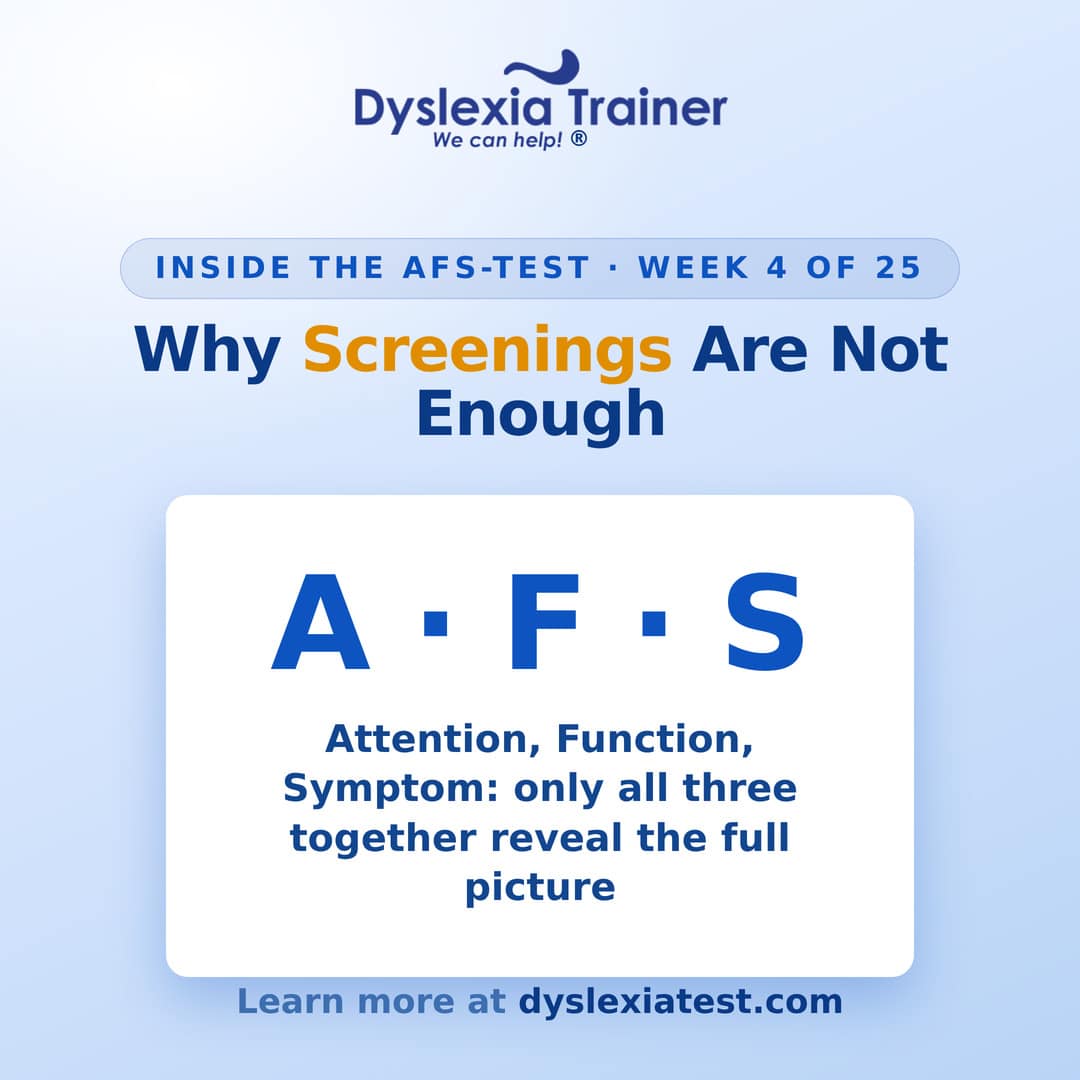
Every Wednesday, we take you inside the AFS-Test, the standardized assessment that allows Certified Dyslexia Trainers to definitively diagnose and categorize dyslexia and dyscalculia. This is week 4 of 25.
This week: Why Screenings Are Not Enough
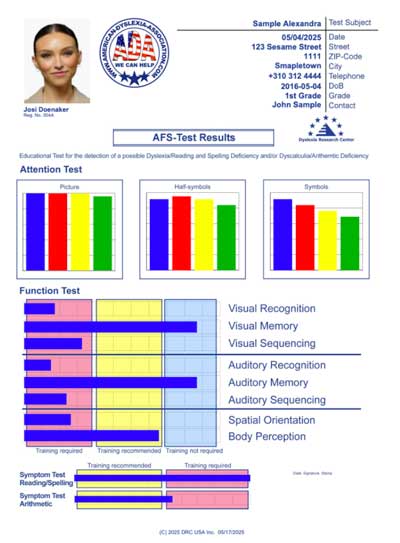
A child can score average on a screening and still struggle every single day. Screenings, reading tests, IQ tests, and phonological assessments each look through one small window, and none of them alone can definitively diagnose and categorize dyslexia. The AFS-Test takes the comprehensive route: it examines the attention span, eight areas of sensory perception, and the concrete error symptoms a child shows when reading, spelling, or calculating. Only when all three areas are tested together does the full picture appear, and with it the right kind of help.
About the AFS-Test
The standardized Attention-Function-Symptom Test has been used worldwide for more than 25 years. It examines the attention span, the sensory perceptions, and the error symptoms of a child, and turns the results into an individualized training plan following the AFS-Method.
Find a Certified Trainer
Certified Dyslexia Trainers conduct the standardized AFS-Test in your area or remotely. Learn more and find a Certified Trainer near you: dyslexiatest.com
You can find all published articles of this series under the tag AFS-Test Series.
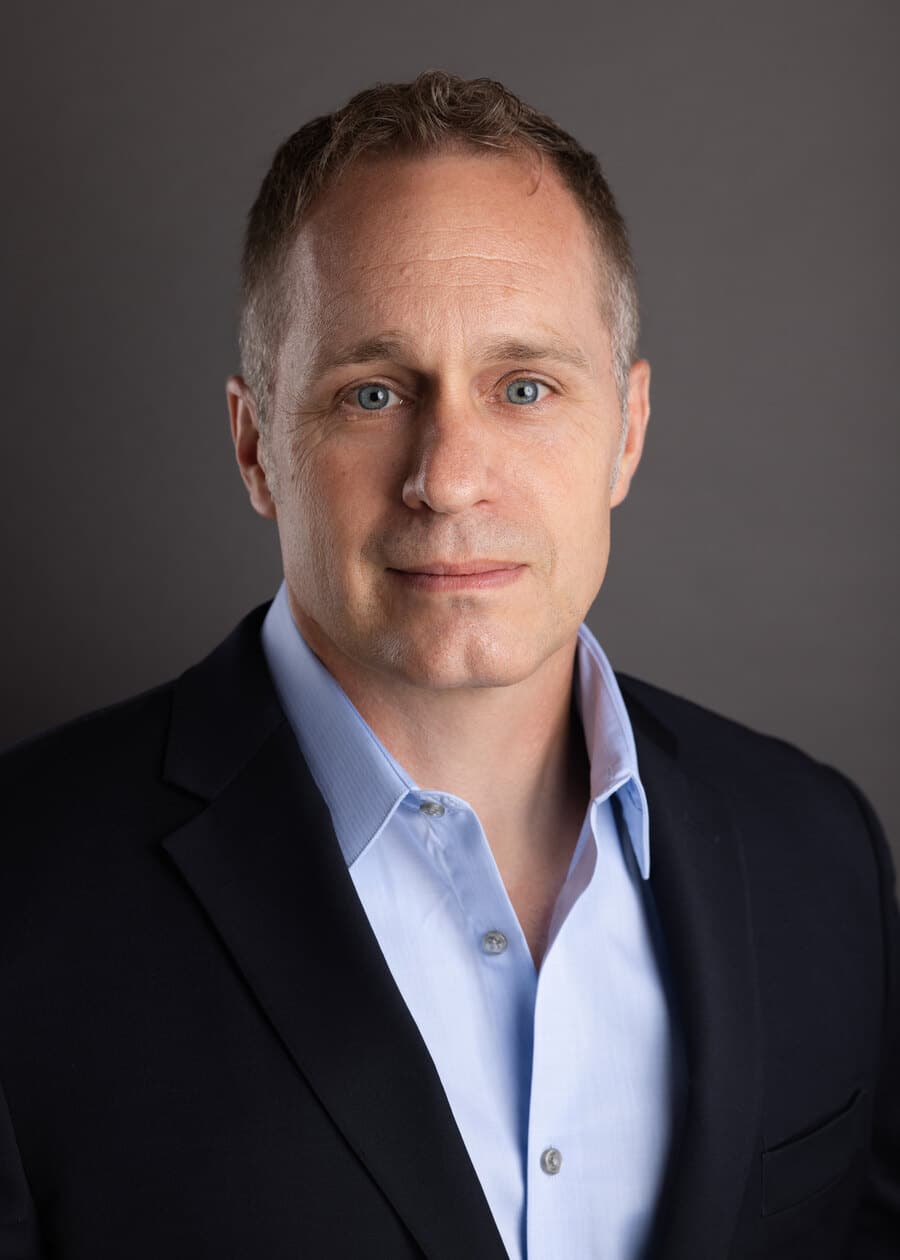
Some writers spend a career imagining danger. Don Bentley spent a decade flying into it.
Before he became a New York Times bestselling novelist, Bentley flew Apache helicopters for the U.S. Army and was awarded the Bronze Star Medal and the Air Medal with “V” device for valor in Afghanistan. He went on to serve as an FBI special agent working foreign intelligence and counterintelligence, and as a member of a SWAT team. Today he writes the Matt Drake thrillers and four Tom Clancy Jack Ryan, Jr. novels, and he now writes in the Mitch Rapp universe created by the late Vince Flynn.
We wrote to him with a small request. We asked whether he would say a few words to children who find reading hard, and to the families sitting at the kitchen table with them. He answered within the week.
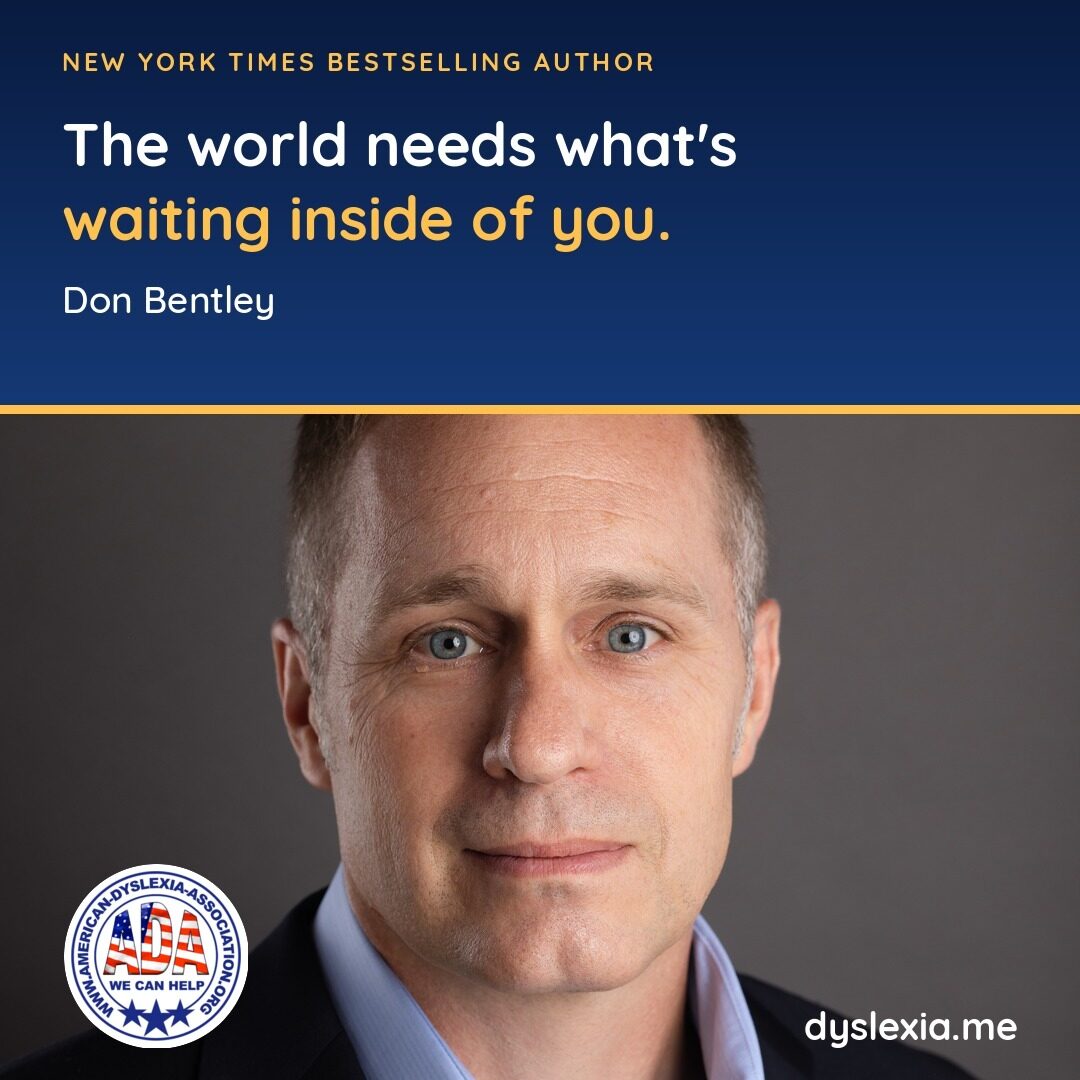
Dyslexia is an obstacle, but it doesn’t have to be a limitation. My favorite author, Vince Flynn, was dyslexic and his thirteen novels reflect the creative, out of the box thinking common among dyslexics. Writing was a struggle for Vince, but his perseverance birthed one of commercial fiction’s most iconic protagonists, Mitch Rapp, and delighted millions of readers. Don’t give up—the world needs what’s waiting inside of you too!
Don Bentley
Why Vince Flynn
There is a reason Flynn came to mind. He was open about his dyslexia, and the start of his career was anything but a straight line. He collected rejection letter after rejection letter and finally published his first novel himself, in 1997. Readers found it anyway. The character he created went on to fill shelves in airports and libraries all over the world, and the series is still running today, written by the author who sent us these words.
That is the part we want children to hear. Not that dyslexia is easy, and not that it goes away. It is that the way a dyslexic mind works, arriving sideways at an answer other people walk straight past, is the same quality that made those books worth reading in the first place.
If your child has decided that books are for other people, this is worth reading out loud to them.
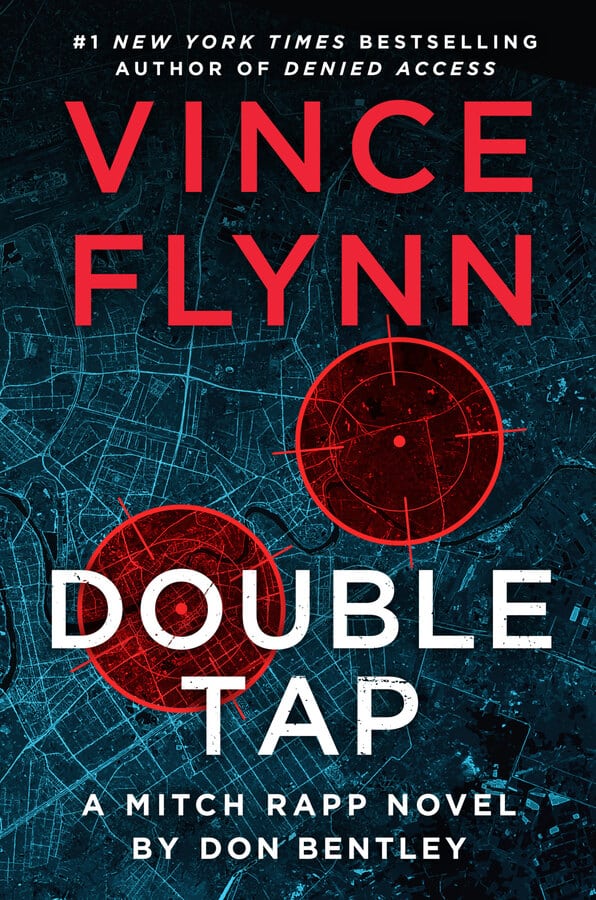
Double Tap, out September 22
Bentley’s next novel, Double Tap, arrives on September 22, 2026 from Atria/Emily Bestler Books. It continues Vince Flynn’s American Assassin storyline and sends a young Mitch Rapp on his first deep cover mission. A Pakistani chemical weapons scientist has been snatched off the streets of Verona, and Rapp has to get inside the cell that took him before anyone can put that expertise to use.
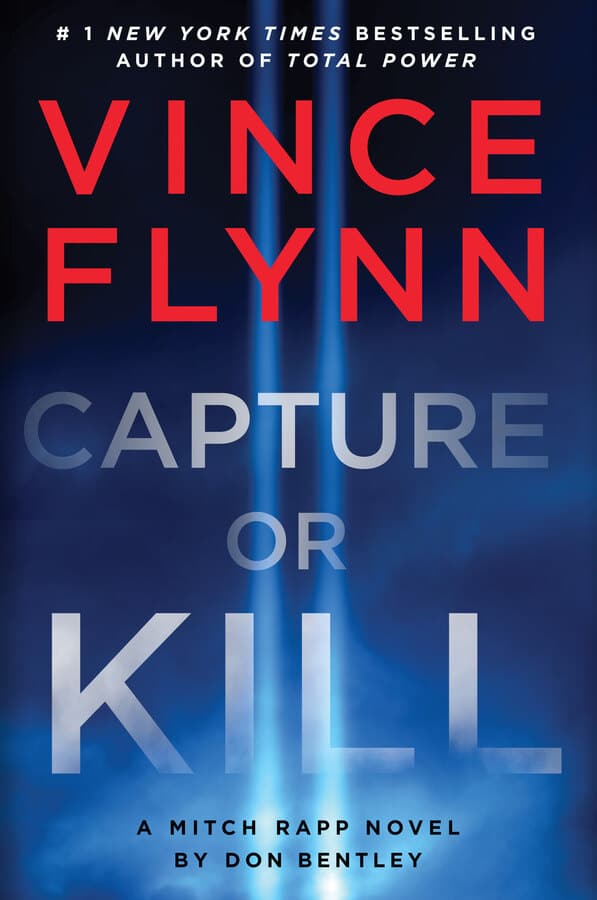
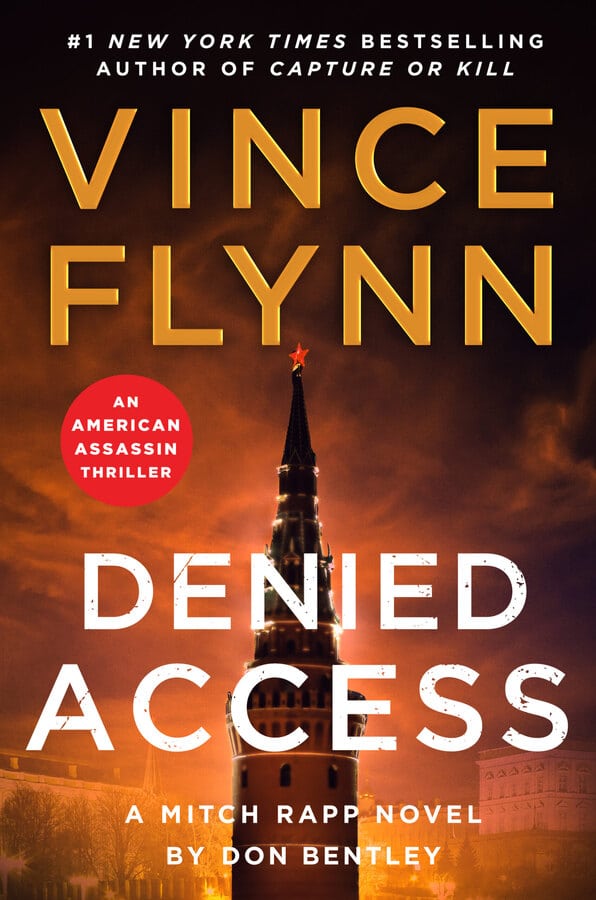
It is his third novel in the Mitch Rapp series, after Capture or Kill and Denied Access.
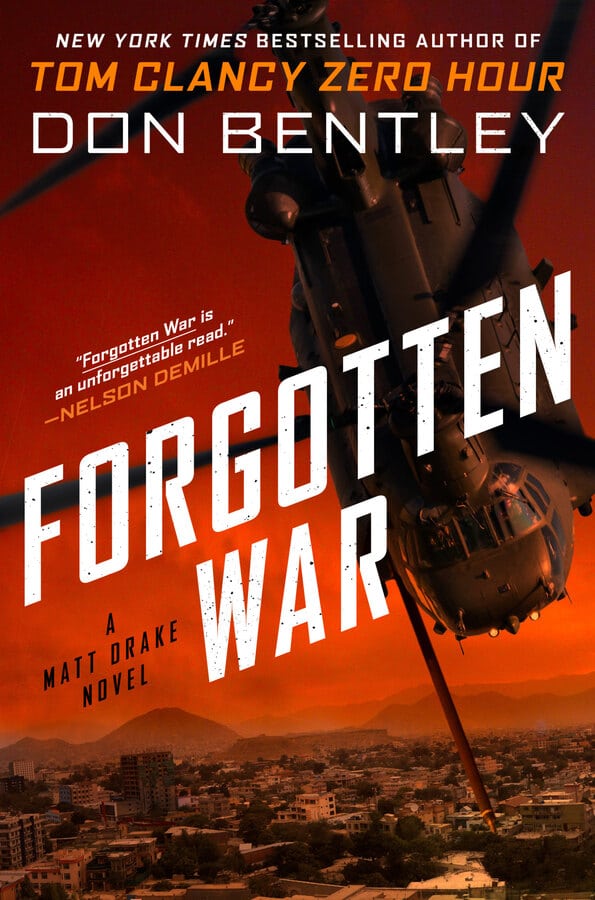
More from Don Bentley: the Mitch Rapp novels Capture or Kill and Denied Access, and the Matt Drake thrillers Without Sanction and Forgotten War.
Our thanks to Don Bentley for taking the time. You can find all of his books at donbentleybooks.com.
The American Dyslexia Association is a nonprofit organization in Osprey, Florida, supporting children, families, educators, and adults affected by dyslexia and other reading and writing differences.
Every Tuesday, we open up one lesson of the Dyslexia Trainer Certification Program here on the blog, all 48 of them, one week at a time. Whether you are a teacher, a parent, or an education professional, this series shows you exactly what certified dyslexia trainers learn, and how the program works from the inside.
This week: The AFS-Test. A Comprehensive Educational Assessment Tool
The AFS-Test (Attention-Function-Symptom Test) is a standardized assessment used worldwide to identify dyslexia and dyscalculia and to plan effective intervention. It evaluates three areas: attention span, the sensory perception abilities underlying reading, spelling, writing, and arithmetic, and the concrete error symptoms a learner shows. This lesson explains its structure and application, and how to turn results into an educational report for parents, teachers, and professionals.
What this lesson is about
Dyslexia and dyscalculia can present significant challenges for children and adults, often impacting their academic and personal lives. Early identification and targeted support are crucial to helping individuals overcome these difficulties and reach their full potential. The AFS-Test (Attention-Function-Symptom Test) is a comprehensive, standardized assessment tool used worldwide to diagnose and plan effective intervention for those experiencing reading, spelling, writing, or arithmetic difficulties.
This lesson explores the structure and application of the AFS-Test, explaining how it evaluates the key areas associated with dyslexia and dyscalculia. By understanding the test’s methodology and its critical role in developing individualized training plans, educators and specialists can better support learners who require specialized instruction. The lessons concludes with how to write an educational report to summarize your findings for parents, teachers, and other professionals.
The standardized Attention-Function-Symptom-Test (AFS-Test) is used worldwide by countless educators in their work with people affected by reading, spelling, writing, or arithmetic problems. The test enables parents, teachers, and interested parties to gain better insight into the entire issue, diagnose a dyslexia/dyscalculia definitely, and is also an invaluable tool for training planning. Based on the test results, detailed individual training plans can be created that are tailored to the affected person’s problems.
What you will learn in Lesson 7
The three areas of the AFS-Test: attention, function, symptoms
How the standardized test is conducted and evaluated
From test results to an individualized training plan
Writing an educational report for parents, teachers, and professionals
About the Dyslexia Trainer Certification Program
Since 1997, more than 17,000 dyslexia trainers in 64 countries have been certified. The certification gives you more than knowledge: all the tools you need to actually work with dyslexic children are included as well. Worksheets, training programs, assessment materials, everything ready to use in your practice. You get the whole package.
The program is accredited by the American Dyslexia Association (ADA) and follows the training standards of the International Federation of Dyslexia and Dyscalculia Associations (IFDDA).
Catch up and start free
Lesson 1 is free for everyone. Register in a minute and see the program from the inside: dyslexiacertificate.com
You can find all published lessons of this series under the tag Lesson Series.
Every Wednesday, we take you inside the AFS-Test, the standardized assessment that allows Certified Dyslexia Trainers to definitively diagnose and categorize dyslexia and dyscalculia. This is week 3 of 25.
This week: The Three Levels of Diagnostics
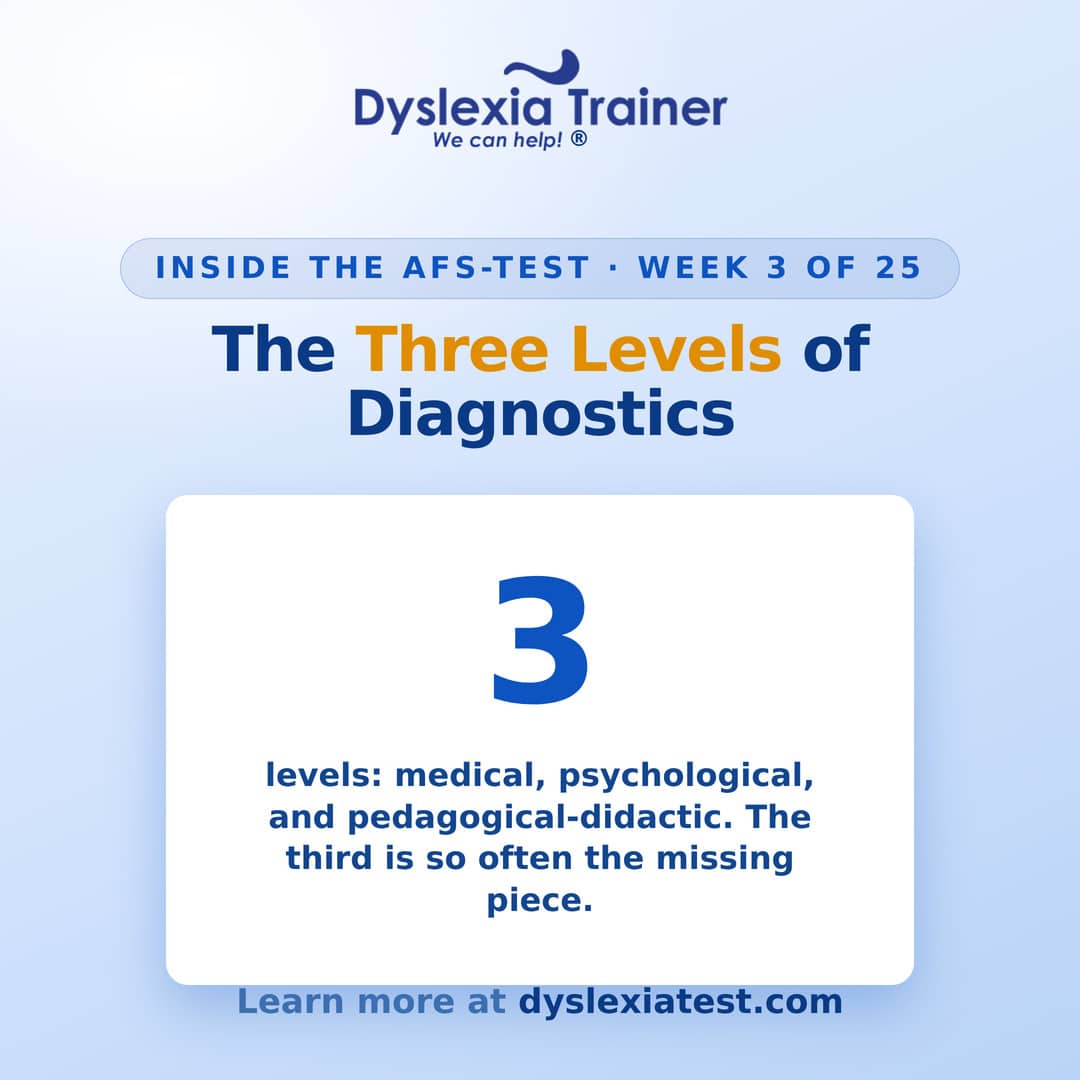
When a child struggles in school, parents often travel a confusing road between teachers, psychologists, and doctors. Diagnostics happen on three levels: the medical, the psychological, and the pedagogical-didactic level. Each answers different questions, and none can replace the others. The pedagogical-didactic level, where the AFS-Test works, is so often the missing piece: it looks at how a child actually reads, writes, and calculates, and what kind of targeted training will help. Only when this level is included does a diagnosis lead directly to support.
About the AFS-Test
The standardized Attention-Function-Symptom Test has been used worldwide for more than 25 years. It examines the attention span, the sensory perceptions, and the error symptoms of a child, and turns the results into an individualized training plan following the AFS-Method.
Find a Certified Trainer
Certified Dyslexia Trainers conduct the standardized AFS-Test in your area or remotely. Learn more and find a Certified Trainer near you: dyslexiatest.com
You can find all published articles of this series under the tag AFS-Test Series.
As an Amazon Associate I earn from qualifying purchases.