Tag: AFS-method

  • 5 Surprising Truths About Dyslexia

    5 Surprising Truths About Dyslexia

    Beyond the Myths: 5 Surprising Truths About Dyslexia

    When most people hear “dyslexia,” they picture a child confusing ‘b’ and ‘d’ or struggling to spell. While these can be signs, this common understanding barely scratches the surface of a much more complex reality. For years, myths and misconceptions have created frustration for parents, educators, and especially for individuals with dyslexia themselves.

    As someone who has been training dyslexia specialists since 1996, I’ve seen firsthand how a deeper understanding can transform a child’s learning journey from struggle to empowerment. Let’s move beyond the myths and explore five truths that challenge common assumptions and offer a more accurate, helpful perspective.

    1. It’s Not Always ADHD—It’s Often Cognitive Overload

    It’s a common scenario: a child is restless, fidgets constantly, and can’t stay focused during reading or writing tasks. The immediate suspicion is often ADHD. However, for many dyslexic learners, these behaviors are not signs of a pervasive attention disorder—they’re a situational response to cognitive overload.

    This is a key diagnostic differentiator known as situational inattentiveness. The behaviors are tied specifically to symbol-based tasks because decoding letters and numbers requires immense mental effort, leading to rapid exhaustion.

    Here’s what’s important: many of these same children can focus deeply on tasks that don’t involve written symbols—building, drawing, or problem-solving. While ADHD involves challenges with regulating attention across all situations, situational inattentiveness from dyslexia is about running out of cognitive fuel during specific tasks.

    The takeaway: Restlessness or inattentiveness during reading and writing isn’t automatically ADHD—it may reflect the stress and fatigue of struggling with dyslexia. Misdiagnosing this can lead to the wrong support, focusing on behavior management while failing to address the root literacy challenge.

    2. Why “Just Try Harder” Is Terrible Advice

    One of the most persistent and damaging myths is that dyslexia can be overcome with more effort. Well-meaning parents and teachers often believe that increased practice—more reading drills, more spelling lists—will solve the problem.

    For a dyslexic child, this approach rarely works and often creates immense frustration. Dyslexia isn’t just a problem with reading and writing symptoms; it’s rooted in differing sensory perceptions and how the brain processes symbols. Piling on more drills without addressing these underlying functions is like asking someone to run faster without ever teaching them proper form.

    A-F-S Method  AFS Method

    Effective support must be comprehensive. The AFS Method is built on three essential pillars that must be addressed together:

    • A – Attention training: Building the capacity for sustained, flexible focus
    • F – Function training: Strengthening sensory perceptions (visual, auditory, spatial processing)
    • S – Symptom training: Practicing reading, writing, and arithmetic skills

    Only when all three pillars are addressed can a child build the necessary pathways for efficient learning. This shifts the focus from blaming a child’s effort to providing the right kind of individualized support.

    3. The Goal Is Flexible Attention, Not Intense Concentration

    This may seem counter-intuitive, but forcing a dyslexic child to concentrate intensely on reading is often counterproductive. There’s a crucial difference between attention and concentration.

    Attention is a flexible state of focus. It allows a learner to stay on task while remaining aware of their surroundings and receptive to guidance. An attentive child can focus on words on the page but still hear a teacher’s prompt or notice a helpful cue.

    Concentration is a narrow, intense focus that excludes everything else. For a dyslexic learner, it can lead to rapid mental exhaustion, block out helpful feedback, and create unnecessary tension.

    The goal of effective training is to strengthen flexible attention—a balanced mental state that supports learning without causing fatigue and stress. This shift in thinking is a game-changer, helping learners engage with difficult tasks in a more sustainable way.

    4. It’s Not a Deficit—It’s a Different Operating System

    For too long, dyslexia has been framed solely as a disability. While the challenges are real, this perspective overlooks the unique strengths that often accompany this different way of processing information.

    Research and experience show that dyslexic individuals often exhibit above-average creativity, problem-solving skills, and big-picture thinking. Many of the world’s most successful innovators and leaders are dyslexic:

    • Hans Christian Andersen’s dyslexia likely contributed to the simple, accessible language that made his tales universally beloved
    • Leonardo da Vinci’s highly visual thinking allowed him to excel as both artist and engineer

    By shifting the narrative from “disability” to “different ability,” we help dyslexic individuals unlock their full potential. This perspective profoundly boosts a child’s confidence and motivation, allowing them to develop their considerable talents while receiving targeted support for their challenges.

    5. IQ Tests Can Be Deceptively Wrong

    Traditional intelligence testing can be highly misleading for individuals with dyslexia. Many IQ subtests rely heavily on the very skills that are challenging for dyslexics: rapid visual processing, symbol manipulation, and visual memory.

    Consequently, a bright dyslexic individual might score poorly and be misclassified as having “borderline intellectual ability.” The evaluator may conclude that academic struggles are due to low overall intelligence—tragically overlooking the real issue.

    A sharp split between different cognitive abilities—such as strong verbal reasoning versus slower processing speed—is often a hallmark pattern of dyslexia, not an indicator of low intelligence. The danger of misdiagnosis is immense: it can lead to recommendations for basic life skills training instead of the targeted academic support they truly need.

    Conclusion: Seeing the Whole Picture

    Understanding dyslexia means looking beyond mixed-up letters and frustrating homework sessions. It means recognizing that:

    • The child who can’t sit still may be cognitively exhausted
    • “Trying harder” is often the wrong advice
    • Comprehensive support addressing attention, sensory functions, and symptoms is essential
    • Flexible attention beats forced concentration
    • Dyslexia comes with unique strengths worth celebrating
    • IQ scores should never limit a child’s potential

    What potential could we unlock if we started seeing dyslexia not as a barrier to overcome, but as a different way of seeing the world?


    Frequently Asked Questions

    What are surprising symptoms of dyslexia?

    Beyond the well-known reading and spelling difficulties, dyslexia can show up in unexpected ways:

    • Left-right confusion – Difficulty distinguishing left from right, even into adulthood
    • Time management struggles – Trouble estimating how long tasks will take or being chronically late
    • Difficulty following sequences – Challenges with steps, directions, or remembering the order of things
    • Word retrieval problems – Knowing a word but being unable to recall it in the moment (“it’s on the tip of my tongue”)
    • Trouble with phone numbers and dates – Mixing up or forgetting numerical sequences
    • Poor short-term memory – Forgetting instructions moments after hearing them
    • Difficulty with organization – Messy backpacks, lost homework, cluttered spaces
    • Mispronouncing words – Especially longer or unfamiliar words
    • Avoiding reading aloud – Even when the person is otherwise confident

    These symptoms often go unrecognized because they don’t fit the stereotypical image of dyslexia.

    What are the 4 D’s of dyslexia?

    The “Four D’s” refer to four related learning differences that often overlap:

    • Dyslexia – Affects reading, writing, and spelling
    • Dyscalculia – Affects mathematical understanding and number sense
    • Dysgraphia – Affects handwriting, spelling, and putting thoughts on paper
    • Dyspraxia – Affects motor coordination and movement planning

    Each presents unique challenges, but they share common roots in how the brain processes information. It’s not uncommon for someone to experience more than one of these conditions.

    Is Bill Gates dyslexic?

    There is no confirmed public statement from Bill Gates indicating that he has dyslexia. While many successful entrepreneurs and innovators are dyslexic, it’s important not to assume or misattribute this condition. What we do know is that Gates has spoken about the value of different thinking styles in innovation and technology.

    Who else is dyslexic?

    Many highly successful people have openly shared their dyslexia, proving that it’s no barrier to achievement:

    • Richard Branson – Founder of Virgin Group
    • Steven Spielberg – Award-winning filmmaker
    • Whoopi Goldberg – Actress and TV host
    • Keira Knightley – Actress
    • Orlando Bloom – Actor
    • Jamie Oliver – Celebrity chef
    • Tom Cruise – Actor
    • Jennifer Aniston – Actress
    • Muhammad Ali – Boxing legend
    • Albert Einstein – Physicist (widely believed, though not formally diagnosed)
    • Agatha Christie – Best-selling author
    • John Lennon – Musician

    These individuals succeeded not despite their dyslexia, but often because of the unique strengths it gave them.

    What should you NOT say to a dyslexic person?

    Certain phrases, even when well-intentioned, can be hurtful or dismissive:

    • “Just try harder” – Dyslexia isn’t about effort; it’s about how the brain processes information
    • “You’re just lazy” – Dyslexic individuals often work twice as hard to achieve the same results
    • “You don’t look dyslexic” – Dyslexia has no physical appearance
    • “Everyone struggles with reading sometimes” – This minimizes a real neurological difference
    • “You’ll grow out of it” – Dyslexia is lifelong, though strategies can help manage it
    • “Why can’t you just remember?” – Memory challenges are part of dyslexia for many people
    • “Maybe you’re just not a reader” – With the right support, dyslexic individuals can enjoy reading
    • “Are you sure you’re not just making excuses?” – This undermines their genuine struggles

    Instead, offer understanding, patience, and ask how you can help.

    What are dyslexics best at?

    Dyslexic individuals often excel in areas that leverage their unique brain wiring:

    • Creative thinking – Seeing possibilities others miss
    • Problem-solving – Finding unconventional solutions
    • Big-picture thinking – Understanding complex systems and connections
    • Visual-spatial skills – Excelling in design, architecture, engineering, and art
    • Storytelling – Communicating ideas in engaging, memorable ways
    • Entrepreneurship – An estimated 35% of entrepreneurs are dyslexic
    • Empathy – Having overcome challenges often creates deep understanding of others
    • Innovation – Thinking outside the box comes naturally
    • Verbal communication – Many dyslexics are excellent speakers and persuaders

    Dyslexia often comes with remarkable gifts—the key is recognizing and nurturing them alongside targeted support for challenges.


    Want to Learn More?

    Are you a teacher, tutor, parent, or education professional who wants to make a real difference for dyslexic learners? Understanding dyslexia at a deeper level is the first step toward providing truly effective support.

    Our comprehensive certification program teaches you the AFS Method and equips you with the knowledge and practical tools to help children with dyslexia thrive.

    👉 Learn more at DyslexiaTrainer.com

    Whether you’re looking to expand your professional skills or simply want to better support a child in your life, education is the key to unlocking their potential.

  • Relaunch Announcement: The ADA-Accredited Dyslexia Trainer Certification Program Returns Stronger Than Ever

    Relaunch Announcement: The ADA-Accredited Dyslexia Trainer Certification Program Returns Stronger Than Ever

    The American Dyslexia Association (ADA) is pleased to announce the relaunch of the ADA-accredited Dyslexia Trainer Certification Program (www.dyslexiacertificate.com), an internationally recognized professional training for educators, specialists, and tutors who want to make a meaningful and immediate difference in the lives of learners with dyslexia.

    This updated and expanded program reflects decades of research, practical experience, and global collaboration—bringing together the proven strengths of the AFS Method, the standardized AFS Dyslexia Test, and the pedagogical expertise of the Dyslexia Research Center USA (DRC) and its partners.

    Become a certified dyslexia trainer

    For educators passionate about supporting diverse learners, this program offers a powerful pathway to deepen skills, strengthen confidence, and create lasting impact in classrooms and communities.


    Why ADA Accreditation Matters

    Accreditation by the American Dyslexia Association signifies that a program meets rigorous standards in research-based content, practical applicability, and professional ethics.

    The Dyslexia Trainer Certification Program by DRC USA is one of the few international dyslexia training programs to achieve ADA accreditation. This ensures that participants receive:

    • Instruction aligned with current scientific understanding of dyslexia
    • Practical tools that can be applied immediately in real educational settings
    • A consistent framework based on the cognitive foundations of reading, writing, and attention
    • A trusted and internationally recognized credential
    • A professional pathway that aligns with ADA’s mission to support individuals with dyslexia through evidence-based practice

    ADA accreditation is not merely a seal—it is a commitment to quality and outcomes. Educators can be confident that the skills they learn will support learners effectively and ethically.


    A Program Designed for Educators Who Want to Make a Difference

    The updated Dyslexia Trainer Certification Program focuses on practical, hands-on training grounded in research. This is not theoretical learning—it is actionable, accessible education that empowers participants to begin helping learners immediately.

    Key features include:

    The Standardized AFS Dyslexia Test

    Participants gain access to a widely used, research-supported screening instrument that helps identify dyslexia-related challenges with clarity and consistency.

    The AFS Method

    A structured, neurological approach to supporting foundational skills such as attention, visual perception, auditory processing, and spatial orientation—areas known to influence reading and writing success.

    Immediate Practical Application

    Each lesson includes methods and exercises educators can start using right away with learners of all ages.

    Flexible Online Learning

    Designed for busy educators, the program can be completed from anywhere, at your own pace, with ongoing support and guidance.

    International Recognition

    Graduates receive a certification that is respected and accepted worldwide through ADA partnerships.


    Who Should Enroll?

    The program is ideal for:

    • Classroom teachers
    • Special education professionals
    • Learning specialists
    • Tutors and educational therapists
    • Psychologists and school counselors
    • Homeschool educators
    • Anyone passionate about supporting individuals with dyslexia

    If your goal is to understand dyslexia deeply and help learners thrive, this certification is a powerful next step.


    Free Preview Lesson Now Available

    To support transparency and help educators experience the program firsthand, the first lesson is available for free. This preview provides an authentic look into the teaching style, structure, and practical value of the certification.

    Educators consistently report that Lesson 1 alone gives them insights they can begin using immediately.

    Sign up for your free lesson here: www.dyslexiacertificate.com


    Enrollment Is Open Now

    Enrollment is now officially open, and we invite educators worldwide to secure their place in the newly relaunched Dyslexia Trainer Certification Program and join educators from 65 countries worldwide who have already completed the certification.

    Demand for this ADA-accredited training is expected to be high, and early enrollment ensures immediate access to:

    • The introductory module
    • Program orientation
    • Bonus materials
    • The free preview lesson
    • Early community access

    This is an excellent opportunity to advance your professional skills and join a global network of dyslexia-focused educators.


    A Shared Mission: Helping Learners Thrive

    At the American Dyslexia Association, our mission is clear:

    To support individuals with dyslexia and related learning differences through understanding, research, and practical, effective education.

    The relaunch of this certification program aligns strongly with that mission.

    We are proud to endorse and accredit a program that equips educators with the tools they need—not only to teach, but to inspire, uplift, and create lasting change for learners who need it most.


    We approve and support this program.

    American Dyslexia Association


    Are you ready to enroll and help dyslexic children effectively? Join here: www.dyslexiacertificate.com

  • Mastering Word Formulation: How the AFS Method is Transforming Language Learning for Dyslexic Individuals

    Mastering Word Formulation: How the AFS Method is Transforming Language Learning for Dyslexic Individuals

    Wordformulation

    In the ever-evolving landscape of educational resources, innovative tools that cater to diverse learning needs are invaluable. For the millions of individuals worldwide who struggle with dyslexia, finding the right approach to language learning can make the difference between frustration and success.

    Enter Wordformulation.com — a platform dedicated to enhancing language acquisition through the proven AFS Method. Developed by Dr. Astrid Kopp-Duller, this structured approach to word formulation offers hope and practical solutions for individuals with dyslexia and other learning challenges.

    What Is the AFS Method?

    The AFS Method is far more than just another learning technique. Standing for Attention, Function, and Symptom training, it represents a comprehensive, research-backed approach designed specifically to address the unique challenges faced by dyslexic individuals.

    Here’s how each component works:

    Attention Training focuses on helping learners concentrate when working with letters, words, and symbols. Dyslexic individuals often experience attention lapses specifically when dealing with written language — not due to lack of effort, but because their brains process information differently.

    Function Training targets the underlying sensory perceptions that are essential for reading and writing. This includes visual differentiation, auditory memory, spatial orientation, and other cognitive functions that form the foundation of literacy skills.

    Symptom Training addresses the actual difficulties in reading and writing — but only after attention and functional skills have been strengthened. This is crucial: traditional approaches often jump straight to symptom training, which is why they frequently fail dyslexic learners.

    By addressing all three areas in a coordinated manner, the AFS Method ensures that learners receive targeted support tailored to their specific needs.

    Exploring Wordformulation.com

    Wordformulation.com serves as a practical treasure trove of resources for teaching and training in the English language. The platform offers a variety of exercises and materials designed with flexibility in mind — resources can be used both online and offline, accommodating educators, learners, and parents in various settings.

    The website is thoughtfully organized into grammatical categories:

    This structure allows users to focus on specific areas of interest or difficulty, making it easy to create customized learning paths based on individual needs.

    Why This Matters for Dyslexic Learners

    Dyslexia presents unique challenges in language acquisition that often require specialized strategies to overcome. Traditional teaching methods — which typically involve repetitive practice of the same material — rarely work for dyslexic learners. In fact, they often lead to frustration, decreased self-esteem, and a growing aversion to reading and writing.

    The AFS Method, as implemented on Wordformulation.com, takes a fundamentally different approach. By first strengthening attention and functional skills, learners build a solid foundation that makes symptom-level work (actual reading and writing practice) far more effective.

    The benefits extend beyond just improved literacy skills:

    • Increased confidence as learners experience genuine progress
    • Reduced frustration through appropriately targeted exercises
    • Better self-understanding as individuals learn how their minds work
    • Long-term skill development rather than short-term memorization

    Practical Application in Daily Learning

    One of the greatest strengths of Wordformulation.com is its practicality. The resources are designed for ease of use by:

    • Educators looking for effective classroom materials
    • Parents supporting their child’s learning journey at home
    • Learners themselves working independently to improve their skills

    Exercises can be completed online or printed for offline practice, accommodating various learning environments and preferences. The platform’s user-friendly interface ensures effortless navigation through different sections, making it a convenient tool for both daily practice and long-term learning strategies.

    The Science Behind the Success

    The development of the AFS Method by Dr. Astrid Kopp-Duller is grounded in decades of intensive work with individuals facing learning challenges. Since 1995, this approach has been refined through real-world experience with thousands of learners, contributing to its proven effectiveness.

    The method acknowledges a fundamental truth that many educational approaches overlook: dyslexic individuals are not “weak students” — they are people with a different way of processing information. This shift in perspective is transformative, both for the learners themselves and for those who support them.

    Getting Started

    Whether you’re an educator seeking effective teaching materials, a parent supporting your child’s learning journey, or a learner striving to improve your language skills, Wordformulation.com offers resources that can make a meaningful difference.

    The platform is free to explore, and the structured organization makes it easy to find exactly what you need. Start by identifying areas of difficulty, then work through the relevant exercises systematically.

    Remember: progress in language learning, especially for dyslexic individuals, is rarely linear. Celebrate small victories, maintain consistency, and trust in the process.

    Conclusion

    In a world where literacy is fundamental to success, tools like Wordformulation.com and approaches like the AFS Method are more important than ever. By offering specialized, research-backed resources that address the root causes of reading and writing difficulties, these platforms are helping countless individuals unlock their full potential.

    Explore Wordformulation.com today and discover how a different approach to language learning can open new doors for you or someone you care about.


    For more information about the AFS Method and comprehensive training in supporting dyslexic learners, visit www.dyslexiacertificate.com

    Wordformulation.com is a resource provided by the Austrian Dyslexia Association (EÖDL), celebrating 30 years of service to individuals with dyslexia and dyscalculia.

  • Approaches to Dyslexia Training

    Approaches to Dyslexia Training

    by IFDDA.org

    I. INTRODUCTION

    The phenomenon of dyslexia is often referred to as a “learning disability”. However, these exceptional individuals just have different sensory perceptions due to genetic dispositions (Galaburda, LoTurco, Ramus, Fitch, & Rosen, 2006). Their different sensory perceptions cause them to view and experience our world differently, what can lead to significant accomplishments in arts, sports, and science – just not in reading and writing. Many researchers of different disciplines have dealt with this topic, mainly on how to address the reading and spelling issues that dyslexics have and how to render assistance. The approaches to research in dyslexia are as diverse as the various methods of training. What is needed is a comprehensive approach to dyslexia training that addresses all elements that cause the affected individuals’ problems to deliver faster and longer-lasting improvements.

    The different sensory perceptions of a dyslexic person cause his or her attention to diminish when confronted with symbols like letters. The results are errors while reading and writing. The logical consequence is that dyslexics require assistance in all three areas: improvement of sensory perceptions, as well as enhancement of the attention span while reading and spelling, and at last but not least practicing of reading and spelling. Training techniques for dyslexics and research about such, however, tend to focus on only one (or at most two) of the three mentioned areas. Multiple studies have already proven the benefits of sensory perception training (Bonacina, Cancer, Lanzi, Lorusso, & Antonietti, 2015; Flaugnacco et al., 2015; Fraga González et al., 2015; Gori & Facoetti, 2014; Habib et al., 2016; Ikeshita-Yamazoe & Miyao, 2016; Wang et al., 2014). Other research focused on the advantageous role of attention training (Franceschini et al., 2015; Heim, Pape-Neumann, Van Ermingen-Marbach, Brinkhaus, & Grande, 2015; Valdois et al., 2015), while other scientific inquiries concentrated on increased practicing of the basic academic skills of reading and spelling (Law & Cupples, 2015; McArthur et al., 2015).

    Nevertheless, there is one approach to dyslexia training, which incorporates all three elements and, therefore, promises superior results: the so-called “AFS-Method” (A=attention, F=function/sensory perception, S=symptom). This method is open source and not a commercial program and has been practiced by dyslexia specialists for the past 20 years in over 50 countries worldwide in different languages with much success. Kopp-Duller and Pailer-Duller (2011) conducted a long-term qualitative study investigating the effectiveness of the AFS-Method, which showed that 85% of test subjects were able to improve their reading and spelling abilities. Other researchers have also reported on the uniqueness of the AFS-Method in contrast to other standard practices for rendering assistance to dyslexics (Ablinger, 2006; Halfarová & Cigánková, 2006; Karli, 2006; Levski, 2011; Mészáros, 2011, Szimmuck, 2014; Zachbauer, 2011). A central key point of training in the AFS-Method is the concept of teaching word using multiple senses called word formulations, which was confirmed as beneficial by Aylward and Berninger from the University of Washington (Schwarz; 2004).

    Further research, specifically quantitative in nature, should be conducted on the distinctive AFS-training method to generate quantifiable and tangible results so the method gains more acceptance in the dyslexia community and thus more affected individuals would be able to benefit from it. If more educators knew how to support dyslexic children successfully, fewer children would struggle at school and ultimately would be able to remain in school longer and receive a better education as a result.

    II. CAUSE OF DYSLEXIA

    Dyslexia is a hereditary condition that causes different sensory perceptions (Galaburda et al., 2006). Dyslexic individuals see, hear, and experience the world differently than non-dyslexics. This can have an upside because dyslexics are often talented in areas like technology, art, music, and sports – just not in reading and writing. The different sensory perceptions cause the dyslexics’ attention to diminish when confronted with the abstract concept of letters. This lack of attention results in errors while reading, writing, and spelling and in turn in poor academic performance in language studies (Kopp-Duller, 2012).

    Some research focuses on the aspect of auditory processes during reading, spelling, or writing: Bonacina et al. (2015) said that dyslexia stems from difficulties in auditory information processing, which results in impaired phonological awareness. Gori and Facoetti (2014) also agree that dyslexia is an auditory-phonological processing deficit while Franceschini et al. (2015) said that dyslexics exhibit weak linguistic-phonological processing. Other researchers put the emphasis on the visual aspect: Wang et al. (2014) concluded that dyslexic individuals have an issue with their visual perceptual processing.

    The bottom line is that dyslexia is a multisensory integration deficit (Fraga González et al., 2015). Dyslexic children have a unique way of processing information which results in a unique behavior during the learning process (Kopp-Duller & Pailer-Duller, 2011). No manifestation of dyslexia is alike because not every dyslexic person’s sensory perceptions are affected in the same way. Some children exhibit difficulty in visual processing, others with auditory, and again others in spatial perception. This is the precise reason not every training program to better the effects to dyslexia works on any child. The training efforts always need to be individualized to reach faster improvements without frustrating the child in the process.

    III. ELEMENTS OF DYSLEXIA TRAINING

    The approaches to dyslexia training are as diverse as the approaches to research on dyslexia. Researchers from a spectrum of disciplines have made it their duty to explore this complex subject and ways how to deal with it. Neurologists focus on processes in the brain of dyslexics to better understand the problem this phenomenon causes during reading and spelling (Heim et al., 2015). Geneticists view the issue from a hereditary standpoint (Galaburda et al., 2006). Psychologists focus on diagnosing dyslexia using intelligence tests although these tests were not designed for this purpose (Habib et al., 2016). At last but not least, pedagogues discuss how to help affected children more effectively (Berninger et al., 2008).

    The success of various training programs has been well documented in countless studies as demonstrated in the following subsections. Noticeably, training techniques tend to focus only on one aspect of the causation of dyslexia: training of attention, training of sensory perceptions, or training of symptoms, while the scientific evidence of the success of sensory perception training dominates. The question remains about what happens if dyslexia training is conducted using in individualized approach that covers all areas that cause the dyslexic child’s problems.

    A. Training of Attention

    The thoughts of a dyslexic person tend to wander, especially when they are confronted with the task of reading and writing. Dyslexic children reject these tasks because they cannot perform them well and would rather be doing something else. So they might act out and give the impression of being hyperactive. The wrong conclusion is often drawn from this behavior, that the child is hyperactive and, consequently, cannot read and write. However, the opposite is the case: The child cannot read and write which causes him or her misbehave. An important part of dyslexia training, therefore, is the focusing of attention. The goal of attention exercises is to give the affected individual the tools to focus his or her thoughts on the task at hand which automatically yields positive results in reading and spelling (Kopp-Duller, 2012).

    Various training techniques can be used to bring forth the desired outcome of focusing a child’s attention. Franceschini et al. (2015) used action video games in their study to increase the attention span in children with dyslexia. Heim et al. (2015) showed that the training of visual attention improves reading abilities. Another study where the training of visual attention improved reading abilities was conducted by Valdois et al. (2015). Breteler, Arns, Peters, Giepmans, and Verhoeven (2010) used qEEG based neurofeedback training to increase the attention span, where the subject learned to self-regulate and thus improve brain activities, and subsequently were able to reduce reading and spelling deficits. Research by Kast, Baschera, Gross, Jäncke, and Meyer (2011) revealed that phonological awareness exercises increased the focusing of the test subjects on the task at hand.

    B. Training of Sensory Perceptions

    As already discussed, dyslexics exhibit deficits in sensory perceptions, so-called functions. Logic and practice dictate that only with functioning sensory perceptions a smooth learning process is possible. The training and, therefore, improvement of these sensory perceptions leads to automatically better performances in reading and spelling as the presented evidence from multiple studies will demonstrate. Training can focus on visual, auditory, or spatial sensory perceptions while it is vital to find out in which areas that child has difficulty before starting with the sensory perception training (Kopp-Duller & Pailer-Duller, 2011).

    Fraga González et al. (2015) disclosed that training of letter-speech sound mapping lead to substantial reading gains in dyslexic test subjects. Ikeshita-Yamazoe & Miyao (2016) used a specifically for dyslexics designed visual training tool for learning symbols, where test subjects were able to give 83% correct responses after two months in post-tests compared to the traditional teaching method where no correct answers were given. The overall concept of perceptual learning lead to improvements in visual attention and reading in research by Gori and Facoetti (2014).

    Furthermore, Balido-Dean, Kupczynski, and Fedynich (2011), Berninger et al. (2008), in addition to Kast et al. (2011) showed multi-sensory training using letters has positive effects on reading and spelling abilities of dyslexic children. But even sensory perception training without the use of symbols lead to improvement of reading and spelling skills in a study by Burger, Kastenhuber, and Loidl (2001).

    A new approach to sensory perception training is the use of music. Training of basic musical rhythm perception skills had a positive impact on reading speed and accuracy in a study performed by Bonacina et al. (2015). Likewise, Flaugnacco et al. (2015) used music training to improve phonological awareness and reading skills in children with dyslexia. Habib et al. (2016) specifically used the concept of Cognitivo-musical training to yield improvements in auditory attention and reading.

    C. Training of Symptoms

    Another part of dyslexia training is the improvement of reading and writing skills and, therefore, the eradication of errors while reading and spelling. This is achieved through practicing these basic academic skills. In the end, even for dyslexic children, reading and spelling can only be learned through reading and spelling (Kopp-Duller, 2012). A lack of recent investigations in this area demonstrates that the scientific community of dyslexic research has reached the consensus that dyslexia needs to be addressed on the multi-sensory level. Nonetheless, Law and Cupples (2015) found that the increased practice of reading lead to improvement of real word reading for dyslexic children. Likewise, McArthur et al. (2015) showed that practicing of sight word and phonics reading lead to improvement in reading.

    IV. A COMPREHENSIVE APPROACH

    Kopp-Duller (1997), through her extensive experience in working with children that struggle in school, found that the classic method of increased practicing of reading and spelling did not bring forth the desired improvement when dealing with dyslexic children. The reason for this are the sensory perceptions that are not well developed in dyslexics. These need to be activated and formed to facilitate a smooth process of learning to read and write. An altered approach to helping children that struggle with reading and spelling due to dyslexia was needed that took into account all the things that cause dyslexic children to make mistakes when reading and spelling: inattention while reading and spelling, different sensory perceptions, and errors in reading and writing.

    A. The AFS-Method

    The result was the A(=attention)F(=functions)S(=method)-Method. This method is considered comprehensive or holistic because it offers training in all areas where dyslexic children struggle and where improvement measures should focus. The AFS-Method is also considered open because it only provides the framework for dyslexia training and allows the trainer to incorporate any program, tool, or resource that can help the child. Individuality is essential in dyslexia training since every child has his or her unique difficulties and, thus, the training needs to cater to these individual problems (Kopp-Duller, 2012).

    The AFS-Method consists of three parts: Every training session should start with an attention exercise, so the child learns to focus his thoughts on the reading and spelling task. This is followed by exercises for sharpening of the sensory perceptions. Not every child has issues in the same perception areas. Therefore, it is critical that an assessment takes place before training starts to find out which sensory perceptions need work. At last but not least, dyslexic children also need to practice reading, spelling, and writing (Kopp-Duller & Pailer-Duller, 2011).

    Kopp-Duller (1997) also came up with the concept of so-called word formulations to integrate into symptom training. The practicing of the core academic skills should also be conducted by activating the senses. Word formulations involve exercises that teach children about word picture (letters make up words, what do the letters look like, etc.), word sound (letters have sounds and these sounds together form a word, etc.), and word meaning (every word has one or multiple applications, how can the word be used in a sentence, etc.). Elizabeth Aylward and Virginia Berninger from the University of Washington, as reported by Schwarz (2004), found in their research that words are not just words but that they are stored in the human brain by using neural circuits to code words in three forms. They found that the most effective way to teach dyslexic children is by showing them explicitly how letters, sounds, and meaning are interrelated.

    It is also worth mentioning that the AFS-Method is not a commercial program but is open source, unlike most training programs for dyslexia. The AFS-Method can be practiced by teachers, parents, other professionals alike. Practice has shown that greater success in training is achieved if children see a specialist once a week for a training session and additionally that 10-20 minutes daily at home with their parents (Kopp-Duller & Pailer-Duller, 2011).

    B. Evaluation of the AFS-Method

    Certified dyslexia trainers in over 50 countries worldwide have been practicing the AFS-Method for over 20 years now with much success (Kopp-Duller & Pailer-Duller, 2011). International academics have discussed this distinctive approach to dyslexia training in various publications and papers and highlighted its uniqueness compared to other standard practices in the teaching of dyslexics (Ablinger, 2006; Halfarová & Cigánková, 2006; Karli, 2006; Levski, 2011; Mészáros, 2011, Szimmuck, 2014; Zachbauer, 2011). The overall consensus is that a variety of training programs for dyslexia work, but this method might bring better results because of its comprehensiveness.

    In 2008, Kopp-Duller and Pailer-Duller published a long-term qualitative study on the effectiveness of the AFS-Method. Data for the study was gathered between 2001 and 2006 and 3,370 dyslexic test subjects (71% boys, 29% girls) between the ages of 7 and 14 years (1st-4th grade: 61%, 5th-8th grade: 39%) participated. The results showed that after being instructed using the AFS-Method, all children were able to improve their reading and spelling skills while 85% of the participants showed significant gains in their reading and spelling capabilities. The improvements were not short term but occurred continuously over the two-year observation period. After two years of instruction, the dyslexic children had caught up with their non-dyslexic classmates and were able to fulfill the requirements at school. Parents also reported in a survey that conducted in the course of the study that their children seemed more motivated to do their school work.

    V. SUGGESTED RESEARCH AND RESULTING BENEFITS

    New programs to help dyslexic children emerge almost daily on the market of teaching aids. Most of them probably work and help dyslexic children in some cases. Scientific inquiries tend to focus on exactly such tools that have a narrow focus and only address one issue at a time, be it attention issues, individual sensory perceptions, or new ways on how to practice reading, spelling, and writing. Continuing research, however, should focus on training approaches that offer a holistic concept to tackle the problem as a whole and not investigate, what can help in a niche area of training for dyslexics.

    A starting point for further research could be to conduct a quantitative study about the AFS-Method to generate quantifiable and tangible results. This might lead to a greater acceptance of this framework of dyslexia training among professionals and would promote the dissemination of dyslexia training techniques. The more educators practice this open source method, the more children would be able to benefit from it. Dyslexic children would be more motivated to stay in school if they had fewer failures because of inadequate teaching methods that do not cater to their needs and hence would be able to receive an adequate education. The implications for better qualifications when they enter the labor market goes without saying.

    VI. CONCLUSION

    The scientific community agrees that dyslexia is a multi-sensory processing deficit that causes affected individuals to make errors while reading, spelling, and writing (Bonacina et al., 2015; Fraga González et al., 2015; Franceschini et al., 2015; Galaburda et al., 2006; Gori & Facoetti, 2014; Kopp-Duller, 2012; Kopp-Duller & Pailer-Duller, 2011; Wang et al., 2014). This is precisely why training approaches have to take into account that dyslexics have different sensory perceptions and what issues these different sensory perceptions cause: On the surface, only the symptoms are visible, namely the mistakes dyslexic children make while reading and writing. But the subject matter is more complex than that. The different sensory perceptions that dyslexic children exhibit cause them inattention when they encounter letters because the concept is too abstract for them to grasp using traditional teaching methods. This inattentiveness ultimately results in erroneous reading and writing.

    Many different training approaches for dyslexia yield positive results as was extensively demonstrated in this paper. However, training tends to focus on only one area where the dyslexic student has difficulty. Some research centers on improving the attention span of dyslexic children to teach them to focus their thoughts better on the reading and spelling task (Breteler et al., 2010; Franceschini et al., 2015; Heim et al., 2015; Kast et al., 2011; Valdois et al., 2015). Other research focuses on sharpening the sensory perceptions to guarantee a smoother process of learning to read and write (Balido-Dean et al., 2011; Berninger et al., 2008; Bonacina et al., 2015; Burger et al., 2001; Flaugnacco et al., 2015; Fraga González et al., 2015; Gori & Facoetti, 2014; Habib et al., 2016; Ikeshita-Yamazoe & Miyao, 2016; Kast et al., 2011; Wang et al., 2014). The last camp of dyslexia research focuses on increased practicing of the basic academic skills of reading and spelling (Law & Cupples, 2015; McArthur et al., 2015), although the lack of evidence in this area is promising that the scientific community has realized that traditional teaching methods do not work for most dyslexics.

    Because every manifestation of dyslexia is different, the logical implication must be that the procedure to improve symptoms of dyslexia needs to be adapted to match the dyslexics issues. The AFS-Method is the only training method that offers a solution to address all the areas the dyslexic child needs training in. Approaching the issue of dyslexia from a comprehensive angle seems more sensible in any case. The AFS-Method is considered not only holistic but also as open because it allows the trainer to incorporate any training program or tool in the individual areas of training: focusing of attention, sharpening of the sensory perceptions, and practicing of reading and spelling. But even the betterment of symptom is done by using a multi-sensory concept called word formulations (Kopp-Duller, 1997). Aylward and Berninger from the University of Washington agree that words need to be taught to dyslexic children by explaining to them word picture, word sound, and word meaning (Schwarz, 2004).

    The AFS-Method has been practiced worldwide for over 20 years now, and international research agrees on the advantages of the AFS-Method (Ablinger, 2006; Halfarová & Cigánková, 2006; Karli, 2006; Levski, 2011; Mészáros, 2011, Szimmuck, 2014; Zachbauer, 2011). Kopp-Duller and Pailer-Duller (2008) investigated the benefits of the AFS-Method in a qualitative study. While observing 3,370 test subjects with a confirmed diagnosis of dyslexia between the ages of 7 and 14 years over a period of two years, they found that 85% of participants showed significant gains in their reading and spelling abilities, motivation was improved, and the students were able to fulfill the requirements at school.

    A good amount of research has already been conducted on the topic of dyslexia, and hopefully, researchers will continue to do so in the future to find new ways on how to help dyslexic individuals more effectively. However, further research into the ways on how to improve reading and spelling abilities of dyslexic children should focus on a comprehensive approach to training like the AFS-Method. Addressing all areas where dyslexics need assistance delivers greater and longer lasting results as has already been found in qualitative research. But generating quantitative results about the success of the AFS-Method would prove to the education community a sophisticated way to help dyslexic students.

    If scientific research can show ways on how to train dyslexic children in practice, educators, other professionals, and parents alike would be able to facilitate a training process that brings lasting improvements for affected children. The result would be more motivated students that are able to stay in school longer and received a better education. This would allow them to achieve ultimately greater things and hopefully, lead better lives.

    References

    Ablinger, M. (2006). Frühkindliche motorische Entwicklungsdefizite und Rechtschreibschwäche. Salzburg, Austria: University of Salzburg.

    Balido-Dean, L., Kupczynski, L., & Fedynich, L. (2011). An analysis of dyslexic students at the elementary level. Journal of Case Studies in Education, 2, 1-11. Retrieved from http://files.eric.ed.gov/fulltext/EJ1057186.pdf

    Berninger, V., Winn, W., Stock, P., Abbott, R., Eschen, K., Lin, S., & Nagy, W. (2008). Tier 3 specialized writing instruction for students with dyslexia. Reading and Writing, 21(1-2), 95-129. doi:10.1007/s11145-007-9066-x

    Bonacina, S., Cancer, A., Lanzi, P. L., Lorusso, M. L., & Antonietti, A. (2015). Improving reading skills in students with dyslexia: The efficacy of a sublexical training with rhythmic background. Frontiers In Psychology, 6(1510), 1-8. doi:10.3389/fpsyg.2015.01510

    Breteler, M., Arns, M., Peters, S., Giepmans, I., & Verhoeven, L. (2010). Improvements in spelling after QEEG-based neurofeedback in dyslexia: A randomized controlled treatment study. Applied Psychophysiology and Biofeedback, 35(1), 5-11. doi:10.1007/s10484-009-9105-2

    Burger, T., Kastenhuber, M., Loidl, K. (2001). Evaluationsstudie zum Einsatz von Lernsoftware bei Kindern mit Lese-Rechtschreibschwäche. Retrieved from http://www.legasthenie.at/eval/studie.html

    Flaugnacco, E., Lopez, L., Terribili, C., Montico, M., Zoia, S., & Schön, D. (2015). Music training increases phonological awareness and reading skills in developmental dyslexia: A randomized control trial. PLoS ONE, 10(9), 1-17.

    Fraga González, G., Žarić, G., Tijms, J., Bonte, M., Blomert, L., & van der Molen, M. W. (2015). A randomized controlled trial on the beneficial effects of training letter-speech sound integration on reading fluency in children with dyslexia. Plos One, 10(12), e0143914–e0143914. doi:10.1371/journal.pone.0143914

    Franceschini, S., Bertoni, S., Ronconi, L., Molteni, M., Gori, S., & Facoetti, A. (2015). “Shall we play a game?”: Improving reading through action video games in developmental dyslexia. Current Developmental Disorders Reports, 2(4), 318-329. doi:10.1007/s40474-015-0064-4

    Gori, S., & Facoetti, A. (2014). Perceptual learning as a possible new approach for remediation and prevention of developmental dyslexia. Vision Research, 99(1), 78-87. doi:10.1016/j.visres.2013.11.011

    Galaburda, A. M., LoTurco, J., Ramus, F., Fitch, R. H., & Rosen, G. D. (2006). From genes to behavior in developmental dyslexia. Nature Neuroscience, 9(10), 1213-1217. doi:10.1038/nn1772

    Habib, M., Lardy, C., Desiles, T., Commeiras, C., Chobert, J., & Besson, M. (2016). Music and dyslexia: A new musical training method to improve reading and related disorders. Frontiers in Psychology, 1-15. doi:10.3389/fpsyg.2016.00026

    Halfarová, L., & Cigánková, S. (2007). Dyslexie u dospělých a výuka cizího jazyka (Dyslexia in young adults in foreign languages). Ostrava, Czech Republic: Technical University of Ostrava.

    Heim, S., Pape-Neumann, J., Van Ermingen-Marbach, M., Brinkhaus, M., & Grande, M. (2015). Shared vs. specific brain activation changes in dyslexia after training of phonology, attention, or reading. Brain Structure & Function, 220(4), 2191-2207. doi:10.1007/s00429-014-0784-y

    Ikeshita-Yamazoe, H., & Miyao, M. (2016). A visual training tool for teaching kanji to children with developmental dyslexia. Computer Assisted Language Learning, 29(1), 88-102. doi:10.1080/09588221.2014.889716

    Kast, M., Baschera, G., Gross, M., Jäncke, L., & Meyer, M. (2011). Computer-based learning of spelling skills in children with and without dyslexia. Annals of Dyslexia, 61(2), 177-200.
    doi:10.1007/s11881-011-0052-2

    Karli, D. (2006). Dyslexia in theory and practice. Klagenfurt, Austria: University of Klagenfurt.

    Kopp-Duller, A. (1997). Der legasthene Mensch (1st ed.). Klagenfurt, Austria: KLL-Verlag.

    Kopp-Duller, A. (2012). Legasthenie – Training nach der AFS-Methode (4th ed.). Klagenfurt, Austria: KLL-Verlag.

    Kopp-Duller, A. & Pailer-Duller, L. (2008). Legasthenie – Dyskalkulie !? (1st ed.). Klagenfurt, Austria: KLL-Verlag.

    Kopp-Duller, A., & Pailer-Duller, L. (2011). Dyslexia – Dyscalculia !? Osprey, FL: Dyslexia Research Center USA.

    Law, C., & Cupples, L. (2015). Thinking outside the boxes: Using current reading models to assess and treat developmental surface dyslexia. Neuropsychological Rehabilitation, 1–47. doi: 10.1080/09602011.2015.1064453

    Levski, V. (2011). Discovering and supporting dyslexia in the early years. Bulgaria, Cyprus, Italy, Romania, Slovenia, Sweden, Turkey: Education and Culture, European Commission, Socrates Comenius.

    McArthur, G., Castles, A., Kohnen, S., Larsen, L., Jones, K., Anandakumar, T., & Banales, E. (2015). Sight word and phonics training in children with dyslexia. Journal of Learning Disabilities, 48(4), 391-407. doi:10.1177/0022219413504996

    Mészáros, S. (2011). Dyslexia, as Austrian teachers see it. Budapest, Hungary: Eötvös Loránd University.

    Schwarz, J. (2004, February 12). Children must learn relationship among spoken, visual, meaning of word forms. University of Washington Today. Retrieved from http://www.washington.edu/news/

    Szimmuck, K. (2014). Interventionsmethoden für Legasthenie. Welche zentralen pädagogischen Interventionsmethoden gibt es für Kinder mit Legasthenie? Ein Vergleich. Hamburg, Germany: University of Hamburg.

    Valdois, S., Peyrin, C., Lassus-Sangosse, D., Lallier, M., Démonet, J.-F., & Kandel, S. (2014). Research report: Dyslexia in a French–Spanish bilingual girl: Behavioural and neural modulations following a visual attention span intervention. Cortex, 53, 120–145. doi:10.1016/j.cortex.2013.11.006

    Wang, Z., Cheng-Lai, A., Song, Y., Cutting, L., Jiang, Y., Lin, O., . . . Zhou, X. (2014). A perceptual learning deficit in Chinese developmental dyslexia as revealed by visual texture discrimination training. Dyslexia (Chichester, England), 20(3), 280-296. doi:10.1002/dys.1475

    Zachbauer, P. (2011). Dyslexia and high talent – When two phenomena collide. Salzburg, Austria: University of Salzburg.
  • Dinosaur perception training

    Dinosaur perception training

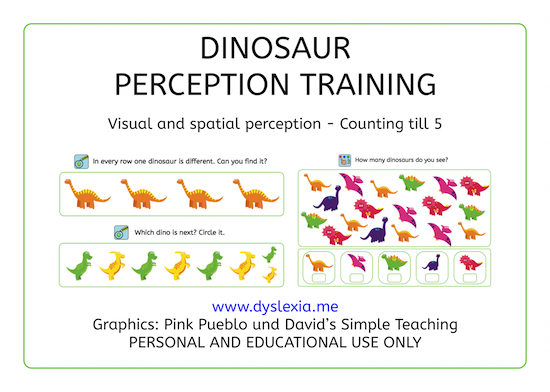
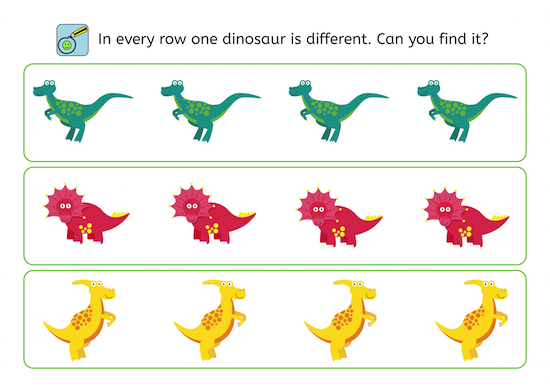
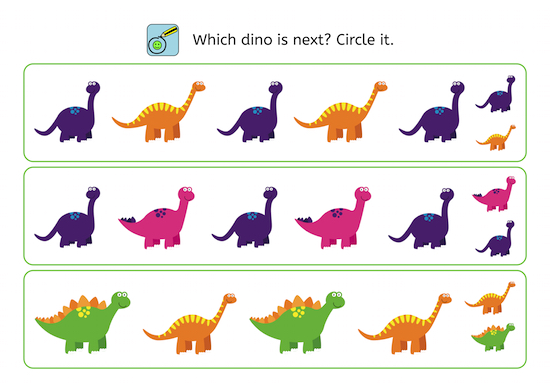
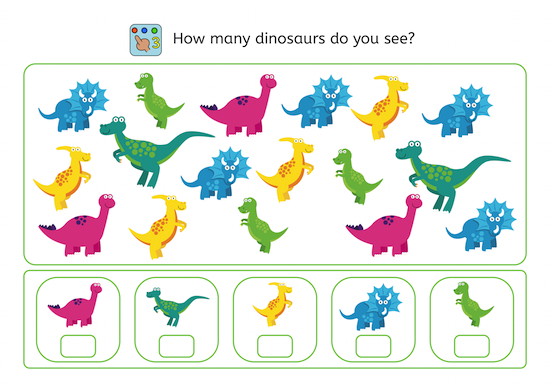
    Kids + dinosaurs = fun! Enjoy our new free no-prep printables with dinosaurs. Kids will have fun and train their visual and spatial perception, patterning, and counting up to 5.

    Dinosaur, perception training, children, freebie, no prep printable, parents, school, teacher, dyslexia, dyscalculia, AFS-method

    Visual and spatial perception:

    Dinosaur, perception training, children, freebie, no prep printable, parents, school, teacher, dyslexia, dyscalculia, AFS-method

    Patterning:

    Dinosaur, perception training, children, freebie, no prep printable, parents, school, teacher, dyslexia, dyscalculia, AFS-method

    Counting till 5:

    Dinosaur, perception training, children, freebie, no prep printable, parents, school, teacher, dyslexia, dyscalculia, AFS-method

    Download: Dinosaur perception training

    You want even more dinosaurs? Check out this free online game: Dinosaur – Find the pairs! You can choose different levels. The game can be played in any browser on any computer, smartphone or tablet.

  • 1500 free worksheets

    1500 free worksheets

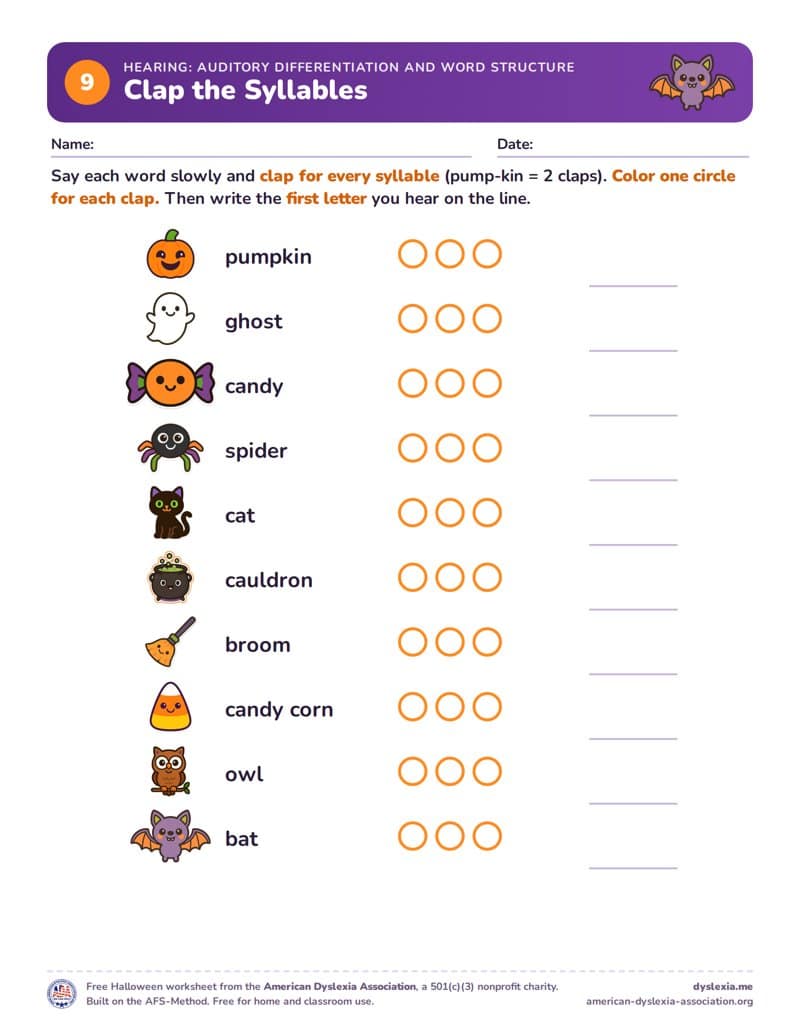
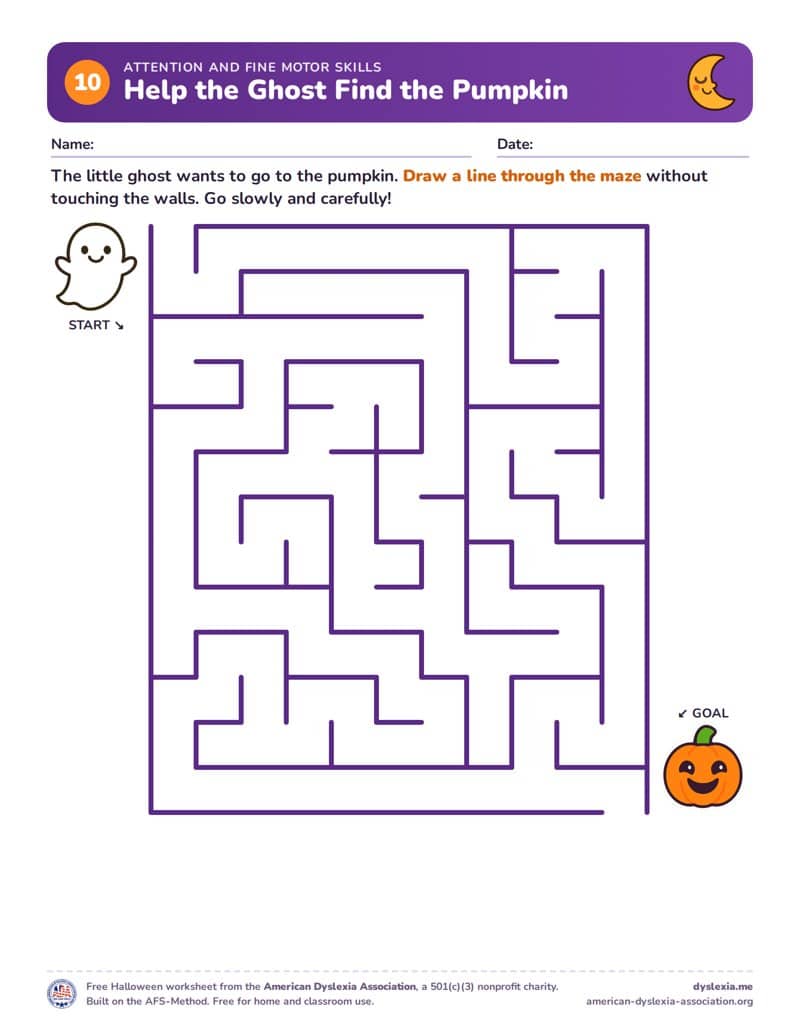
    The American Dyslexia Association offers more than 1500 free worksheets on its website. The worksheets follow the AFS-method , a very successful method to help children with dyslexia and dyscalculia. If a child has dyslexia or dyscalculia, it is not enough to work on the mistakes. The child also has to learn to be attentive all the time when reading, writing, and calculating. Furthermore, it is important to train the child’s perception to improve reading, writing, and calculating skills.

    Dyslexia, worksheets, free, parents, children, homeschooling, reading, writing, AFS-method


    Access the worksheets

  • New freebie: I spy … superheroes!

    New freebie: I spy … superheroes!

    New freebie: I spy ... superheroes, I spy, dyslexia, dyscalculia, AFS-method, perception, visual perception, spatial perception, worksheet, parents, children, homeschooling, freebie

    Here is another “I spy…” freebie. Children simply love them. This time it is about “I spy … superheroes”. Print them out, color, count and simply enjoy all the fun. At the same time, children train attention, visual perception and fine motor skills.

    Grab this freebie here: I spy … superheroes

    More freebies

  • Open your ears!

    Open your ears!

    The American Dyslexia Association offers a different educational approach to help people with dyslexia and dyscalculia. This approach is called the AFS-Method, which is a multi-sensory method to help people who have difficulties with reading, writing and/or calculating. The “F” stands for “Function” which means the different sensory perceptions you need to learn reading, writing, and calculating. One important sensory perception is the acoustic area:

    • acoustic recognition: Can the child recognize different sounds?
    • acoustic memory: Can the child remember what he/she has heard?
    • acoustic sequencing: Can the child remember a sequence of sounds?

    We offer 12 sound sequences to train acoustic perception. Access them here. The audio clips have different degrees of difficulty. The child should recognize whether the sounds are the same or different, loud or soft, how many different sounds there are, and so on. According to the age and skills of your child, you can do the exercises with closed headphones. The headphones have the advantage that the child can completely focus on the sounds. The trainer or parent then also needs headphones and a dual adapter. If you do the exercises without headphones, then the child also hears the normal daily sounds around and learns how to filter out noise even better.
    We also made some worksheets to accompany these exercises, which you can download here: DOWNLOAD.
    Access the audio clips here.

  • App: Phonetic Birds

    App: Phonetic Birds

    Phonetic Birds, app, perception, ipad, acoustical perception, AFS-method, dyslexia, parents, children

    Finding good programs and worksheets to train acoustical perception is difficult. So we were very happy when we discovered the app “Phonetic Birds” in the app store. This app is designed to assist in improving audio discrimination and memory-sequencing. In 4 playfull mini games the player has to find pairs of birds, mimic melodies and organize birds from low to high or silent to loud.

    Highlights:

    • Adventure mode with 72 levels
    • Quick play mode for full control
    • Random play mode for endless fun
    • Motivating birds in unlimited colors
    • Save the progress for up to 6 players

    The app is designed by Marc Stockel, a special education teacher in Germany. Visit his website.

    The app is available in the app store and costs $ 2,99.

    Phonetic Birds, app, perception, ipad, acoustical perception, AFS-method, dyslexia, parents, children