Tag: brain

  • The Benefits of Play in Cognitive Development


    Editor’s note: While it may seem like a simple idea, play is fundamental to forming trust-based relationships. Play permeates the TBRI empowering, connecting, and correcting principles and as Dr. Purvis once said: “Play disarms fear, builds connectedness, and teaches social skills and competencies for life.” We’ve recently received a few questions about the benefits of play in cognitive development, so we’ve provided this summary of current research on the positive impact of play. 

    The Benefits of Play

    By Sheri Parris & Christian Hernandez

    Play provides a wide variety of benefits for children. Through play, children build and strengthen socio-emotional and cognitive skills. Children at play have agency (control over their own actions) and feel socially and emotionally safe. They express themselves freely, trying out different behaviors or ideas, without fear or anxiety. Peter Gray (2017) defines play as an activity that (1) is self-chosen and self-directed, (2) is motivated more by means than ends, (3) is guided by mental rules, and (4) includes a strong element of imagination.

    Gray also notes that children practice different skills during different types of play. Categories of play include (a) physical/locomotor play (e.g., running, climbing, chasing); (b) constructive play (e.g., building things, creating art or music); (c) language play (e.g., infant cooing, puns, rhymes); (d) fantasy or pretend play (e.g., constructing pretend worlds); (e) games with formal rules (e.g., baseball, chess, dominoes); and (f) social play (e.g., any type of play involving 2 or more children).

    Play has shown to have many benefits for the brain because it not only engages children in activities that promote cognitive development (e.g., problem-solving, collaboration, mental flexibility, creativity) but it also removes barriers to cognitive development (e.g., fear, anxiety, stress). Likewise, play promotes development of a wide range of socio-emotional skills, such as self-regulation, listening, negotiating, independent thinking, taking other perspectives, persistence, and curiosity.

    Lev Vygotsky was a soviet psychologist whose observations about play continue to be validated psychologists over a century later. He found that social make-believe play was the ideal context for cognitive development. For instance, when children create imaginary situations, they increase their ability to follow internal ideas and social rules rather than impulses, and can practice activities they are too young to perform in real life. In these imaginary roles, children can be a parent rocking a doll and telling it a bedtime story, or a firefighter putting out a fire. Also during make-believe play, children engage in ‘private speech’ where they practice using their thoughts to control their actions. During make-believe play, children can try a wide variety of new and challenging activities, acquiring many new competencies. Recent studies have supported Vygotsky’s observations, including one study by Elias and Berk (2002) showing that joint make-believe play with peers improves self-regulation in highly impulsive preschoolers.

    Continue here: https://child.tcu.edu/play/#sthash.ThqVYOzO.dpbs

  • Dyslexia and the Brain

    Dyslexia and the Brain

    Researchers are continually conducting studies to learn more about the causes of dyslexia, early identification of dyslexia, and the most effective treatments for dyslexia.

    Developmental dyslexia is associated with difficulty in processing the orthography (the written form) and phonology (the sound structure) of language. As a way to understand the origin of these problems, neuroimaging studies have examined brain anatomy and function of people with and without dyslexia. These studies are also contributing to our understanding of the role of the brain in dyslexia, which can provide useful information for developing successful reading interventions and pinpointing certain genes that may also be involved.

    What is brain imaging?

    A number of techniques are available to visualize brain anatomy and function. A commonly used tool is magnetic resonance imaging (MRI), which creates images that can reveal information about brain anatomy (e.g., the amount of gray and white matter, the integrity of white matter), brain metabolites (chemicals used in the brain for communication between brain cells), and brain function (where large pools of neurons are active). Functional MRI (fMRI) is based on the physiological principle that activity in the brain (where neurons are “firing”) is associated with an increase of blood flow to that specific part of the brain. The MRI signal bears indirect information about increases in blood flow. From this signal, researchers infer the location and amount of activity that is associated with a task, such as reading single words, that the research participants are performing in the scanner. Data from these studies are typically collected on groups of people rather than individuals for research purposes only—not to diagnose individuals with dyslexia.

    Which brain areas are involved in reading?

    Since reading is a cultural invention that arose after the evolution of modern humans, no single location within the brain serves as a reading center. Instead, brain regions that sub serve other functions, such as spoken language and object recognition, are redirected (rather than innately specified) for the purpose of reading (Dehaene & Cohen, 2007). Reading involves multiple cognitive processes, two of which have been of particular interest to researchers: 1) grapheme-phoneme mapping in which combinations of letters (graphemes) are mapped onto their corresponding sounds (phonemes) and the words are thus “decoded,” and 2) visual word form recognition for mapping of familiar words onto their mental representations. Together, these processes allow us to pronounce words and gain access to meaning. In accordance with these cognitive processes, studies in adults and children have demonstrated that reading is supported by a network of regions in the left hemisphere (Price, 2012), including the occipito-temporal, temporo-parietal, and inferior frontal cortices. The occipito-temporal cortex holds the “visual word form area.” Both the temporo-parietal and inferior frontal cortices play a role in phonological and semantic processing of words, with inferior frontal cortex also involved in the formation of speech sounds. These areas have been shown to change as we age (Turkeltaub, et al., 2003) and are altered in people with dyslexia (Richlan et al., 2011).

    What have brain images revealed about brain structure in dyslexia?

    Evidence of a connection between dyslexia and the structure of the brain was first discovered by examining the anatomy of brains of deceased adults who had dyslexia during their lifetimes. The left-greater-than-right asymmetry typically seen in the left hemisphere temporal lobe (planum temporale) was not found in these brains (Galaburda & Kemper, 1979), and ectopias (a displacement of brain tissue to the surface of the brain) were noted (Galaburda, et al., 1985). Then investigators began to use MRI to search for structural images in the brains of research volunteers with and without dyslexia. Current imaging techniques have revealed less gray and white matter volume and altered white matter integrity in left hemisphere occipito-temporal and temporo-parietal areas. Researchers are still investigating how these findings are influenced by a person’s language and writing systems.

    What have brain images revealed about brain function in dyslexia?

    Early functional studies were limited to adults because they employed invasive techniques that require radioactive materials. The field of human brain mapping greatly benefited from the invention of fMRI. fMRI does not require the use of radioactive tracers, so it is safe for children and adults and can be used repeatedly which facilitates longitudinal studies of development and intervention. First used to study dyslexia in 1996 (Eden et al., 1996), fMRI has since been widely used to study the brain’s role in reading and its components (phonology, orthography, and semantics). Studies from different countries have converged in findings of altered left-hemisphere areas (Richlan et al., 2011), including ventral occipito-temporal, temporo-parietal, and inferior frontal cortices (and their connections). Results of these studies confirm the universality of dyslexia across different world languages.

    Continue reading article: https://dyslexiaida.org/dyslexia-and-the-brain-fact-sheet/

  • What is dyslexia and what can be done to help?

    by David Morgan | 2 April 2019

    Dyslexia can make learning to read a real challenge, but dyslexics are often exceptionally bright children, with incredible potential. We find that – with the right targeted support – every dyslexic can crack the code and start reading and writing well.

    If your child is struggling with dyslexia, he or she isn’t alone. According to Chris Horn of the University of South Carolina, an estimated 6 to 10 percent of today’s students face this learning challenge. Some say that the percentage could be even closer to 20, since many people struggle with their reading and exhibit dyslexic patterns, but do not fit exact testing criteria.

    20% is roughly the number of adults who have passed through the school system and not learned to read in the USA, according to the National Center for Education Statistics. Such statistics shed light on just how widespread reading difficulties are. However, this doesn’t change the fact that it can feel scary and overwhelming— especially when you’ve just received a diagnosis of dyslexia for yourself or your child.

    But what does a diagnosis of dyslexia mean? Does it mean that learning to read is impossible? Is dyslexia a lifetime disability?

    At Helping Children to Read, our answer is a resounding “no!”

    Instead, our research has shown that almost all dyslexics can learn to read and spell. In fact, we have not had a single dyslexic not learn to read well on completion of our home support process in recent years. Most can reach the middle or top of their class. It is our experience that with the right tools, every child can gain the skills they need to read fluently and well. It is our mission to get those tools into the hands of every child.

    Rethinking dyslexia: a label, not a diagnosis

    When someone is given a dyslexia diagnosis, our greatest worry is that they take it as a label of disability, with a sentence of lifetime reading struggles. Some specialists will suggest this is the case, and say that a dyslexic child should accept the situation and switch to using “practical” tools like read-to-me software as a workaround.

    We understand that if you have not seen dyslexics learn to read, then that would seem like good advice. But we could not disagree more with that view!

    Learning with conventional phonics is often hard for dyslexics, but there are new and different strategies. If you support the decoding of words in the right way, children with dyslexia can still become proficient at it quite quickly, with good comprehension. By using trainertext visual phonics to help with the decoding and by addressing other causes of difficulty, we fundamentally change the way that dyslexics approach the written word. Once that switch of strategy has occurred, their reading can start to fly.

    Continue reading article here:

    https://www.helpingchildrentoread.com/articles/what-is-dyslexia/

  • Lexilens, Overcoming Dyslexia

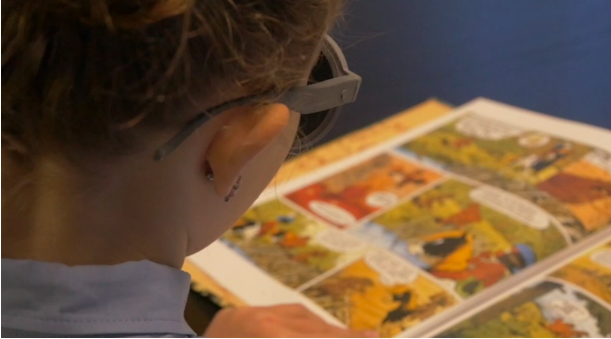
    Abeye, a French healthtech startup has developed Lexilens, a revolutionary reading aid for dyslexics.

    This new product is based on science and provides instantaneous effect to dyslexic readers. It was awarded several prizes among which the CES innovation award at Las Vegas in 2020 and Silmo Gold award (health & vision category). It will be launched in France soon after this summer and in Europe afterwards.

    Dyslexia is a reading disorder affecting 8 to 10% of population

    Dyslexia makes reading very difficult and is declared as a handicap by the World Health Organization. Children suffer the most from it as they must read a lot at school while they have not yet learned how to cope with this disorder by setting up alternative strategies to read.

    Dyslexia makes reading difficult and can lead to school failure, loss of self-confidence & potentially social isolation. It is a daily pain for the children and their family.

    Abeye develops smart eyewear for health and wellness

    Launched in 2018, the startup Abeye (abeye.tech) creates smart eyewear, eg standard looking eyewear that embeds electronics to provide health related services to the user. Abeye just released earlier this year a product called Spectalert which is a fall detection eyewear for seniors. Lexilens is their second product, developed with the same rules : simple, useful, elegant and affordable.

    Abeye is incubated by “Atol les opticiens”, a French optician retail network (800 shops in France). Abeye can therefore rely on Atol expertise to design eyewear that looks like….eyewear and that people will actually want to wear

    Lexilens is a revolutionary reading aid for dyslexics

    Lexilens is the result of a 2 year R&D effort done by Abeye in collaboration with the scientific academic laboratory who discovered in 2017 a potential cause of dyslexia.

    These French scientists showed a link between the eyes, the brain and dyslexia: In the image processing center of the brain, every single human at some point creates a mirror image of what they are seeing. Think of looking in the mirror when letters seem backward. In a person with dyslexia, the incomplete decoding in the brain of the mirror image can result in overlays or omissions. For non-dyslexics two eyes are asymmetric which means not exactly alike. And this asymmetry gives clues to the brain in selecting which image to pick.For dyslexic people, they have two eyes that are too perfect. So the brain cannot tell the difference and can mix the two mirror images.

    Lexilens can filter mirror images with its electronic lenses and reading is easier for the dyslexic wearer.

    After several versions, a real life test was conducted with several testers. The results are unprecedented. The children’s parents testimony are extremely promising as some children can read up to twice as fast with Lexilens. For many testers, reading is faster and easier, memorization is increased and academic results improved, increasing social confidence.

    Lexilens effect is instantaneous (no training required), universal (does not depend on the age, gender or native language). The spectacular effects of Lexilens have been since confirmed for adults and children from a broad range of countries. A formal clinical trial is under way to generate scientific data to measure the improvement rate.

    A non stigmatizing device

    Abeye has been working on improving the design of Lexilens so it can be worn at school without stigmatization. Lexilens will be available in two sizes : children & adults. Lexilens is compatible with all prescription lenses for an increased reading comfort.

    Lexilens will be available for preorder in the coming months (in Atol shops in France and online (abeye.tech) for the rest of Europe). Abeye is currently in discussion with distribution partners to support its global expansion.

  • Why Dyslexia Is More Than a Reading Disorder

    Gary Waters—Getty Images/Ikon Images

    People with dyslexia have difficulty reading letters and words; it’s a learning disability that has nothing to do with their intelligence. Until recently, researchers assumed the challenge could be traced to language difficulties, including problems processing printed words, and they focused their attention on the language parts of the brain.

    But in the latest research published in the journal Neuron, scientists led by John Gabrieli, a professor of brain and cognitive sciences at Massachusetts Institute of Technology, found that dyslexia may be due to a much broader difference in brain function. After analyzing functional MRI brain scans of people with and without dyslexia, they found that those with dyslexia were less adept at something called adaptive learning. When the brain sees something new, whether it’s a word, object, voice or experience, it expends a lot of neural energy to gather as much information about the novel stimulus as possible. But if it does this every time it hears the same voice, or encounters the same dog barking, for example, that wouldn’t be efficient. It’s therefore able to adapt and quickly triage new encounters from familiar ones.

    Gabrieli found that in the brains of dyslexics, this process wasn’t occurring when they heard the same person speak different words. Nor did it occur in other tests of the brain’s plasticity, or ability to adapt. That suggests that the trouble with reading has less to do with language specific problems but rather broader issues with adaptivity. In other words, the issues with adapting to new things may compromise skills like reading.

    Continue reading here: https://time.com/4608060/dyslexia-reading-disorder/


  • Dyscalculia and Brain Activity-The Connection, by Shradha Kalyani Kabra

    The fear of Mathematics and numbers is called Dyscalculia which is a learning disability also termed as number blindness. Extensive studies have recorded that nearly 7% of the population with average intelligence have the problem. The innate number sense of the human brain is not in sync in dyscalculics as numerical ability relies on special brain networks.

    The theory that separates Dyscalculia from other deficiencies of memory, language and memory is that the approximate number sense gets severely affected. Common symptom that defines the problem is the inability to recognize the place value system. The mathematical ability of people who are unable to grasp the recognition pattern of small numbers is impaired significantly.

    Brain Function In Dyscalculia Sufferers

    The inability to properly estimate and grasp quantifiable figures is the hallmark of Dyscalculia.The disability signifies the inability or impaired ability to recognize small numbers. The brain scans of persons suffering from this issue show that the intraparietal sulci show less activity and are less connected with the greater brain when dealing with numbers.

    Other learning disabilities like dyslexia and aligned problems like ADHD and autism spectrum disorder is also common in dyscalculics.  The treatment becomes a little complex as it is difficult to separate the issues. These comorbidities often make the diagnosis difficult.  The neuronal basis of Dyscalculia is not widely studied due to this phenomenon. Several neuroimaging studies have detailed the representation and processing of numerical information, but no comprehensive and conclusive findings are available. There are many forms of Dyscalculia, and some of them are associated with demonstrated alteratiometabolism, brain structure and function.

    dyscalculia brain scan

    Image Source: dyscalculiamathdisability.weebly.com


    Developmental Dyscalculia

    Developmental Dyscalculia tends to present as abnormalities in the parietal cortex and involves the cortical and subcortical regions. Recent studies have given clarity on brain activity during number processing as well as calculation. The IPS or intraparietal sulcus is known to be the centre for numerical processing. Research has illustrated that the IPS is activated when mathematical tasks and even simple counting exercises are carried out.

    Memory, perceptual, spatial and motor functions are also involved in the process. Attention is also a key factor. The cognitive processes that are involved in calculation tasks add to the complexity. Developmental Dyscalculia (DD) demonstrates deficits in core brain regions associated with number processing. The brain activation pattern is also not adequate in children afflicted with DD. The gap is bridged with the child resorting to finger counting and memory to compensate.

    The need for remediation measures and education for children with special needs is the need of the hour. There are some steps taken in this direction by experts, but the gap is much more significant than the remedy. Urgent intervention is needed to collate research findings and create practical special education resources to help children suffering from DD.

    Practical Application of Research in Educational Processes for Special Needs

    The first step is to recognize that the child has a problem. Unfortunately, the children suffering from Developmental Dyscalculia are not even diagnosed in time to help them. They are often labelled as slow or below average and are left to fend on their own. The need of the hour is to educate parents and educationists alike about the existence of DD and how it affects the child.

    Academic and emotional negligence often tortures the otherwise intelligent child. They are special and hence need proper guidance and help, more than the other children. They may be subjected to bullying and rampant ignoring in the classroom. Teachers need to be sensitized about the occurrence and issues related to Dyscalculia as they are prone to dismiss the condition as a lack of general intelligence. There are few practical steps that can be taken to ensure that the child finds a way to cope with the problem and even overcome it to a certain extent.

    Continue reading here: https://numberdyslexia.com/dyscalculia-and-brain-activity-the-connection/


  • What is dyslexia?

    What is dyslexia?

    Dyslexia affects up to 1 in 5 people, but the experience of dyslexia isn’t always the same. This difficulty in processing language exists along a spectrum — one that doesn’t necessarily fit with labels like “normal” and “defective.” Kelli Sandman-Hurley urges us to think again about dyslexic brain function and to celebrate the neurodiversity of the human brain.

    Dr. Sally Shaywitz recently wrote, “In the case of dyslexia, (while there is always the desire for more), there is currently sufficient knowledge to do a far better job in identifying, intervening in and accommodating dyslexia. There is an unacceptable and harmful wide gap between the robust existing science of dyslexia and how this knowledge is implemented, typically not implemented, by schools. In dyslexia, there is not a knowledge gap but rather an action gap. As a consequence, dyslexic children frequently go unidentified, unremediated, and unaccommodated, with great harm to the children, to their families, and to society. Educators must act to translate this body of converging science into policy and practice. Our children’s lives and futures (human capital) are too precious to waste.” We could not agree more!

    Watch this compelling video and then visit “What is dyslexia?” on Ed.ted for more information, discussions, and links.