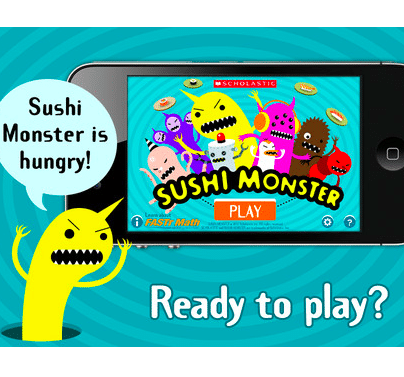
Meet Sushi Monster! Scholastic’s new game to practice, reinforce, and extend math fact fluency is completely engaging and appropriately challenging. Strengthen reasoning strategies for whole number addition and multiplication by helping monsters make a target sum or product. Earn points with each correct answer… but watch out for distractions! To be successful, plan ahead and strategically select numbers from the sushi counter.
Tag: calculating ability
-

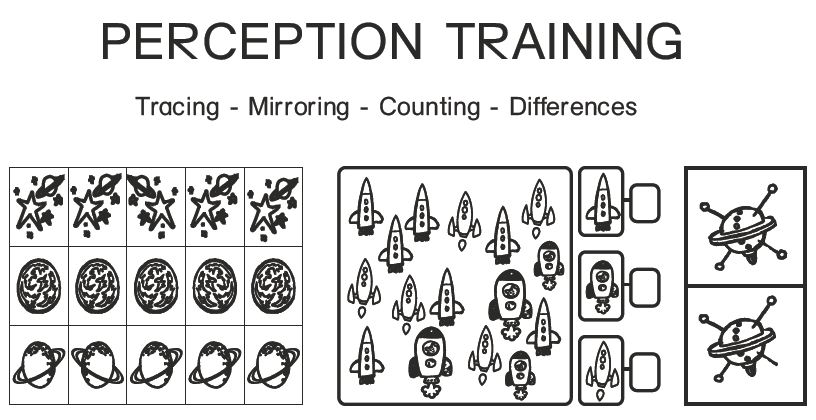
Perception training from space

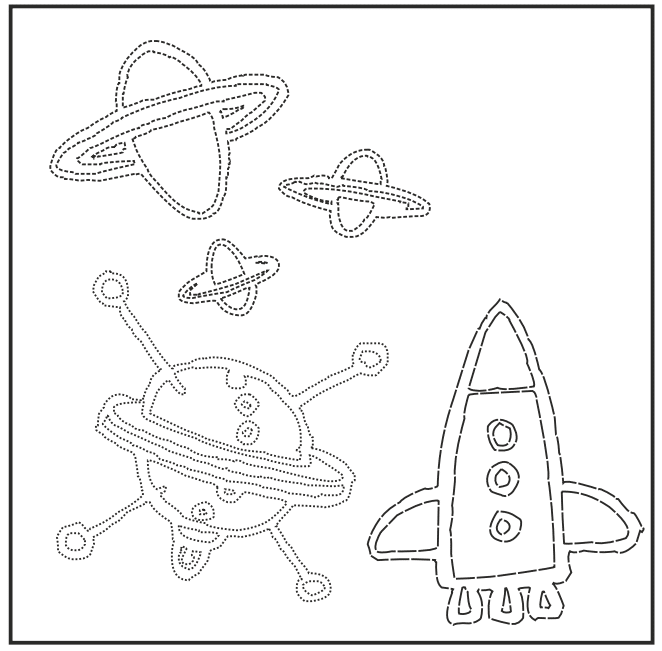
Tracing, recognizing mirrored images, counting pictures, and finding differences – all these exercises are included in today’s freebie. These exercises combine different skills necessary for good reading, writing, and calculating. Use these exercises when training dyslexic and dyscalculic children. Of course, you can also use them for homeschooling, tutoring, or extra training.
-

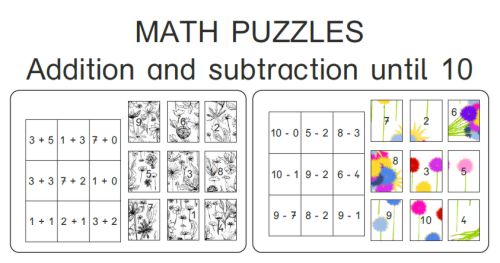
Math puzzles

Today’s freebie consists of some math puzzles with calculations up to 10. Children have to cut out the pictures and glue them onto the correct calculation. This trains not only math skills, but also fine motor skills, attention, visual, and spatial perception.
-

Counting with monsters
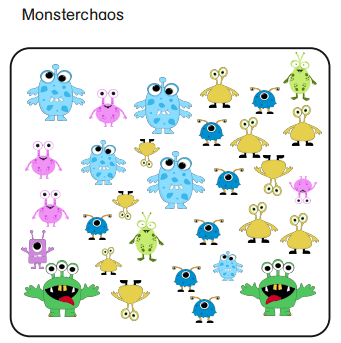
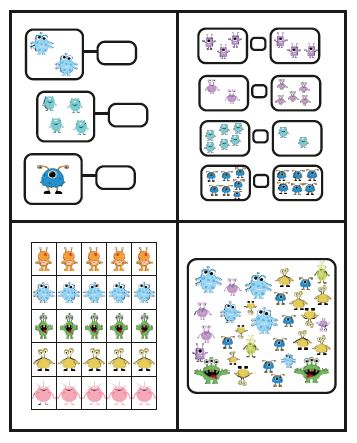
Many children with dyscalculia have difficulties with grasping amounts or with terms such as “less than…” or “more than…”. With today’s freebie, this can be practiced within the number range of 1 to 10. Children have to count and to compare monsters. However, according to the AFS method, you should not just practice calculating skills, but also sensory perception. Therefore, exercises for visual and spatial perception are included.

-

Drawing lines
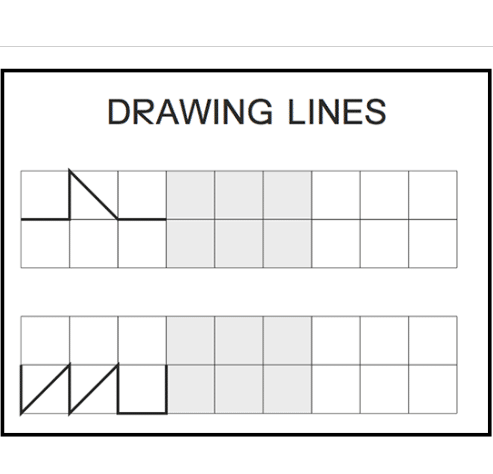
“Drawing lines” offers many possibilities to train children’s skills that are important for reading, writing, and arithmetics: attention, hand-eye coordination, visual and spatial perception. The children are counting, they have to decide whether to draw up, down, to the right, to the left, etc. This may look simple, but for some children, this is a real challenge.
There are 5 sheets with 4 exercises on each. The children have to continue the lines in the same way. They can do this freehand or use a ruler. There are also two empty templates.
For children who have real difficulties with this kind of exercise, it might be a good idea to laminate the pages and give the children an overhead marker. This works like magic because with an overhead marker, children are no longer afraid to make mistakes. They can easily wipe them away.
Extra tip: If you have an iPad or tablet, open the file in an app that allows PDF-annotation. The children can do the exercise directly on the iPad/tablet. No child refuses to do the exercise, then!