Teachers can speak a lot of things into existence (a quiet line in the hallway, students sitting “criss, cross, applesauce”) but a love of reading isn’t one of them. Enthusiasm is a part of good teaching, but communicating a love of books isn’t the same thing as teaching reading. I learned that the hard way.
When reading comes easily, it’s easy to love it
Reading courses in my teacher preparation program centered around a love of reading. In class, we shared our own memories of learning to read, curated books lists for our classroom libraries, and debated the themes hidden in our favorite children’s books. We were taught to devote time to students reading for pleasure and to be disdainful of basal programs with scripted lessons.
When I first began teaching, I read aloud to my class every day, gave my students time for independent reading, and facilitated discussions about their books. My approach worked well for students who entered my fourth grade class already reading well. They would sprawl around the classroom and become so absorbed in their books that they’d groan when Read to Self time was over. I had a few students who struggled with reading and they were pulled for intervention by a specialist and I never had the opportunity to see the instruction they received. So while I taught fourth grade in a high-performing school, I believed that if students were given time to read and discuss good books, their abilities would grow and a love of reading would flow naturally.
But when reading is difficult …
Five years ago, I moved to a school with low reading achievement. As a literacy coach, I saw teachers try the same strategies I had used, but they experienced very different results. And I quickly learned that in classrooms with children who cannot read well there are a thousand ways a Readers Workshop lesson can backfire.
In one third grade class, a teacher began to state her teaching point, “Good readers…” only to be cut off by a student who called out, “We don’t got those in here!” The teacher handled the disruption beautifully in the moment, but afterwards she lamented, “The kid had a point.” Just two of her students were reading anywhere near grade level.
In well-managed classrooms, independent reading periods would devolve into quiet distraction. In less-orderly rooms, students scrawled curse words in books and knocked leveled book bins to the floor. Our school’s kindergarteners had more tolerance for low-level books than the ten year olds who had been struggling for years to make sense of reading. I soon realized that independent reading is a burden, not a pleasure, for students who struggle to lift the words off the page.
Student: Why do they always put tricky words in there?
Although we had hundreds of books bins, only the low-level books were being used. Our mini-lessons began to feel too mini and our Guided Reading lessons felt too guided. What had seemed to be enough in my own fourth grade classroom was certainly not enough here. It seemed cruel to talk about a love of reading when students felt taunted by the squiggly lines on the page.
The joy of cracking the code
I began to use the time I had devoted to Guided Reading intervention for explicit phonics instruction. The scripted lessons felt dry, but I honored the instructional routines and I faked enthusiasm. My students discovered the joy in the lessons before I did.
I think I was 6 years old when I realized I was different. I tried harder than anyone else to please, but I could not spell words or learn how to put letters together to read.
Leana Greene
How do you not feel stupid when everyone else is learning something that you can’t grasp at the same pace? The shame of not being able to read out loud without stuttering or misspelling something on the blackboard in front of the class was almost unbearable. The fear of being called on by the teacher was paralyzing and made me act out and have panic attacks. My math teacher berated me because she thought I was being careless when I accidentally reversed numbers. I spent countless hours with frustrated but well-meaning adults who wanted to help me but just thought I wasn’t trying hard enough. All of these experiences sent me the message that I was not good enough.
Being different as a child is not an easy thing, and it can scar your self-esteem for a lifetime. I think that the compounding effect is that you feel ashamed about it, and so your anxiety about trying to do something makes having the disability even harder. While many people struggle with the diagnosis of a learning disability, I think parents of children with learning disabilities might have an even bigger challenge addressing the psychological effects of it.
As a parent, it is important to really talk to your child and address what is happening. According to pediatric neuropsychologist at UCLA, Sandra Loo, PhD, the first step for any parent who has a child with learning difficulties is to get the right diagnosis. Getting an early diagnosis will help your child get the proper interventions and accommodations, like extra time in school. It’s a good idea to get a complete evaluation because many children have more than one learning disability — around 25 percent of children with Dyslexia also have ADHD. Another way of addressing what is happening is by discussing your own areas where you feel inadequate in order to make it easier for your child to share his or her problems. Sharing my struggles about my disability with my kids has encouraged them to share not only a good grade but also the inevitable challenges of trying to perform in school.
Most people with learning disabilities, like dyslexia, have a hard time doing well in school, but they often are successful post-education. Dyslexia/ADD specialist and leader of Renaissance Mind learning facility, Angela Gonzales, MD, explains that often the traditional academic environment does not suit a non-traditional learner, but children with learning disabilities have a style of thinking that is a gift later in life. She says, “These are highly visual, spatial, and conceptual learners that have the ability to distort perception and perceive it as reality. That’s a problem in school, but in the real world, this style of thinking allows you to be a Lego builder extraordinaire. It allows you to be an artist. As you get older, it allows you to be the best architect, movie producer, musician, or actor you can be.” While parents need to have realistic expectations about what their child can accomplish in school, they also need to make an effort to understand the different ways their child processes information and appreciate that their child, who is struggling with academics, is actually a gifted and capable individual with an incredible imagination. As Einstein said, “Imagination is more important than knowledge.” Communicating this way of thinking with your child may take some of the pressure off and make school bearable.
Finding people who have faced the same struggles as your child may also be helpful in working through a disability. For me, it has been helpful recognizing that there are other Dyslexic entrepreneurs like Ingvar Kamprad, founder of Ikea, Paul Orfala, founder of Kinko’s, David Neeleman, founder of JetBlue, Charles Schwab, Tommy Hilfiger, and Ben Foss of Intel. Having a role model is important, and if your child has the opportunity to know that there are other people out there facing the same challenges, he or she will feel less alone and know they can succeed.
For years, I tried to hide my learning disability because I didn’t want it to define me, and maybe I was still ashamed. Many parents have to deal with this seesaw. On the one hand, you want to help your child create a positive label for being different, but on the other hand, you do not want that label to solely define your child. Once you begin being labeled as just “John with ADD” or “Jane with Dyslexia,” it increases the shame and fear of being different. Even for those who have learned to embrace their learning disability, it is always difficult and hurtful to be labeled by others.
How a child sees his or her disability is dependent on how that disability is explained and communicated by family members. Harvard-trained child and adult psychiatrist and ADHD Specialist, Edward Hallowell, explains the importance of framing learning disabilities in a positive way and communicating with your child that he or she is not so much “disabled” as “different”. Parents need to be sensitive to the fact that kids may not want to be defined as different all of the time, and give their kids an opportunity to be defined by other achievements. A way of doing this is to help your child find at least one other activity in which he or she can excel. That activity may be drawing, music, or sports. Whatever it is, helping your child recognize that he or she has both strengths and weaknesses makes life easier. It also gives children the opportunity to see themselves as more than their disability and more than a label.
I think it is important for parents to understand that it is not only the learning disability that causes problems, but also the anxiety and paralysis that compound the learning disability. Acting defiantly may be a way of protecting oneself from the fear of failure, and it is good if parents can recognize those signs in their children. Even today, as I go into the doctor’s office and have to fill out a form with no spellcheck or person there to correct my spelling, I can feel that same childhood panic attack and sweat coming down my back, and this is after years of openly talking about my dyslexia.
Ultimately, I have found ways to work through my disability, and parents should know that, with the proper help, their kids will as well. In the words of clinical neuropsychologist and faculty of Harvard Medical School, Jerome Schultz, PhD, “If we’re starting with a base of failure and fear and frustration, it’s hard to build anything on that foundation. So we really have to turn this cycle around, and it’s quite possible to do.” Many studies are proving that children with learning disabilities can overcome adversity, and this could be the reason why so many dyslexic people and others with learning disabilities end up excelling and becoming entrepreneurs.
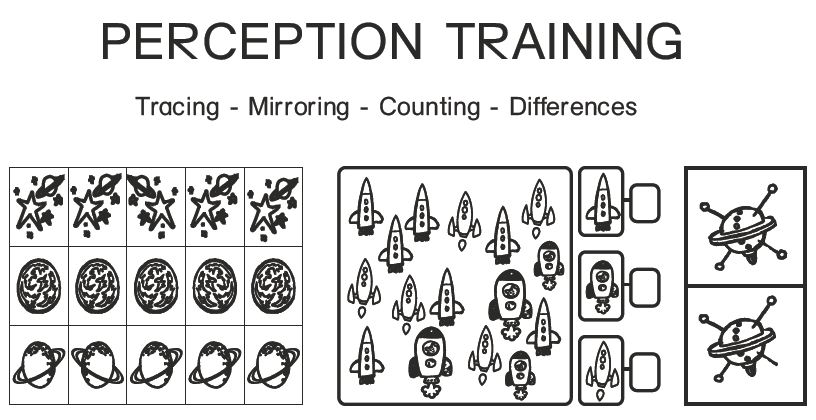
Tracing, recognizing mirrored images, counting pictures, and finding differences – all these exercises are included in today’s freebie. These exercises combine different skills necessary for good reading, writing, and calculating. Use these exercises when training dyslexic and dyscalculic children. Of course, you can also use them for homeschooling, tutoring, or extra training.
An Entertainment Fun Book for Parents of Dyslexic Pre-teens David Carlson Linda Davis-Kyle, Editor Foreword by Dr. Astrid Kopp-Duller, President of the Austrian Dyslexia Association
“Ready, Set, Action! is destined to become not only a loyal friend to the parents of preteens challenged with dyslexia, but also, that it will be a boon to their young learners. This fun book is brimming with an abundance of writing and performing exercises that reveal the world as an exciting learning laboratory.
Equine Therapy is an experiential, evidence-based therapy involving horses. The client works with the horses, along with a certified horse specialist and therapist, to help achieve the client’s goals. EAP is appropriate for individuals of all ages, as well as groups, families, and couples.
Ideal for kids and families struggling with:
Addiction
ADHD
Autism
Eating Disorders
Family Conflict
Learning Disabilities
Social Anxieties
Through a series of activities, participants identify with the horses and learn how to better communicate with others. Participants work on problem-solving games, such as moving the horse through an obstacle course. Activities help clients learn to trust their thought processes as well as work in a team to think and act outside their comfort zone.
Equine Therapy increases empathy through grooming activities and caring for the horses. The horses keep the participants in the moment, focused on a task, and completely honest. All EAP sessions are facilitated by a licensed therapist or a Marriage and Family Therapist Intern under the supervision of a BBS licensed supervisor.
BIG Heart Ranch in Malibu, California, is a facility specializing in healing youth and adults struggling with mental health and everyday issues through Equine Assisted Psychotherapy (EAP) and Equine Assisted Growth and Learning (EAGL). Cofounder Suzi Landolphi is certified in EAP, and cofounder and Program Director Brian Goldberg is a Certified Equine Specialist. Together with their staff and animals, they provide various animal-assisted therapies.
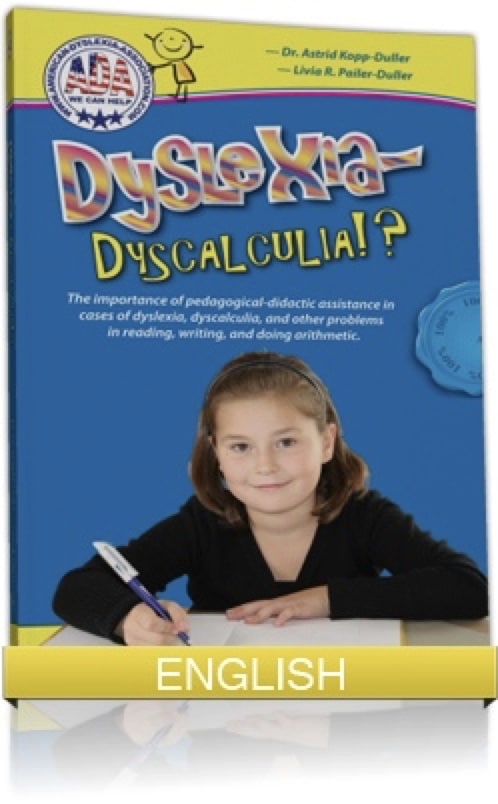
For those enveloped in a world of chaos, confusion and misunderstanding, Dyslexia Dyscalculia ?! is the new “iconic” global position system for minds that aspire for a better understanding to guide those suffering from dyslexia.
In this awe-inspiring publication, renowned authors, Dr. Astrid Kopp-Duller and Livia R. Pailer-Duller, perpetuate their title as the authority on the subject as they delineate the necessity of intervention with incredible insight at the educational-didactic level. Which, is of preeminent importance for success in the training of those who have difficulties with reading, writing or calculating.
Infused with the key ingredients for successful training, the authors’ erudition of the most complex aspects of the pedagogic processes have been simplified in an epicurean recipe for the successful teachings of a misunderstood and somewhat unchartered methodology. “We’re entering a new era of learning and this publication is without a doubt at the forefront of modern teachings.” — K. Cole
“A benvolent addition to any serious literary resource collecton.” — B. Dalton
As an Amazon Associate I earn from qualifying purchases.