Tag: teaching

  • The Gift of Being a Dyslexic Teacher

    The Gift of Being a Dyslexic Teacher

    A dyslexic teacher can be more attentive in the classroom, sensitive to struggling students, and model how to compensate for this spectrum disorder.
    By Matthew James Friday

    Dyslexia creates suffering for many students, but you rarely hear of teachers admitting to having it. Are teachers really still required, in the 21st century, to be models of perfect, marble-made fonts of knowledge and effectiveness? I have tutored a small number of dyslexic trainee teachers, but that was an exception to the norm. By sheer statistics alone, I must have worked with (and perhaps am presently working with) colleagues who are struggling in secret. It’s time to talk about dyslexia.

    6 Facts About Dyslexia

    So what’s dyslexia? Here is a quick definition:

    1. Dyslexia is a “spectrum disorder,” meaning that there is a range or spectrum of symptoms.
    2. People with dyslexia commonly have difficulty with all or some of:
      • Phonological awareness
      • Verbal memory
      • Rapid serial naming
      • Verbal processing speed.
    3. Dyslexia has no link to intelligence, though many people feel “stupid” and ashamed at school because they struggle with literacy skills — the cornerstone of how we measure ability.
    4. Dyslexia is one of the most common learning difficulties. It is estimated that one out of ten people in the UK has dyslexia.
    5. While language has a role in prevalence, dyslexia affects people of all ethnicities.
    6. Commonality in families has led scientists to identify six genes that may cause dyslexia. (My brother has severe dyslexia, and my father has all the symptoms, though when he was at school, those symptoms were put down to laziness or stupidity.)

    One of the happiest days of my life was being diagnosed with mild auditory dyslexia. I was 20 years old and had started college studies after a few gap years. The first essay I had written was returned splattered with red ink and harsh comments about mistakes — the familiar feeling of shame and frustration. Luckily, a leaflet about dyslexia in the university library directed me to an educational psychologist and an assessment process that resulted in the diagnosis I had suspected for years. It was a huge relief to know what was wrong with me.

    With my auditory dyslexia, I can hear what is said, but I instantly feel the information flittering away in my mind. It is like having leaking holes in my brain. At primary school, I could pass a spelling test but made frequent mistakes in my extended writing. My school reports featured the same comment: “Matthew enjoys writing, but he rushes and makes many mistakes.”

    I have always struggled with my listening skills. I am easily distracted and often drift into an imaginary world. Though an advanced private reader, I hated reading texts aloud in high school. The words blurred on the page, and I felt intense anxiety at the thought of being laughed at. My comprehension of the text was low, so I had to work doubly hard at home to catch up. The worst moment was when my beloved English teacher declared me “stupid” in front of the whole class for repeatedly misspelling “Anthony” in an essay about a Shakespeare play.

    Continue reading article here: https://www.edutopia.org/blog/gift-of-being-dyslexic-teacher-matthew-friday

  • Visualizing to Make Meaning

    By: Judy Zorfass, Tracy Gray, and PowerUp WHAT WORKS


    I grabbed my purse, stepped outside into the cold night air, and watched as a flake drifted to the ground. I started walking to my car, but I had to grab hold of a mailbox to keep from slipping.

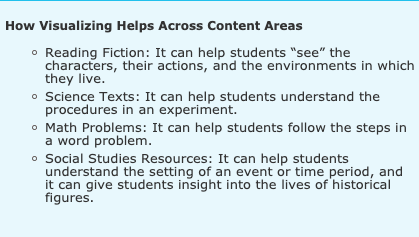
    Did you picture a woman standing outside on a winter’s night watching the snow fall? Or maybe you pictured her taking a step and then slipping on the icy sidewalk as she headed to her car? If so, you were visualizing — a critical reading skill that is necessary to comprehend both informational texts and literature. Within the College and Career Readiness Standards for Reading, visualizing has a role to play in helping students identify key ideas and details and understand craft and structure.

    Proficient readers scan and interpret text, forming a mental image of what is happening. Visualizing while reading adds texture to a scene by adding imagined details that the text may not spell out, and it is an indication of successful text comprehension.

    By incorporating differentiated models, practicing visualization, and supporting your students as they visualize (drawing on principles for Universal Design for Learning), you can help them learn to use all of their senses to engage with and imagine the world of a text, and to bring that world to life as they read. See UDL Editions Visualize Strategy for a student-friendly explanation and rubric for visualizing.

    Technology Tools for Visualizing

    A range of tools (both low-tech and high-tech) can support your students’ ability to visualize. For example, you could encourage students to draw, use dramatizations, and/or create music. Students could use cameras to take photos, or they could search for photos, images, and other graphics. They could create their own videos or watch those produced by others; they could listen to music or use programs to create their own. A variety of software tools and apps are available that stimulate students’ visualizations and support their efforts to draw, diagram, and create images.

    If students are reading digital text, they can access a variety of embedded supports to enhance visualization (e.g., audio explanations, photos, and images), including embedded prompts that encourage students to stop and visualize. All of these tools can help you to differentiate instruction. The video below provides ideas for using supports that are built into text to differentiate instruction.

    Continue reading here: http://www.ldonline.org/article/Visualizing_to_Make_Meaning

  • Applying Bloom’s Taxonomy in Your Classroom

    Applying Bloom’s Taxonomy in Your Classroom

    Assessing Critical Thinking in Middle and High Schools: Meeting the Common Core, by Rebecca Stobaugh is a practical, very effective resource for middle and high school teachers and curriculum leaders looking to develop the skills necessary to design instructional tasks and assessments that engage students in higher-level critical thinking, as recommended by the Common Core State Standards. This infographic outlines the six steps of Bloom’s Taxonomy and provides examples of in-class instruction and assessment at each level. SOURCE

    25 Latest Articles Infographic: Applying Bloom's Taxonomy in Your Classroom, Infographic, teaching, school, common core

  • Free Reading

    Free Reading

    FreeReading

    FreeReading is a free, high-quality, open-source reading program addressing literacy development for grades K-3. Leveraging the collective wisdom of researchers, teachers, reading coaches, and other education and industry professionals, FreeReading provides a high-quality, cost-effective alternative to static materials. By establishing a foundation of hundreds of research-based lessons and materials that users can download and use for free, FreeReading has created the framework for intervention programs supporting K-6 literacy. The collective wisdom within FreeReading is invaluable and can be more beneficial than any one reading program.

    Check out FreeReading

    We are very fond of the decodable passages, because these can also be used when working with dyslexic children. Many decodable stories included in commercial reading programs are redundant and lack the authenticity of a real reading experience. We have tried to create stories that are more authentic as well as being 100% decodable. That means you can discuss the meaning of the story after reading it, building your students’ comprehension skills. These stories are also more cognitively demanding and use slightly more sophisticated language than typical decodable stories. This is an opportunity to better develop your students’ oral language skills. In some cases, it will require repeated readings of a passage for students to understand it fully.

    Decodable passages


  • Creativity matters in education

    Creativity matters in education

    education and creativity
    As an educator, you have an opportunity and an obligation to foster creativity in your students, while also helping them develop digital skills. When students become creators of digital content, they can amplify their ideas and increase their impact. Article by Adobe

  • Math Worksheet Wizard

    Math Worksheet Wizard

    ESL_Math

    Yesterday we presented the Handwriting worksheet wizard, today we bring you the math worksheet wizard. These math wizards make arithmetic worksheets for your children. Rather than level specific, these are general math worksheets that can be used by any elementary school student. Just choose the settings that are appropriate for your child. Access the math worksheet wizard here. Again, this is a free resource for teachers and parents.

  • News on dyslexia and dyscalculia

    News on dyslexia and dyscalculia

    LDNews

    Now and then, we want to give you a survey of interesting articles gathered from the net on dyslexia and dyscalculia.

    Spielberg on Dyslexia: “You are not alone.”

    Despite being bullied in school, Steven Spielberg didn’t let dyslexia prevent him from becoming a Hollywood legend. Read his encouraging words for people with learning disabilities. READ ON

    4 reasons to test your child for dyslexia, ADHD/ADD, LD

    Licensed school psychologist, Dr. Jim Forgan, details the reasons to test a child for several different types of learning disabilities. Forgan emphasizes the need for parents to “trust their instincts” concerning the learning progress of their child compared to peers. READ ON

    Dyslexia in the 21st century: Where are we going?

    Presentation by Dr. Brock Eide, co-author of The Dyslexic Advantage, at the annual meeting of the International Dyslexia Association in Baltimore, MD.  READ ON

    Busted: Five myths and truths about dyslexia

    Think all dyslexics write their letter reversed? Or that they never learn to read, or have less than average intelligence? Wrong. Husband-and-wife-team Bennett and Sally Shaywitz are pediatric neurologists at Yale University who have dedicated their lives to understanding and advancing treatment for dyslexia. READ ON

  • Logical: Snowman

    Logical: Snowman

    Logicals are an excellent way to practice reading and listening skills. A logical is a riddle that is solved by logical reasoning. Accurate reading or listening is very important. Today’s freebie includes two logicals with snowmen: the first one is pretty easy, the second one is a little trickier. Ask the children to read the text carefully or to listen carefully, so they can find out who built which snowman when and where. Have fun!

    DOWNLOAD

    Also check out these logicals:

  • Drawing lines

    Drawing lines

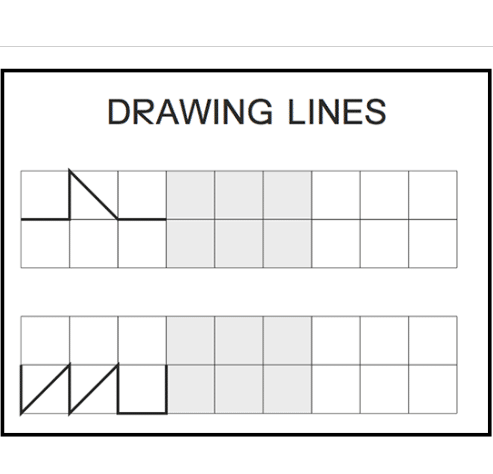
    “Drawing lines” offers many possibilities to train children’s skills that are important for reading, writing and arithmetics: attention, hand-eye-coordination, visual and spatial perception. The children are counting, they have to decide whether to draw up, down, to the right, to the left, etc. This may look simple, but for some children this is a real challenge.

    You get 5 sheets with 4 exercises each. The children have to continue the lines in the same way. They can do this freehand or use a ruler. There are also two empty templates.

    For children who have real difficulties with this kind of exercise, it might be a good idea to laminate the pages and give the children an overhead marker. This works like magic, because with an overhead marker children are no longer afraid to make mistakes. They can easily wipe them away.

    Extra tip: If you have an ipad or tablet, open the file in an app that allows PDF-annotation. The children can do the exercise directly on the ipad/tablet. There is no child who refuses to do the exercise then!

    DOWNLOAD THIS FREEBIE HERE